태양광 발전소 환경 모니터링 솔루션: PV 성능 향상 및 운영 위험 감소

소개

As global photovoltaic (PV) installed capacity continues to grow, utility-scale solar farms have become a vital component of clean energy. However, relying solely on high-efficiency modules and inverters does not guarantee that a solar farm will always maintain optimal power generation performance. Environmental factors such as variations in solar radiation, rising module temperatures, wind speed, rainfall, dust accumulation, and extreme weather can all directly impact power generation efficiency and equipment lifespan.

According to data from the International Energy Agency (IEA), power generation losses caused by environmental factors can account for 5% to 15% of annual power generation in some regions, and when dust accumulation on modules is severe, power generation losses can even exceed 20%. As a result, an increasing number of EPC contractors, solar investors, and O&M companies are deploying professional solar farm environmental monitoring solutions to provide reliable data support for performance analysis, fault diagnosis, and O&M decision-making through real-time monitoring of environmental parameters.

This article provides a comprehensive analysis of the importance of environmental monitoring in PV power plants, key monitoring parameters, system components, industry standards, and procurement recommendations to help you select an environmental monitoring solution that meets your project’s needs.

태양광 발전소 환경 모니터링 솔루션

태양광 발전소 환경 모니터링 시스템이란 무엇인가?

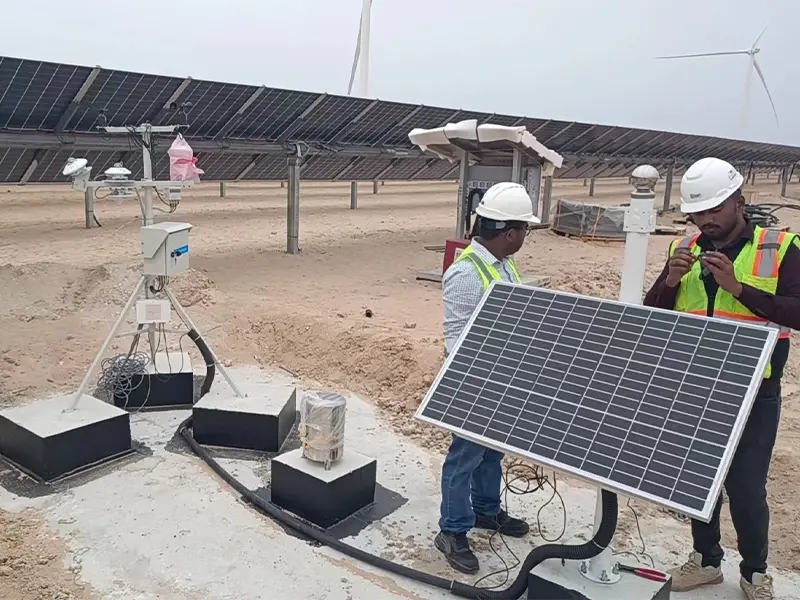
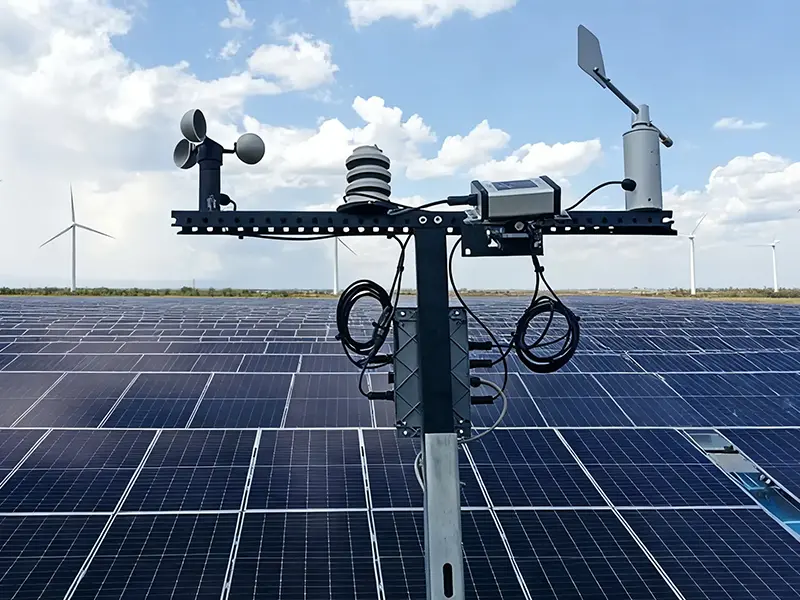
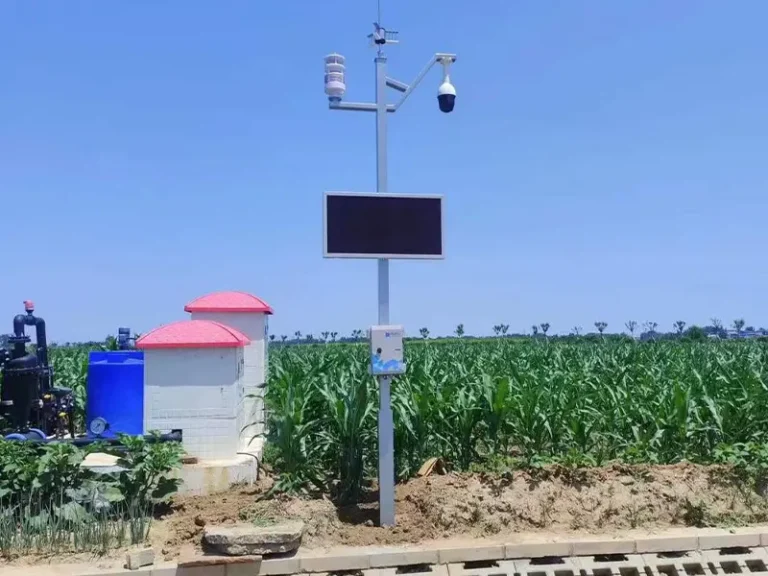
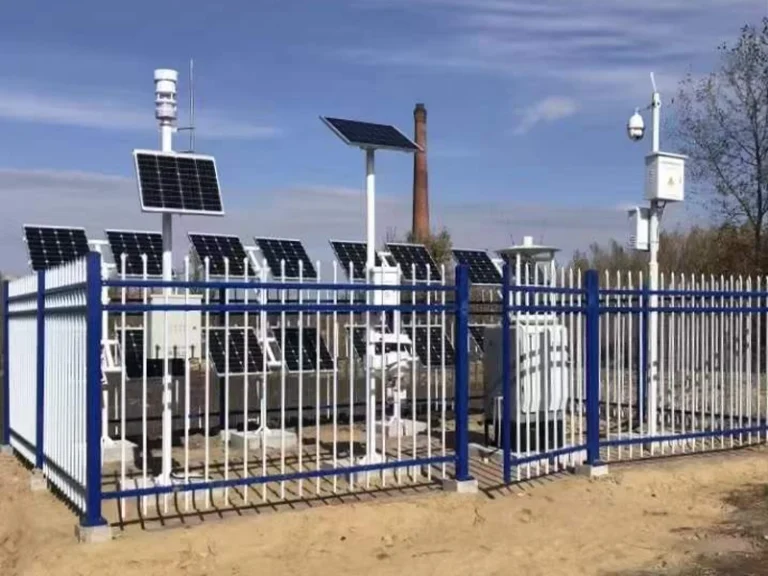
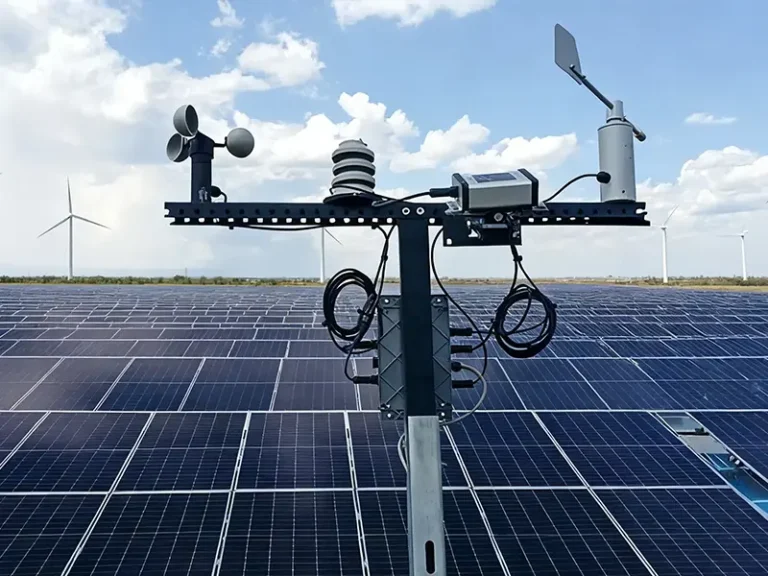
A photovoltaic power plant environmental monitoring system is an intelligent system that integrates sensor data collection, data transmission, intelligent analysis, and platform management. By deploying an array of high-precision sensors at the power plant site, it automatically collects key environmental and meteorological parameters required for grid-connected operation around the clock. Solar farm monitoring system effectively addresses industry pain points such as the limited scope of traditional monitoring equipment, data inconsistencies, and equipment clutter.

What core parameters does the system monitor?

  • 태양 복사: Total horizontal radiation, total oblique radiation, direct radiation, diffuse radiation, peak sunshine hours.
  • 온도: Ambient temperature, PV module backsheet temperature.
  • Meteorological: Wind speed, wind direction, ambient humidity, atmospheric pressure.

Why Do Solar Farms Need Environmental Monitoring Systems?

환경 모니터링 has gradually evolved from a traditional auxiliary tool to an integral part of modern photovoltaic power plants. For large-scale ground-mounted power plants, accurate environmental data not only improves power generation efficiency but also helps operations and maintenance teams quickly identify issues, reduce operational risks, and meet the monitoring data requirements of an increasing number of international projects.

Improve Power Generation Efficiency

Real-time monitoring of solar radiation, temperature, and wind speed helps analyze the actual power output of modules and improves energy utilization.

운영 위험 감소

Early detection of abnormal weather conditions, equipment failures, and performance degradation trends helps minimize unplanned downtime.

Enhance PR Analysis Accuracy

Environmental data serves as a critical basis for Performance Ratio (PR) calculations, helping to assess a power plant’s true operational efficiency.

Meet IEC Standard Requirements

An increasing number of international PV projects require environmental monitoring in accordance with IEC 61724-1, enhancing the credibility of project acceptance and financing.

Support Remote O&M

Integrated with SCADA systems, this solution enables remote monitoring, alarms, and data analysis, improving operational and maintenance efficiency.

Extend Equipment Lifespan

Monitoring changes in temperature, humidity, and wind speed helps reduce the risk of module aging and equipment damage.

How do environmental factors affect the power generation efficiency of solar power plants?

The output power of photovoltaic modules depends not only on 태양 복사 but is also influenced by various environmental factors, such as temperature, wind speed, humidity, rainfall, and dust accumulation. Only by comprehensively capturing this data can one accurately analyze power generation performance and the health status of the system.

태양 복사량

Solar irradiance is the key factor determining photovoltaic power generation and serves as an important basis for calculating theoretical power generation and the Performance Ratio (PR).

  • Determines the theoretical output power of modules
  • Used to calculate the Performance Ratio
  • Assesses the impact of shading
  • Supports power generation forecasting

모듈 온도

The higher the temperature of a photovoltaic module, the lower its conversion efficiency. Generally speaking, for every 1°C increase in the temperature of a crystalline silicon module, the output power decreases by approximately 0.3% to 0.5%.

Main Functions:

  • Analyze the causes of decreased power generation efficiency
  • Assess the module’s heat dissipation performance
  • Optimize installation design
  • Improve the accuracy of PR analysis

주변 온도

Ambient temperature affects the operating efficiency of inverters, energy storage devices, and the entire system.

Main Functions:

  • Refine the module temperature model
  • Assess the operating environment
  • Improve prediction accuracy
  • Protect equipment

Wind Speed & Wind Direction

Wind speed helps modules dissipate heat, while wind direction affects the direction in which dust accumulates.

Main Functions:

  • Improve module heat dissipation efficiency
  • Identify extreme weather conditions
  • Optimize cleaning schedules
  • Support structural safety design

강우량

Rainfall not only affects power generation but also helps naturally clean the modules.

Main Functions:

  • Determine whether manual cleaning is necessary
  • Optimize O&M costs
  • Improve power generation efficiency
  • Support drainage design

습도

High-humidity environments can easily lead to the PID effect, condensation, and equipment corrosion.

Main Functions:

  • Reduce PID risk
  • Identify environments prone to condensation
  • Extend equipment lifespan
  • Improve equipment reliability

오염 모니터링

Soiling has become a significant factor affecting solar power plants in desert, mining, and coastal areas. Studies show that in some arid regions, soiling can result in power generation losses of 5% to 30%.

  • Optimize cleaning schedules
  • Reduce labor costs
  • Increase energy yield
  • Improve return on investment
태양광 발전소 환경 모니터링 솔루션

What equipment is included in Solar Farm Environmental Monitoring Solutions?

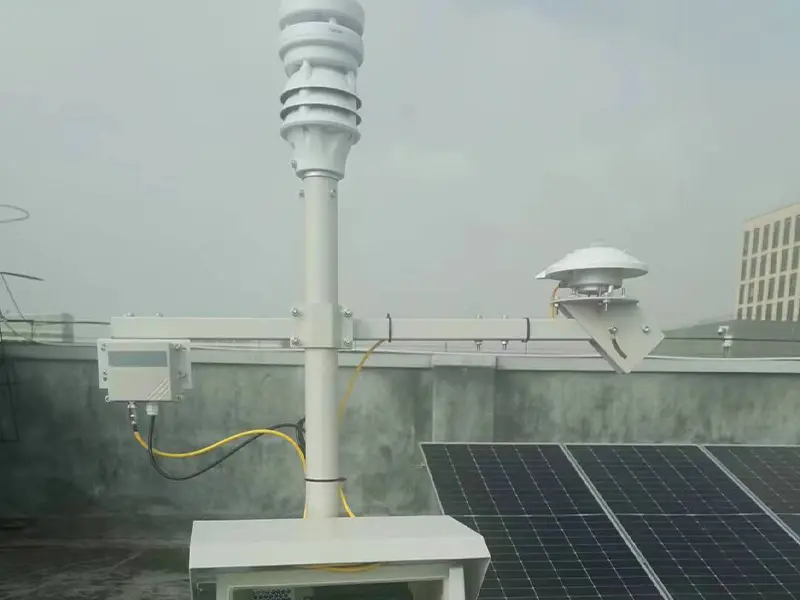
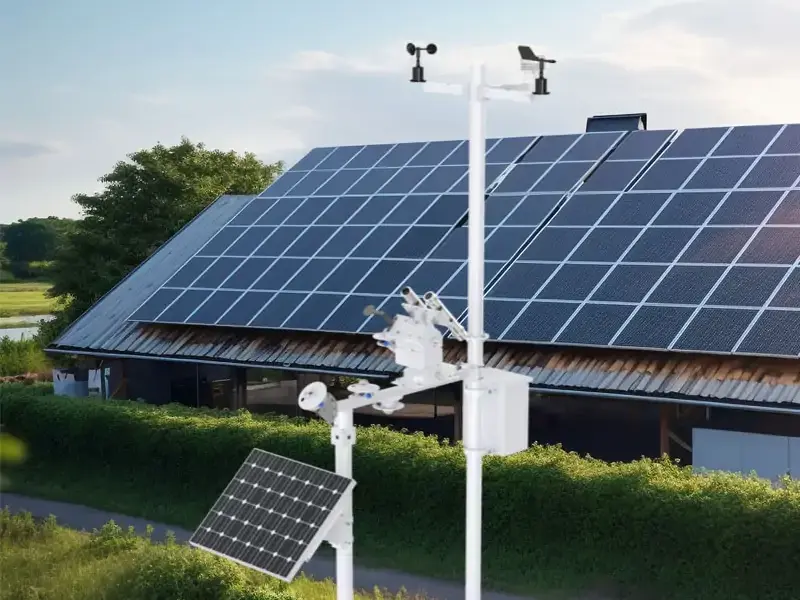
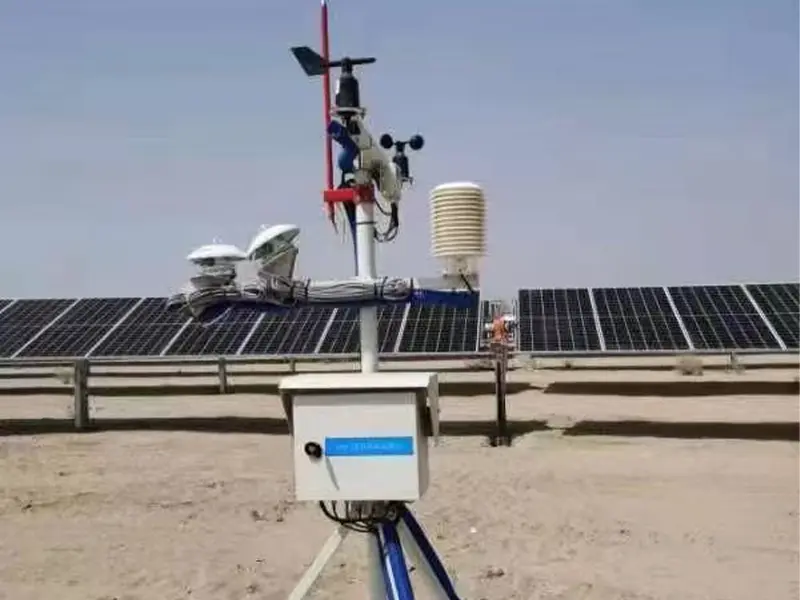
A comprehensive environmental monitoring system typically consists of multiple high-precision sensors, data acquisition terminals, a communication network, and a monitoring platform. Contact our technical team for a flexible configuration tailored to the scale of your project.

모니터링 매개변수Recommended EquipmentMain Functions
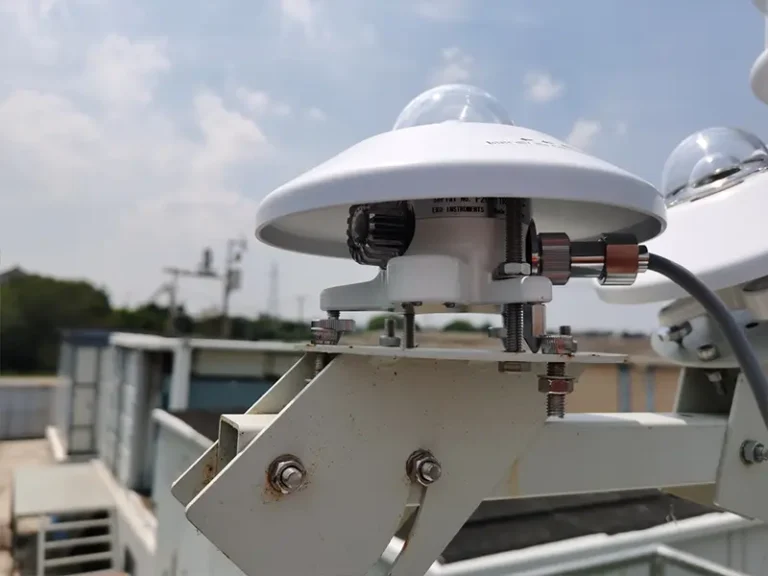
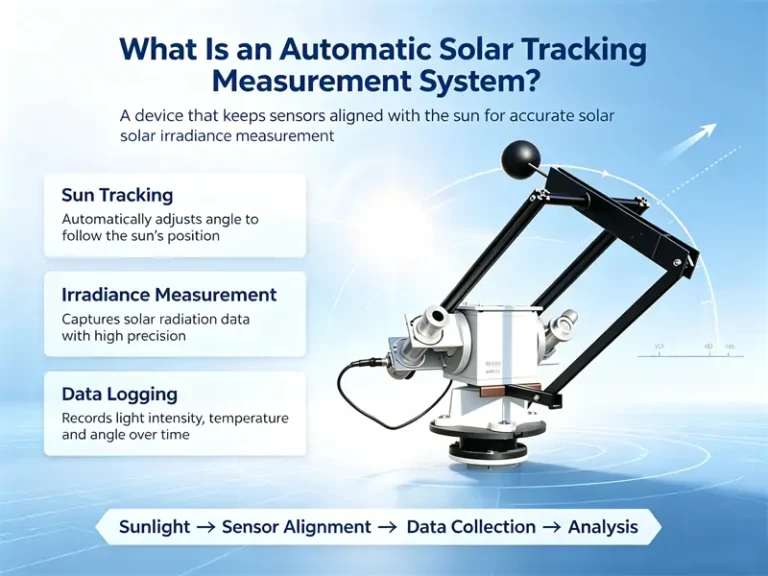
태양 복사량피라노미터Monitoring Solar Irradiance
POA IrradiancePOA SensorSurface Irradiance of the Monitoring Component
주변 온도온도 센서Ambient Temperature Monitoring
모듈 온도PT100 SensorComponent Temperature Monitoring
풍속Ultrasonic Wind SensorThermal Management and Safety Analysis
바람 방향풍향 센서Weather Analysis
강우량강우량 게이지Rainfall Monitoring
습도습도 센서Humidity Monitoring
PressureBarometric SensorWeather Analysis
데이터 로거데이터 수집 장치데이터 수집
Communication GatewayRS485/4G/Ethernet데이터 전송
클라우드 플랫폼SCADA PlatformRemote Monitoring

What benefits can deploying an environmental monitoring system bring to a solar farm?

For investors in solar power plants, environmental monitoring is not only a tool for data collection but also a key means of increasing project returns.

1. Improve power generation efficiency and O&M accuracy

  • Precise Fault Diagnosis: By comparing actual power generation with theoretical power generation based on irradiance data, string faults or equipment anomalies can be quickly identified.
  • Optimizing Operations and Maintenance Strategies: By cross-referencing environmental data with power generation data, the system can accurately distinguish between fluctuations in power generation caused by environmental factors and those caused by equipment failures, thereby optimizing module cleaning schedules, equipment maintenance plans, and power plant dispatch strategies.
  • Analysis of Thermal Loss: By continuously monitoring the temperature of the module backsheet, thermal loss can be accurately analyzed, helping operations and maintenance personnel identify potential issues such as hot spots, module malfunctions, and poor heat dissipation.

2. Ensuring Grid Connection Safety and Grid Stability

  • Early Warning of Power Fluctuations: For grid-connected photovoltaic power plants, the system can accurately predict fluctuations in power generation caused by extreme weather and provide early warnings of potential risks to grid-connected operations.
  • Supporting Grid Dispatch: Real-time monitoring data can be synchronously uploaded to the grid dispatch platform, providing accurate data support for intelligent grid dispatch and ensuring that photovoltaic output precisely matches grid load demand.

3. Support the full lifecycle management of power plants

  • Resource Assessment and Revenue Projections: Long-term, continuous environmental data can be used for solar resource assessment, preliminary revenue projections for power plants, and the calibration of satellite remote sensing data.
  • Research and Design Support: The data also supports research on atmospheric energy balance and climate change analysis, and provides support for power plant retrofits and site selection.

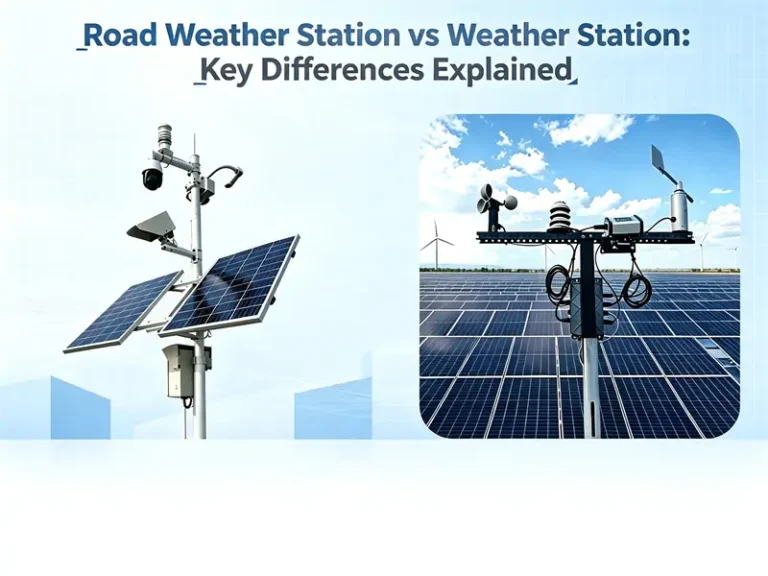
Weather Station vs. Environmental Monitoring System

Comparison Category기상 관측소환경 모니터링 시스템
모니터링 매개변수Basic meteorological data only: temperature, humidity, wind speed, wind direction, rainfall, atmospheric pressureFull meteorological + PV-specific parameters: solar irradiance (GHI), POA irradiance, module temperature, soiling data, etc.
Data Analysis CapabilityBasic data display and loggingAdvanced analysis, including Performance Ratio (PR), energy loss analysis, and system efficiency evaluation
SCADA IntegrationLimited or no integrationFull SCADA / EMS/cloud platform integration via RS485 / Modbus RTU / Ethernet / 4G
IEC 61724 CompliancePartial or not compliantFully compliant with IEC 61724-1 (Class A/B/C monitoring systems)
원격 관리Basic local monitoring or limited remote accessReal-time remote monitoring, cloud dashboard, alarm system, and historical data analysis
Scalability / ExpandabilityLimited expansion capabilityHighly scalable system with support for additional sensors (POA, soiling, aerosol, albedo, etc.)
Application ScopeAgriculture, basic weather observation, small-scale projectsUtility-scale solar farms, EPC projects, PV power plants
System ComplexityLow, standalone deviceMedium to high, integrated system solution
Investment ValueProvides basic weather information onlyDirectly improves energy yield and project ROI through performance optimization
O&M ValueLimited maintenance insightEnables predictive maintenance and advanced operational optimization

Applications Across Different Solar Projects

Solar photovoltaic projects are evolving in diverse ways worldwide, ranging from large-scale ground-mounted power plants to distributed rooftop systems, as well as floating and desert-based power plants. The requirements for environmental monitoring systems vary significantly across these different application scenarios. Selecting the appropriate monitoring solution not only improves power generation efficiency but also reduces O&M costs and optimizes long-term return on investment.

Utility-Scale Solar Farms

Focus on high-precision irradiance and PR performance monitoring to maximize energy yield and support SCADA integration.

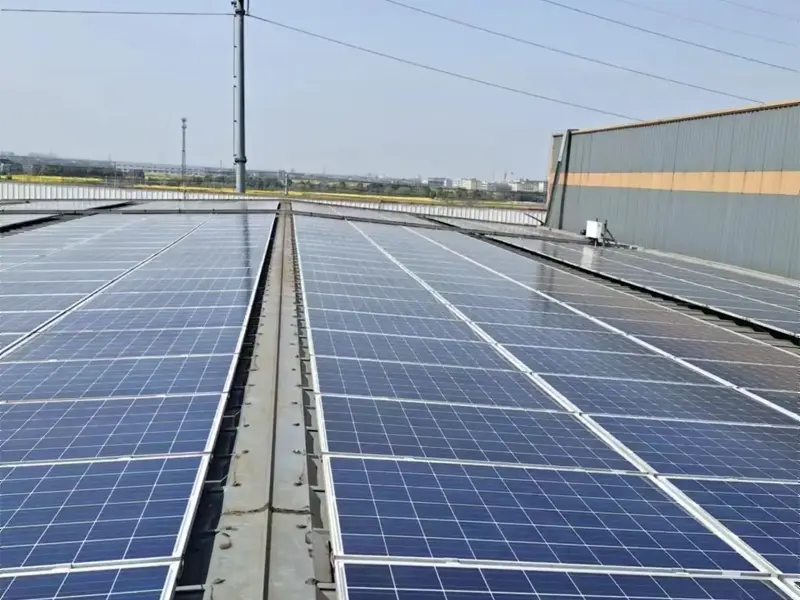
Commercial & Industrial Rooftop PV Systems

Designed for system performance tracking and cost-efficient remote monitoring with simplified sensor configurations.

Floating Solar Farms

Requires monitoring of humidity, wind speed, and water surface microclimate to ensure structural safety and long-term stability.

Desert Solar Projects

Emphasizes soiling detection, dust impact monitoring, and high-temperature resilience to reduce significant energy losses.

Mountain & Complex Terrain Solar Plants

Uses distributed monitoring stations to capture microclimate variations and improve energy yield accuracy across uneven terrain.

Hybrid Renewable Energy Projects

Integrates solar and wind environmental data into SCADA/EMS systems to optimize energy forecasting and grid dispatch.

How to Choose the Right Environmental Monitoring Solution for a Solar Farm?

Requirements for environmental monitoring systems vary depending on project scale, geographic location, and budget constraints. During the procurement process, it is recommended to focus on the following aspects.

  • All-in-One Integration:
    No need for separate assembly or complex wiring; all monitoring elements are integrated into a single, all-in-one solution.
  • High Precision and Stability:
    Equipped with a high-precision thermopile radiation sensor and an ultrasonic wind speed and direction sensor, ensuring accurate and reliable data.
  • Rugged Design:
    Features a high protection rating (e.g., IP65) and withstands harsh outdoor conditions such as high temperatures, extreme cold, wind, rain, and dust.
  • Supports Smart Operations and Maintenance:
    Enables real-time data upload to a cloud-based monitoring platform, facilitating data visualization, historical traceability, report export, and anomaly alerts.
  • 통신 프로토콜:
    Supports multiple interfaces, including RS485, Modbus RTU, SDI-12, 4G, and Ethernet.
  • System Compatibility:
    Seamlessly integrates with SCADA, EMS, and third-party platforms.
옌타이 센서

Why Choose Yantai Sensor?

As a professional manufacturer of environmental monitoring equipment, Yantai Sensor is committed to providing stable and reliable environmental monitoring solutions for solar power plants worldwide.

Our strengths include:

In-house R&D and manufacturing
Extensive experience in solar farm projects
Support for OEM/ODM Customization
High-Precision Environmental Monitoring Sensors
Support for Communication Protocols Including RS485, Modbus, 4G, and LoRa
Compliance with International Standards, such as IEC 61724-1
Global Technical Support and Rapid Delivery

Whether you are an EPC contractor, system integrator, or solar power plant operator, Yantai Sensor can provide professional recommendations for environmental monitoring system configurations tailored to your project’s needs.

결론

As the photovoltaic industry continues to evolve toward smarter and more digital operations, solar farm environmental monitoring solutions have become an essential component for enhancing power plant performance and reducing operational risks. By monitoring solar radiation, module temperature, wind speed, rainfall, and other key environmental parameters in real time, project owners can more accurately analyze power generation efficiency, optimize O&M strategies, and improve long-term returns on investment.

If you are planning a new solar project or upgrading your existing monitoring system, please feel free to 연락처 Yantai Sensor. Our professional team will provide you with customized environmental monitoring solutions based on your project scale, application environment, and technical requirements, helping your solar farm achieve higher power generation efficiency and more stable long-term operation.

자주 묻는 질문

태양광 발전소 환경 모니터링 시스템은 일사량, 온도, 풍속, 강우량, 습도 및 기타 환경 파라미터에 대한 실시간 데이터를 수집합니다. 이는 운영자가 PV 성능을 평가하고, 유지보수를 최적화하며, 전체 에너지 수율을 개선하는 데 도움을 줍니다.

일반적인 태양광 발전소 모니터링 시스템은 일사계, 외기 온도 센서, 모듈 온도 센서, 풍속 및 풍향 센서, 강우량계, 습도 센서, 대기압 센서, 그리고 데이터 로거로 구성됩니다.

일사량은 태양광 발전에 영향을 미치는 주요 요소입니다. 정확한 일사량 데이터는 성능비(PR) 산출, 시스템 효율 평가, 에너지 손실 분석에 필수적입니다.

A 기상 관측소 주로 기상 매개변수를 측정하는 반면, 태양광 발전소 환경 모니터링 시스템은 기상 데이터를 PV 특화 센서, 통신 장치 및 SCADA 플랫폼과 통합하여 종합적인 성능 분석을 수행합니다.

태양광 발전소의 환경 조건은 환경 센서 및 데이터 수집 시스템에 연결된 통합 기상 관측소를 사용하여 모니터링됩니다. 수집된 데이터는 RS485 또는 Modbus RTU와 같은 프로토콜을 통해 SCADA 또는 클라우드 플랫폼으로 전송되어 실시간 모니터링, 이력 분석, 알람 및 예측 유지보수를 가능하게 합니다.

에너지 손실을 줄이기 위해서는 지속적인 환경 모니터링과 사전 예방적 유지보수가 결합되어야 합니다. 일사량, 모듈 온도, 풍황 조건 및 오염 수준을 분석함으로써 운영자는 청소 일정을 최적화하고, 장비 결함을 조기에 감지하며, 시스템 효율성을 개선하고, 기상 및 환경 요인으로 인한 성능 저하를 최소화할 수 있습니다.

선택 시 태양광 기상 관측소, 프로젝트 용량, 센서 정확도, 통신 프로토콜, 환경 내구성, SCADA 호환성, 유지보수 요구 사항 및 IEC 61724-1과 같은 국제 표준 준수 여부를 고려하십시오.

Yes. By continuously monitoring environmental conditions, a solar weather station helps identify energy losses, optimize panel cleaning schedules, improve fault detection, and increase the overall energy yield and operational efficiency of a solar power plant.

관련 기사