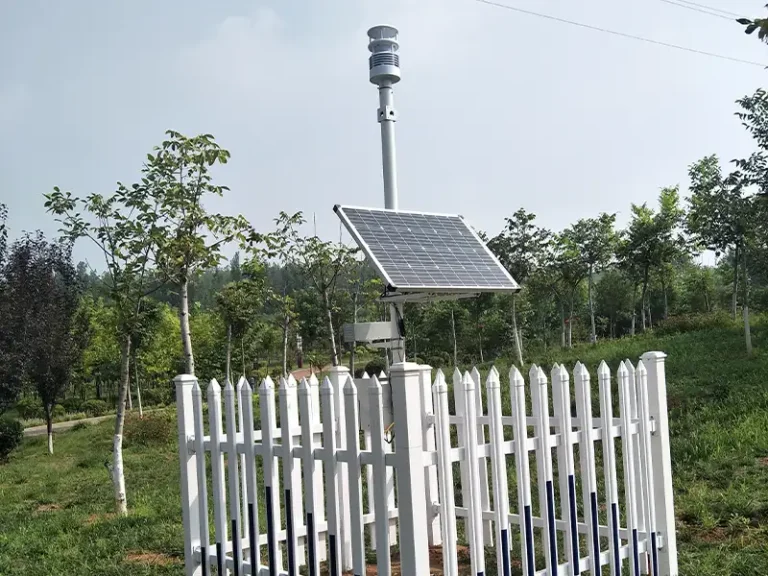
En los sistemas modernos de agricultura inteligente, la producción agrícola está pasando gradualmente de basarse en la “experiencia” a basarse en los “datos”. Para lograr una gestión precisa de los entornos de crecimiento de los cultivos, las condiciones del suelo y los regímenes de riego y fertilización, se utilizan diversos sensores agrícolas se implementan ampliamente en campos, invernaderos, huertos y viveros de plántulas. Estos sensores abarcan múltiples dimensiones, desde parámetros ambientales hasta indicadores fisicoquímicos del suelo, proporcionando un soporte de datos fundamental, continuo y confiable para la producción agrícola. Para obtener más información sobre “Cómo elegir la estación meteorológica adecuada para la agricultura de precisión en 2026”, haga clic aquí.
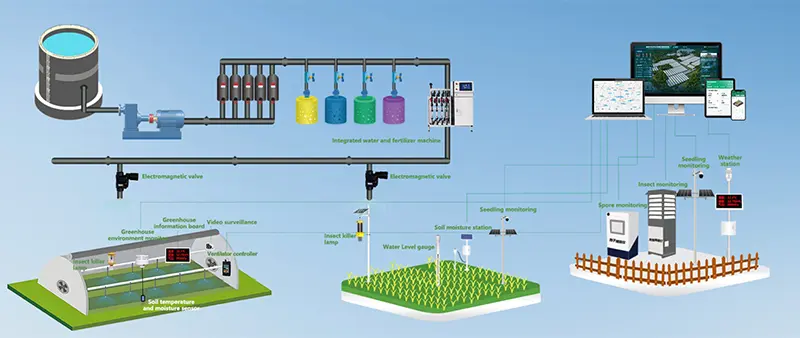
En función de los objetivos de monitorización y los escenarios de aplicación, los sensores agrícolas pueden clasificarse en sensores del medio ambiente atmosférico, sensores de monitorización del suelo, sensores de gestión del agua y los fertilizantes, y sensores de monitorización de los parámetros de crecimiento de los cultivos. Los diferentes tipos de sensores funcionan de forma conjunta para formar una red integral de detección del entorno agrícola, que constituye la base esencial para el riego de precisión, la fertilización científica y la evaluación del crecimiento de los cultivos.
¿Qué son los sensores agrícolas y por qué son importantes en la agricultura moderna?
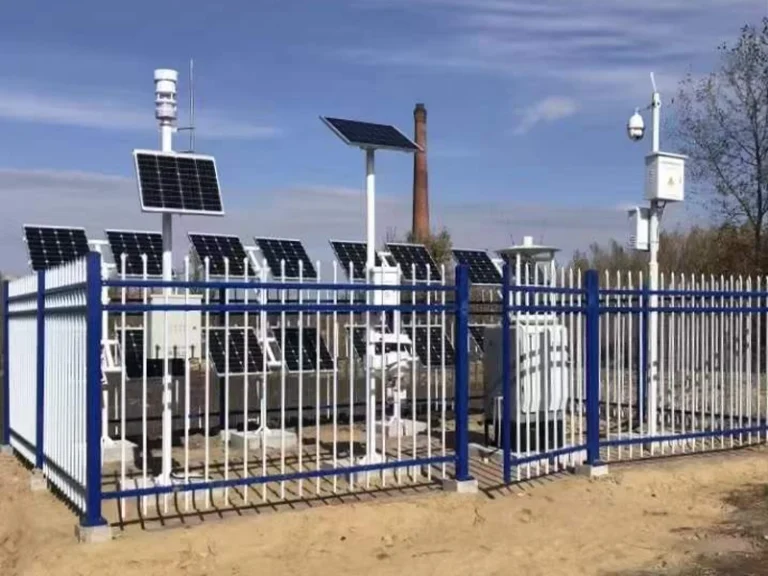
Los sensores agrícolas son herramientas inteligentes que ayudan a los agricultores a “comprender” sus tierras. Controlan automáticamente la humedad del suelo, la fertilidad y los niveles de pH las 24 horas del día, además de la temperatura del campo y la intensidad de la luz, transformando las condiciones de crecimiento de los cultivos en datos en tiempo real que se pueden interpretar fácilmente de un solo vistazo. A partir de ahora, el riego y la fertilización ya no se basan en conjeturas, lo que hace que la gestión del cultivo sea más precisa y sencilla, siendo adecuados tanto para invernaderos como para huertos y campos al aire libre.
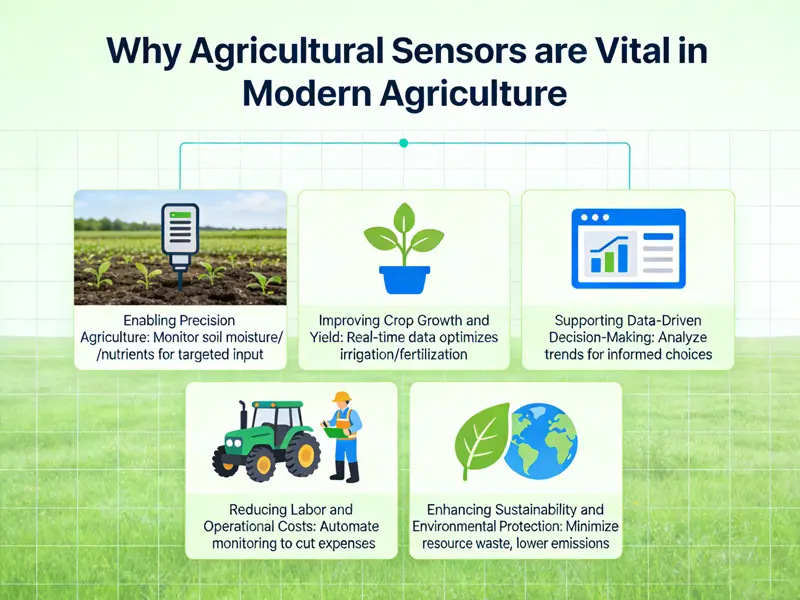
Por qué son importantes los sensores agrícolas en la agricultura moderna
En la agricultura moderna, la eficiencia, la sostenibilidad y la productividad son más importantes que nunca. Los sensores agrícolas desempeñan un papel fundamental al:
- Habilitar la agricultura de precisión
Di adiós al riego por inundación. Los sensores permiten regar y fertilizar de forma selectiva —exactamente donde se necesita—, lo que supone un ahorro de dinero y recursos. - Mejorar el crecimiento y el rendimiento de los cultivos
La supervisión constante mediante sensores garantiza que los cultivos prosperen en condiciones óptimas, lo que reduce las enfermedades y el estrés, favoreciendo así un crecimiento más saludable y unos rendimientos más elevados. - Apoyar la toma de decisiones basada en datos
Los datos de los sensores, tanto en tiempo real como históricos, proporcionan información valiosa para la programación del riego, la planificación de la fertilización y el control climático. - Reducir los costes de personal y operativos
Los sensores supervisan los campos las 24 horas del día, los 7 días de la semana, lo que reduce drásticamente la necesidad de realizar inspecciones manuales. Ahorra tiempo, esfuerzo y gastos. - Mejorar la sostenibilidad y la protección del medio ambiente
Los datos precisos evitan el riego excesivo y la fertilización excesiva, lo que protege el suelo y las fuentes de agua al tiempo que mejora la agricultura. Al evitar el riego excesivo y el uso excesivo de fertilizantes, los sensores ayudan a proteger la calidad del suelo y los recursos hídricos.
A medida que la agricultura sigue evolucionando hacia sistemas digitales e inteligentes, los sensores agrícolas se han convertido en un componente fundamental de la agricultura inteligente, la agricultura de precisión y las soluciones agrícolas basadas en el Internet de las cosas (IoT). En las siguientes secciones se presentarán diferentes tipos de sensores agrícolas y sus aplicaciones específicas, con el fin de aclarar cómo se utilizan en situaciones agrícolas reales.
Lista de sensores agrícolas
Los sensores agrícolas se utilizan para supervisar parámetros relacionados con el medio ambiente, el suelo y los cultivos, lo que ayuda a los agricultores a tomar decisiones basadas en datos a lo largo de todo el ciclo de cultivo. A continuación se ofrece una lista exhaustiva de los sensores agrícolas más habituales y sus funciones en las aplicaciones agrícolas.
1. Sensor de temperatura del aire
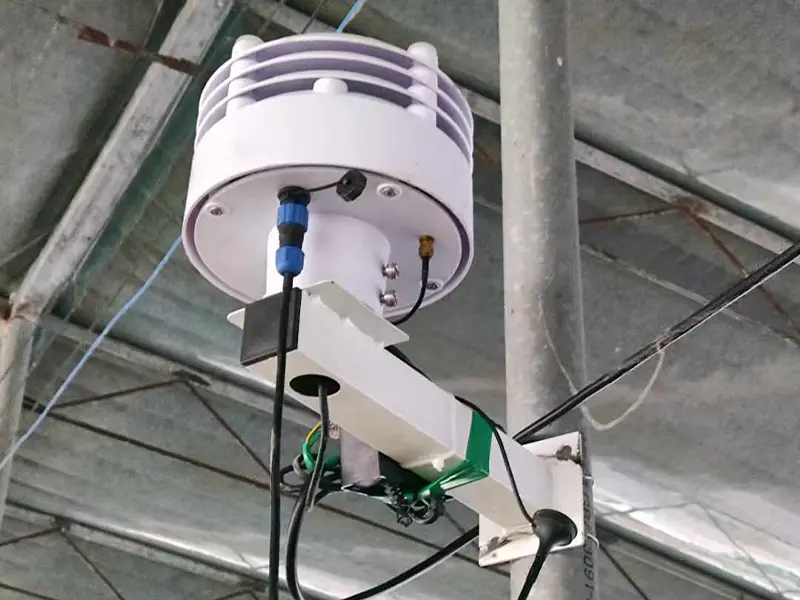
Sensores de temperatura del aire medir la temperatura ambiente en torno a los cultivos. La temperatura es un factor clave que influye en el metabolismo de las plantas, su ritmo de crecimiento, la floración y el rendimiento. Estos sensores se utilizan ampliamente en campos abiertos, invernaderos y viveros para facilitar el control climático, la prevención de las heladas y la optimización del crecimiento de los cultivos.
2. Sensor de humedad del aire
Los sensores de humedad del aire controlan el contenido de humedad en el aire. Mantener unos niveles adecuados de humedad ayuda a prevenir enfermedades en las plantas, reducir el estrés por transpiración y mejorar la salud general de los cultivos. Suelen integrarse en los sistemas de control climático y de seguimiento meteorológico de los invernaderos.
3. Sensor de humedad del suelo
Los sensores de humedad del suelo miden el contenido de agua del suelo, lo que permite una gestión precisa del riego. Al proporcionar datos en tiempo real, estos sensores ayudan a evitar el riego excesivo o el estrés hídrico, mejorando la eficiencia en el uso del agua y favoreciendo un desarrollo saludable de las raíces.
4. Sensor de temperatura del suelo
Sensores de temperatura del suelo realizar un seguimiento de las condiciones de temperatura en la zona radicular. La temperatura del suelo influye en la germinación de las semillas, la absorción de nutrientes y la actividad microbiana. Estos sensores son esenciales para tomar decisiones sobre la siembra, planificar el riego y gestionar los cultivos a lo largo de las estaciones.

5. Sensor de pH del suelo
Los sensores de pH del suelo miden la acidez o la alcalinidad del suelo. Dado que el pH del suelo influye directamente en la disponibilidad de nutrientes, su seguimiento continuo ayuda a los agricultores a ajustar sus estrategias de fertilización y a mantener unas condiciones óptimas de cultivo para los distintos cultivos.
6. Sensor de conductividad eléctrica (CE) del suelo
Los sensores de conductividad eléctrica (CE) del suelo miden la capacidad del suelo para conducir la corriente eléctrica, lo cual está estrechamente relacionado con la salinidad y la concentración de nutrientes. Estos sensores se utilizan habitualmente para evaluar la fertilidad del suelo, detectar la acumulación de sal y gestionar la aplicación de fertilizantes de forma más eficaz.
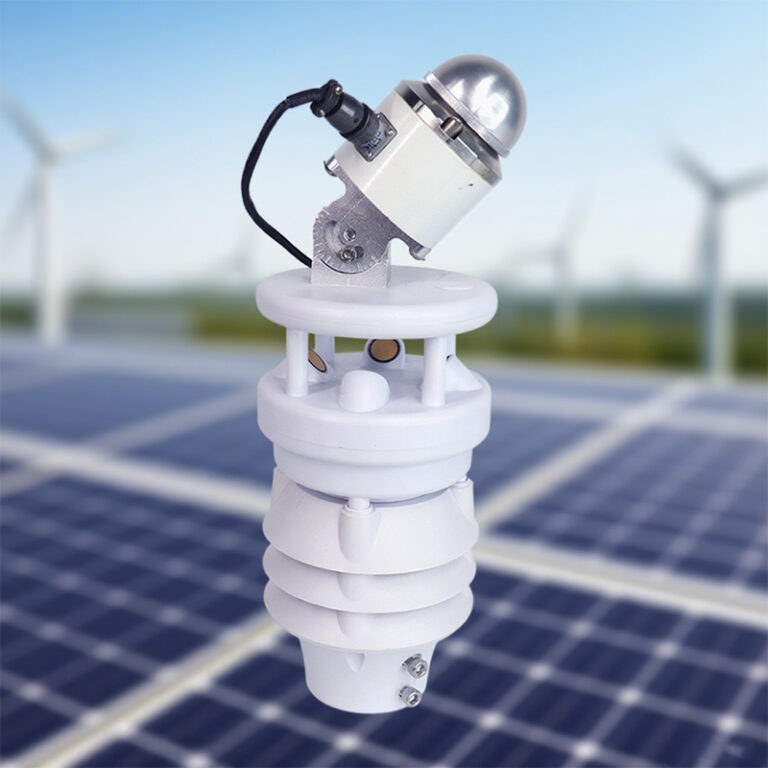
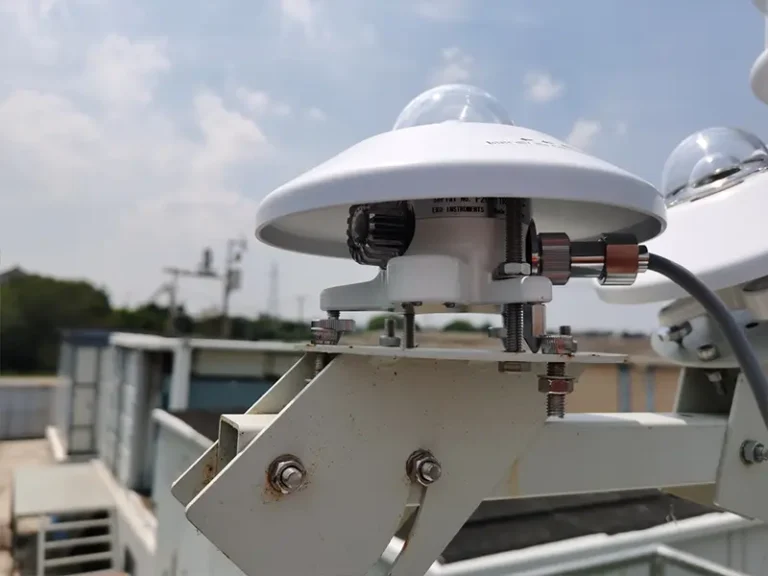
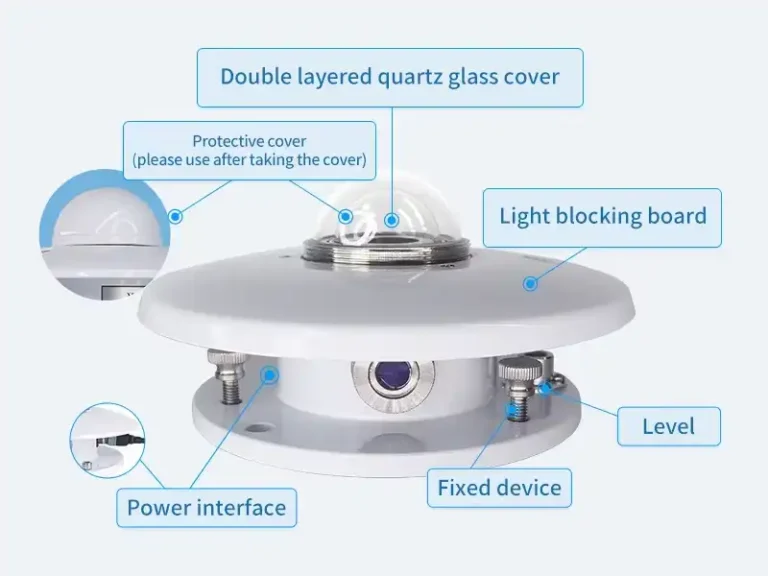
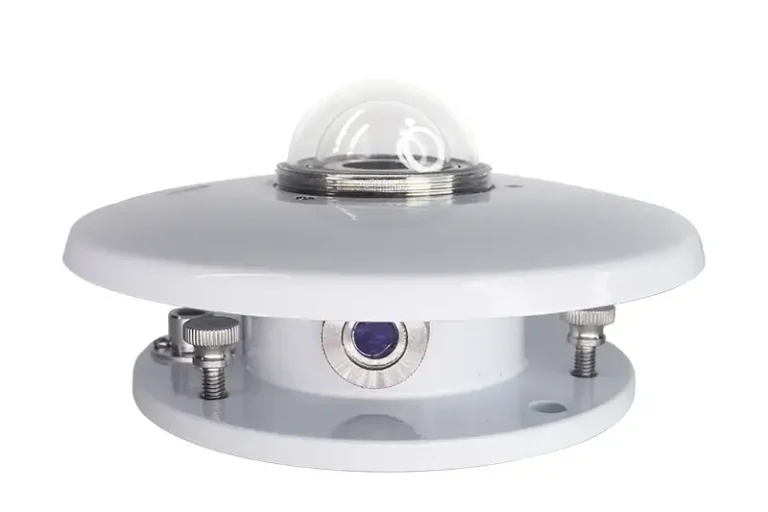
7. Sensor de intensidad luminosa
Los sensores de intensidad luminosa miden la radiación solar o la radiación fotosintéticamente activa (PAR). La disponibilidad de luz influye directamente en la fotosíntesis y en el desarrollo de las plantas. Estos sensores se utilizan ampliamente en invernaderos y en la agricultura de ambiente controlado para optimizar las estrategias de iluminación y sombreado.
8. Sensor de lluvia
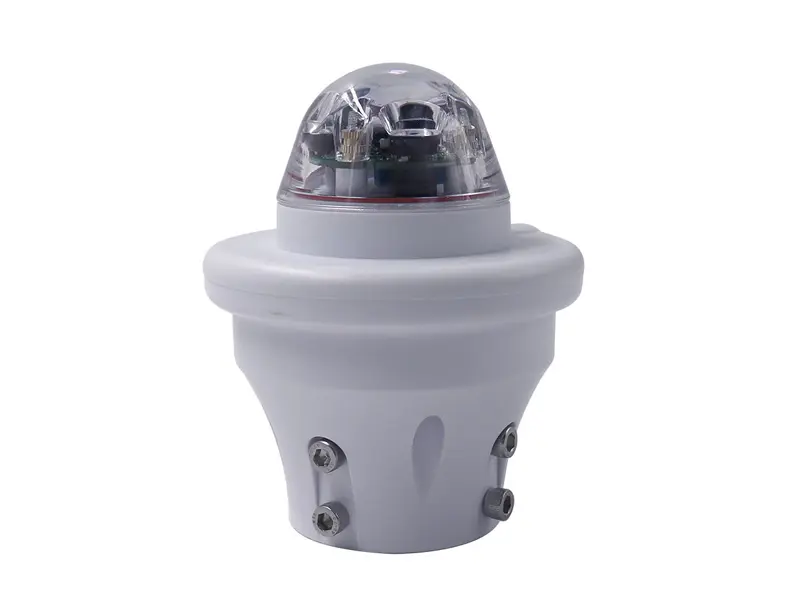
Sensores de lluvia miden los niveles y la distribución de las precipitaciones. Ayudan a los agricultores a evaluar el aporte natural de agua, ajustar los programas de riego y gestionar los sistemas de drenaje, especialmente en la agricultura de campo a gran escala y en aplicaciones de agricultura de precisión.
9. Sensor de velocidad y dirección del viento
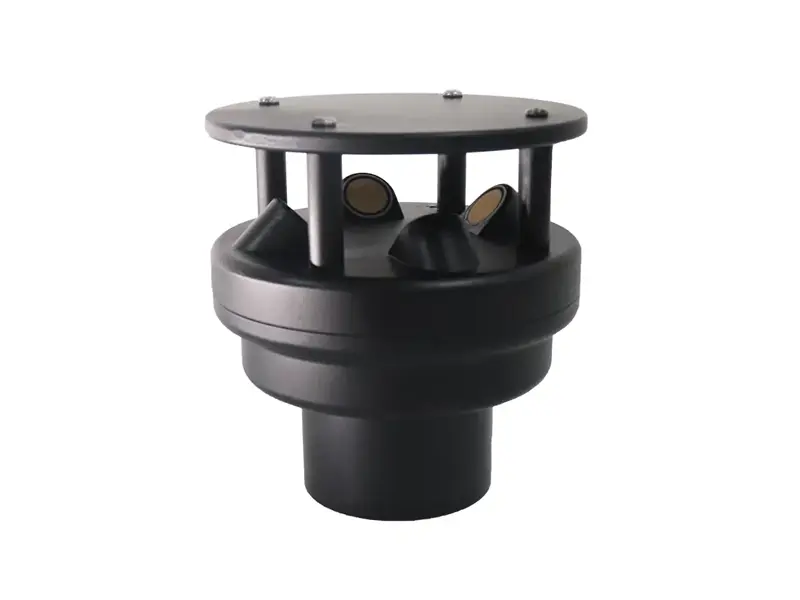
Los sensores de viento supervisan las condiciones del flujo de aire en entornos agrícolas. Los datos sobre el viento son importantes para controlar la deriva de los productos fitosanitarios, gestionar la ventilación de los invernaderos y evaluar el estrés de los cultivos provocado por vientos fuertes o tormentas.
10. Sensor de CO₂
Los sensores de CO₂ miden la concentración de dióxido de carbono en el aire. En la agricultura en invernadero, el enriquecimiento con CO₂ se utiliza a menudo para potenciar la fotosíntesis. La monitorización de los niveles de CO₂ garantiza un crecimiento óptimo de las plantas, al tiempo que se mantiene un control ambiental seguro y eficiente.
11. Sensor de humedad foliar
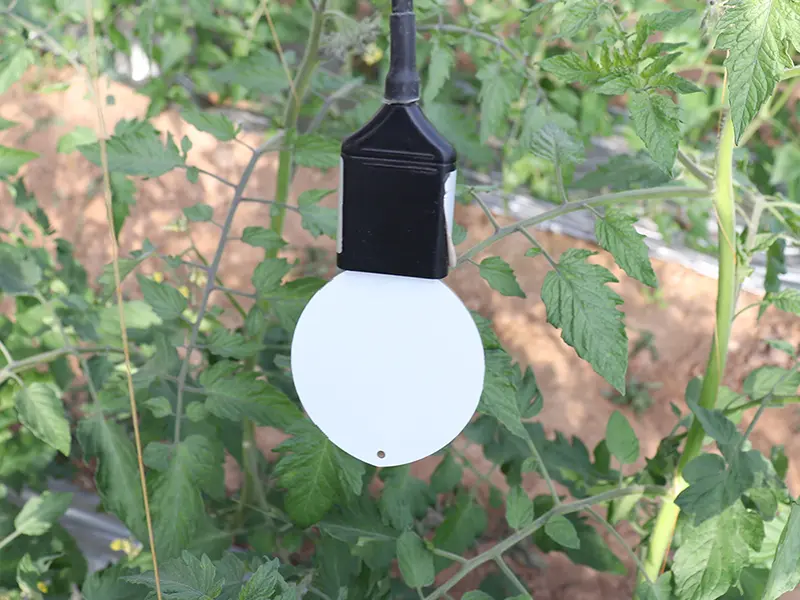
Sensores de humedad foliar detectar la humedad en la superficie de las plantas. Se utilizan principalmente para la predicción de enfermedades y en sistemas de alerta temprana, lo que ayuda a los agricultores a reducir las pérdidas de cosechas causadas por infecciones fúngicas y bacterianas.
12. Sensor de calidad del agua
Los sensores de calidad del agua controlan parámetros como el pH, la conductividad eléctrica (CE), la temperatura y los sólidos disueltos en el agua de riego o en las soluciones nutritivas. Estos sensores son fundamentales en los sistemas de fertirrigación y en la agricultura hidropónica para garantizar un suministro de agua constante y seguro.
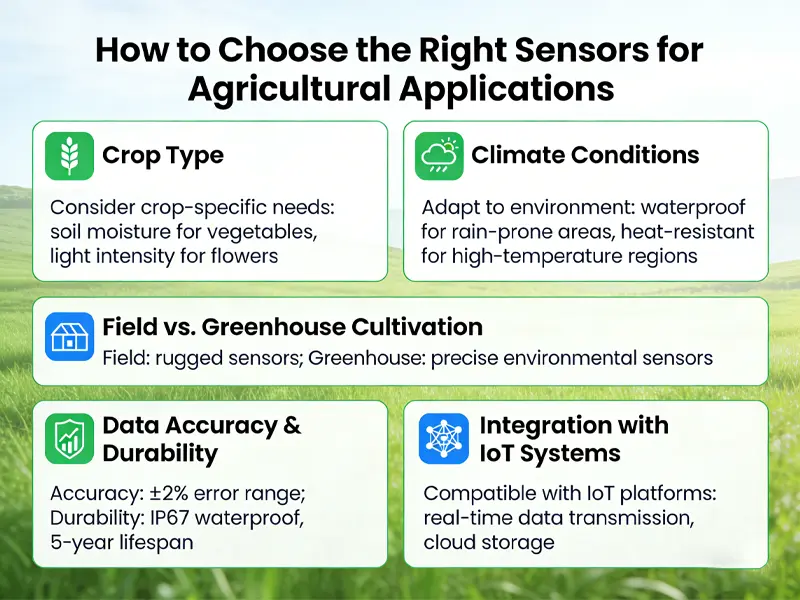
Cómo elegir los sensores adecuados para tu aplicación agrícola
Para elegir los sensores agrícolas adecuados, lo primero es conocer las condiciones específicas de su explotación y sus objetivos operativos. Los distintos cultivos, entornos y sistemas de gestión requieren soluciones de detección diferentes.
Tipo de cultivo
Los distintos cultivos tienen requisitos ambientales y edafológicos específicos. Por ejemplo, las hortalizas, las frutas y los cereales responden de forma diferente a la temperatura, la humedad, el pH y los niveles de nutrientes. La selección de sensores que se adapten a las necesidades específicas de monitorización de cada cultivo ayuda a optimizar el crecimiento y el rendimiento.
Condiciones climáticas
El clima local desempeña un papel fundamental en la selección de los sensores. Los sensores que se utilizan en entornos con alta humedad, altas temperaturas o condiciones meteorológicas extremas deben ofrecer una gran resistencia ambiental y estabilidad a largo plazo para garantizar una recopilación de datos fiable.
Campo abierto frente a invernadero
La agricultura al aire libre requiere sensores con diseños resistentes a la intemperie y amplios rangos de medición, mientras que las aplicaciones en invernaderos se centran más en la alta precisión y el control ambiental en tiempo real. Elegir sensores diseñados para tu entorno agrícola mejora el rendimiento y la fiabilidad del sistema.
Exactitud y durabilidad de los datos
Disponer de datos precisos es fundamental para la agricultura de precisión. Los sensores de alta calidad, con una calibración estable, baja deriva y una construcción resistente, reducen los costes de mantenimiento y garantizan un seguimiento constante a largo plazo.
Integración con sistemas de IoT
La agricultura moderna se basa en sistemas conectados. Los sensores que admiten protocolos de comunicación estándar como RS485, SDI-12, o Modbus, se integran fácilmente con plataformas de IoT, registradores de datos y sistemas de agricultura inteligente, lo que permite el análisis centralizado de datos y la automatización.
Conclusión
Los sensores agrícolas se han convertido en un pilar fundamental de la agricultura moderna basada en datos. Desde la monitorización de las condiciones del suelo y los factores climáticos hasta el apoyo al riego y la fertilización de precisión, los sensores adecuados permiten a los agricultores tomar decisiones más inteligentes y mejorar la productividad. Al conocer los diferentes tipos de sensores y seleccionar cuidadosamente las soluciones en función de las necesidades de los cultivos, las condiciones ambientales y la compatibilidad de los sistemas, las explotaciones agrícolas pueden alcanzar una mayor eficiencia y sostenibilidad. La colaboración con un fabricante profesional de sensores agrícolas garantiza además la precisión a largo plazo, la fiabilidad y un soporte escalable para futuras aplicaciones de agricultura inteligente.