Atmospheric Pressure: Definition, Measurement, and Applications

Atmospheric pressure is an invisible yet omnipresent force. It influences wind patterns, shapes cloud formations, and even drives ocean tides and climate change. From gentle breezes to violent storms, every shift in weather involves atmospheric pressure. Understanding its workings enables us to forecast the weather more accurately and perceive nature’s subtle changes with greater sensitivity.

Atmospheric Pressure

What is atmospheric pressure?

Atmospheric pressure refers to the force exerted by the Earth’s atmosphere on the ground and objects above it due to its own weight. Essentially, it arises from air molecules continuously exerting downward force under gravity and colliding with surfaces. As altitude increases, air becomes less dense, and atmospheric pressure gradually decreases. Atmospheric pressure serves as a fundamental parameter for meteorological changes, directly influencing the formation of wind, clouds, precipitation, and weather systems. It holds significant importance in meteorological monitoring, aerospace, environmental observation, and industrial measurement.

How is atmospheric pressure formed?

Atmospheric pressure arises from the combined effects of Earth’s gravitational pull and the physical properties of air. It serves as a fundamental physical quantity describing atmospheric conditions, primarily manifested in the following aspects:

  1. Gravitational Force of Air
    The Earth’s surface is enveloped by a thick atmosphere. Air possesses mass and exerts a constant downward pressure due to Earth’s gravitational pull. Countless air molecules continuously collide with the ground and surfaces of objects. The force exerted per unit area from these collisions constitutes atmospheric pressure.
  2. Relationship Between Altitude and Pressure
    Atmospheric pressure gradually decreases with increasing altitude. At lower elevations, the column of air above is longer and contains more air molecules, resulting in higher pressure. Conversely, in high mountain or high-altitude environments, the air above becomes thinner, reducing its weight and consequently lowering the pressure. This characteristic serves as a crucial basis for meteorological observations, aviation, and high-altitude environmental research.
  3. Influence of Temperature and Air Density
    Changes in air temperature affect air density, thereby altering atmospheric pressure. As the temperature rises, the air expands due to heating, decreasing density, and often lowering pressure. Conversely, when the temperature drops, air contracts, increasing density and relatively raising pressure. This differential is one of the key driving forces behind the formation of wind and weather systems.

Precisely because atmospheric pressure is influenced by multiple factors—gravity, altitude, and temperature—it serves as a fundamental and critical core parameter in meteorological and environmental monitoring. It is widely applied in weather forecasting, climate analysis, and various environmental monitoring systems.

Atmospheric Pressure

Units and Standard Atmospheric Pressure

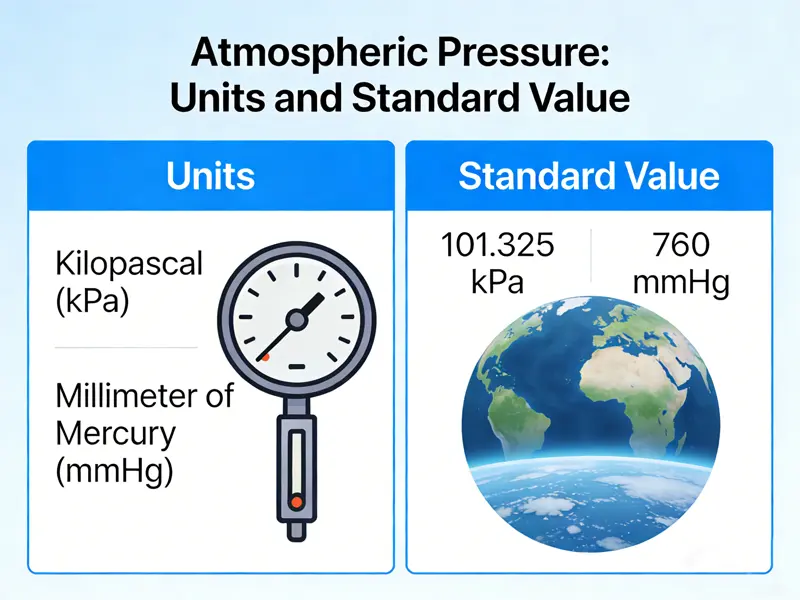
Atmospheric pressure is typically expressed in various measurement units, each suited for different applications and industry standards. Within the internationally recognized system, common units include the following:

  • Pascal (Pa)
  • Hectopascal (hPa)
  • Millibar (mbar)
  • Millimeters of mercury (mmHg)
  • Atmosphere (atm)

Under standard sea-level conditions, standard atmospheric pressure is 1013.25 hPa (1 atm), which serves as a reference in meteorology and engineering applications.

Atmospheric Pressure

The Relationship Between Atmospheric Pressure and Weather Changes

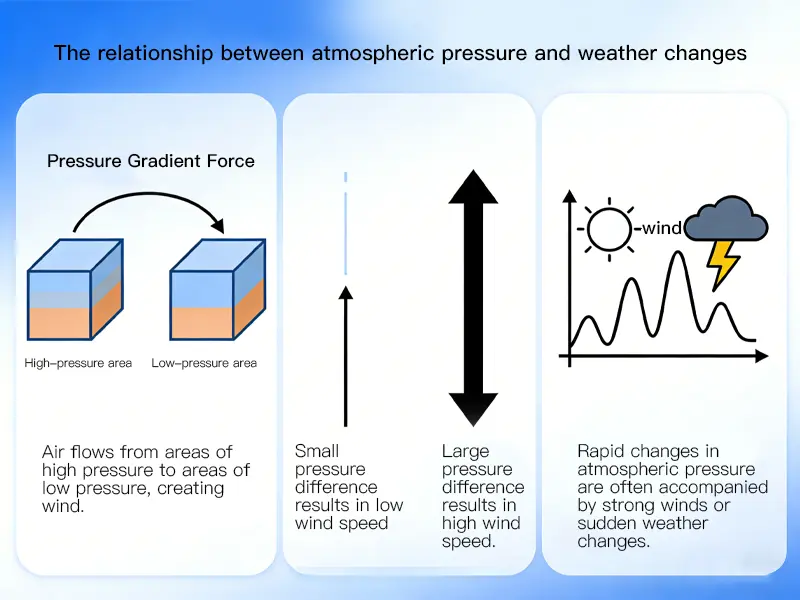
Atmospheric pressure is one of the core meteorological elements influencing weather changes. The level of atmospheric pressure and its changes directly determine the pattern of air movement, thus affecting the formation and evolution of weather phenomena such as clouds, wind, and precipitation.

  1. High Pressure and Clear Weather
    In high-pressure systems, air mainly moves downwards. The descending airflow gradually warms as it approaches the ground, which is unfavorable for water vapor condensation, resulting in reduced cloud cover and generally clear, dry weather with weak winds. Therefore, high pressure is often associated with stable and favorable weather conditions.
  2. Low Pressure and Cloudy/Rainy Weather
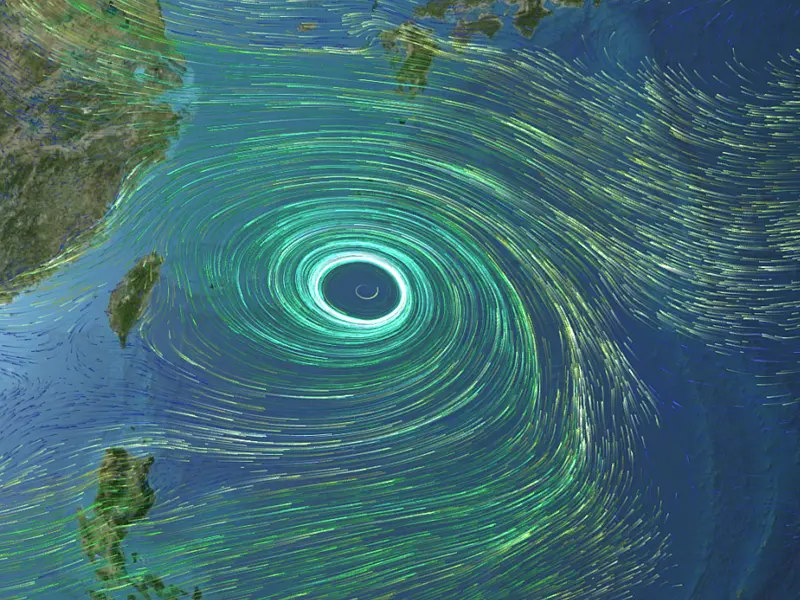
    In low-pressure areas, air mainly moves upwards. The rising airflow cools at high altitudes, causing water vapor to condense and form clouds, which easily leads to rain, snow, or strong convective weather. Extreme weather systems such as heavy rain, thunderstorms, and typhoons are often closely related to low-pressure activity.
  3. Pressure Changes and Wind Formation
    Air always flows from high-pressure areas to low-pressure areas. This horizontal pressure difference is called the pressure gradient force, which is the fundamental cause of wind formation. The greater the pressure difference, the stronger the airflow and the higher the wind speed. Rapid changes in atmospheric pressure are often accompanied by strong winds or sudden weather changes.
  4. Pressure Trends and Weather Forecasting
    The rising and falling trend of atmospheric pressure is more indicative of weather changes than the absolute value.
    A continuous decrease in atmospheric pressure usually indicates deteriorating weather, with an increased probability of rain or strong winds.
    A gradual increase in atmospheric pressure often means that the weather is stabilizing or improving.
    Therefore, continuously monitoring changes in atmospheric pressure is an important basis for weather forecasting and disaster warning.
Atmospheric Pressure

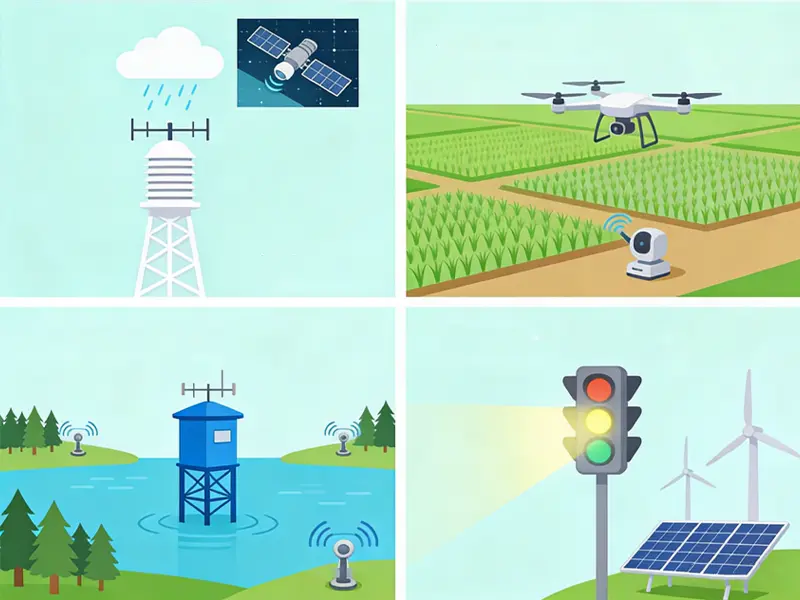
Main Application Areas of Atmospheric Pressure

1. Meteorological Monitoring
Used in weather forecasting, automatic weather stations, and severe weather warning systems.
2. Agriculture and Smart Farming
Supports crop environment assessment, greenhouse climate control, and precision agriculture.
3. Environmental and Ecological Monitoring
Applied in long-term data collection, climate research, and ecosystem analysis.
4. Transportation and Energy
Used in road weather monitoring and environmental assessment for wind and solar energy systems.

Atmospheric Pressure

How is atmospheric pressure measured?

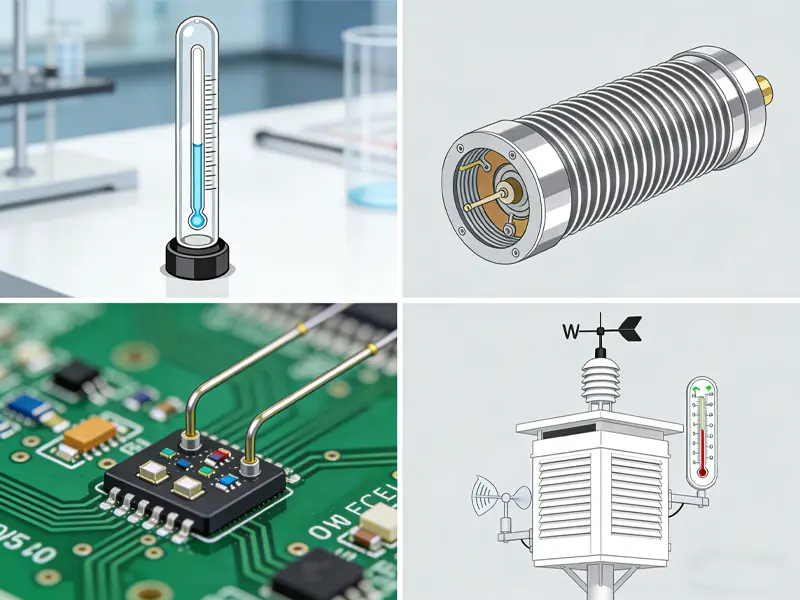
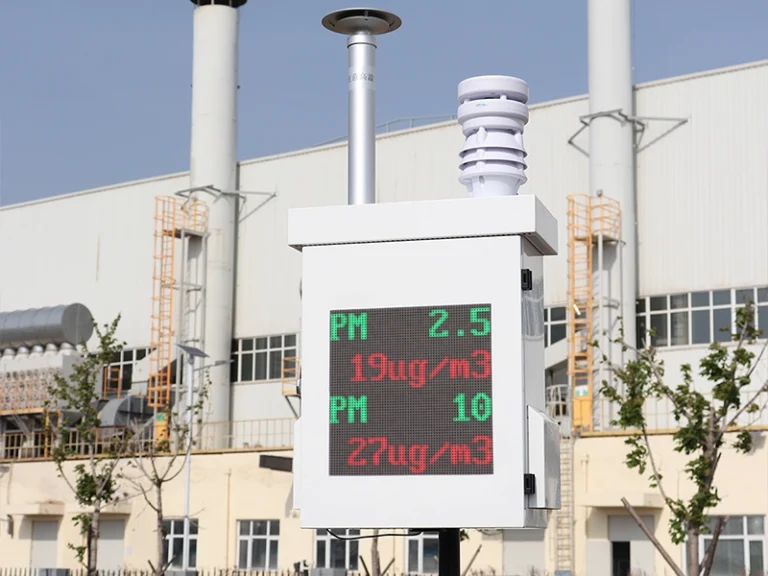
Traditional methods include mercury and aneroid barometers. Today, digital atmospheric pressure sensors are widely used due to their high accuracy, fast response, and ease of integration. They support automated and remote monitoring, making them ideal for modern weather stations and environmental monitoring systems.

  • Mercury Barometer (Traditional Measurement Method)
    The mercury barometer is the earliest instrument used to measure atmospheric pressure. Its principle is based on fluid statics. Atmospheric pressure acts on the surface of the mercury reservoir, causing the mercury column in the glass tube to reach a certain height. The height of the mercury column is directly proportional to the atmospheric pressure. Although highly accurate, it is bulky and requires complex maintenance, and is now rarely used in modern automated monitoring.
  • Aneroid Barometer (Mechanical Type)
    The diaphragm barometer utilizes the deformation of a sealed metal chamber caused by atmospheric pressure changes, which is amplified and indicated through a mechanical structure. This type of instrument requires no liquid and features a relatively stable structure, making it commonly used in traditional meteorological observations and portable devices. However, it is unsuitable for high-frequency or remote data acquisition.
  • Electronic Pressure Sensor (Mainstream Method)
    Modern meteorological monitoring systems widely use electronic pressure sensors, whose core is usually a silicon piezoresistive or capacitive sensing element. When the external atmospheric pressure changes, the internal microstructure of the sensor deforms, causing a change in resistance or capacitance, which is then converted into a standard electrical signal output.
    This method has the advantages of high accuracy, fast response, small size, and easy integration, making it suitable for automatic weather stations, environmental monitoring systems, and Internet of Things applications.
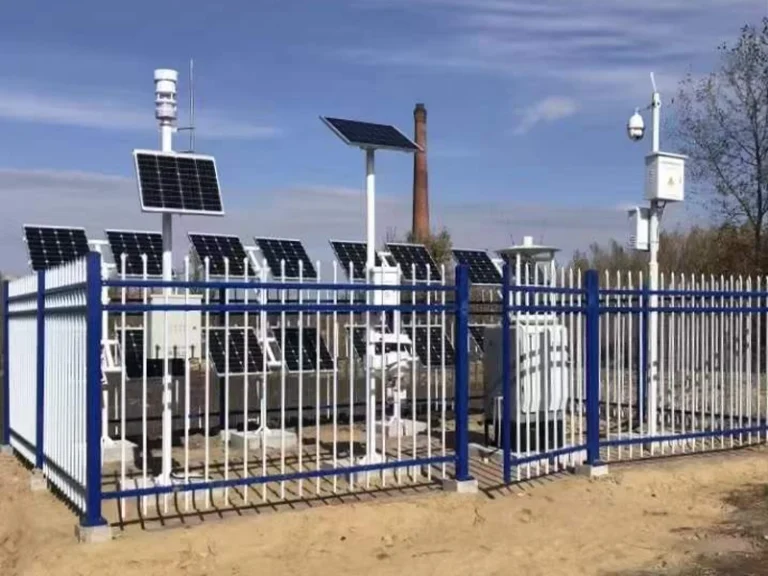
  • Pressure Measurement in Automatic Weather Stations
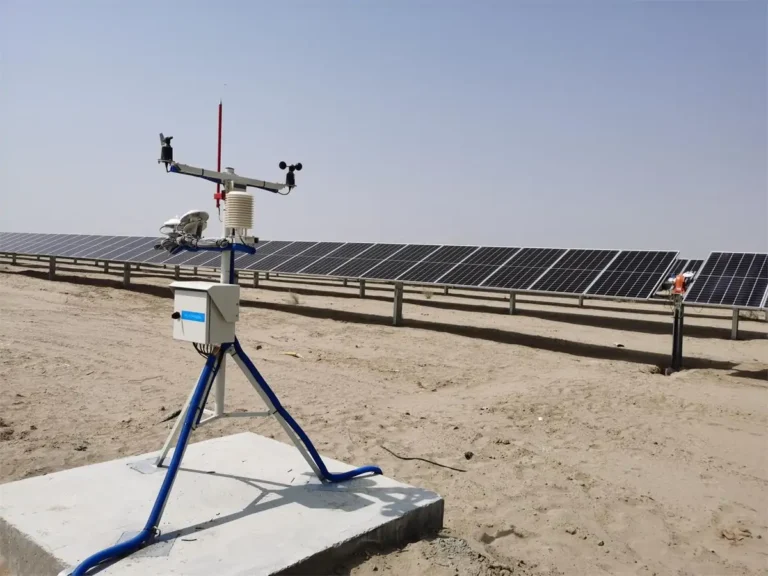
    In automatic weather stations, atmospheric pressure is usually continuously collected by high-precision digital pressure sensors, and temperature compensation and calibration are performed using algorithms to ensure long-term stability and data consistency. The measured data can be used for weather analysis, trend prediction, and system linkage control.

How to Select the Right Atmospheric Pressure Sensor?

When selecting an atmospheric pressure sensor, a comprehensive assessment based on multiple factors is required, including the measurement environment, accuracy requirements, communication methods, and installation conditions. The following key factors can help you make a more informed decision:

  • Measurement range and accuracy
  • Temperature compensation
  • Long-term stability
  • Output interfaces (RS485, Modbus, SDI-12)
  • Environmental protection and outdoor durability
  • Compatibility with weather station systems

Selecting the appropriate atmospheric pressure sensor is not determined by a single parameter, but rather requires a comprehensive balance of factors such as accuracy requirements, application scenarios, communication protocols, environmental conditions, and budget. After clarifying your needs, you can compare options by referencing product specifications and application case studies. This approach ensures stable data, seamless integration, and reliable operation.

Atmospheric Pressure

Conclusion

As a core parameter in meteorological and environmental monitoring, atmospheric pressure plays a vital role across various industries. Selecting accurate and reliable pressure sensors enhances data quality and supports informed decision-making. Customized monitoring solutions are essential for meeting the needs of different applications.

자주 묻는 질문

Atmospheric pressure is primarily influenced by the weight of air, elevation, temperature variations, and weather systems (such as high-pressure and low-pressure systems). Additionally, barometric pressure varies across different geographical locations and climatic conditions.

In most meteorological and environmental monitoring applications, atmospheric pressure sensors are fundamental and essential components. Barometric data is not only directly used for weather analysis and trend forecasting but is also frequently combined with parameters like temperature and humidity for data calibration and model calculations. The absence of barometric measurements significantly reduces the integrity and analytical value of meteorological data.

Atmospheric pressure data (barometric pressure / atmospheric pressure) plays a vital role in weather forecasting, wind and solar power monitoring, agricultural meteorological management, aviation altitude measurement, as well as smart urban transportation and environmental monitoring. When combined with parameters such as temperature and humidity, it enables more precise analysis and decision-making.

When selecting, comprehensively consider factors such as measurement accuracy, response speed, measurement range, environmental adaptability, communication interfaces, and installation methods. Different application scenarios (research, agriculture, industry, smart cities) have varying requirements for accuracy and stability. Choose a high-performance atmospheric pressure sensor for 기상 관측소 that matches actual needs.

관련 기사