บทนำ
When selecting a pyranometer for a solar PV plant, weather station, or other solar monitoring system, buyers often face a practical question: should the project use a thermopile or silicon pyranometer? Both technologies measure solar irradiance, but their different detection principles affect spectral response, measurement performance, response time, and cost.
For a purchasing decision, this difference matters because the sensor that works well for a compact distributed monitoring system may not be the right choice for long-term solar resource assessment or higher-accuracy PV monitoring. A thermopile pyranometer is generally preferred for broadband solar radiation measurement, while a silicon pyranometer can be more practical when fast response, compact size, and deployment cost are priorities.
In the following sections, we compare the two technologies from their measurement principles, spectral response, accuracy, response time, cost, and typical applications, then look at what buyers should check when selecting a pyranometer and which solar radiation monitoring options may fit different project requirements.
Thermopile vs Silicon Pyranometer: What Is the Difference?
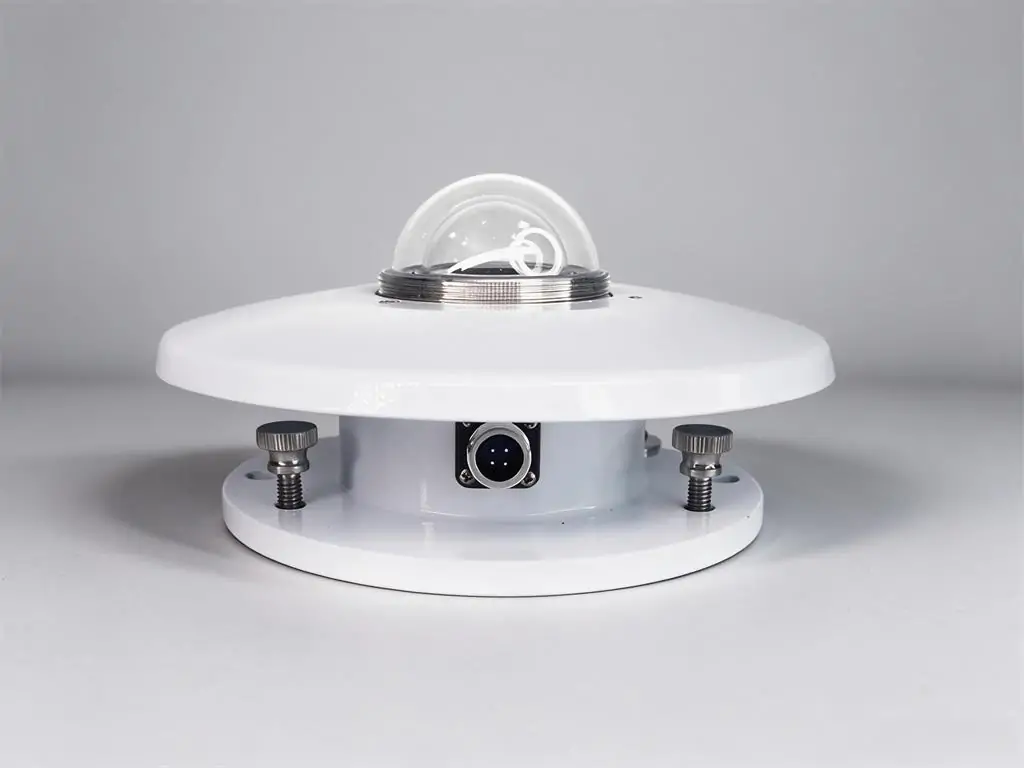
At first glance, thermopile and silicon pyranometers do the same job: measuring solar irradiance. The difference becomes clear when you look at how they detect sunlight. A thermopile measures the heat produced by absorbed radiation, while a silicon pyranometer uses a silicon photodiode to detect light and generate an electrical signal. This difference affects the sensor’s spectral response, response time, price, and the type of monitoring work it fits best.
| คุณสมบัติ | ไพราโนมิเตอร์แบบเทอร์โมไพล์ | เซ็นเซอร์โฟโตไดโอด |
| Detection principle | Thermoelectric effect | Silicon photodiode |
| Spectral response | Broad solar spectrum | More selective spectral response |
| Response speed | Generally slower | Generally faster |
| Broadband measurement | เหมาะสมเป็นอย่างยิ่ง | More dependent on spectral response |
| Typical cost | Generally higher | Generally lower |
| Typical applications | Meteorological monitoring, solar resource assessment, PV monitoring | PV monitoring, compact weather stations, distributed sensing |
In practical terms, the choice comes down to what you expect the sensor data to represent. A thermopile is usually considered when broadband solar radiation and stable long-term measurements are important. A silicon sensor is often more convenient when fast response, compact size, and lower cost are higher priorities. Neither technology is automatically the right choice for every project; the measurement target and site conditions should come first.
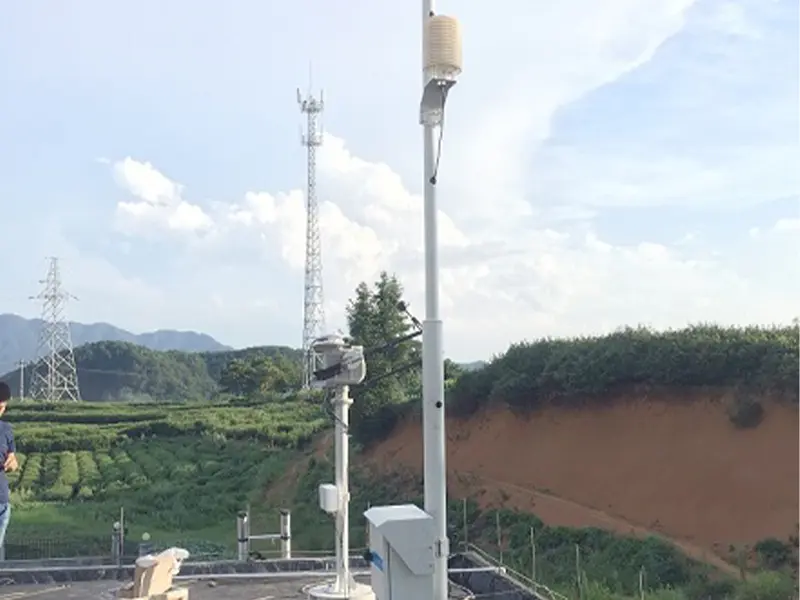
How Thermopile and Silicon Pyranometers Measure Solar Radiation?
The difference between thermopile and silicon pyranometers starts with how the detector responds to sunlight. One measures the thermal effect of absorbed radiation, while the other converts light directly into an electrical signal. Understanding this basic difference makes it easier to see why the two technologies behave differently in spectral response, speed, and practical solar radiation monitoring.
ไพราโนมิเตอร์แบบเทอร์โมไพล์
A thermopile pyranometer measures solar radiation by converting absorbed radiation into heat and then into an electrical signal. The sensing surface absorbs incoming radiation, creating a temperature difference between the hot and cold junctions of the thermopile. This temperature difference produces a small voltage that can be correlated with the incident solar irradiance.
The main advantage is its broad spectral response. Instead of relying on the response characteristics of a semiconductor detector, the thermopile sensing element is designed to respond to a wide portion of the solar spectrum. This is why thermopile pyranometers are commonly used for continuous solar radiation measurement, meteorological observation, and applications where broadband irradiance data is important.
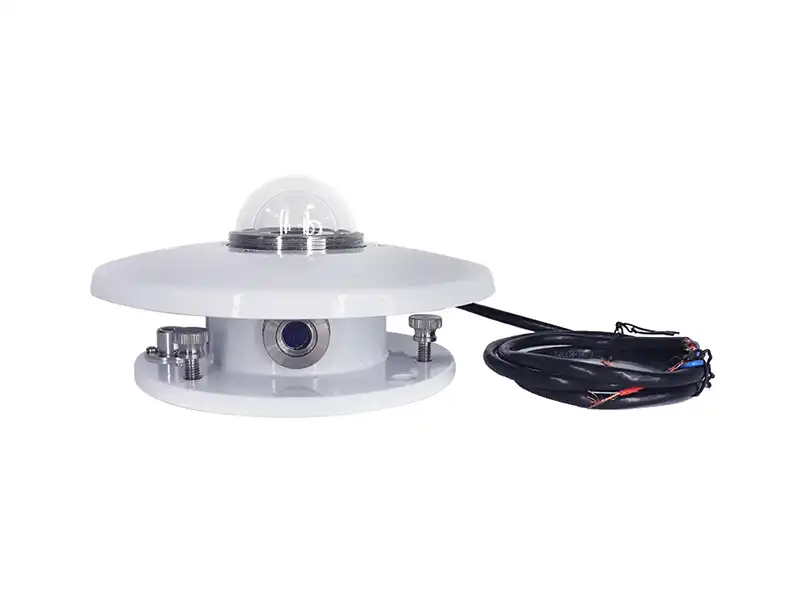
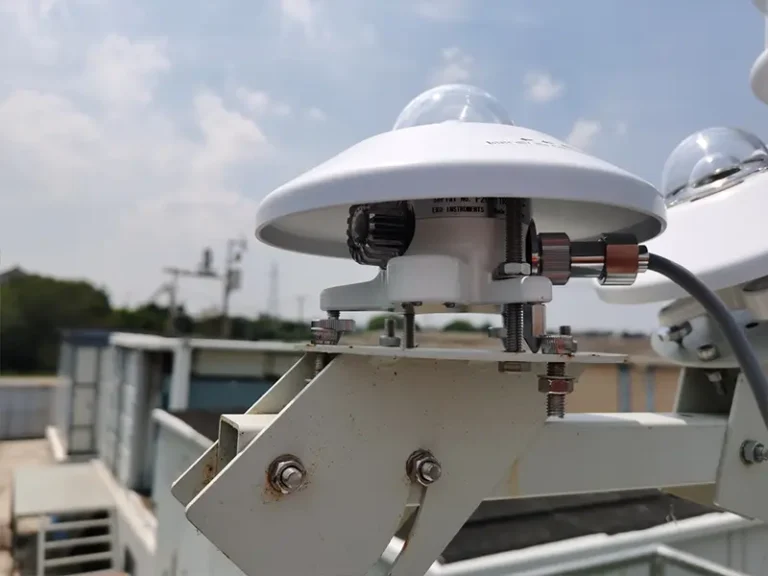
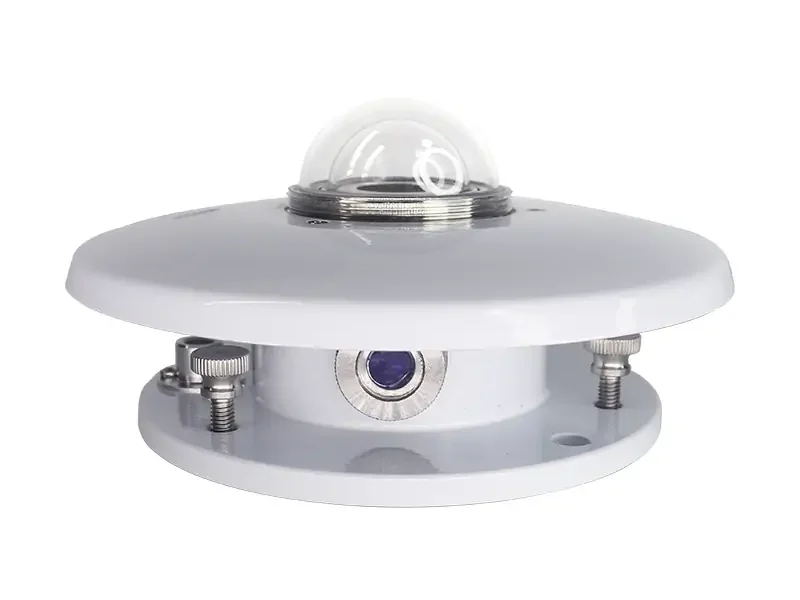
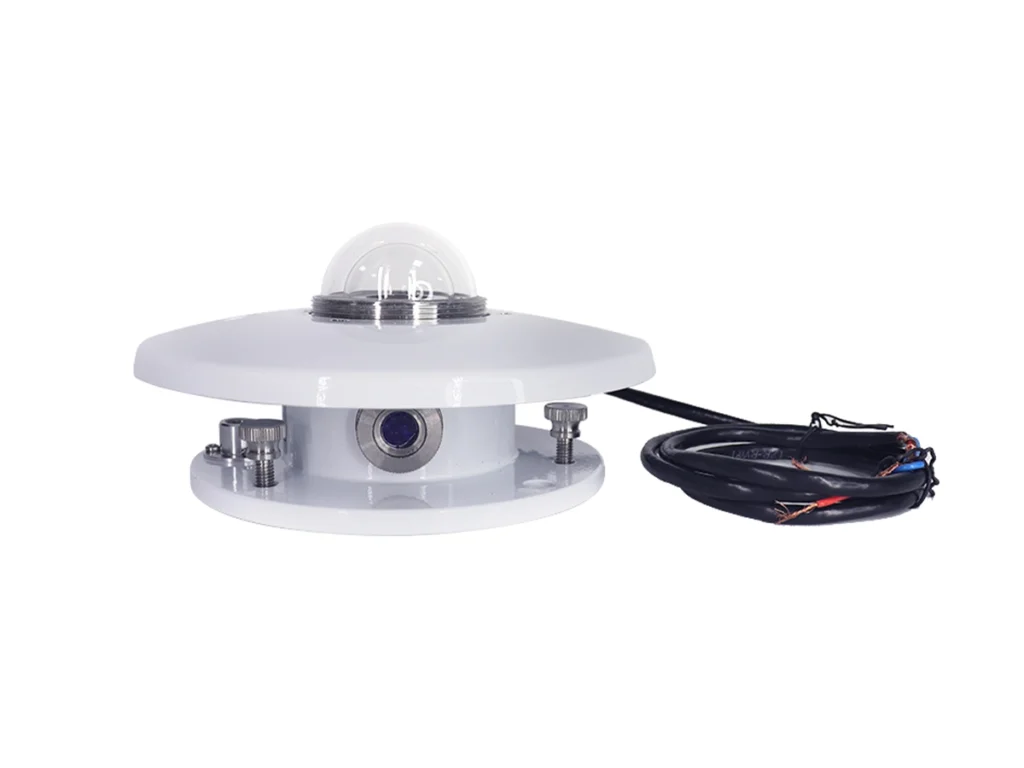
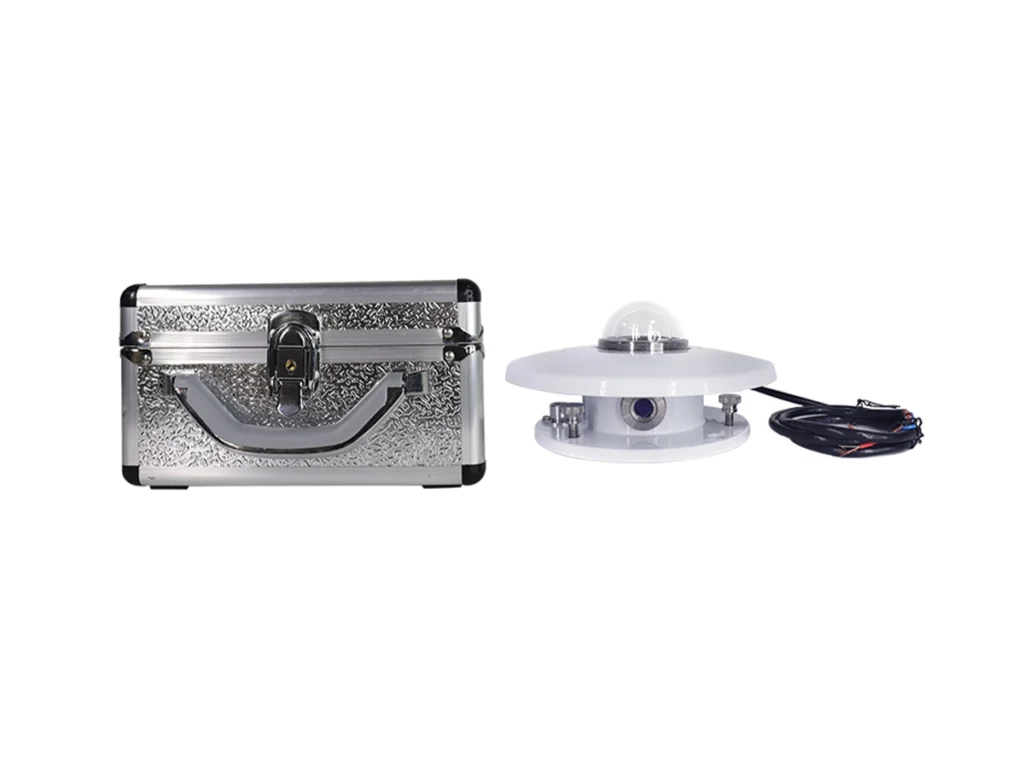
ตัวอย่างเช่น, Yantai Sensor’s TBQ-2C uses a wire-wound thermopile and a double-layer quartz glass cover. Its published spectral range is 0.3–3.2 μm, with a 99% response time below 35 s and annual stability of ≤±2%. These specifications give a practical example of how thermopile construction is applied in a field solar radiation sensor.
เซ็นเซอร์โฟโตไดโอด
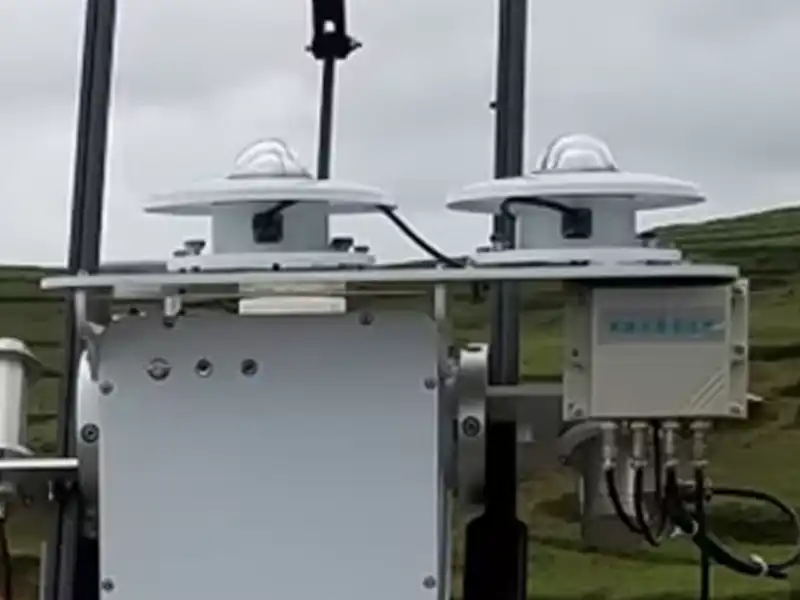
A silicon pyranometer works differently. It uses a silicon photodiode to convert incoming light into an electrical signal directly, so there is no thermal process comparable to the thermopile measurement path. As a result, silicon detectors can respond very quickly to changes in irradiance and can be built into relatively compact monitoring devices.
The limitation is spectral response. Silicon detectors are naturally more selective than broadband thermopile detectors, so the measured signal depends more strongly on the spectrum of the incoming sunlight. This matters when conditions change, such as during cloud cover or when the sensor is used with PV modules having a particular spectral response. For this reason, a silicon pyranometer should be selected according to the actual monitoring purpose, calibration, and required measurement performance rather than response speed alone.
เทอร์โมไพล์ vs ไพราโนมิเตอร์ซิลิคอน: ข้อดีและข้อเสีย
The difference is easier to judge once you move from the sensor principle to the actual job it needs to do. In practice, neither technology is suitable for every monitoring system. A thermopile usually makes more sense when broadband radiation data and long-term measurement are the priority, while a silicon sensor can be more practical when fast response, compact installation, and deployment cost carry more weight.
Thermopile: Where It Has an Advantage
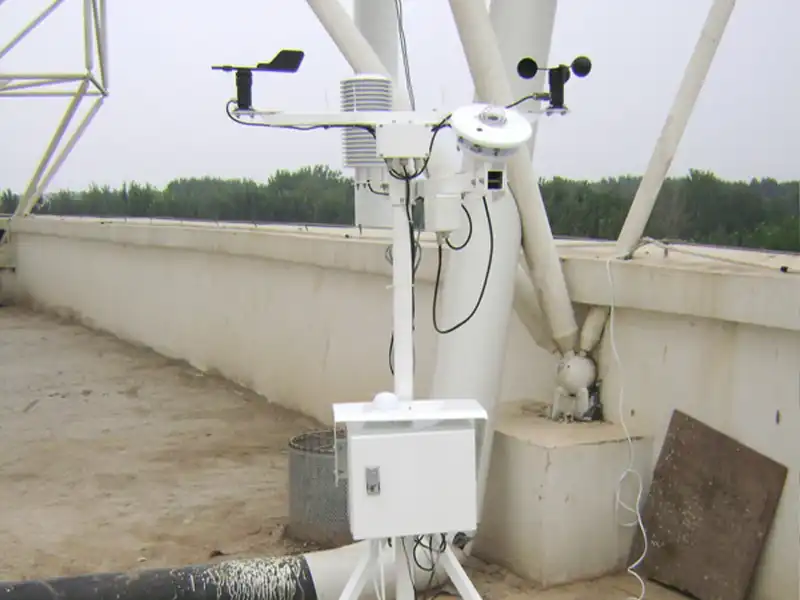
A thermopile pyranometer is generally used as a dedicated solar radiation instrument. It is designed to capture a broad portion of the incoming solar spectrum and provide continuous irradiance data, which is why it is often found in meteorological stations, solar resource measurement systems, research installations, and PV monitoring equipment.
Its strength is consistency across changing sunlight conditions. When the purpose is to build a long-term radiation record or use irradiance data for more detailed solar analysis, the broader response of a thermopile is often worth the additional cost. The compromise is straightforward: thermal detection takes longer to react, and higher-performance instruments require more careful calibration and typically cost more.
Silicon: Where It Has an Advantage
A silicon pyranometer is a more compact type of solar radiation sensor built around a silicon photodiode. It responds directly to incoming light, so it can detect rapid changes in irradiance without waiting for a thermal element to heat up. This makes the technology useful where sensors need to be small, responsive, and easy to deploy at multiple locations.
The trade-off is that the detector has a more selective spectral response. For a simple monitoring system, this may not be a major issue, but it becomes important when the measured value needs to represent broadband solar irradiance under different weather or spectral conditions. In those cases, the sensor’s actual spectral characteristics and calibration should be checked before making a purchasing decision.
Why Spectral Response Matters?
Sunlight reaching a sensor is not spectrally constant. Solar elevation, air mass, cloud cover, atmospheric moisture, and aerosols can all change the distribution of wavelengths reaching the ground. Since thermopile and silicon detectors respond to these wavelengths differently, two properly calibrated sensors can produce different irradiance readings under the same outdoor conditions.
This is why spectral response should be considered together with accuracy, calibration, and application requirements when selecting a pyranometer.
How Thermopile and Silicon Sensors Differ Spectrally?
A silicon pyranometer uses a photodiode with a defined spectral response, so its output is influenced by both the amount of incoming light and its wavelength distribution. A thermopile pyranometer can be designed to respond across a much broader portion of the solar spectrum. For example, Yantai Sensor’s TBQ-2C has a published spectral range of 0.3–3.2 μm, covering ultraviolet, visible, and infrared portions of incoming solar radiation.
The important distinction is not simply that one sensor measures more sunlight than the other. It is that the two detectors weight different wavelengths differently. When the solar spectrum changes during the day or with weather conditions, this difference can also affect the relationship between their readings.
Why It Matters for PV Monitoring?
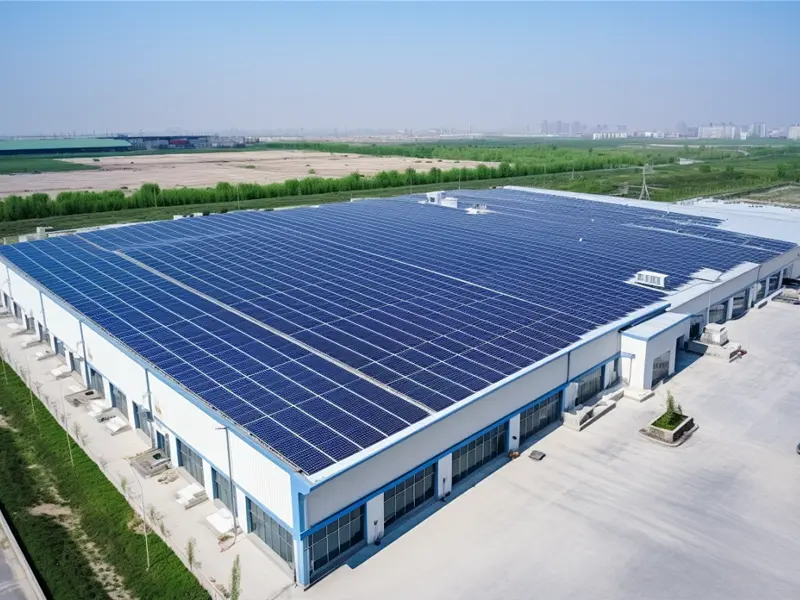
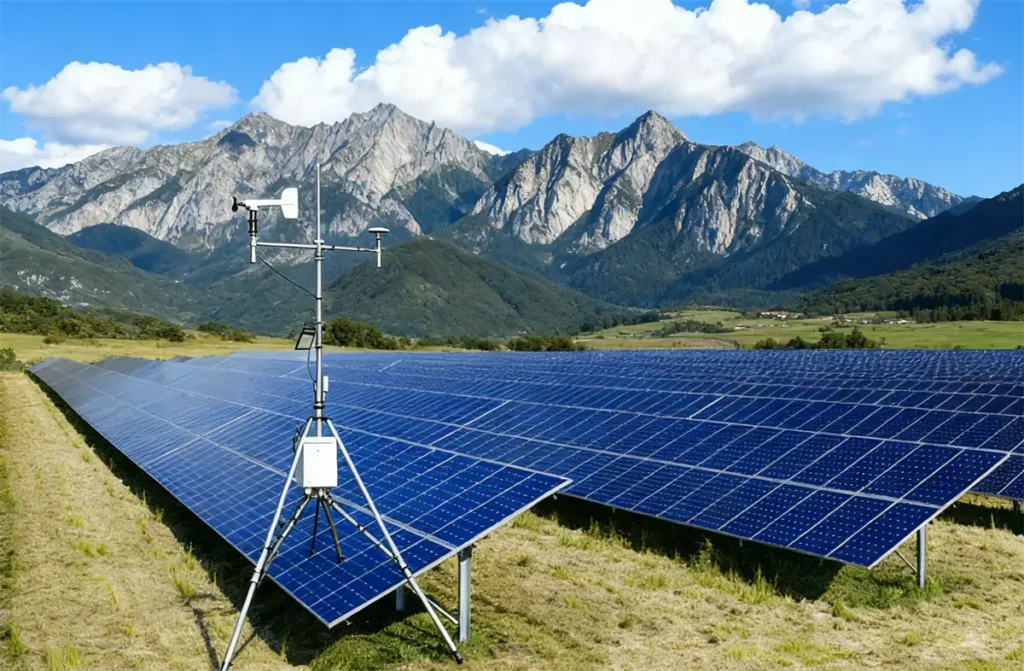
For PV monitoring, spectral response matters because the reference irradiance measurement is often used to assess how a solar system is performing. PV modules also have their own spectral response, so a sensor whose spectral characteristics differ significantly from the module may not track the usable solar input in exactly the same way under changing conditions.
This does not mean a silicon sensor is automatically unsuitable for PV applications. It can be a practical choice when its spectral characteristics and calibration are appropriate for the monitoring purpose. For broadband solar resource assessment or applications requiring a broader representation of incoming radiation, a thermopile pyranometer is often the more suitable option.

Is a Thermopile Pyranometer Always More Accurate?
Not always. A thermopile is often preferred when the measurement needs to cover a broad solar spectrum, but that does not automatically make every thermopile pyranometer more accurate than every silicon model. The quality of the optical design, detector, temperature compensation, calibration, and mechanical construction all affect the final measurement.
This is an important point when comparing suppliers. Two pyranometers using the same detector technology can have noticeably different specifications and field performance. Instead of judging a sensor by “thermopile” or “silicon” alone, look at the parameters that describe how the complete instrument performs.
What Should You Check on the Datasheet?
| พารามิเตอร์ | What to Look For |
| Spectral response | Check whether the wavelength range matches the radiation you actually need to measure. |
| Accuracy / performance class | Compare the stated performance class or measurement accuracy rather than relying on detector type. |
| การตอบสนองโคไซน์ | Important for outdoor measurements because the angle of incoming sunlight changes throughout the day. |
| Temperature dependence | Shows how much the sensor output may change as the installation temperature varies. |
| ความมั่นคงประจำปี | Useful for evaluating whether the sensor can maintain consistent readings during long-term deployment. |
| เวลาตอบสนอง | Worth checking when the system needs to capture rapid changes caused by moving clouds or changing irradiance. |
| การสอบเทียบ | Check the calibration method, certificate, and available measurement traceability before purchasing. |
Which Pyranometer Is Better for Solar PV?
For a PV project, the right pyranometer depends on what the irradiance data is expected to do. A sensor used to assess solar resources or support performance testing has different requirements from one installed at dozens of monitoring points around a plant. So the choice should start with the measurement task, not with the sensor name.
| PV Requirement | Recommended Direction |
| การประเมินทรัพยากรพลังงานแสงอาทิตย์ | เทอร์โมไพล์ |
| Broadband reference measurement | เทอร์โมไพล์ |
| Long-term irradiance records | เทอร์โมไพล์ |
| Distributed monitoring points | Silicon can be practical |
| Rapid irradiance changes | Silicon |
| สถานีตรวจอากาศแบบกะทัดรัด | Silicon or compact thermopile |
| PV performance measurement | Choose according to the required standard and performance class |
When Thermopile Makes More Sense for PV?
If irradiance data will be used as a reference for evaluating the solar resource or the performance of a PV system, a thermopile pyranometer is often the safer starting point. Its broad spectral response makes it suitable for measurements where the goal is to characterize incoming solar radiation rather than simply detect changes in light intensity. This is particularly relevant to long-term monitoring and higher-quality performance measurements.
The sensor still needs to be selected against the project’s actual requirements. Performance class, cosine response, temperature dependence, calibration, installation angle, and maintenance conditions can all affect the final data. Paying more for a thermopile does not automatically solve these issues.
When Silicon Can Be a Practical Choice?
Silicon pyranometers can make more sense when the monitoring system needs a large number of sensors and the priority is quick response, compact installation, or keeping the cost of each measuring point under control. They are suitable for many routine PV monitoring applications, provided that the detector’s spectral characteristics and calibration are appropriate for the intended use.
For a purchasing team, this distinction is useful: if the sensor is part of the measurement reference, focus on measurement performance first; if it is one of many distributed monitoring points, response, integration, power consumption, and cost may become more important. The final selection should be based on the role of the sensor in the PV system and the specifications required by the project.
Thermopile Pyranometer or Silicon Pyranometer: What Should Buyers Check?
Choosing between a thermopile and silicon pyranometer should start with the project requirements rather than the detector type. Before requesting a quotation, buyers should confirm what needs to be measured, the required data quality, the installation environment, and how the sensor will connect to the existing monitoring system.
What Are You Actually Measuring?
Define the measurement target first: global irradiance, plane-of-array (POA), UV, PAR, or another radiation quantity. For PV projects, also clarify whether the sensor is for routine monitoring, performance assessment, or reference measurement, because each application can have different requirements for spectral response and measurement performance.
What Measurement Performance Is Required?
Do not judge a pyranometer by the stated accuracy alone. Check the performance class, spectral response, cosine response, temperature dependence, annual stability, and calibration information together, especially if the data will be used for testing, reporting, or long-term performance analysis.
How Quickly Must the Sensor Respond?
Response time becomes important when the system needs to capture rapid irradiance changes, such as those caused by moving clouds. If the application mainly tracks longer-term solar trends, an extremely fast response may offer little practical benefit, so define the required sampling and monitoring frequency first.
Where Will the Sensor Be Installed?
Consider the actual outdoor conditions, including temperature, humidity, rain, dust, snow, mounting angle, and maintenance access. Operating temperature, IP rating, cable configuration, and cleaning requirements are worth checking before purchase, particularly for sensors that will remain outdoors for years.
How Will the Sensor Connect to Your System?
Confirm the available RS485/Modbus, analog output, supply voltage, cable, connector, and data logger compatibility before ordering. A sensor can meet the measurement requirements but still create integration problems if its communication interface or power requirements do not match the existing monitoring system.
Yantai Sensor Solar Radiation Sensor Options
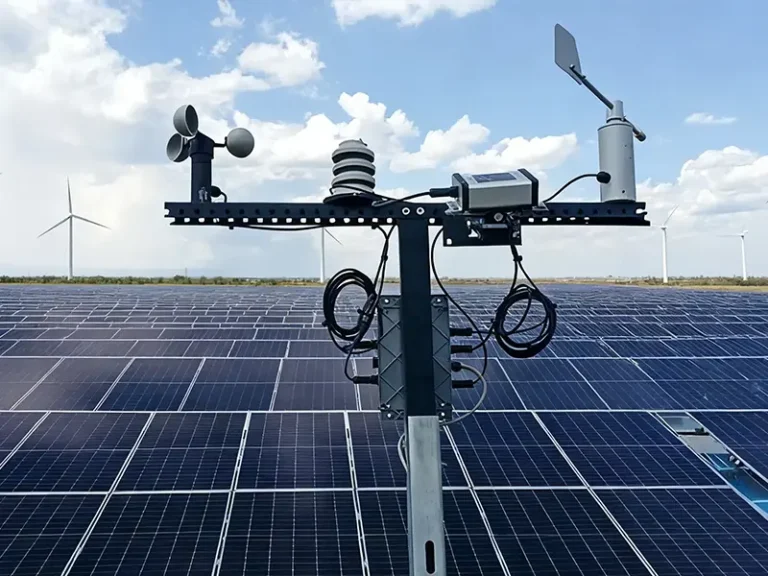
Yantai Sensor provides different solar radiation measurement options depending on whether the project requires a standalone pyranometer, integrated weather monitoring, or automated solar radiation measurement.
TBQ-2C Thermopile Pyranometer
0.3–3.2 μm | <35 s response | ≤±2% annual stability
TBQ-2C is a thermopile-based total solar radiation sensor designed for broadband solar radiation measurement. It is suitable for meteorological observation, environmental monitoring, solar resource assessment, and other outdoor irradiance applications. View TBQ-2C Pyranometer
XF500S-CWB Compact Solar Weather Sensor
POA Radiation | RS485/Modbus RTU | IP65
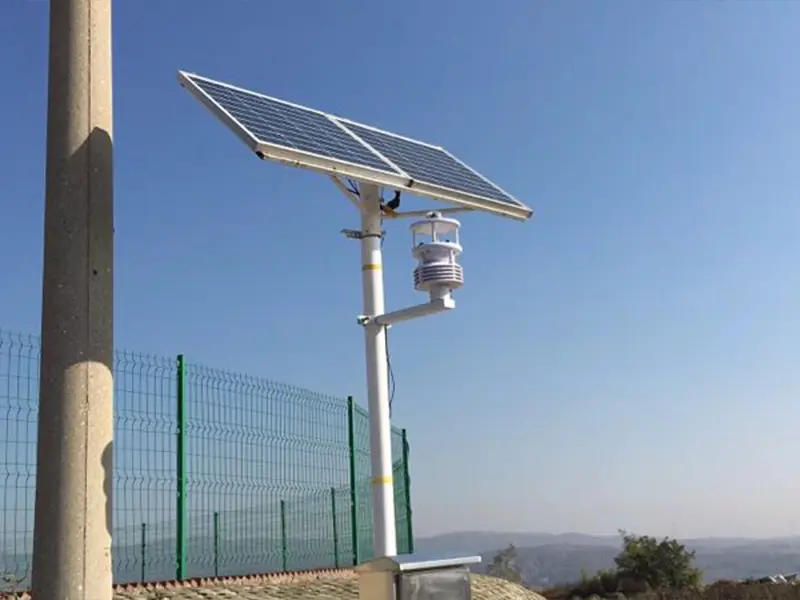
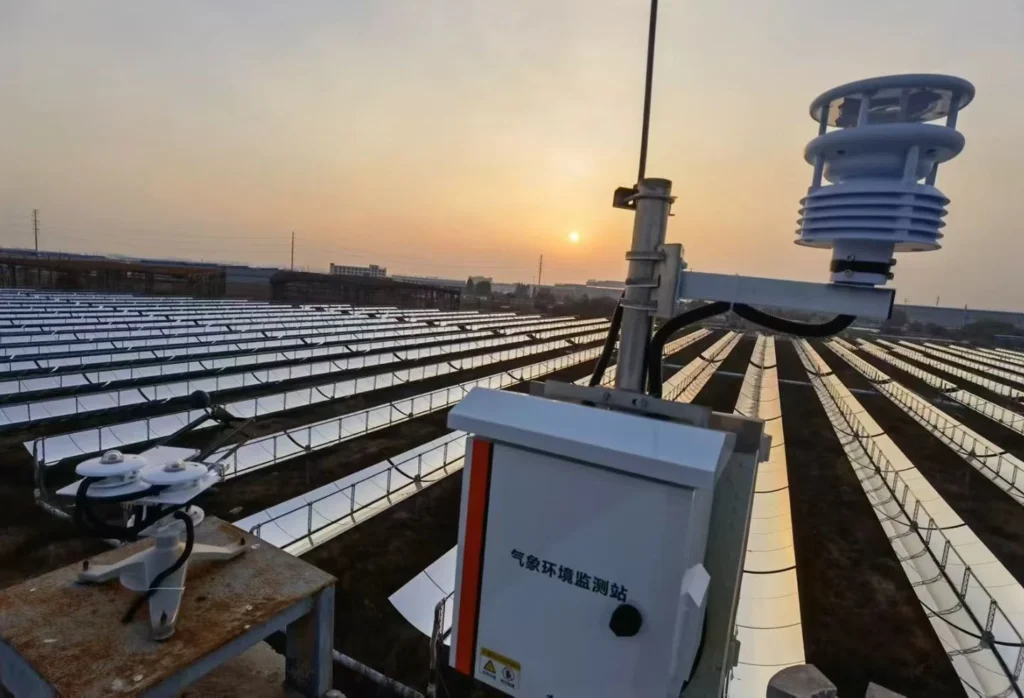
XF500S-CWB is suited to projects that need solar irradiance data together with weather parameters in one compact monitoring unit. It supports POA radiation measurement and digital communication for integration with data acquisition systems. View XF500S-CWB Solar Weather Sensor

ระบบวัดรังสีอาทิตย์อัตโนมัติ SAUT
Automatic Tracking | Multiple Radiation Measurements | RS485
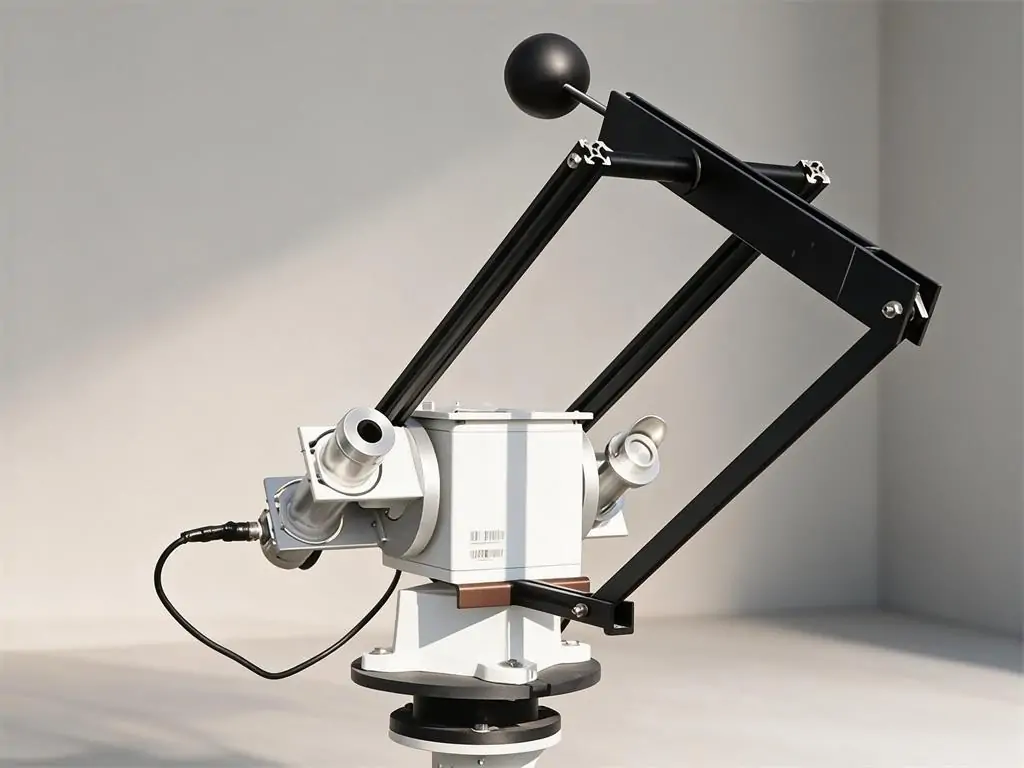
For projects requiring automated solar radiation observation with sun tracking, SAUT provides a complete measurement system rather than a standalone pyranometer. It can support multiple radiation sensors and automated positioning for continuous solar radiation measurements. View SAUT Automatic Tracking System
สรุป
Thermopile and silicon pyranometers are not simply “high-accuracy” and “low-cost” alternatives. Their different detection technologies affect spectral response, response time, cost, and application suitability. For standalone broadband solar radiation measurement, thermopile is often the safer choice, while silicon can be practical for compact, fast, and cost-sensitive monitoring. The final selection should be based on the required measurement performance, installation environment, and overall system configuration.
Have a solar radiation monitoring project? Send us your measurement target, installation environment, required accuracy, communication interface, and number of monitoring points. ติดต่อ Yantai Sensor to discuss your requirements and get a suitable solar radiation sensor configuration for your project.