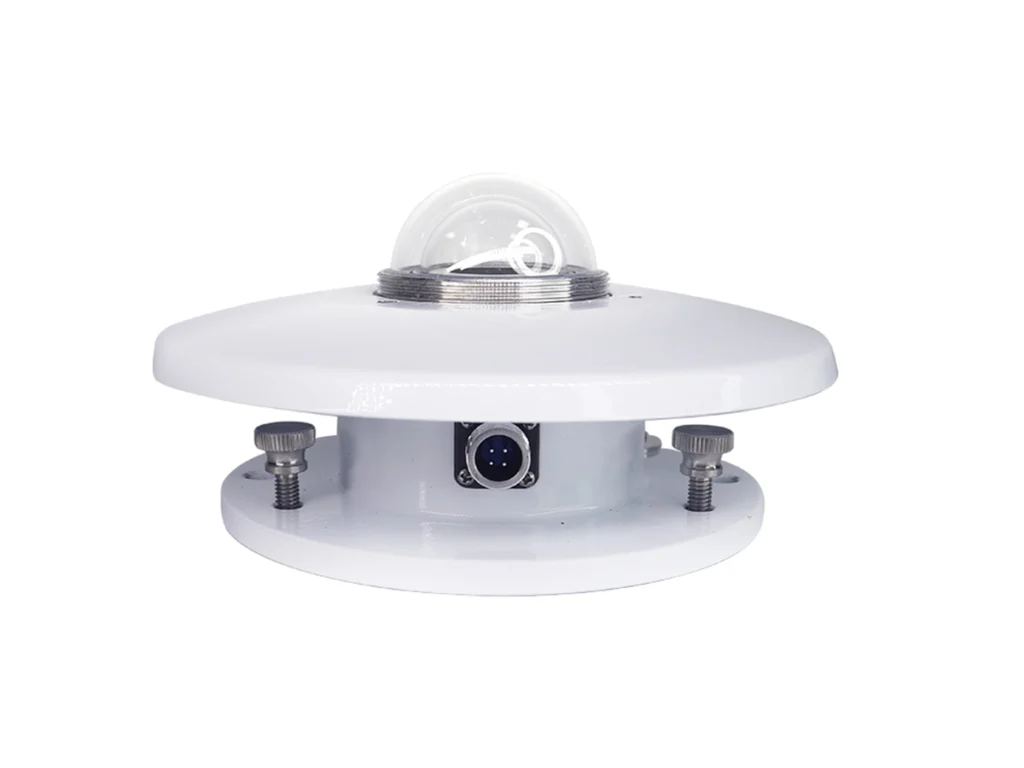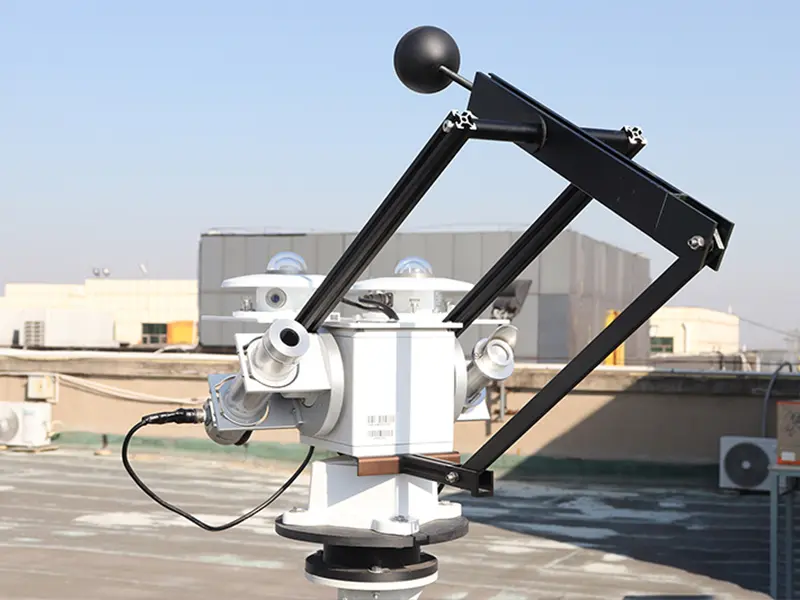
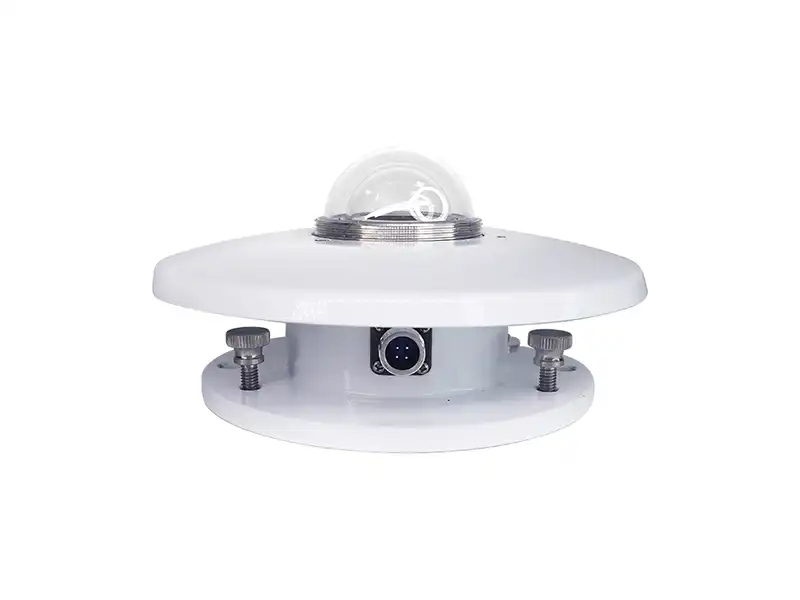
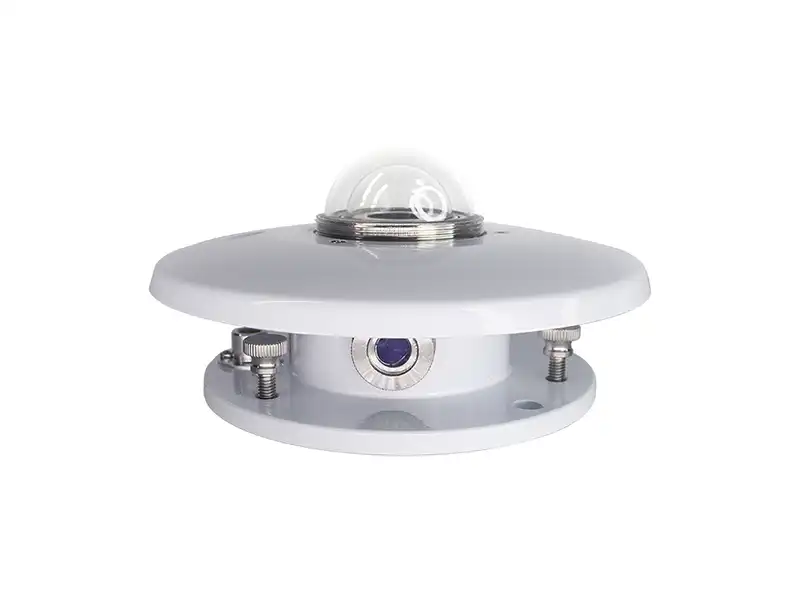
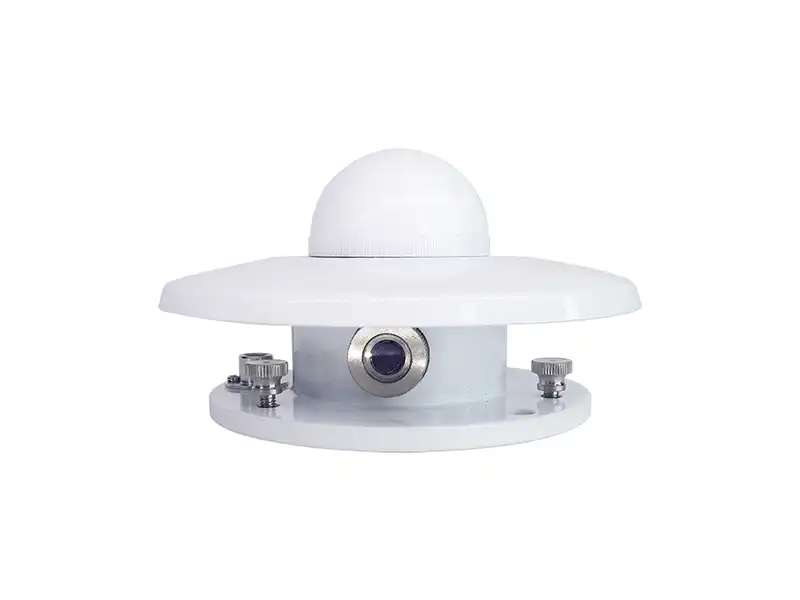
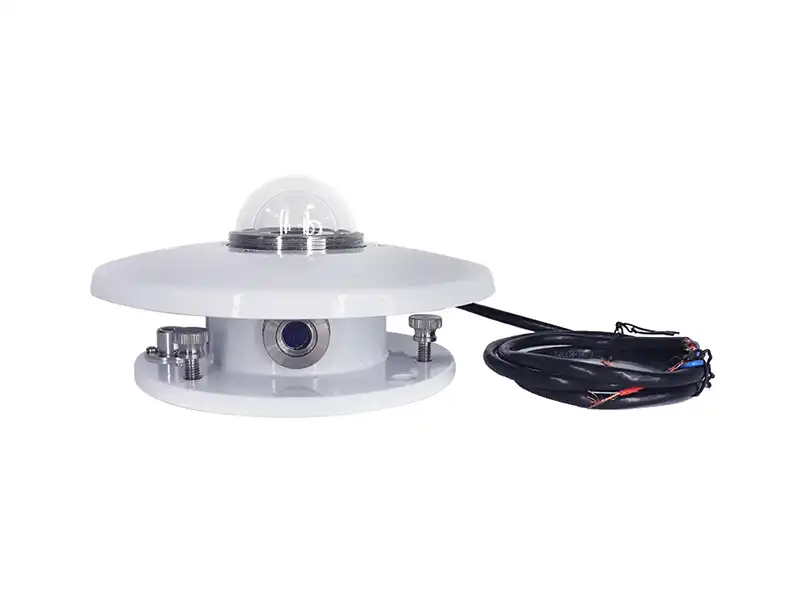
Piranómetro de alta precisão para monitorização do rácio de desempenho solar fotovoltaico (PR)
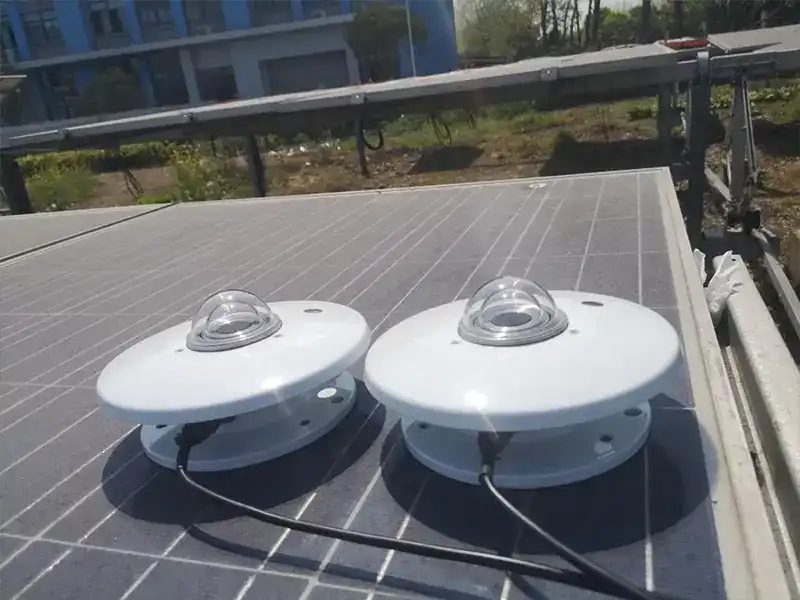
Piranómetros de alta precisão (também conhecidos como sensores de radiação solar) são ferramentas essenciais para a monitorização do desempenho dos sistemas solares fotovoltaicos. Concebidos especificamente para medir a intensidade da radiação solar, ajudam a monitorizar a produção de energia e a eficiência das centrais fotovoltaicas. Estes instrumentos avançados garantem a precisão dos cálculos da Relação de Potência (PR) para sistemas fotovoltaicos, proporcionando assim aos utilizadores dados fiáveis.
- Saída: 200 mV da saída original
- Sensibilidade: 7~14 μV/W·m⁻²
- Tempo de resposta: <35 s (resposta 99%)
- Resposta do cosseno: ≤ ±7% (com um ângulo de altitude solar de 10°)
- Azimute: ≤ ±5% (com um ângulo de altitude solar de 10°)
- Não linearidade: Não superior a ±2%
- Intervalo espectral: 0,3–3,2 μm
Preço: $258.7-$310.44
Introdução
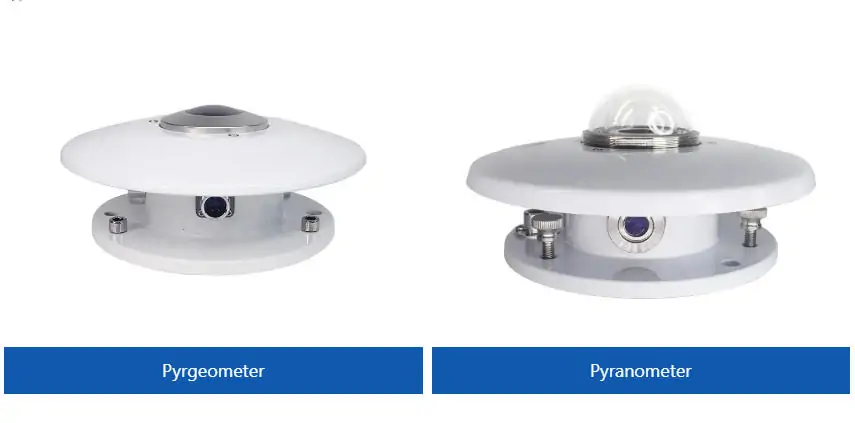
Um piranómetro é um instrumento de precisão utilizado para medir a intensidade da radiação solar e é amplamente utilizado em sistemas solares fotovoltaicos. Recorre a um sensor de termopilha para converter a intensidade da radiação num sinal elétrico, com base no princípio do potencial termoelétrico. Quando a luz solar incide sobre a superfície sensora, a variação de temperatura resultante gera uma força eletromotriz que reflete a intensidade da radiação solar. A cobertura de vidro de quartzo de dupla camada foi concebida para minimizar os efeitos da convecção do ar, garantindo a precisão da medição. Os piranómetros podem medir com precisão a radiação solar na gama de comprimentos de onda de 0,3 a 3,2 micrómetros e são amplamente utilizados em áreas como produção de energia fotovoltaica, monitorização meteorológica e investigação climática. Se quiser saber como medir com precisão a irradiância normal direta (DNI), clique aqui para ler o artigo.
princípio de funcionamento do piranómetro
O princípio de funcionamento de um piranómetro baseia-se no sensor de termopilha, que absorve a radiação solar e a converte num sinal elétrico. Eis como funciona:
- Absorção da radiação solar: O sensor do piranómetro, normalmente uma termopilha, absorve a radiação solar num espectro que vai de 0,3 a 3,2 micrómetros.
- Diferença de temperatura: A radiação absorvida aquece o sensor, provocando uma diferença de temperatura entre as junções quente e fria do sensor.
- Geração de tensão: Esta diferença de temperatura gera uma pequena tensão elétrica (efeito Seebeck) que é diretamente proporcional à quantidade de radiação solar recebida.
- Medição da tensão: A tensão gerada é medida e registada como um valor que representa a intensidade da radiação solar.
- Conversão em dados: A tensão de saída é então convertida em dados legíveis, que indicam a radiação solar em watts por metro quadrado (W/m²).
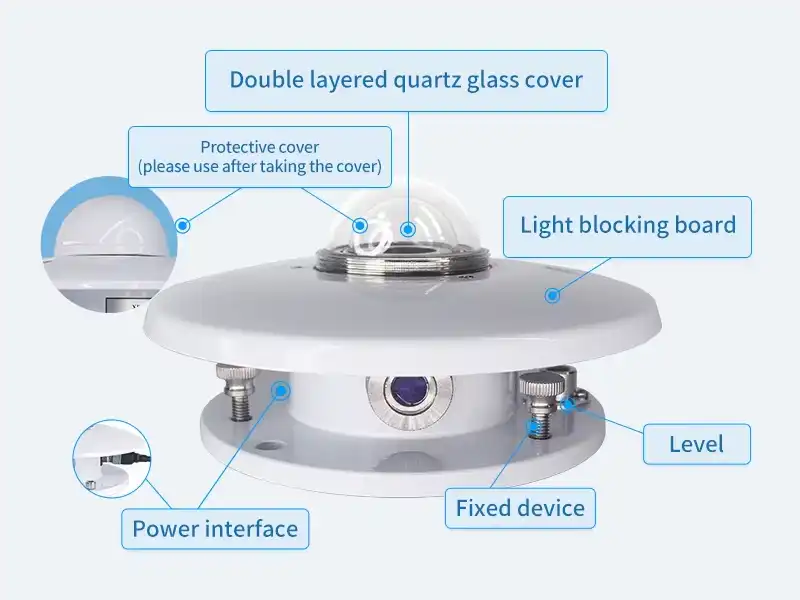
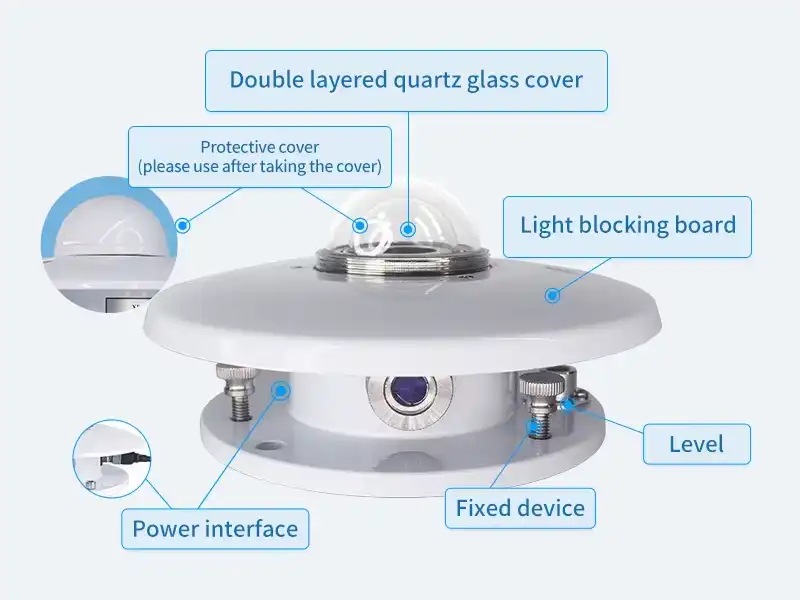
Piranómetro de estrutura
- Elemento sensor
Composto por uma termopilha de resposta rápida, com enrolamento de fio e galvanizada, utilizada para converter a radiação solar num sinal elétrico. - Superfície sensora
Revestida com tinta preta mate para aumentar a eficiência de absorção da radiação, a superfície sensora está ligada à junção quente. - Tampa de vidro de quartzo de dupla camada
A cobertura exterior reduz os efeitos da convecção do ar, enquanto a cobertura interior bloqueia a radiação infravermelha proveniente da cobertura exterior, garantindo a precisão da medição. - Junção fria
Cria uma diferença de temperatura em relação à superfície sensora; em conjunto com a junção quente, gera uma força eletromotriz proporcional à intensidade da radiação solar. - Desecante
Protege os componentes eletrónicos internos da humidade, garantindo a estabilidade do instrumento. - Placa de sombreamento
Utiliza-se para ajustar e bloquear a luz solar excessiva, garantindo a precisão das medições do radiómetro.
Mostrar detalhes
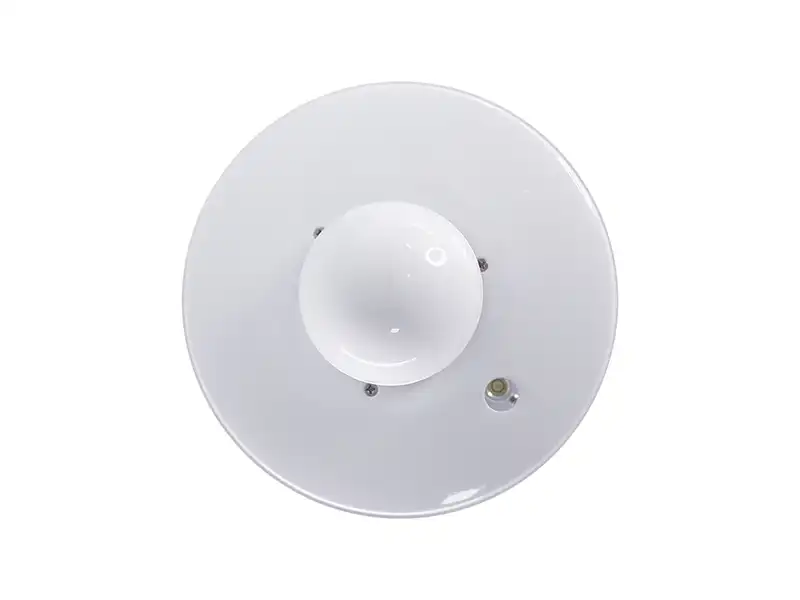
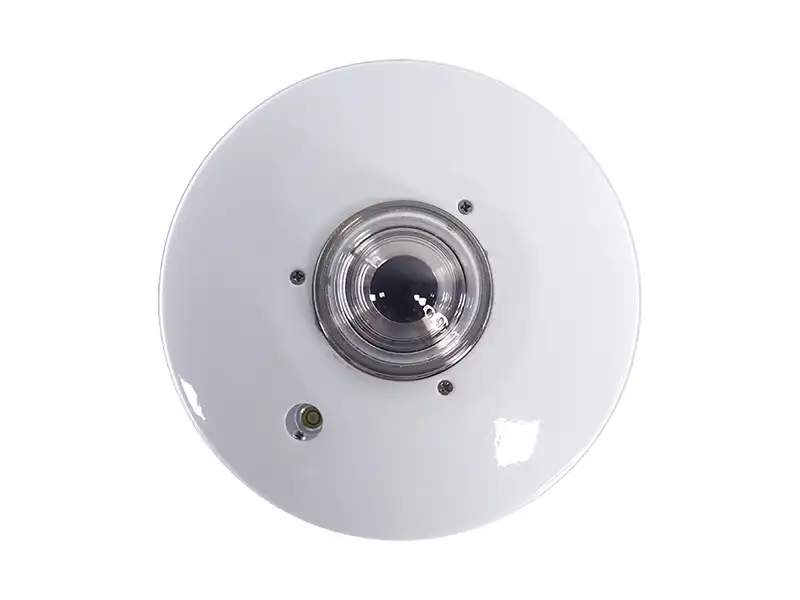
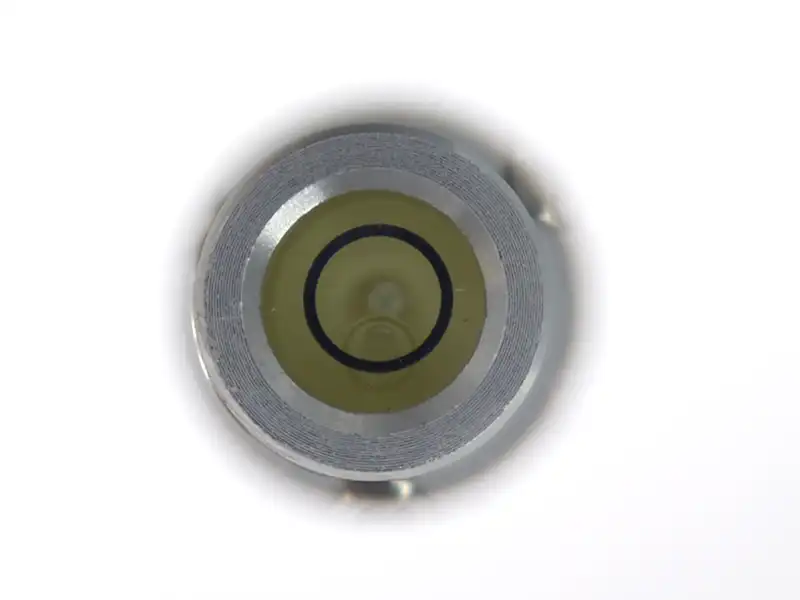
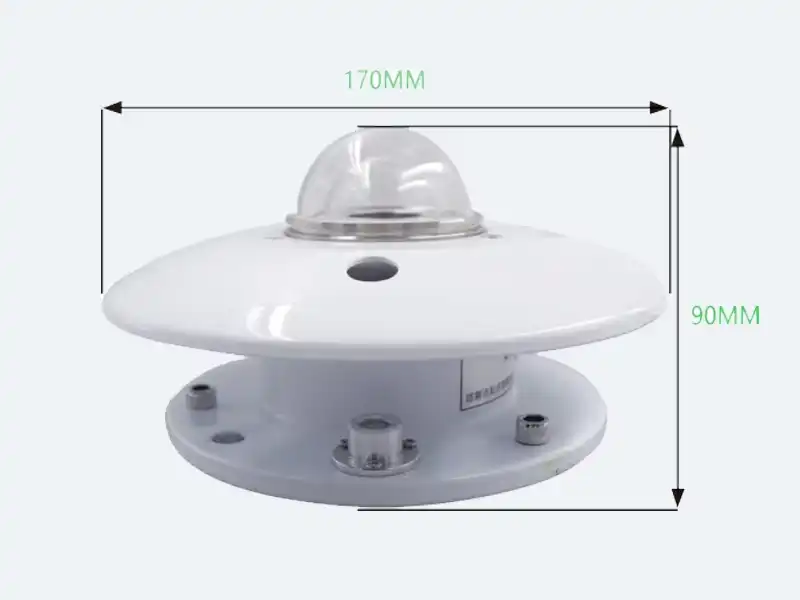
Os detalhes de design do piranômetro solar, desde a superfície de detecção no topo até a interface de montagem na base, demonstram construção superior, e o invólucro de vidro duplo minimiza eficazmente interferências externas. Cada componente, incluindo o elemento sensor, o dessecante no invólucro e os encaixes de precisão, foi rigorosamente projetado e testado para garantir operação eficiente e de longo prazo. Se você quiser saber “Como escolher um sistema de monitoramento de PV para monitoramento preciso de usinas solares,” clique no artigo. Abaixo estão os detalhes exibidos para o piranômetro solar:
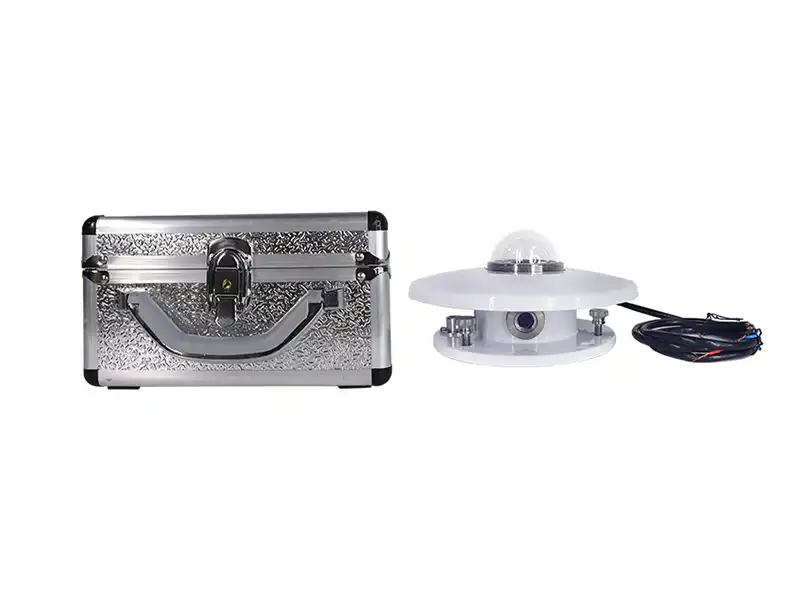
Especificações
O piranómetro foi especificamente concebido para medir a radiação solar, apresentando um tempo de resposta rápido (<35 segundos) e uma estabilidade excecional (estabilidade anual de ±2%). Com uma gama espectral de 0,3–3,2 μm, é adequado para uma vasta gama de aplicações de monitorização da radiação. Seguem-se as especificações do piranómetro:
Parâmetros
| Tipo | Estação meteorológica | Saída | RS485 |
| Utilização | PAR | Nome da marca | Sensor de Yantai |
| Descrição | Instalação da flange | Descrição | Sensor piranométrico de radiação solar total / sensor de radiação solar |
| Caraterísticas | Alta sensibilidade | Número de referência do fabricante | TBQ-2C |
| Tipo de montagem | Multi-funções | Local de origem | Hebei, China |
| Série | HCD | ||
| Saída | 200mv da saída original | Sensibilidade | 7-14 mV/kW·m² |
| Tempo de resposta | <35 s (resposta 99%) | Estabilidade anual | ≤±2% |
| Resposta do cosseno | ≤±7% (elevação solar de 10°) | Posição | ≤±5% (elevação solar de 10°) |
| Não linear | ≤±2% | Gama espetral | 0,3-3,2μm |
| Coeficiente de temperatura | ≤±2% (-10–40 °C) | ||
Inclui um sensor piranométrico
Resposta rápida
Tempo de resposta inferior a 35 segundos, garantindo uma resposta rápida às variações na intensidade da radiação.
Ampla gama espectral
0,3–3,2 μm, adequado para medir vários tipos de radiação solar.
Design sustentável
Possui propriedades de resistência às intempéries e impermeabilidade, permitindo o funcionamento em ambientes adversos.
Baixa manutenção
Um design simplificado reduz a manutenção e os cuidados, prolongando a vida útil do dispositivo.
Alta Compatibilidade
Compatível com vários sistemas de aquisição de dados, facilitando a integração em plataformas existentes.
Resistência a Interferências
Componentes ópticos de alta qualidade e design protetor minimizam interferências externas.
Aplicações do piranômetro
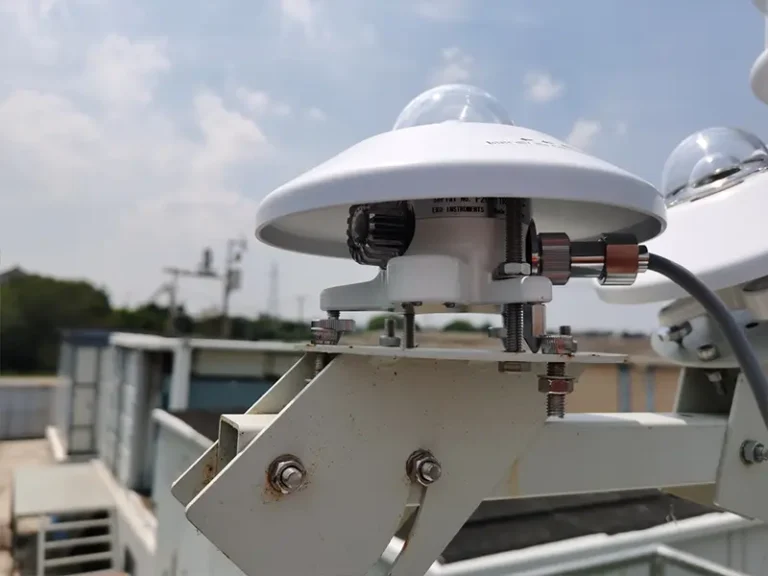
Piranômetros são amplamente utilizados em vários campos que exigem medições precisas da intensidade da radiação solar, particularmente na geração de energia solar e na pesquisa meteorológica. Ao fornecer dados de radiação altamente precisos, os piranômetros ajudam a otimizar a eficiência dos sistemas de energia solar e apoiam o monitoramento ambiental e a pesquisa climática. Abaixo estão aplicações específicas dos piranômetros:
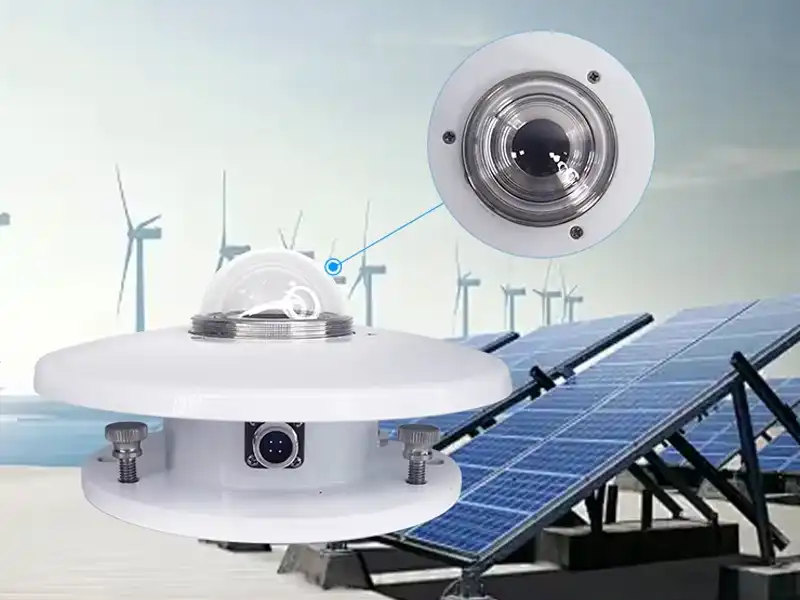
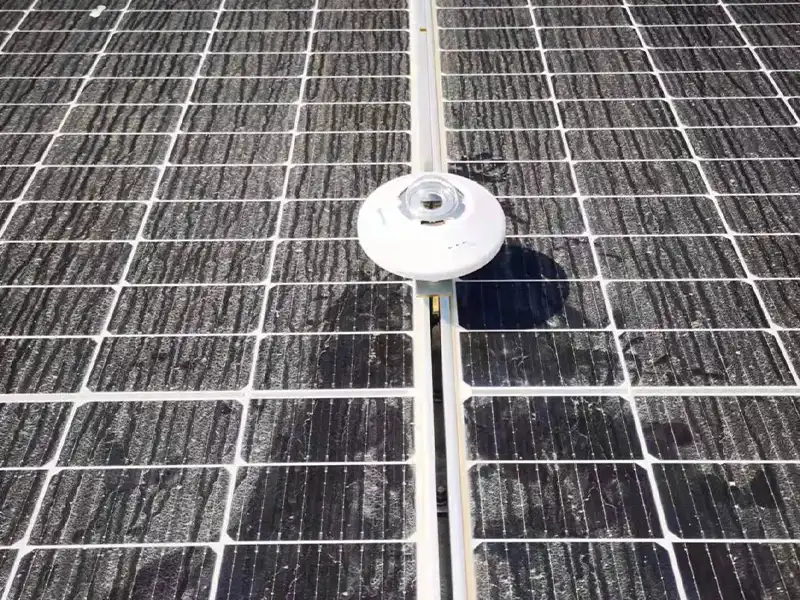
Geração de Energia Fotovoltaica
Usado para avaliar a intensidade da radiação solar, ajudando a otimizar o desempenho e a eficiência de sistemas fotovoltaicos.
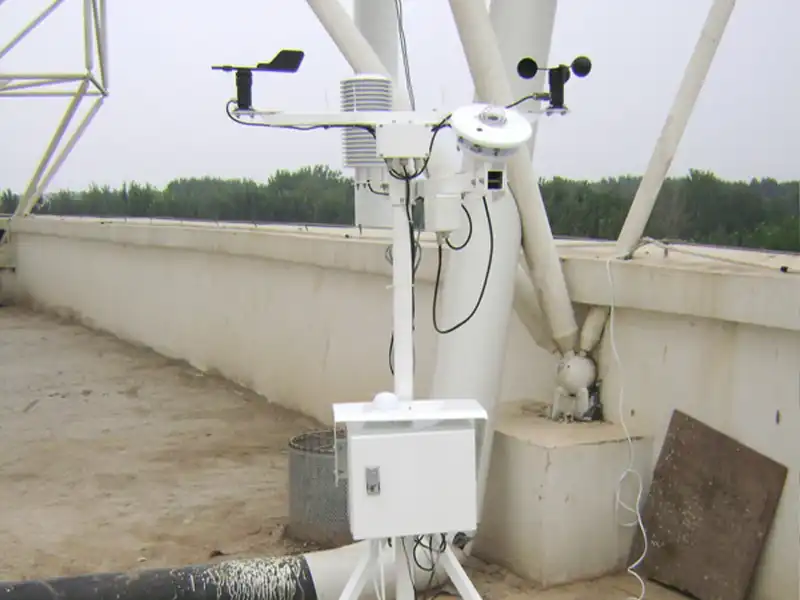
Monitorização meteorológica
Usado por estações meteorológicas para monitorar a radiação solar, apoiando a previsão do tempo e a pesquisa climática.
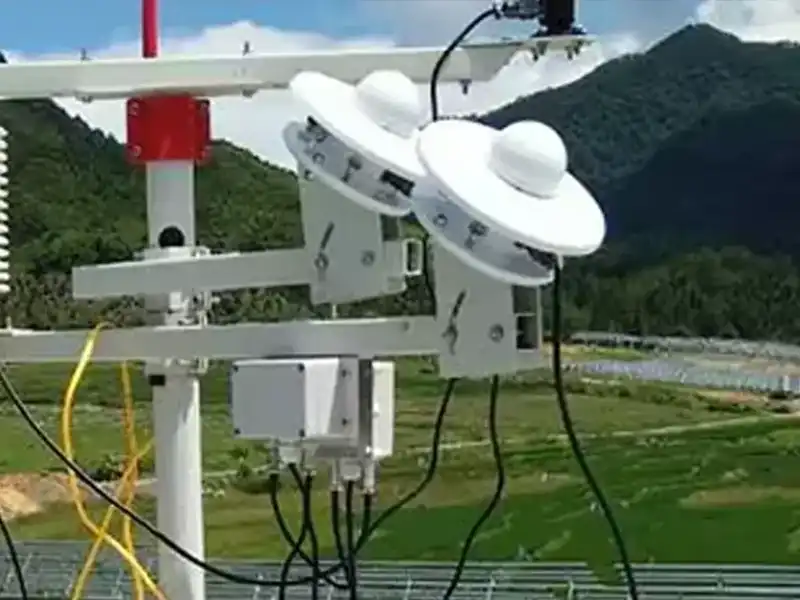
Monitorização ambiental
Na proteção ambiental e na pesquisa ecológica, monitora a intensidade da radiação para fornecer dados para estudos de mudanças climáticas.
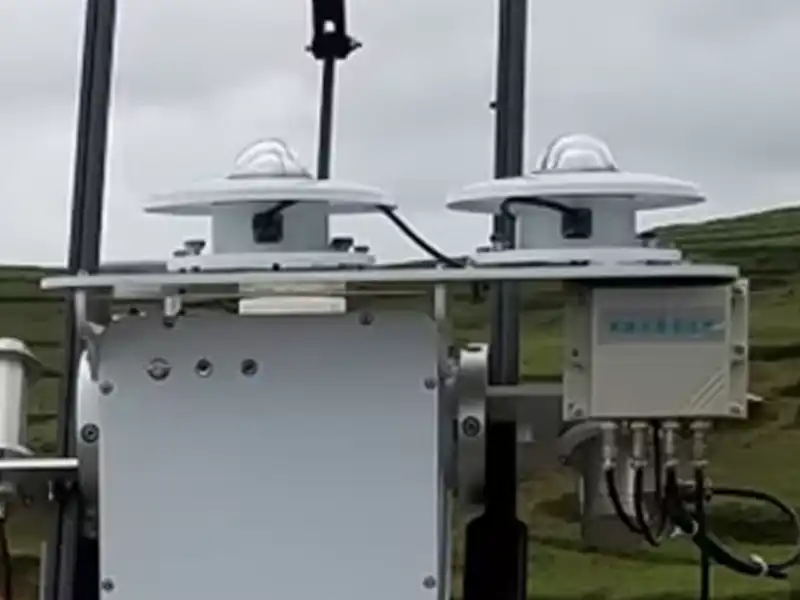
Investigação agrícola
Usado na agricultura e no cultivo em estufas para monitorar as condições de luz, ajudando a otimizar os ambientes de crescimento das culturas.
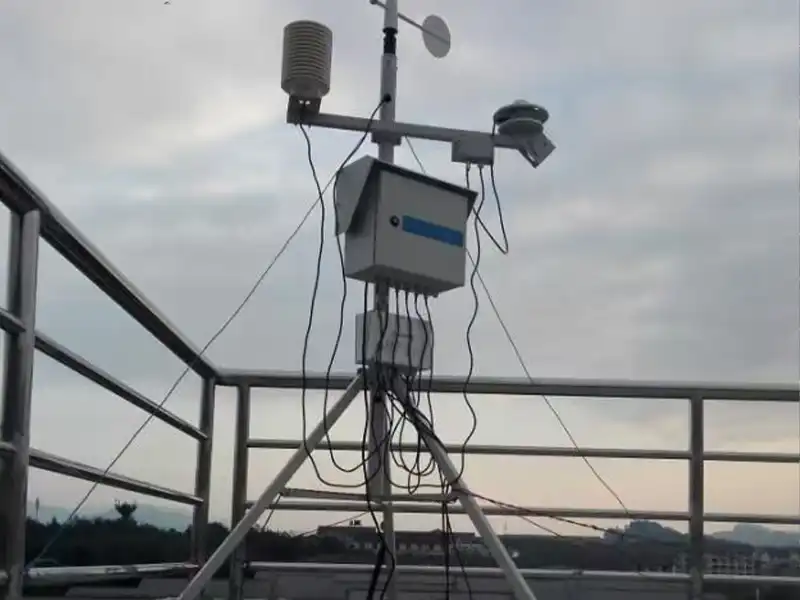
Investigação climática
Usado na pesquisa de mudanças climáticas para medir a radiação solar, fornecendo suporte de dados para prever tendências climáticas globais.
Aplicações Aeroespaciais
Usado em satélites e estações espaciais para medir a radiação solar, apoiando o monitoramento da radiação durante missões espaciais.
piranômetro solar personalizado
Piranômetros solares personalizados fornecem soluções sob medida para atender às necessidades específicas de diferentes clientes e cenários de aplicação. Ao ajustar parâmetros, design e funcionalidade, esses piranômetros personalizados podem satisfazer os requisitos precisos para medição de radiação solar em vários campos profissionais, garantindo desempenho eficiente e confiabilidade em ambientes específicos.
Opções de personalização
- Faixa de Sensibilidade: A faixa de sensibilidade pode ser ajustada para atender aos requisitos do cliente e acomodar várias necessidades de medição de radiação.
- Gama espetral: Faixas espectrais personalizadas estão disponíveis para aplicações específicas, como a medição de radiação ultravioleta, visível ou infravermelha.
- Tempo de resposta: O tempo de resposta pode ser otimizado para atender aos requisitos da aplicação e se adaptar a ambientes de radiação em rápida mudança.
- Material da caixa: Selecione diferentes materiais de invólucro com base no ambiente operacional, como opções à prova d'água, resistentes à corrosão ou resistentes a altas temperaturas, para garantir operação confiável em condições adversas.
- Adaptabilidade à Temperatura: Personalize os coeficientes de temperatura para acomodar uma faixa de temperatura mais ampla com base nos requisitos do ambiente operacional do cliente, mantendo assim a precisão da medição.
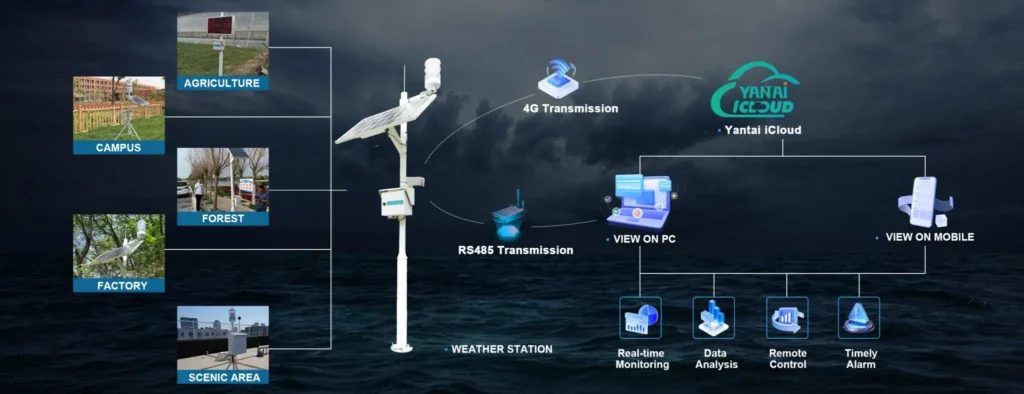
- Interfaces de Dados Personalizadas: Oferecemos várias opções de interface de dados, como Modbus, RS485 e comunicação sem fio, para facilitar a integração com sistemas de monitoramento existentes.
- Opções de montagem: Oferecemos várias opções de montagem, como montagem fixa e montagem com ângulo ajustável, para atender a diferentes requisitos de instalação.
- Requisitos de exatidão: Oferecemos opções de medição de alta precisão para atender às necessidades de aplicações específicas com requisitos rigorosos de precisão de dados.
piranómetro Fabricante e Fornecedor
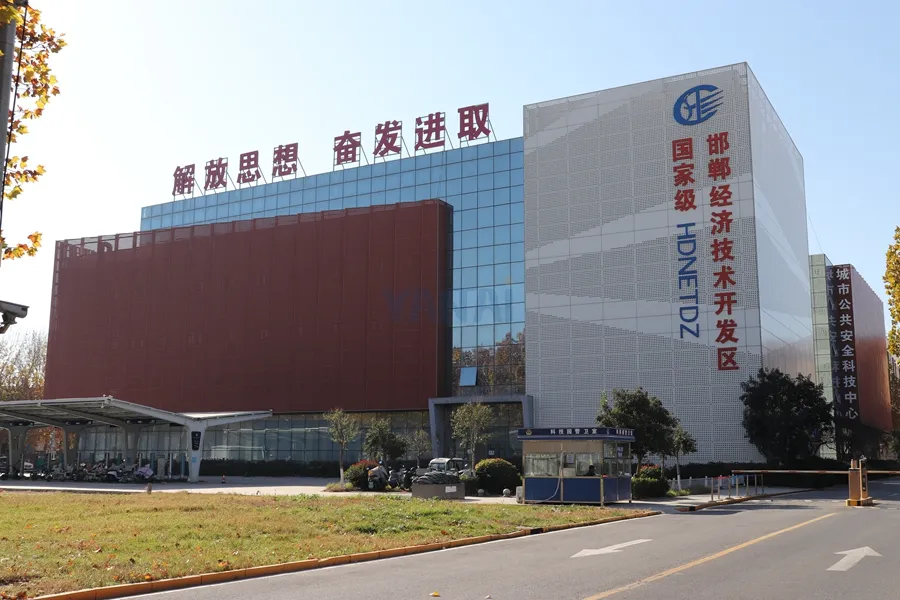
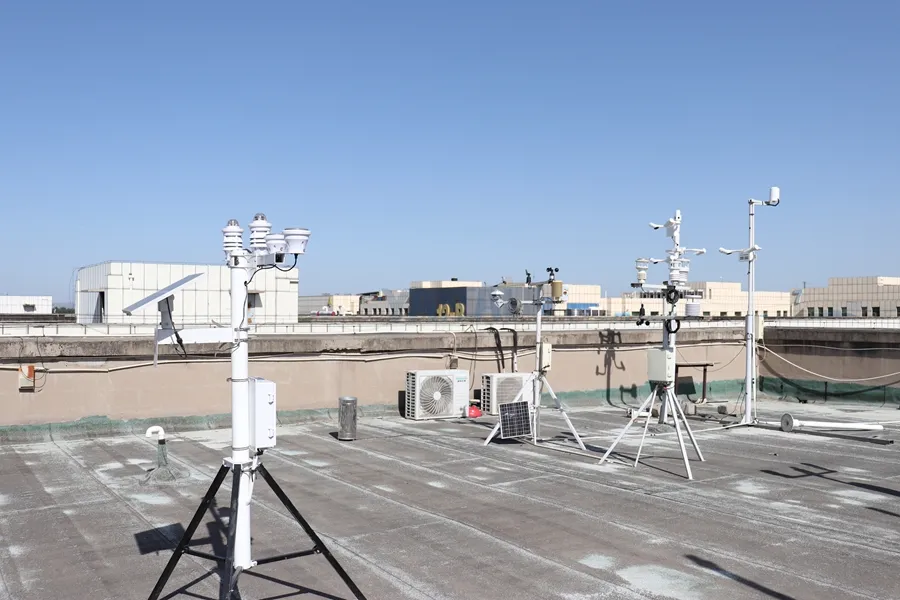
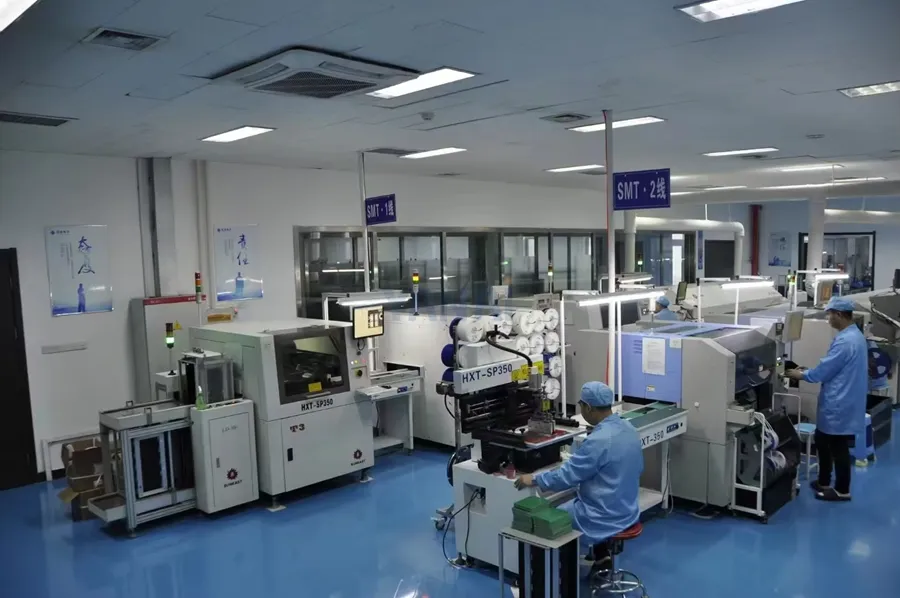
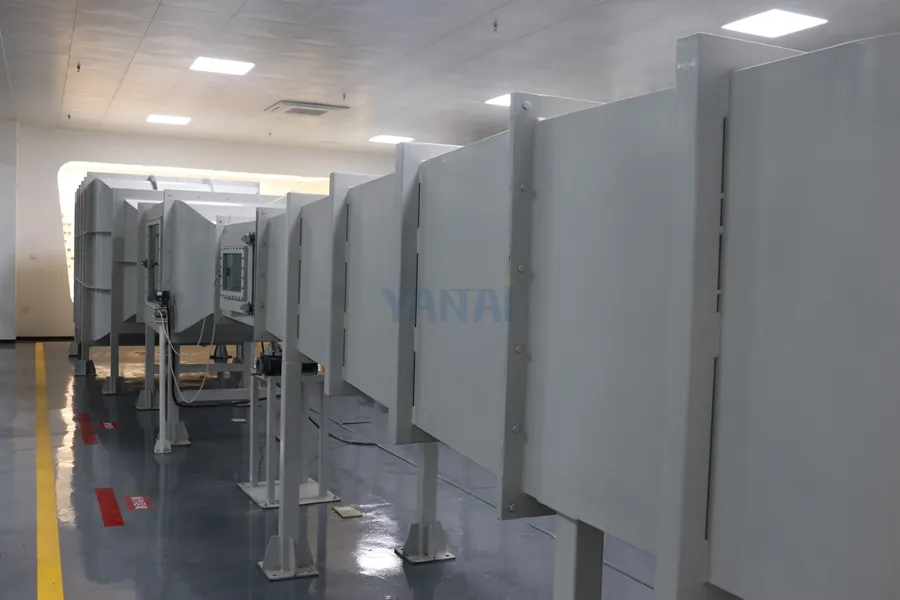
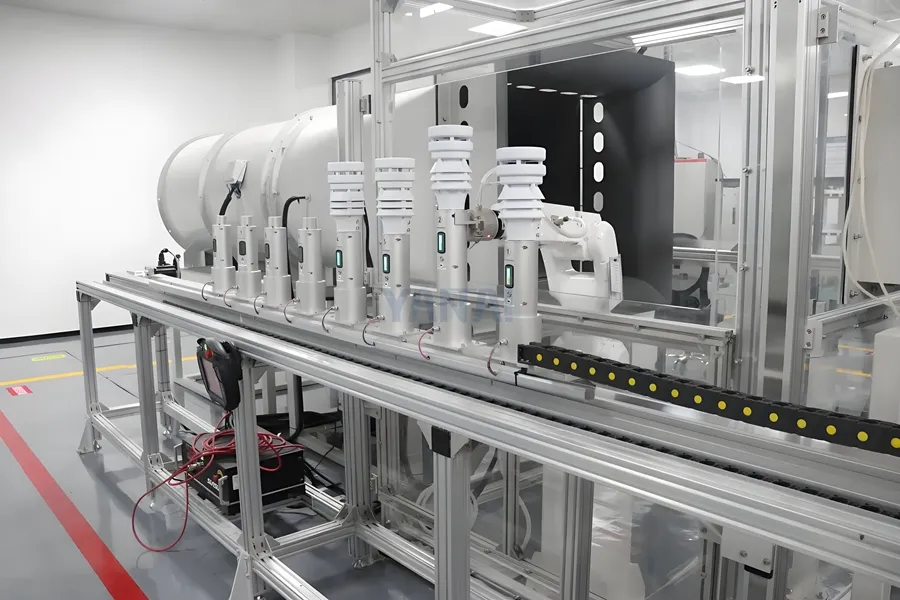
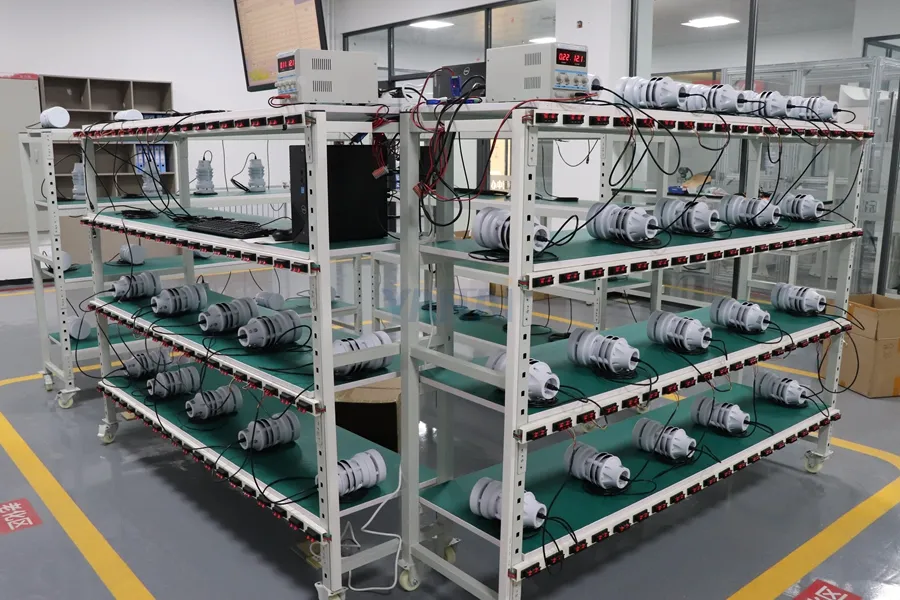
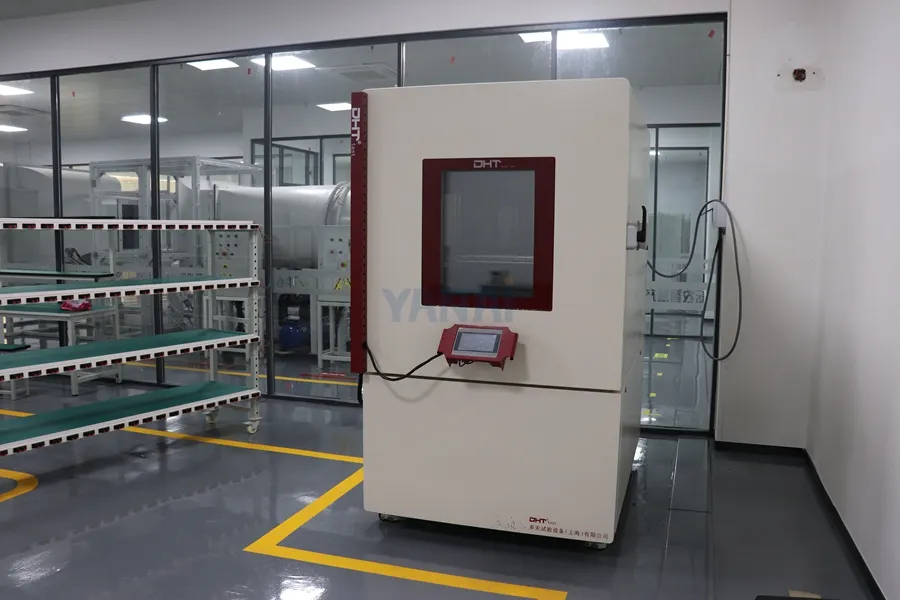
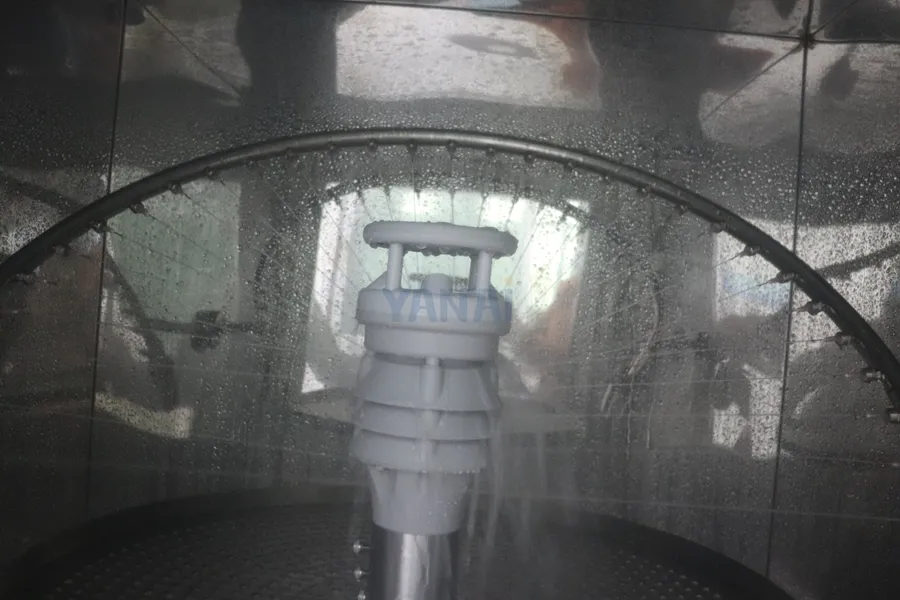
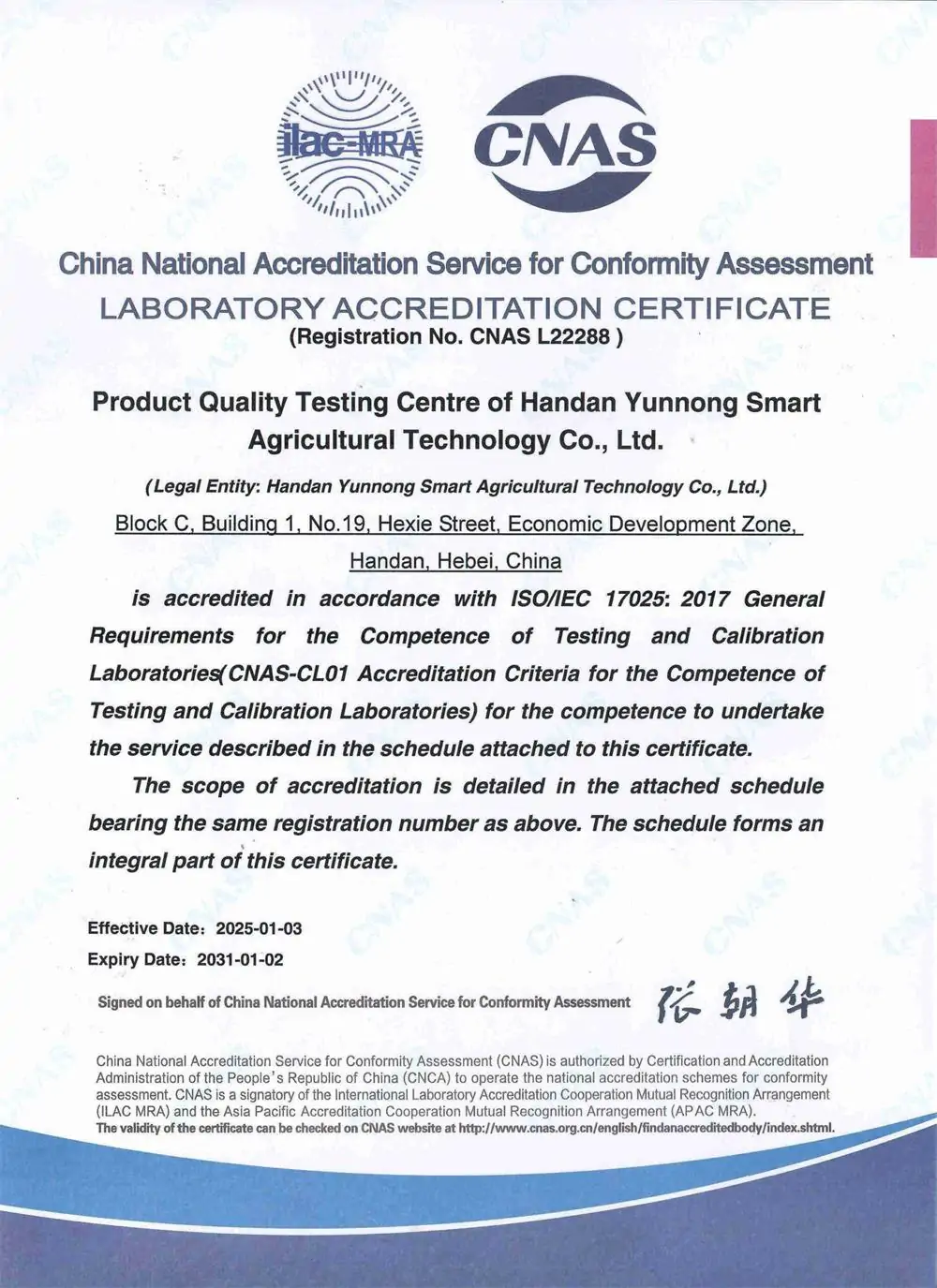
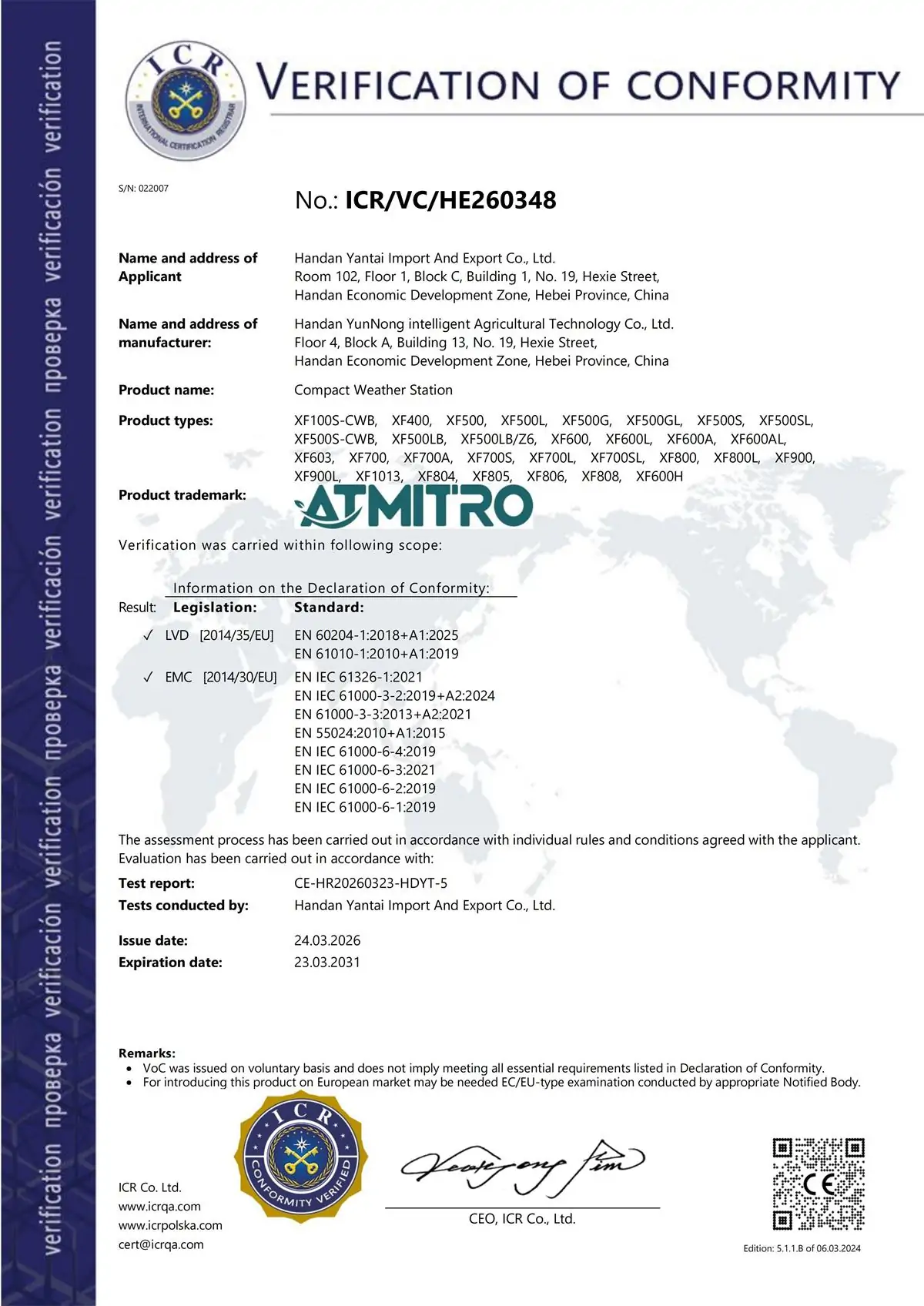
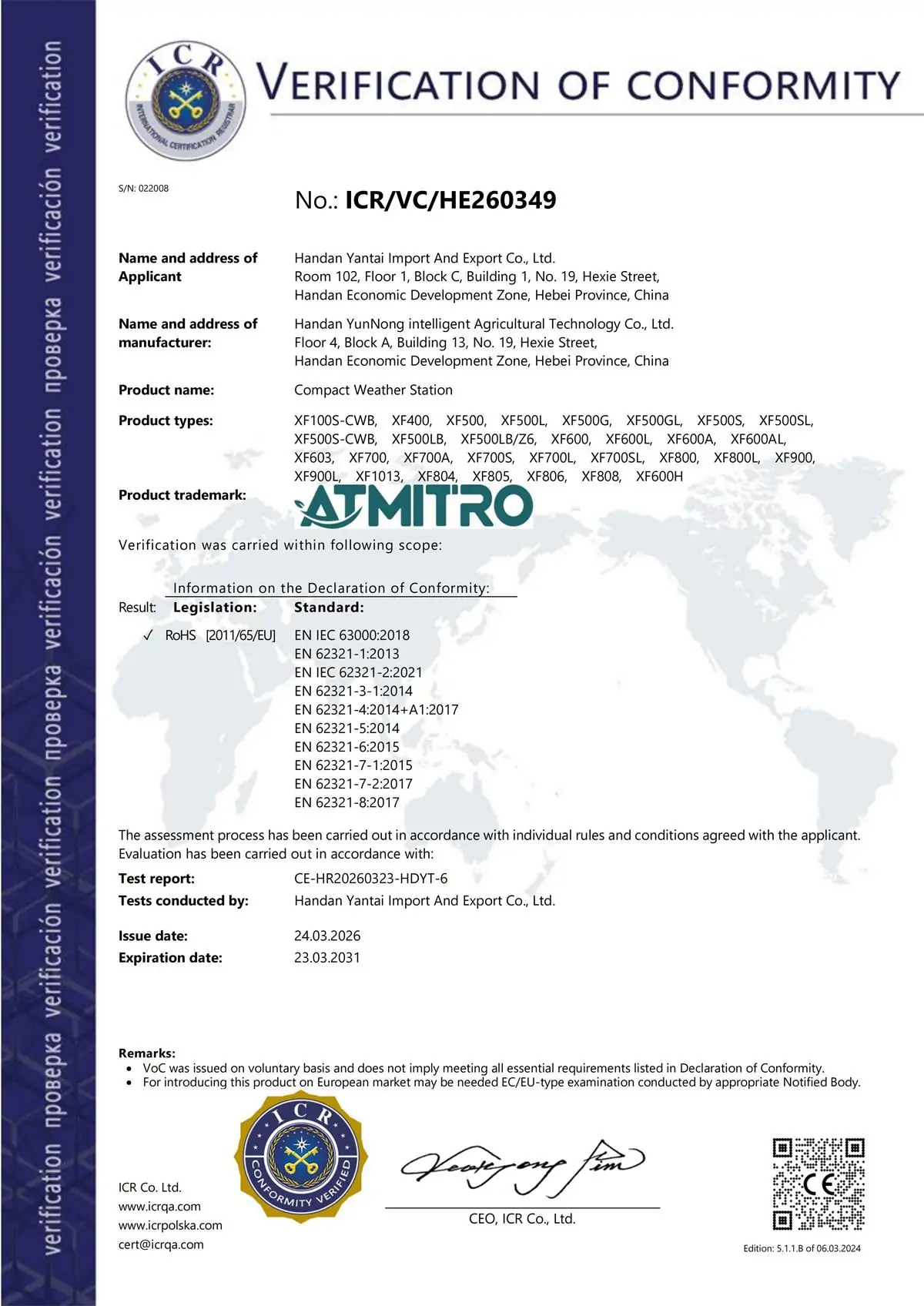
Yantai Sensor é um fabricante e fornecedor profissional de piranômetros, especializado em soluções de medição de radiação solar de alta precisão para sistemas de energia solar, monitoramento ambiental e pesquisa científica. Nossos piranômetros de termopilha são projetados para medir com precisão os níveis de radiação solar, fornecendo dados estáveis e confiáveis para monitoramento da taxa de desempenho (PR), otimização de energia e estudos climáticos. Com fortes capacidades independentes de P&D, instalações de fabricação avançadas e um laboratório de testes ambientais dedicado, cada piranômetro passa por rigorosos controles de qualidade, incluindo testes de temperatura, umidade, vibração e desempenho de longo prazo. Certificados com CE, ISO e RoHS, oferecemos produtos confiáveis juntamente com serviços flexíveis de OEM/ODM para apoiar projetos globais de energia solar e monitoramento climático.
Para que serve um piranômetro?.

FAQs
Contactar-nos
Está à procura de soluções personalizadas de sensores inteligentes? A nossa equipa é especializada em fornecer soluções escaláveis, flexíveis e personalizadas para satisfazer as suas necessidades específicas.
Preencha o formulário agora para obter uma solução personalizada. Os nossos especialistas fornecerão aconselhamento profissional e garantirão que o seu projeto decorra sem problemas. Contacte-nos hoje para começar a aumentar a eficiência!