用于太阳能光伏监测的参考式与蓝光灰尘传感器对比

导言

Dust monitoring has become an increasingly important part of solar PV operation and maintenance, but choosing the right sensing technology is not always straightforward. Many solar farms still rely on conventional dust monitoring methods that can indicate particle changes, yet these approaches may struggle to accurately reflect module surface contamination under strong sunlight, high temperatures, and changing outdoor conditions. For PV operators, the key challenge is not only detecting dust, but understanding how much dust has accumulated on modules and when cleaning is truly required.

This Dust Sensor Comparison guide explores the differences between Reference Dust Sensors and Blue Light Dust Sensors from the perspective of solar PV applications. Instead of focusing only on sensor specifications, this article compares their measurement principles, resistance to environmental interference, monitoring capabilities, and practical value for solar farm maintenance. It also introduces photovoltaic dust monitoring solutions, including blue light-based contamination monitoring and soiling evaluation technologies, to help operators select the most suitable approach for different PV environments.

Why Dust Monitoring Matters for Solar Farms?

Dust accumulation is a common challenge for solar PV plants, especially in regions with dry climates, frequent wind, or high airborne dust levels. Over time, dust deposits on module surfaces reduce sunlight transmission and can affect power generation. For large-scale solar farms, the main challenge is not only removing dust, but understanding the actual contamination level and deciding the right time for cleaning.

Traditional maintenance methods often rely on visual inspection or fixed cleaning schedules, which cannot always reflect real-time changes in module conditions. Dust monitoring allows operators to make maintenance decisions based on measured conditions rather than assumptions. However, not all sensing methods are designed for solar environments, and differences in detection principles can directly affect monitoring results and practical value.If you’d like to learn 天气监测如何提升太阳能电站的投资回报率, ,请点击该文章。.

PV Module Soiling Reduces Energy Output and Increases Maintenance Costs

Dust covering PV modules reduces the amount of solar radiation reaching the cells, which gradually lowers energy output. In utility-scale solar projects, even moderate soiling levels can accumulate into noticeable production losses over long operating periods.

At the same time, unclear dust conditions make cleaning management more difficult. Cleaning too early increases water, labor, and operation costs, while cleaning too late allows avoidable power losses to continue. Reliable contamination information helps operators better plan maintenance activities.

Limitations of Conventional Dust Sensors

Many solar farms still use manual checks or scheduled cleaning to manage module soiling. These approaches are simple but cannot continuously track contamination changes across large PV areas.

Conventional dust sensors may also have limitations when applied to solar farms. Some devices focus on airborne particle detection rather than the actual dust condition on module surfaces, and outdoor factors such as strong sunlight may affect measurement stability. These limitations have driven the development of more suitable sensing technologies for PV applications.

Reference Dust Sensor vs Blue Light Dust Sensor: How They Work

Different dust sensors are based on different measurement principles, which directly affects what type of dust information they can provide. Reference dust sensors are generally designed to detect airborne particles, while blue light dust sensors are developed for monitoring surface contamination on PV modules. Understanding this difference is essential when selecting a dust monitoring approach for solar applications.

Working Principle of Reference Dust Sensors

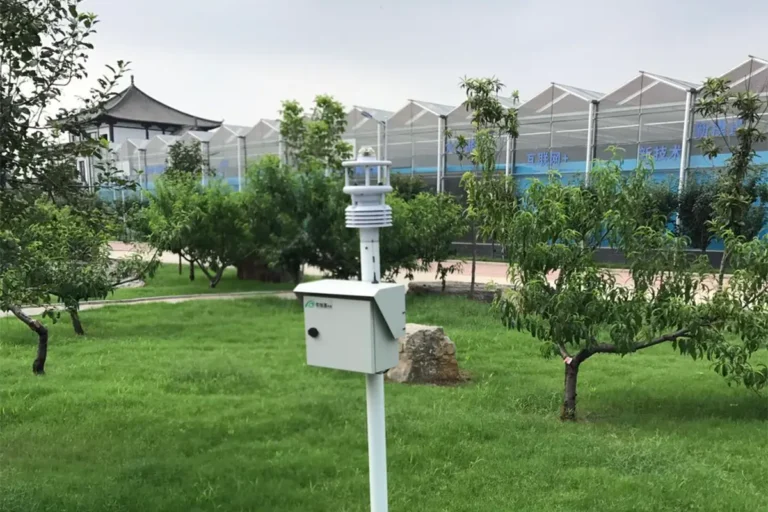
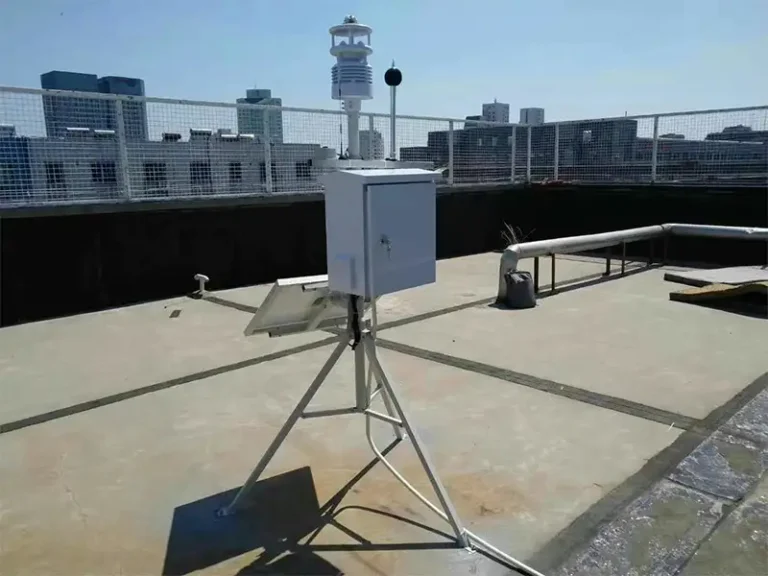
Reference dust sensors typically use optical scattering technology to estimate dust concentration. A built-in light source emits light into the detection area, and airborne particles scatter the light when they pass through the sensing path. The optical detector captures the scattered signal and converts it into dust concentration data.

This approach is widely used because of its simple structure, mature design, and relatively low cost. However, these sensors mainly measure suspended particles in the air rather than the actual dust accumulated on PV module surfaces. Under outdoor solar conditions, strong sunlight and changing environments may also affect measurement stability, limiting their ability to directly represent PV soiling levels.

Working Principle of Blue Light Dust Sensors

Blue light dust sensors use a specific short-wavelength light source and active optical measurement to monitor changes caused by dust accumulation on PV module surfaces. Instead of only detecting airborne particles, they analyze optical changes related to surface contamination through a controlled measurement path.

By comparing the optical signal from clean and contaminated surfaces, blue light sensing technology can estimate module soiling levels and provide more direct information about dust-related performance losses. Its active measurement design reduces interference from outdoor light conditions, making it more suitable for solar farms exposed to strong sunlight and changing weather environments.

Comparison FactorReference Dust SensorBlue Light Dust Sensor
Main purposeDetect airborne dust concentrationMonitor PV module surface contamination
测量原理Optical scatteringBlue light-based active optical measurement
Detection targetSuspended particlesDust accumulation on module surface
Environmental suitabilityGeneral indoor/industrial monitoringOutdoor solar PV environments
Data valueDust concentration informationSoiling condition for cleaning decisions

Why Blue Light Dust Sensors Are More Suitable for Solar PV Applications?

For solar PV plants, dust monitoring is not simply about detecting dust particles. The key requirement is understanding how much contamination has accumulated on module surfaces and how it may affect power generation. Compared with conventional dust sensors, blue light dust sensors are designed around PV soiling measurement needs, making the collected data more meaningful for cleaning decisions and O&M planning.

Better Measurement Stability

Solar farms operate in open outdoor environments where strong sunlight, high irradiance, and surface reflections can affect optical measurements. For dust sensors used in PV applications, maintaining stable measurement performance under changing light conditions is essential.

Blue light dust sensors use a specific wavelength light source combined with an active optical measurement method. This controlled measurement approach reduces the influence of ambient light and allows more consistent monitoring under outdoor conditions, including high-radiation and dusty environments.

Direct Monitoring of PV Module Surface Soiling Conditions

The main difference between general dust detection and PV soiling monitoring is the measurement target. Traditional dust sensors often focus on airborne particle concentration, while solar operators need information about dust accumulation directly affecting module performance.

Blue light dust sensors detect optical changes caused by dust deposits on module surfaces, allowing more direct assessment of contamination conditions. This makes them better suited for determining cleaning requirements and supporting data-based maintenance strategies.If you want to learn about 适用于光伏电站的最佳太阳能粉尘监测解决方案, ,请点击该文章。.

DustLV: Blue Light Dust Monitoring Solution

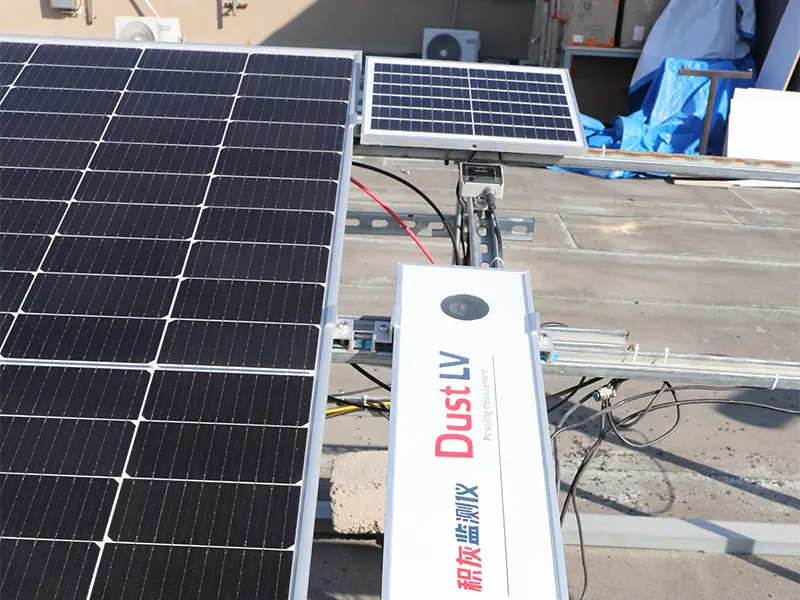
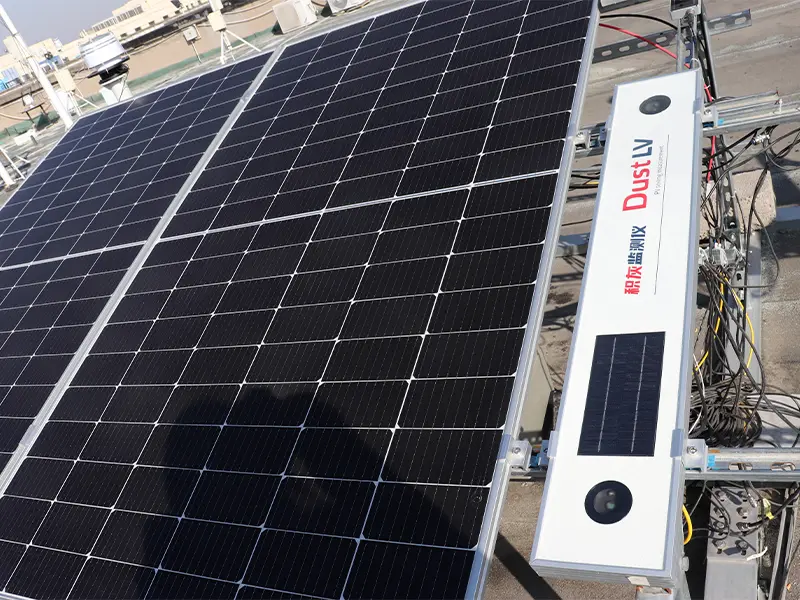
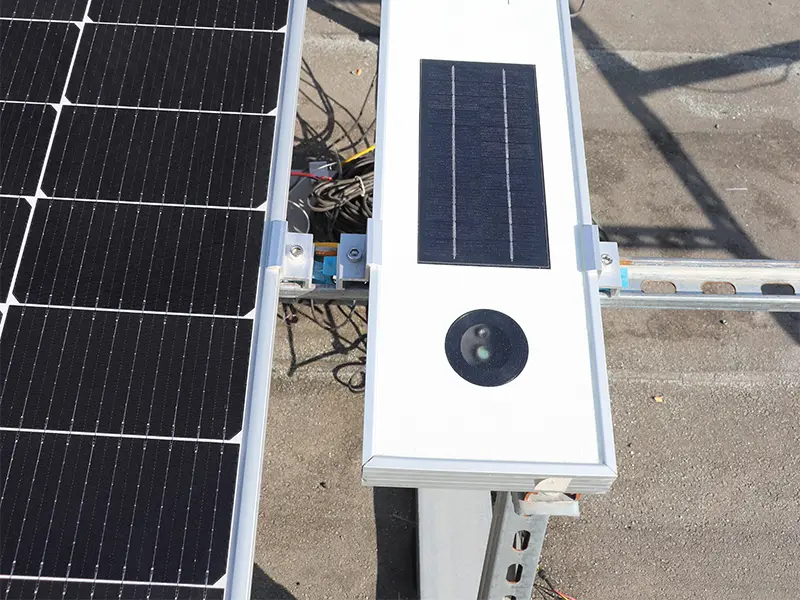
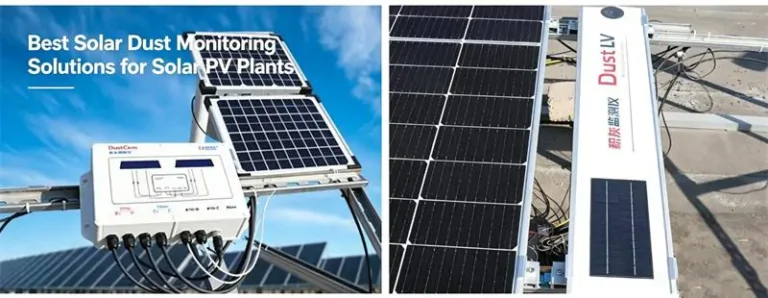
DustLV 光伏模块污染状态监测器 combines high-precision optical sensing with blue light measurement technology to continuously capture changes in reflected and scattered light from PV module surfaces. By analyzing these changes, DustLV can monitor dust accumulation levels and provide useful information for evaluating module cleanliness and maintenance timing.

Applications of Blue Light Dust Sensors in Solar PV Systems

Blue light dust sensors are mainly applied in solar PV systems where module surface contamination directly affects energy yield and maintenance decisions. Unlike conventional dust sensors that mainly measure airborne particles, blue light dust sensors focus on PV module soiling conditions, making them suitable for projects that require continuous monitoring of dust accumulation and cleaning requirements.

Utility-Scale Solar Farms in High-Dust Environments

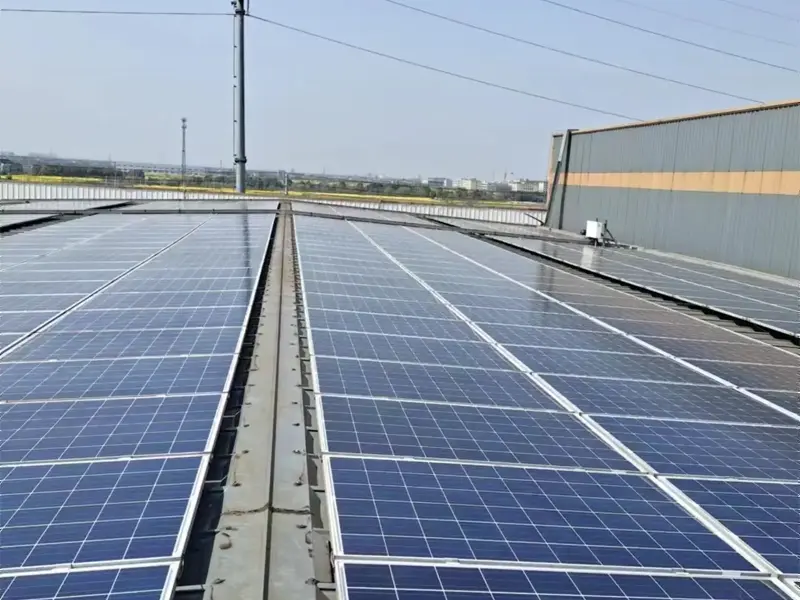
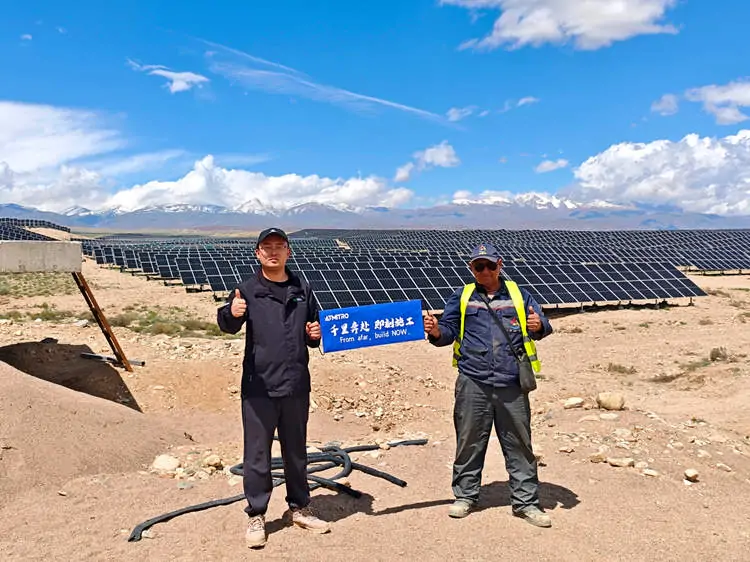
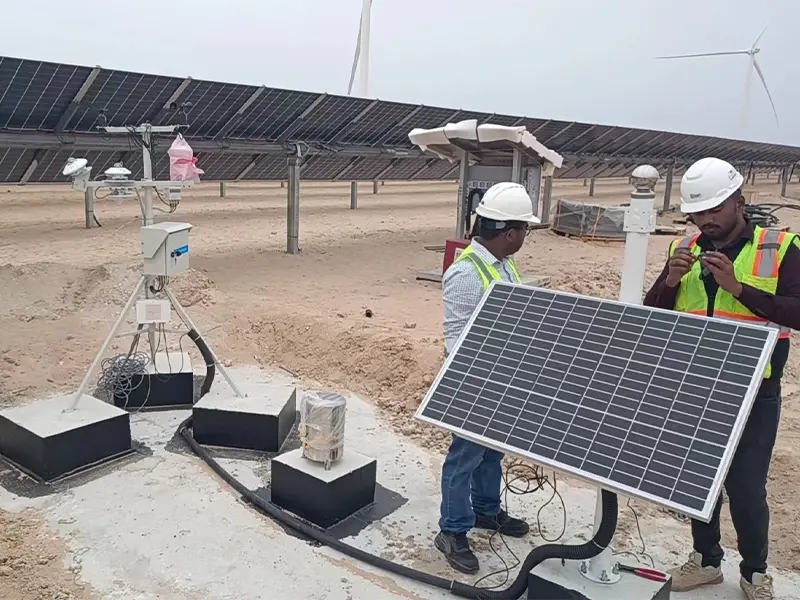
Large-scale solar farms located in deserts, dry areas, and regions with frequent dust storms are highly affected by module soiling. For these projects, manual inspection cannot accurately reflect contamination differences across large PV arrays. Blue light dust sensors can continuously monitor module surface cleanliness and provide data for cleaning decisions, helping operators identify when dust accumulation begins to impact PV performance.

Commercial and Industrial PV Systems with Remote Maintenance Needs

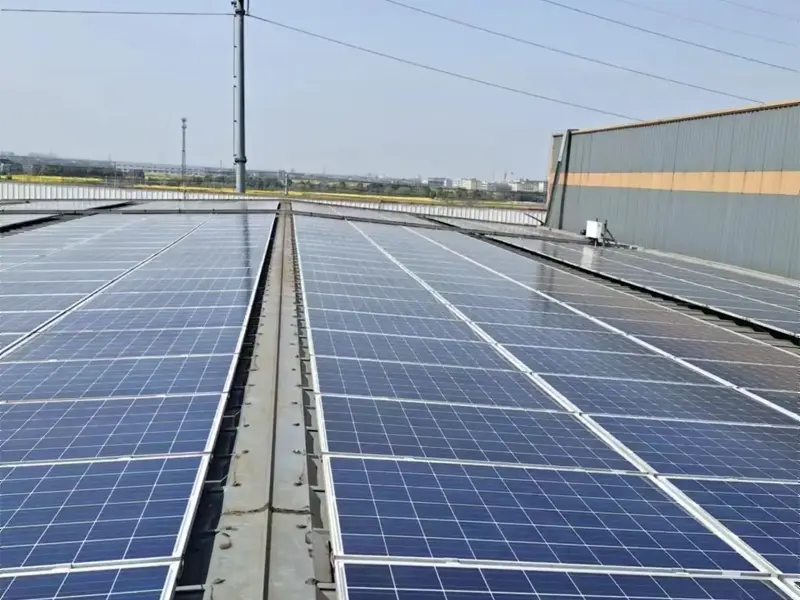
Industrial rooftops and distributed PV systems often have limited access for regular inspections, making it difficult to determine actual module cleanliness. By monitoring surface dust accumulation remotely, blue light dust sensors allow operators to understand soiling trends, assess cleaning requirements, and manage maintenance based on real module conditions instead of fixed schedules.

PV Plants Requiring Intelligent Soiling Monitoring Solutions

For modern PV plants moving toward digital operation and automated maintenance, accurate soiling data is becoming increasingly important. Blue light dust sensors can be integrated into PV monitoring systems to track contamination levels and support data-based cleaning strategies. Solutions such as DustLV Photovoltaic Module Pollution Status Monitor use blue light measurement technology to monitor changes on module surfaces and help operators manage PV soiling more effectively.

Photovoltaic Dust Monitoring Solutions for Different O&M Requirements

Solar PV operators may have different requirements when managing dust-related losses. Some need to track module surface contamination and determine cleaning timing, while others need to quantify how dust accumulation affects actual power generation. Choosing the right approach depends on whether the goal is maintenance planning, performance evaluation, or long-term PV operation analysis.

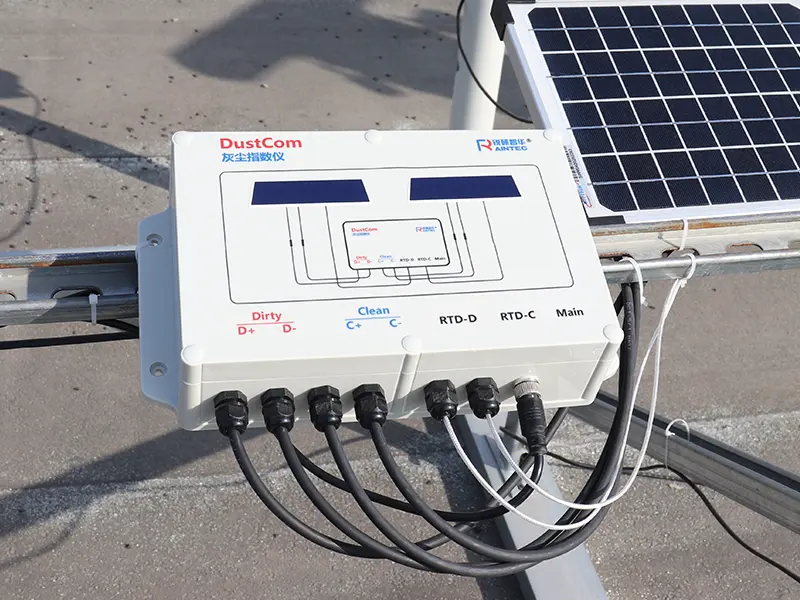
DustCom 光伏粉尘指数监测系统

DustCom is designed for solar operators who need to quantify how dust accumulation affects PV energy production. Instead of only monitoring surface contamination, it evaluates soiling-related power losses by comparing the electrical performance of a clean reference module and a dust-contaminated module under similar conditions. By combining module electrical data, solar radiation, and temperature measurements, DustCom calculates the Soiling Loss Index (SLI), providing measurable data for cleaning strategy evaluation, PV performance analysis, and long-term O&M planning.

How to Select the Right Dust Sensor for Solar Farms

Choosing the right dust sensor for a solar farm starts with understanding what needs to be measured. Reference dust sensors are generally used for detecting airborne particle concentration, while PV applications usually require monitoring the actual impact of dust accumulation on module performance. For projects that need to track surface contamination changes and cleaning requirements, a Blue Light Dust Sensor such as DustLV is more suitable. If the goal is to evaluate energy losses caused by soiling, a soiling loss monitoring system such as DustCom can provide direct performance-based analysis.

The installation environment is another key factor when selecting dust monitoring technology. Solar farms in deserts, high-irradiance regions, or areas with frequent dust events face stronger challenges from sunlight interference, temperature changes, and particle accumulation. Compared with conventional reference dust sensors, blue light dust sensors are designed for outdoor PV conditions by using active optical measurement and specific wavelength detection, allowing more stable monitoring of module soiling under complex environmental conditions.

Finally, the dust sensor should match the existing PV operation and maintenance system. Large-scale solar plants usually require integration with data acquisition systems, SCADA platforms, and remote monitoring networks. Communication compatibility, such as RS485 Modbus support, data transmission capability, and long-term operating stability, should be considered to ensure that dust monitoring data can be effectively used for cleaning decisions and PV performance management.

结论

Reference Dust Sensors and Blue Light Dust Sensors are based on different measurement principles and serve different monitoring purposes. While reference sensors can be suitable for general dust concentration monitoring, solar PV applications require more accurate evaluation of module surface soiling under strong outdoor radiation conditions. Selecting the right dust monitoring technology should consider measurement accuracy, environmental adaptability, and the specific maintenance objectives of the solar plant.

Yantai Sensor provides photovoltaic dust monitoring solutions, including blue light-based module contamination monitoring and PV soiling loss evaluation systems, to meet different solar project requirements. If you are planning a solar dust monitoring system or need support selecting the right technology for your PV application, 请联系烟台传感器 to discuss your project requirements and find a suitable monitoring solution.

常见问题

参考粉尘传感器主要采用光学散射方法测量空气中颗粒物浓度。蓝光粉尘传感器专为光伏组件污损监测设计,通过主动光学测量检测表面污染变化。主要区别在于,参考传感器侧重于粉尘浓度,而蓝光传感器更能反映影响太阳能组件的实际污损状况。.

蓝色光粉尘传感器因其专为强日照和变化环境下的户外条件设计,而成为太阳能光伏应用的优选。其主动光学测量减少了背景光的干扰,并提高了对微小积尘变化的灵敏度,使其更适合监测光伏组件清洁度,并支持基于数据的清洁决策。.

传统粉尘传感器主要显示污染变化,但无法直接计算能量损失。诸如DustCom的光伏污秽评估系统通过测量清洁与污染组件之间的差异,并结合太阳辐射和温度数据来计算污秽损失指数(SLI),帮助运维人员了解粉尘对发电的实际影响。.

是的。沙漠光伏电站通常面临高太阳辐射、频繁积尘和极端温度变化。蓝光粉尘传感器采用主动光学测量技术,可减少阳光干扰并保持稳定的监测性能,适用于干旱高粉尘环境下的大型光伏项目。.

光伏灰尘监测系统通过提供组件污染水平的实时信息,减少不必要的清洁工作。操作人员无需遵循固定的清洁计划,而是可以根据实际污损状况安排维护。这种方法有助于平衡清洁成本与发电损失,尤其适用于环境条件各异的大型太阳能电站。.

选择太阳能灰尘传感器需要考虑监测目标、测量精度、环境条件及系统兼容性。专注于光伏组件污染监测的项目可能更倾向于蓝光灰尘传感器,而评估能量损失的项目则可能需要诸如DustCom之类的污损损失测量系统。.

是的。工业光伏灰尘监测系统通常可以通过RS485 Modbus等通信接口与现有监测平台连接。这使得操作人员能够将灰尘数据与光伏运行及环境信息相结合,进行集中监测、维护规划和长期性能分析。.

维护要求取决于传感器设计和安装环境。工业光伏灰尘监测系统通常设计用于长期户外运行。定期检查传感器表面、通信状态和安装条件,有助于保持测量精度,并确保在整个运行期间性能稳定。.

相关文章