导言
光伏监测系统的作用不仅仅是记录太阳辐照度。其测量数据用于评估电站性能、识别潜在损失并支持性能评价。在实际项目中,挑战不仅仅是选择精确的传感器。监测等级、所需参数、传感器安装、校准和数据质量都会影响所采集数据是否具有代表性和实用性。.
IEC 61724 不仅仅是传感器规格。IEC 61724-1:2021 提供了光伏系统性能监测的框架,涵盖监测设备、测量方法、数据质量和监测等级。所需的测量配置可能因光伏系统配置和监测目的而异。例如,双面系统可能需要额外的辐照度测量以考虑背面贡献。.
本指南解释了 IEC 61724 的主要要求,并将其与实际传感器选型相结合。涵盖监测等级、辐照度和温度测量、风速和积灰监测、传感器安装、校准、数据采集以及指定光伏监测系统时需要检查的关键要点。.
IEC 61724 对光伏监测系统意味着什么?
IEC 61724-1:2021 提供了监测光伏系统性能的要求和建议。它涵盖了从光伏系统采集有意义的性能数据所需的设备、测量方法、监测参数和数据质量。在实际项目中,它提供了一个通用框架,用于确定应测量什么以及监测系统应如何配置。.
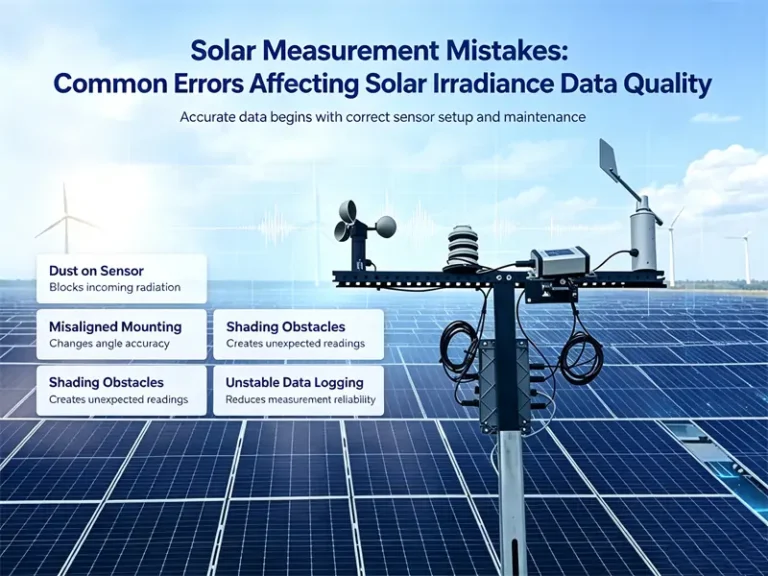
这不仅仅是传感器的问题。光伏监测数据的价值取决于完整的测量过程:传感器 → 安装 → 数据采集 → 数据质量 → 性能分析。例如,即使辐照度传感器很精确,如果安装位置不当、维护不善或连接到记录测量数据不正确的系统,也无法提供具有代表性的数据。同样的原则适用于温度、风速和积灰测量。.
在设备选型方面,应在选择单个传感器之前确定监测等级和所需测量参数。这为将传感器精度、测量范围、安装方法、通信接口和维护要求与实际光伏项目相匹配提供了实用依据。.
IEC 61724-1:2021:有哪些变化?
对于任何指定光伏监测系统的人来说,2021 版之所以重要,是因为其中的一些变化会影响监测等级、辐照度测量和积灰测量的配置方式。您无需阅读每一条款就能理解实际影响。在选择和运用光伏监测传感器时,有三个领域尤为相关。.
C 级被移除
IEC 61724-1:2021 使用 A 级和 B 级监测系统,而上一版中的 C 级类别已被移除。因此,在为项目定义测量设备和传感器要求之前,需要先确定监测等级。.
双面光伏监测
双面组件的前后表面均接收辐射。对于这些系统,监测配置可能需要根据光伏设计和监测目的考虑背面辐照度和反射辐射。这使得传感器类型、测量位置和安装几何结构比单纯根据精度规格选择传感器更为重要。.
辐照度和积灰测量
2021 版还更新了与辐照度测量和积灰评估相关的要求。在实际项目中,这些测量不仅取决于传感器本身,还取决于校准、安装、清洁和长期测量稳定性。因此,辐照度和积灰传感器应被视为完整监测配置的一部分,而非独立仪器。.
实际要点很简单:先确定监测等级和所需测量参数,然后选择与之匹配的传感器和安装方法。当电站使用双面组件或需要更详细的性能分析时,这一点尤为重要。.
IEC 61724 A 级与 B 级
A 级比 B 级提供更严格的监测要求。差异主要体现在光伏监测系统所需的测量质量、监测设备、安装控制和维护方面。.
| 监测级别 | 更高的测量质量 | 中等测量质量 |
| 设备要求 | 更严格 | 较宽松 |
| 安装 | 更严格的测量条件控制 | 更简单的要求 |
| 维护 | 更严格 | 较宽松 |
| 主要用途 | 详细性能监测 | 一般性能监测 |
电站容量本身并不决定监测等级。项目目的、所需测量质量、光伏配置和性能评估要求应综合考虑。较大的电站并不自动需要 A 级,正如较小的电站并不自动限于 B 级。.
IEC 监测等级与总辐射表等级
购买总辐射表时容易忽略的一点:IEC 61724 A/B 级和 ISO 9060 A/B 级不是相同的分类。.
IEC 61724 A 级和 B 级描述的是光伏性能监测系统,而 ISO 9060 A 级和 B 级描述的是总辐射表的性能分类。这两种分类都与测量质量相关,但适用于不同的对象。.
在指定辐照度传感器时,这一区别很重要。首先确定光伏项目的监测要求。然后根据所需的测量性能、适用的 ISO 分类、测量平面、校准和安装条件选择总辐射表。.
如果您正在比较 A 级和 B 级总辐射表,我们的指南“A级与B级总辐射表:您需要哪一种?”解释了两种 ISO 9060 分类之间的区别以及购买前需要检查的实际要点。.
IEC 61724 光伏监测中使用哪些传感器?
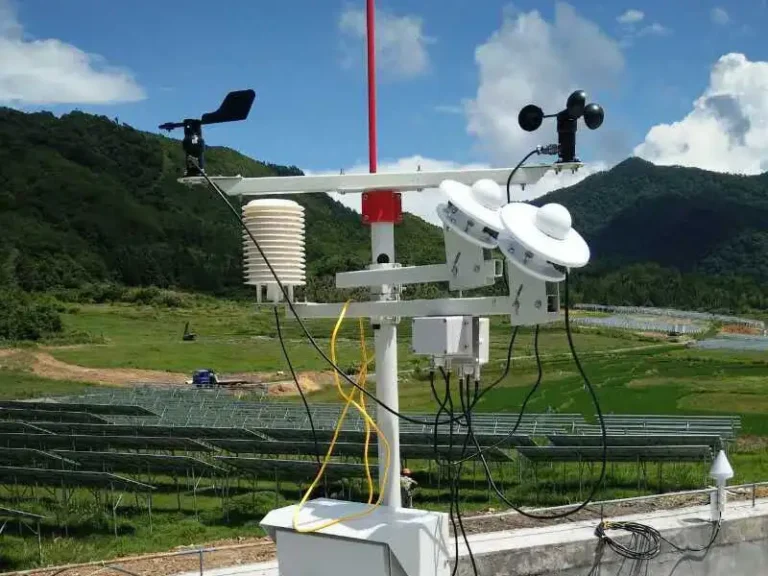
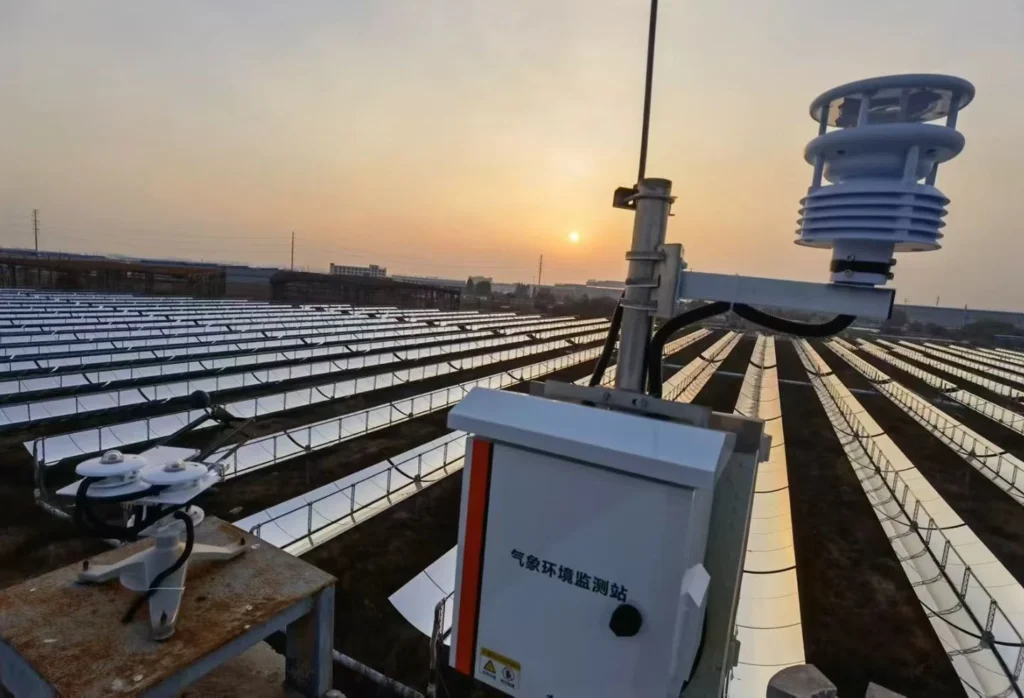
光伏监测系统使用不同的传感器来测量辐照度、组件温度、天气状况和积灰。所需的配置因监测等级和光伏电站设计而异。传感器选型应从性能分析所需的参数入手。.
POA辐照度传感器
POA辐照度测量光伏组件同一平面上接收的太阳辐射。它为阵列可用的太阳能提供参考,是性能分析的重要输入。.
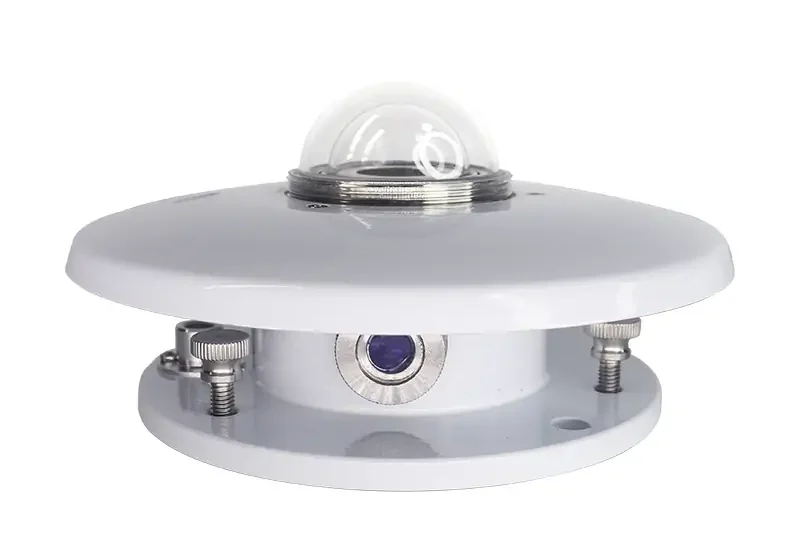
传感器倾角和朝向应与光伏阵列匹配。还应避免遮挡和障碍物。. 烟台传感器 TBQ-2C 是一款专为太阳辐射测量设计的热电堆总辐射表,可用于光伏辐照度监测。.
GHI测量
GHI测量水平面上接收的太阳辐射。它为站点太阳能资源提供参考,可支持光伏性能分析。.
GHI和POA不应被视为可互换的测量值。GHI使用水平参考面,而POA跟随光伏阵列的朝向。TBQ-2C可用于全球太阳辐射测量。.
模块温度传感器
组件温度影响光伏电力输出,且可能与环境空气温度存在显著差异。直接测量组件在解读功率输出变化时能提供更有用的信息。.
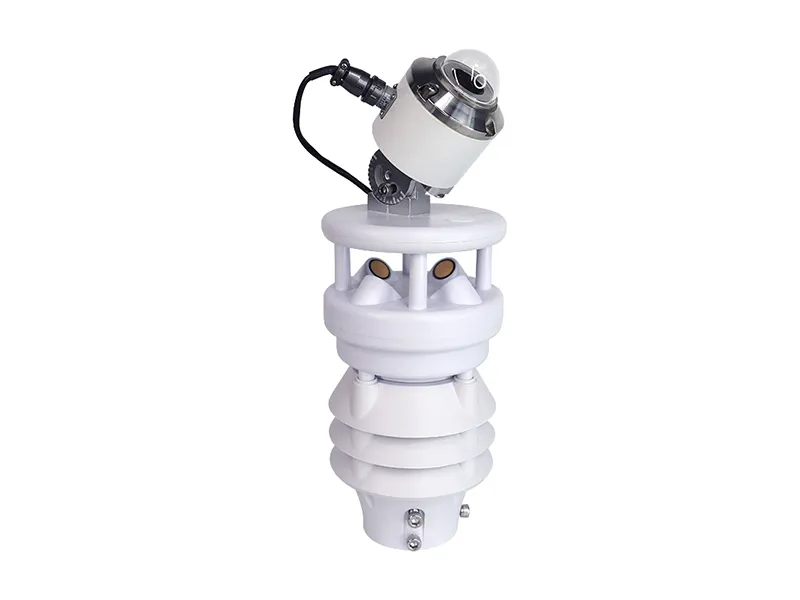
传感器应与代表性组件保持良好热接触。Yantai Sensor的组件温度传感器支持光伏环境监测,而 XF500S-CWB 将组件温度测量集成到紧凑型光伏监测系统中。.
Ambient Temperature and Weather Sensors
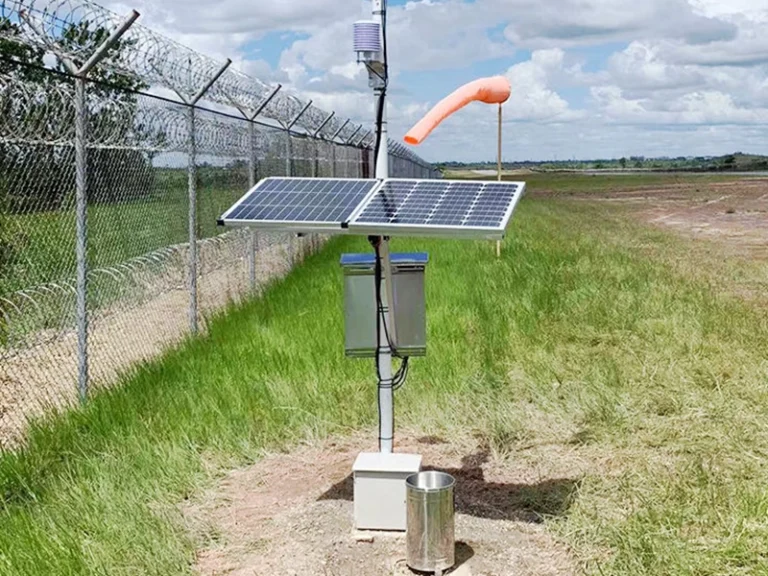
Ambient temperature provides basic environmental information for PV performance analysis. Wind speed and direction help explain heat dissipation from the modules and changing site conditions.
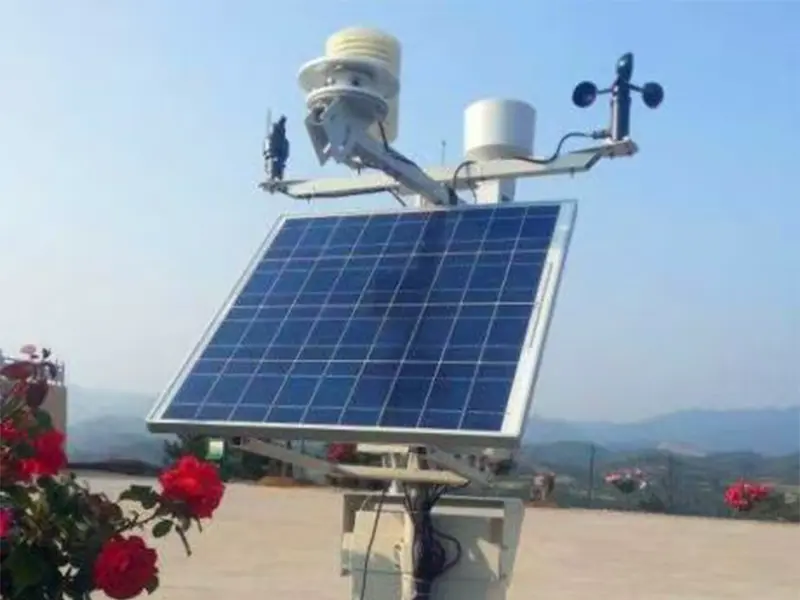
XF500S-CWB integrates ambient temperature, humidity, module temperature, wind speed, wind direction, atmospheric pressure, and POA radiation in one compact monitoring unit. It is suitable for projects that need several PV environmental parameters from a single device.
积灰传感器
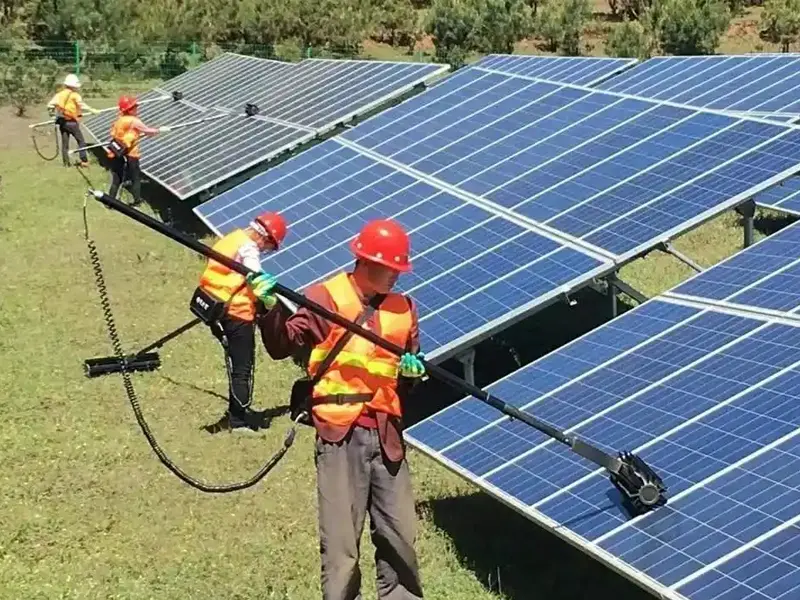
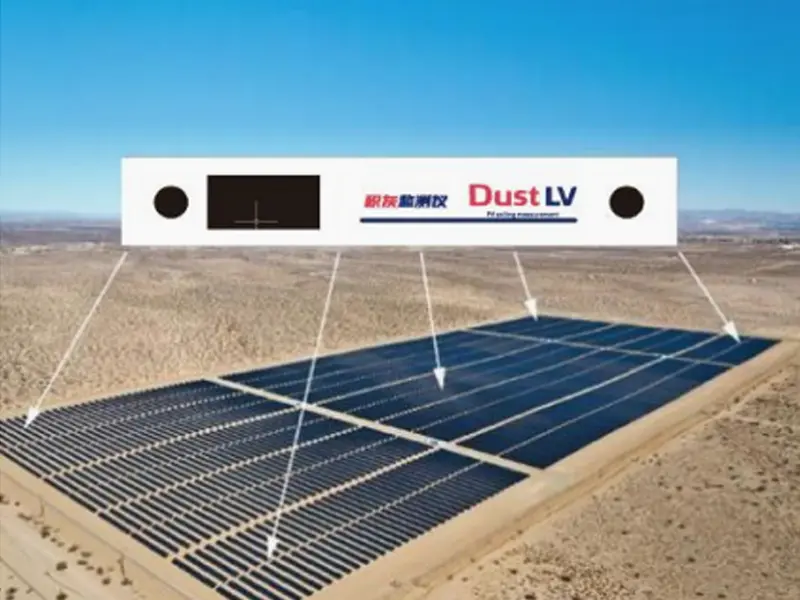
Dust and other surface contamination can reduce the radiation reaching PV modules. A soiling sensor helps quantify this effect and provides useful data for cleaning decisions.
尘埃LV is designed for photovoltaic module pollution monitoring. It tracks surface contamination through optical measurement and provides a pollution status index for ongoing monitoring.
Rear-Side Irradiance and Albedo for Bifacial PV
Bifacial modules also receive radiation on their rear surface. Monitoring may therefore include rear-side irradiance or reflected radiation, depending on the PV layout and evaluation purpose.
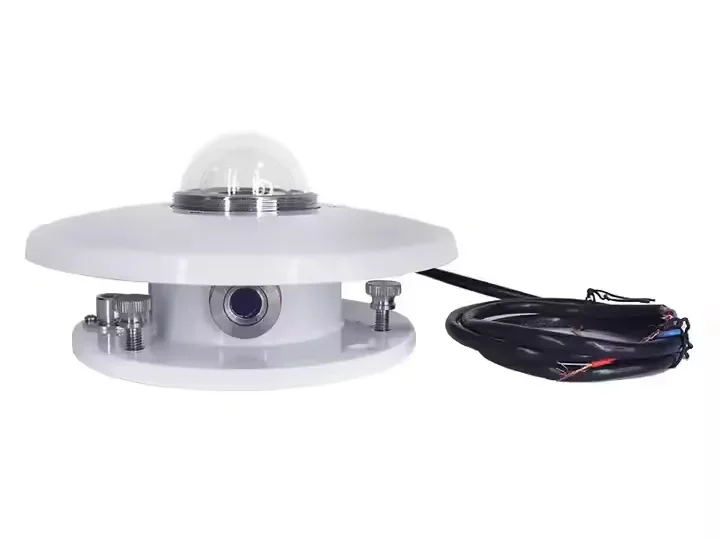
Sensor position becomes particularly important in this application because rear-side radiation varies with module height, row spacing, ground surface, and surrounding conditions. RYQ-3 can be configured for PV radiation monitoring applications that require additional radiation measurements.
How to Match PV Parameters with Sensors?
Sensor selection should start with the parameter that needs to be measured, then consider the PV plant design, monitoring purpose, measurement quality, and installation conditions. The table below gives a practical reference for matching common PV monitoring parameters with suitable sensor types.
| PV Parameter | What It Tells You | Typical Sensor |
| POA irradiance | Solar radiation received by the PV array plane | Pyranometer / irradiance sensor |
| GHI | Solar radiation on a horizontal plane | 测温仪 |
| 组件温度 | Operating temperature of PV modules | Module temperature sensor |
| 环境温度 | Surrounding air temperature | Temperature sensor |
| 湿度 | Site moisture and environmental conditions | Humidity sensor |
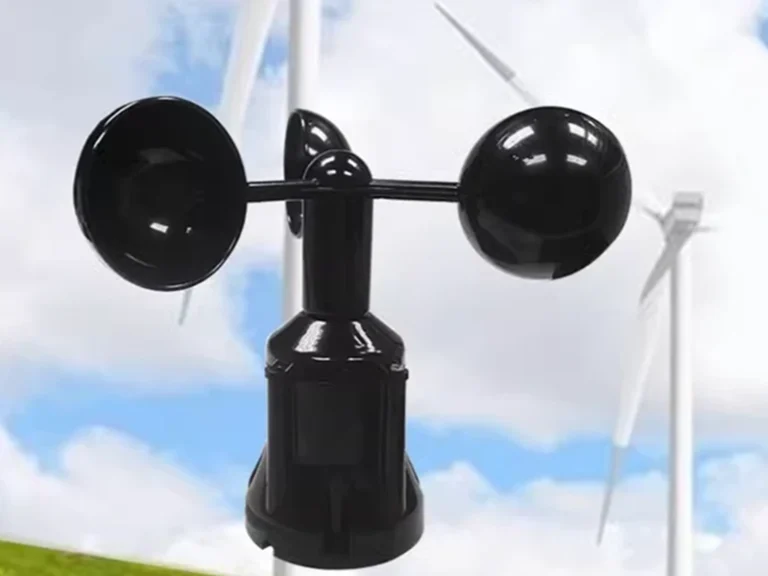
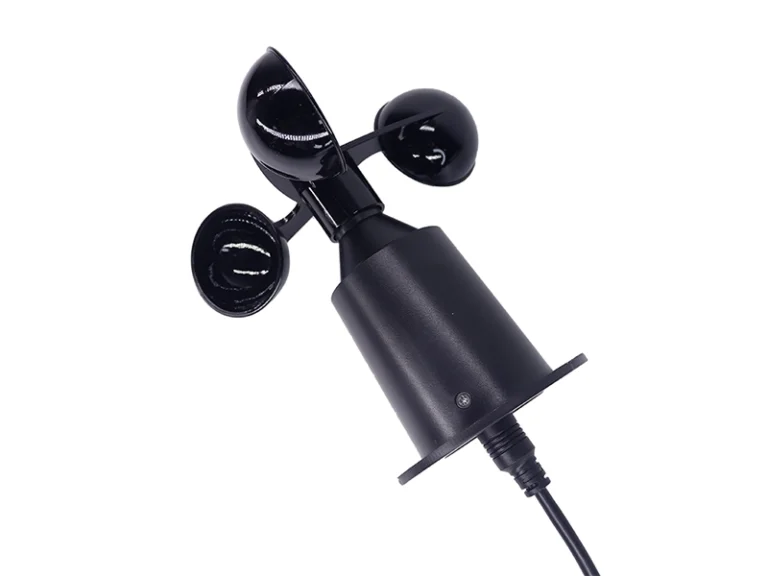
| 风速 | Air movement and module cooling conditions | 风速计 |
| 风向 | Local airflow conditions | 风向传感器 |
| 积尘 | Module surface contamination and related losses | Soiling sensor |
| Rear-side irradiance | Radiation available to bifacial module rear surfaces | Irradiance sensor |
| Albedo | Radiation reflected by the ground surface | Albedo measurement system |
How Many Sensors Does a PV Plant Need?
There is no fixed sensor quantity for every PV plant. The required number depends on the monitoring class, plant size, site layout, module orientation, tracker configuration, bifacial design, and local environmental variation.
A practical approach is to place enough sensors to capture meaningful differences across the PV field. The goal is not to install as many sensors as possible, but to obtain representative measurements for the areas being monitored.
For procurement, sensor quantity should therefore be defined together with the plant layout and monitoring requirements rather than selected from plant capacity alone.
Where Should PV Monitoring Sensors Be Installed?
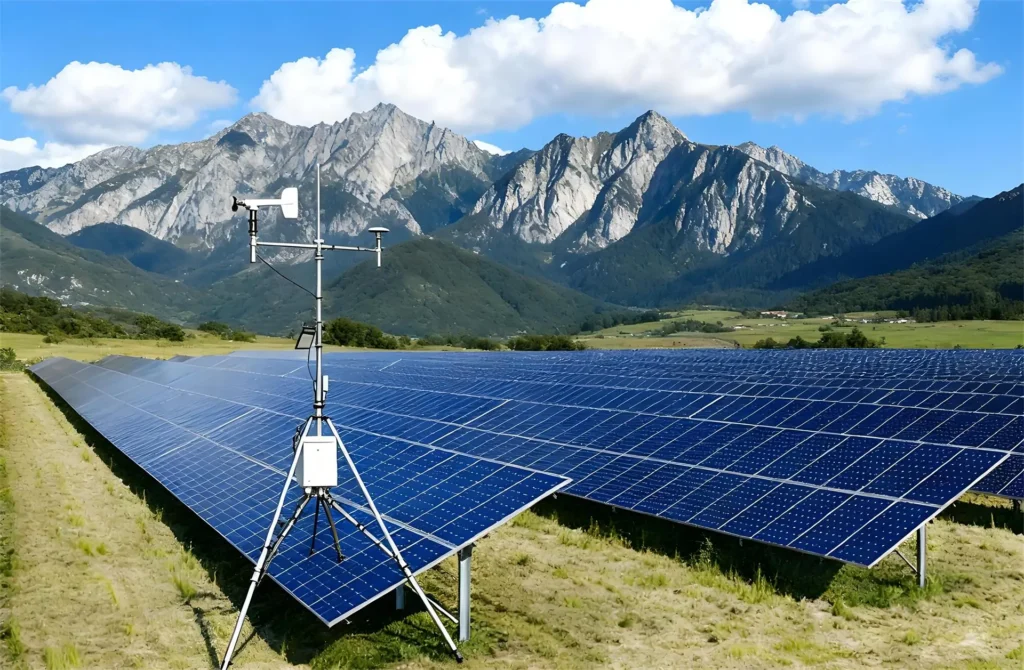
Sensor placement directly affects whether the collected data represents the PV field. Each sensor should therefore be installed according to what it measures and the conditions around the array.
Irradiance Sensor
Install the irradiance sensor in the same plane and orientation as the PV array being monitored. Avoid shading from modules, structures, trees, or other equipment, and keep the sensor accessible for cleaning and inspection.
模块温度传感器
Mount the sensor firmly on a representative PV module and maintain stable thermal contact with the module surface. The selected module should reflect typical operating conditions in the monitored area rather than an unusual location within the array.
风速风向传感器
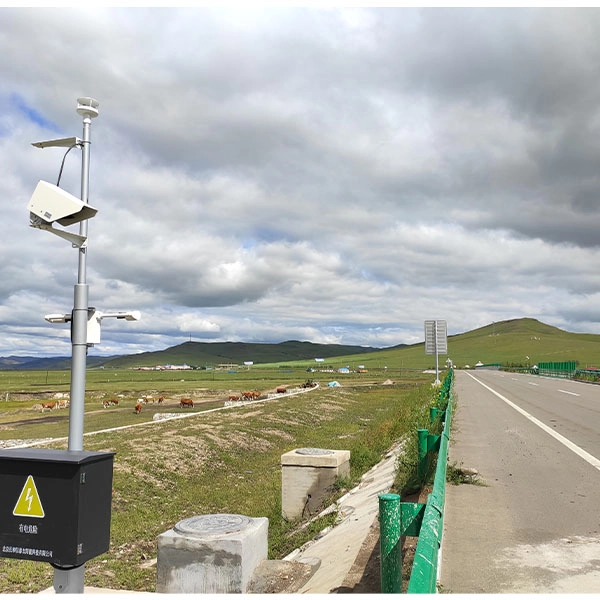
Choose a position with unobstructed airflow and keep the sensor away from structures, equipment, or other sources of local turbulence. The installation height should suit the PV layout and the purpose of the measurement.
积灰传感器
Place the soiling sensor where dust exposure is representative of the PV modules being monitored. It should be easy to access for cleaning, inspection, and periodic maintenance.
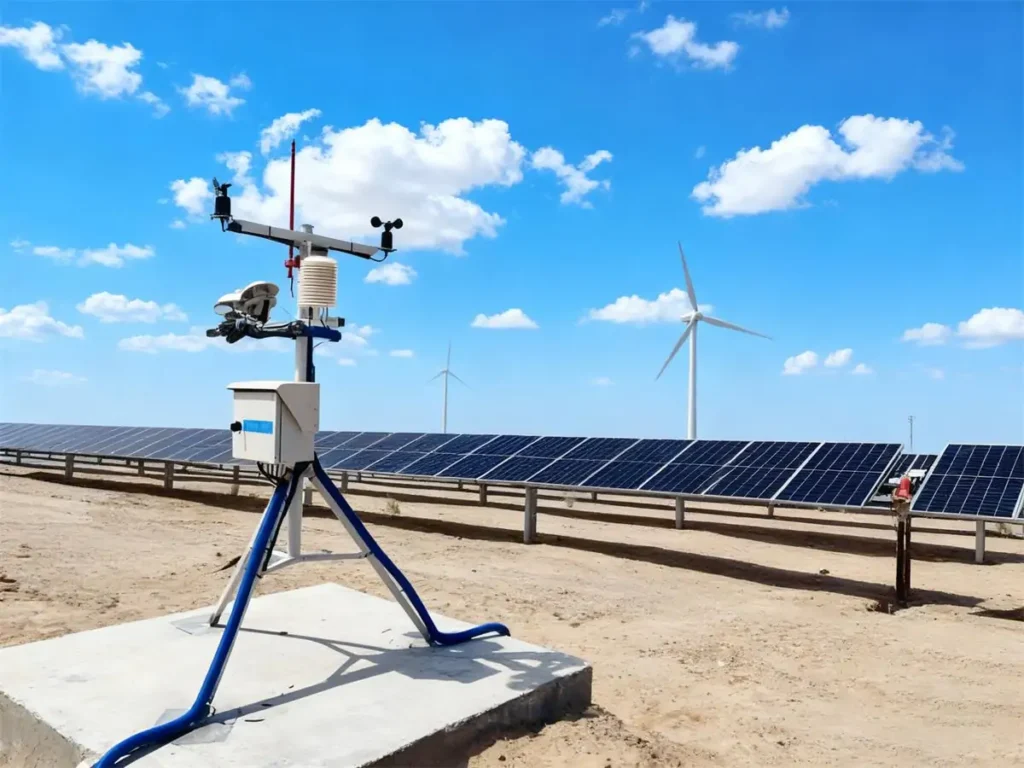
Sensor Accuracy, Calibration and Maintenance
A sensor may look good on paper and still give poor data in the field. When comparing PV monitoring sensors, check the measurement range, response, stability, operating conditions, and the measurement requirements that apply to the project. The sensor specification needs to make sense for the conditions where it will actually be installed.
Check Accuracy
Accuracy is only one number on a datasheet. Look at the measurement range, response time, stability, and operating temperature as well. For irradiance sensors, the measurement performance and installation conditions are especially important because small errors can affect later performance analysis.
Check Calibration
Ask for the calibration certificate before placing the order. It is also worth checking the calibration date, traceability, and recommended recalibration interval. These details become important when the monitoring data will be used for long-term plant assessment or compared with other measurement records.
Check Maintenance
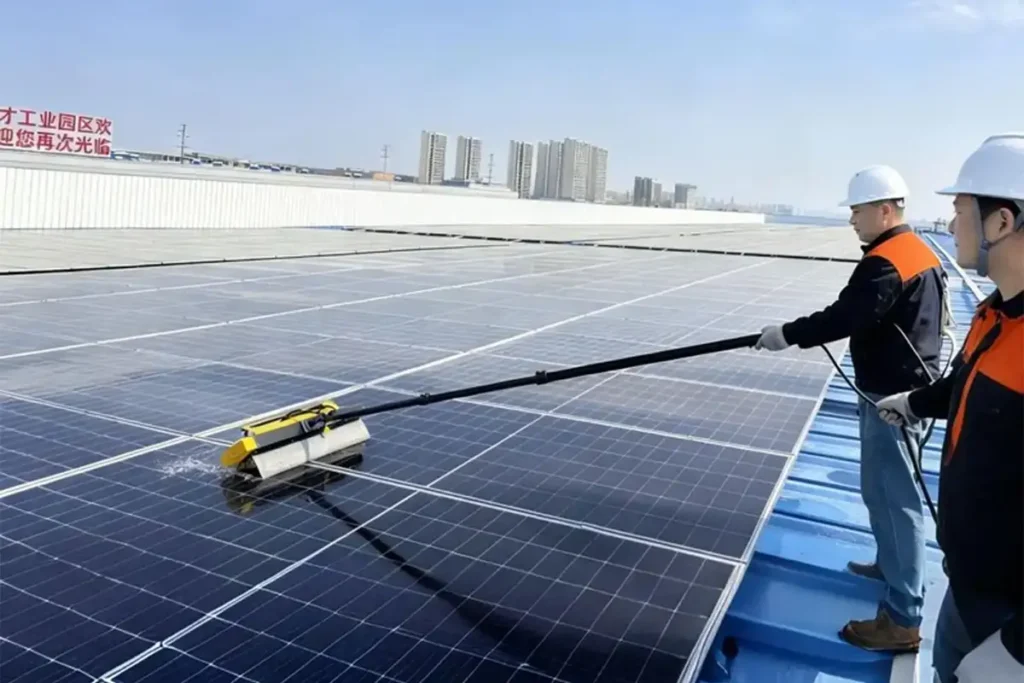
Most maintenance is straightforward: keep the sensing surface clean, check the sensor position, inspect cables and connectors, and make sure the mounting has not shifted. The required frequency depends on the site. Dusty locations may need more frequent cleaning, while exposed outdoor equipment needs regular checks for weather or mechanical damage.
Sensor accuracy is only one part of measurement quality. Installation, calibration, and maintenance also affect the final data.
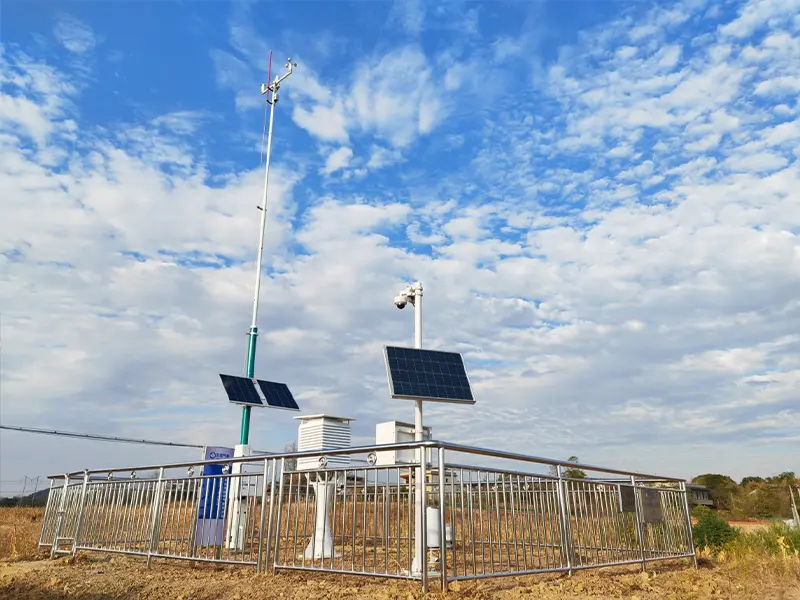


How IEC 61724 Data Supports PV Performance Analysis?
Once the monitoring system is running, each sensor provides a different piece of the performance picture. Irradiance shows how much solar energy was available to the PV array, while module temperature helps explain temperature-related changes in output. Wind and other environmental measurements add context to changing site conditions, and soiling data can help identify losses caused by dust and surface contamination.
These measurements become much more useful when they are analyzed together with the plant’s electrical output. IEC 61724 provides a common framework for collecting and using this data, making it easier to track performance, investigate unusual output, and understand the factors behind changes in generation. This is why sensor selection matters. The quality and representativeness of the measurements directly affect the quality of the performance analysis.
结论
IEC 61724 provides a practical framework for collecting and using PV performance data. For a monitoring project, the key is to match the monitoring class and PV configuration with the right measurement parameters, sensor specifications, installation conditions, and maintenance plan. Good monitoring depends on the whole measurement setup, not a sensor specification alone.
Yantai Sensor provides irradiance, temperature, weather, and soiling sensing options for PV monitoring applications, with different measurement ranges and communication interfaces available for project requirements. 联系Yantai Sensor and share your PV plant configuration and monitoring parameters with our team. We can help you discuss a suitable sensor setup for your project.