Introducción
Al seleccionar un piranómetro para un proyecto de monitoreo solar, los compradores a menudo enfrentan una pregunta práctica: piranómetros Clase A vs Clase B—¿cuál es el adecuado para el proyecto? La respuesta no se trata simplemente de elegir el sensor más preciso o más costoso. Depende de cómo se utilizarán los datos de irradiancia, qué requiere la especificación del proyecto y cuánta incertidumbre de medición puede aceptar la aplicación.
Bajo ISO 9060:2018, los piranómetros Clase A y Clase B tienen diferentes requisitos de rendimiento. La Clase A generalmente se selecciona cuando el rendimiento de medición más estricto y la estabilidad de datos a largo plazo son importantes, mientras que la Clase B puede proporcionar un equilibrio práctico para el monitoreo rutinario de PV, meteorológico y ambiental.
En proyectos reales, la decisión también debe considerar el propósito de la medición, la norma aplicable, el requisito de GHI o POA, el entorno de instalación, la calibración y la interfaz de comunicación. Este artículo explica la diferencia práctica entre Clase A y Clase B y ayuda a los compradores a determinar qué piranómetro es apropiado para su aplicación. Si está comparando diferentes tecnologías de piranómetros, consulte nuestra guía sobre piranómetros de termopila vs silicio para un análisis más detallado de sus diferencias y criterios de selección.
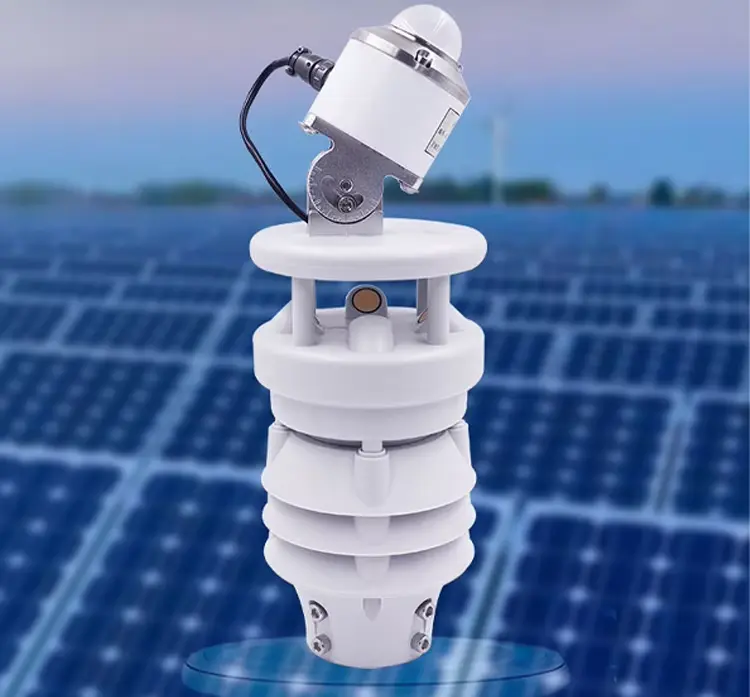
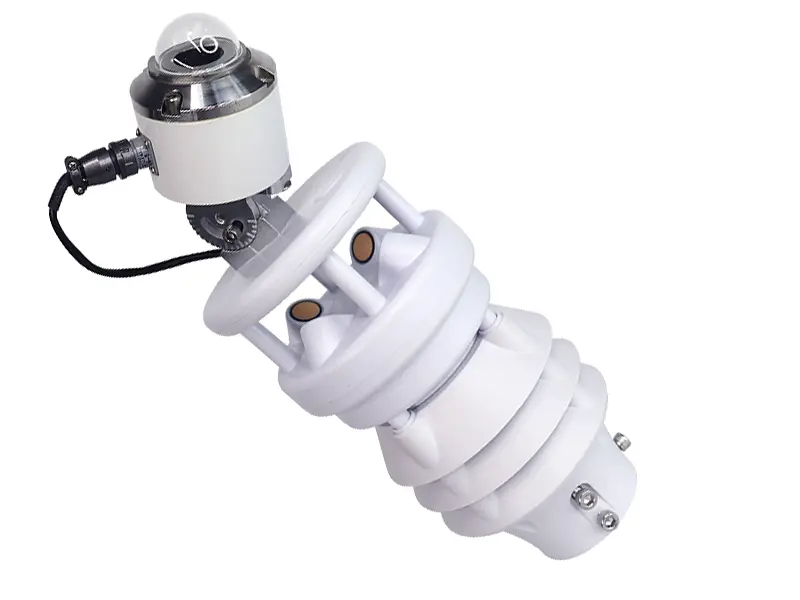
Piranómetros Clase A vs Clase B: De un vistazo
Los piranómetros Clase A y Clase B están ambos clasificados bajo ISO 9060:2018, pero están diseñados para diferentes niveles de rendimiento de medición. La tabla a continuación ofrece una comparación rápida; las diferencias específicas de rendimiento y las consideraciones de aplicación se analizan en las siguientes secciones.
| Factor | Clase A | Clase B |
| Nivel de rendimiento | Más alto | Intermedio |
| Requisitos de medición | Más estrictos | Menos estrictos |
| Estabilidad a largo plazo | Más ajustados | Menos estrictos |
| Rendimiento de respuesta y direccional | Más ajustados | Menos estrictos |
| Uso típico | Monitoreo de referencia y PV crítico | Monitoreo rutinario de PV y ambiental |
| Coste | Generalmente mayor | Generalmente menor |
¿Qué significa ISO 9060:2018 para las clases de piranómetros?
When comparing Class A vs Class B pyranometers, ISO 9060:2018 is the main reference for understanding their performance classification. The standard uses Class A, Class B and Class C and evaluates pyranometers against several performance parameters rather than assigning a class from one overall accuracy value. This gives buyers a clearer basis for comparing a solar radiation sensor for different measurement requirements.If you want to see how IEC 61724 affects PV monitoring and sensor selection, our [Guía IEC 61724] proporciona una visión general práctica.
ISO 9060:2018 define Clase A, B y C
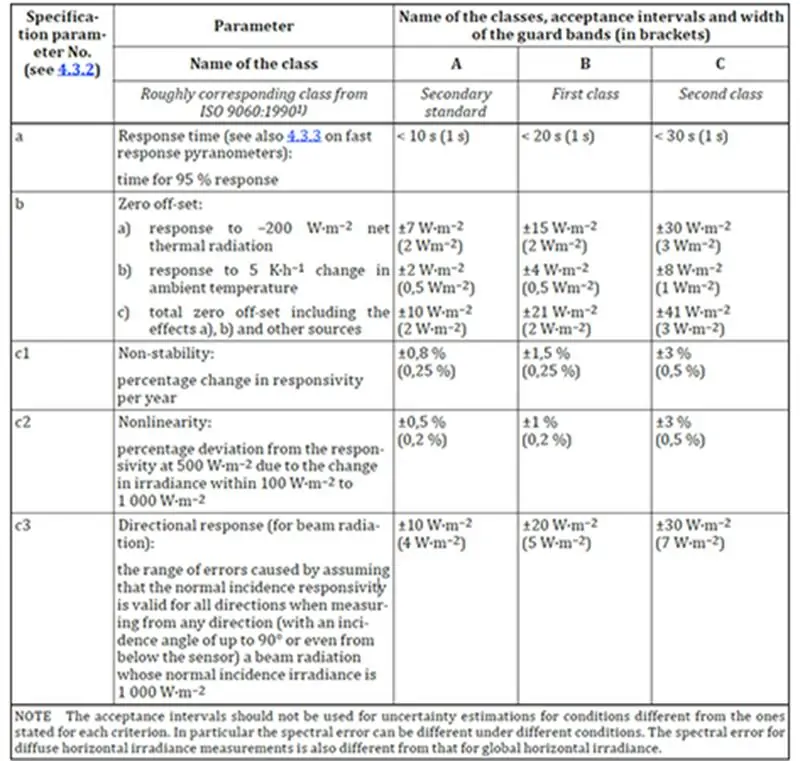
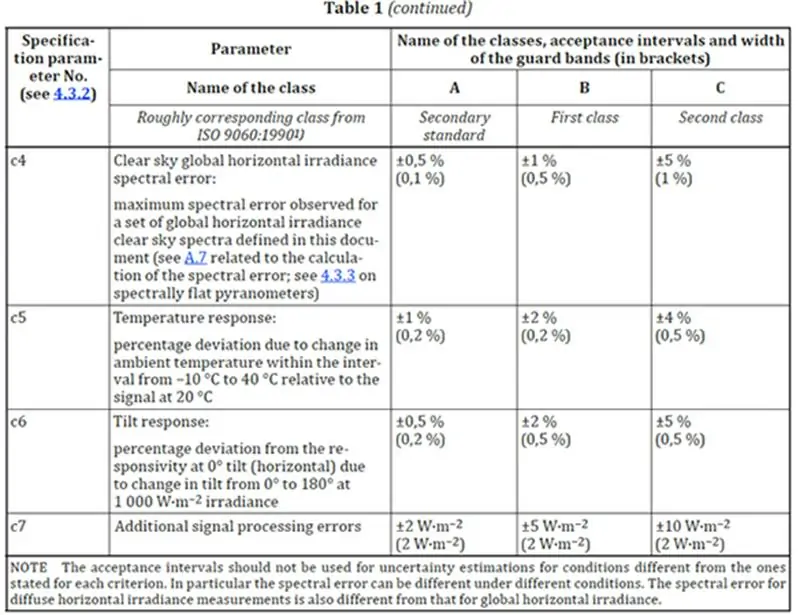
ISO 9060:2018 reemplazó la terminología de Estándar Secundario, Primera Clase y Segunda Clase utilizada en ISO 9060:1990 con el sistema de Clase A, Clase B y Clase C. La clasificación cubre tiempo de respuesta, offset cero, no estabilidad, no linealidad, respuesta direccional, error espectral, respuesta a la temperatura y respuesta a la inclinación.
Los principales límites de Clase A, B y C incluyen:
| Parámetro de rendimiento | Clase A | Clase B | Clase C |
| Tiempo de respuesta (95%) | <10 s | <20 s | <30 s |
| Offset cero A | ±7 W/m² | ±15 W/m² | ±30 W/m² |
| No estabilidad | ±0,8% | ±1,5% | ±3% |
| No linealidad | ±0,5% | ±1% | ±3% |
| Respuesta direccional | ±10 W/m² | ±20 W/m² | ±30 W/m² |
| Error espectral de GHI en cielo despejado | ±0,5% | ±1% | ±5% |
| Respuesta a la temperatura | ±1% | ±2% | ±4% |
Estos valores representan límites de aceptación seleccionados utilizados en la clasificación de piranómetros ISO 9060:2018. La clasificación completa también incluye otras condiciones, como criterios adicionales de offset cero, respuesta a la inclinación y error de procesamiento de señal. No deben tratarse como una única especificación de precisión general.
Clase A y Clase B no se definen por un solo número de precisión
Un error común al comparar piranómetros es reducir la clasificación a una afirmación como “Clase A es ±2% y Clase B es ±3%”. ISO 9060 no define las clases de esta manera. La precisión del piranómetro depende de varias características de rendimiento, por lo que la clase ISO declarada, las especificaciones técnicas y la información de calibración deben verificarse conjuntamente al seleccionar un sensor.
¿Qué significan “Espectralmente plano” y “Respuesta rápida”?
ISO 9060:2018 también introdujo atributos adicionales que pueden usarse con la designación de clase principal. Espectralmente plano indica que el piranómetro cumple con el requisito de selectividad espectral especificado en el rango de longitud de onda relevante. Respuesta rápida aplica a instrumentos con un tiempo de respuesta 95% inferior a 0.5 s. Estos atributos pueden ser útiles cuando el sistema de monitoreo necesita un mejor control de los efectos espectrales o necesita capturar cambios rápidos en la irradiancia solar.
For buyers, the practical question is not simply whether Class A or Class B is higher. The more useful question is whether the pyranometer’s performance matches the measurement purpose, applicable project standard and required data quality.


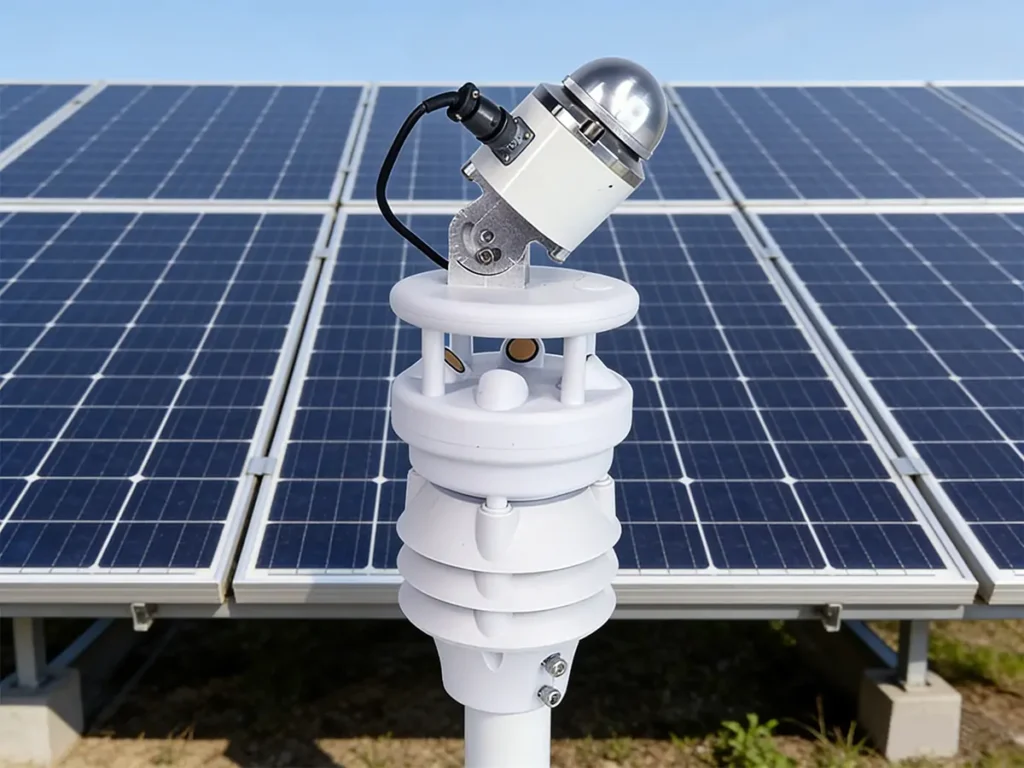
Class A Pyranometer: When Do You Need It?
A Class A pyranometer is generally selected when irradiance data needs tighter measurement performance and better long-term consistency. Under ISO 9060:2018, Class A has stricter limits for several performance characteristics, including zero offset, non-stability, nonlinearity, directional response, temperature response and tilt response.
The practical reason to choose Class A is not simply that it is “more accurate.” It is that tighter control of different error sources can be valuable when irradiance data is used for technical evaluation, performance analysis or long-term reference measurements.
When Should You Choose a Class A Pyranometer?
Class A is worth considering when:
- Solar resource assessment: Irradiance data is used to evaluate a site’s solar resource or support long-term energy analysis.
- PV performance monitoring: GHI or POA irradiance is used to assess actual PV system performance or calculate performance indicators.
- Reference measurement: The sensor serves as a reference point for comparing irradiance data from different locations or monitoring systems.
- Research and environmental monitoring: Consistent measurements are important over long operating periods.
- Project specifications: The tender, monitoring plan or technical specification explicitly requires ISO 9060:2018 Class A.
For routine monitoring where the project does not require these tighter performance limits, Class A may not provide enough additional value to justify its higher cost. The choice should therefore be based on the measurement purpose, project requirements and required data quality, rather than class alone.
Class B Pyranometer: When Is It Enough?
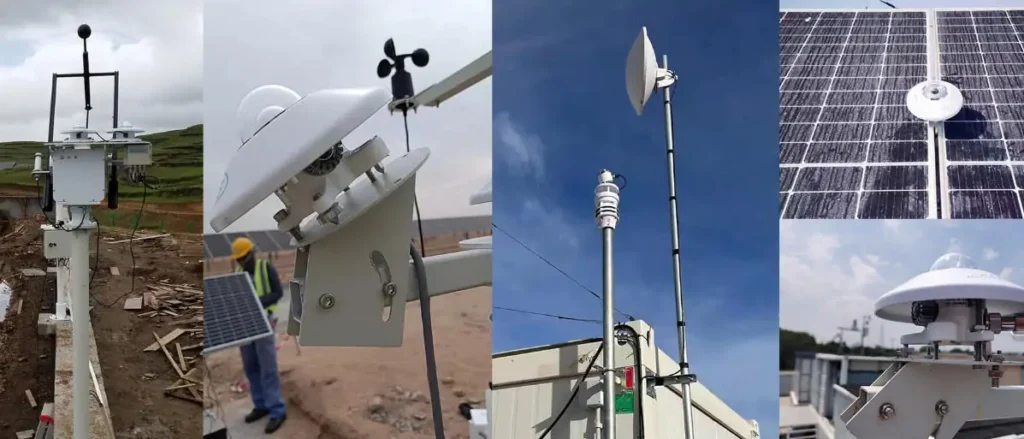
A Class B pyranometer is a practical choice for applications that do not require the tighter performance limits of Class A. Under ISO 9060:2018, Class B provides a defined level of measurement performance across parameters such as non-stability, nonlinearity, directional response, temperature response and tilt response. For many routine solar radiation monitoring applications, this performance level can meet the measurement requirements without specifying the higher performance of Class A.
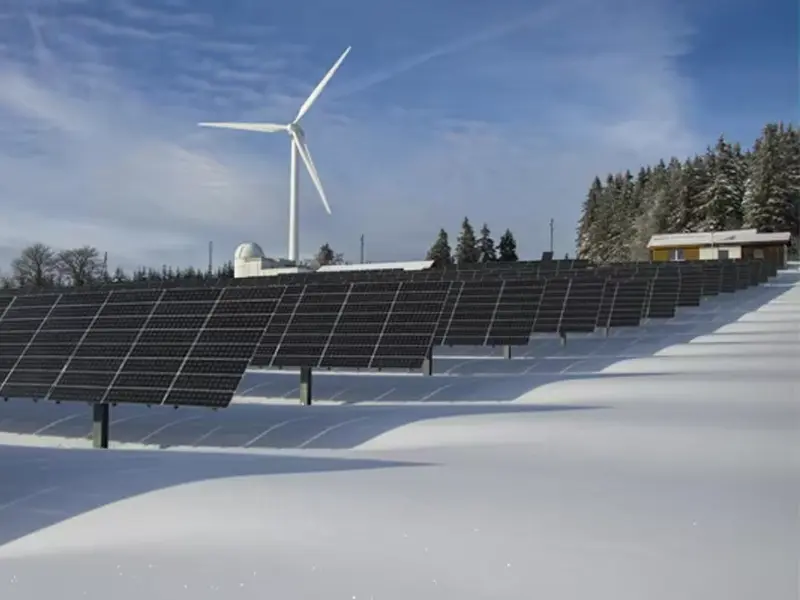
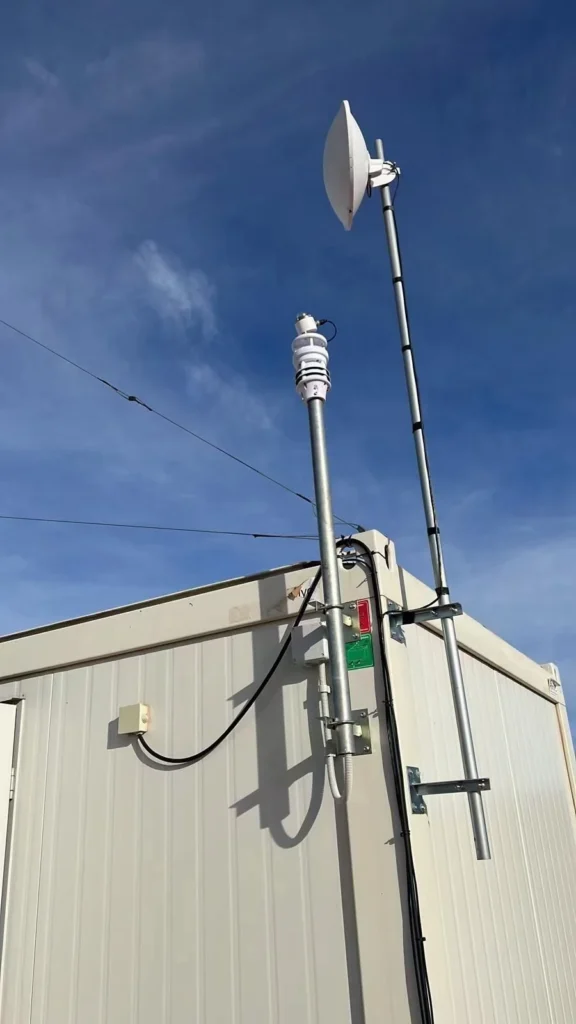
Class B can make sense for routine PV monitoring, commercial and distributed solar projects, meteorological stations, agricultural monitoring, environmental monitoring and secondary irradiance measurement points. It can also be suitable for research applications where the project protocol does not specify Class A. For multi-point monitoring systems, Class B may be considered when the required measurement performance can be achieved across multiple locations without using the highest classification for every sensor.
However, Class B is not the right choice simply because the application is smaller or more cost-sensitive. If a tender or monitoring specification explicitly requires Class A, the sensor should meet that requirement. The same applies when irradiance data is used for high-value performance verification, contractual evaluation, third-party technical assessment or research that requires tighter control of measurement-related errors and uncertainty. In these cases, the higher performance requirements of Class A may be justified.
The key is to match the pyranometer class with the purpose of the measurement, project specification and required data quality. Class B should not be viewed simply as a lower-accuracy or budget version of Class A; it is a different performance level intended for applications where the tighter requirements of Class A are not necessary.
Class A vs Class B Pyranometer: What Actually Changes?
The difference between Class A vs Class B pyranometers is not simply a matter of price or one overall accuracy figure. ISO 9060:2018 evaluates pyranometer performance across several characteristics, including non-stability, nonlinearity, directional response, spectral error, temperature response and tilt response. In practical applications, these differences determine how consistently the sensor can capture solar irradiance under changing conditions and over long periods.
Measurement Stability
Long-term stability describes how much a pyranometer’s measurement performance can change during operation. Class A has a tighter non-stability requirement than Class B, which helps limit measurement drift over time. This matters when irradiance data is collected for multi-year solar resource datasets, reference measurements or long-term PV performance analysis.
For routine monitoring, however, the tighter stability requirement of Class A may not always be necessary. The expected monitoring period, data comparison requirements and consequences of measurement drift should be considered before choosing the higher classification.
Response to Changing Irradiance
Solar irradiance can change quickly when clouds move across a PV plant, during sunrise and sunset, or under rapidly changing weather conditions. Response time determines how quickly the pyranometer reacts to these changes and how accurately short-duration irradiance variations are represented in the recorded data.
It is important not to assume that Class A automatically means faster response. ISO 9060:2018 treats the main class classification separately from the additional “fast response” property. When rapid irradiance changes need to be captured, the actual response-time specification should be checked independently of the Class A or Class B designation.
Directional and Tilt Response
The angle at which sunlight reaches a pyranometer affects its measurement, making directional and tilt response particularly relevant to PV monitoring. GHI is normally measured on a horizontal plane, while POA irradiance is measured with the sensor mounted at the plane of the PV array. As the sun moves across the sky, the incident angle changes continuously.
Class A has tighter requirements for directional and tilt response than Class B. This difference is more relevant when measuring tilted-plane irradiance or when the data is used for detailed PV performance analysis. Sensor orientation, mounting angle and measurement plane should therefore be considered together with the pyranometer’s classification.
Respuesta Espectral
A pyranometer does not receive solar radiation at a single wavelength. The spectral distribution of sunlight changes with solar position, atmospheric conditions and weather, while the sensor itself has a defined spectral response. These factors can influence how closely the measured signal represents the actual solar irradiance. ISO 9060:2018 therefore includes spectral error among its pyranometer performance characteristics.
ISO 9060:2018 also allows a “spectrally flat” designation as an additional property rather than a separate class. This may be relevant in PV monitoring and research applications where measurements need to remain consistent under changing spectral conditions. If spectral performance is important to the project, it should be checked in the product specifications rather than inferred from the Class A or Class B designation alone.
Efectos de la temperatura
A pyranometer operates in real outdoor conditions, where ambient temperature, sensor temperature, wind and humidity can change throughout the day. Temperature response is therefore one of the factors that can affect irradiance measurements, particularly at locations with large daily or seasonal temperature variations. ISO 9060:2018 includes temperature response among the characteristics used for pyranometer classification.
Class A has a tighter temperature-response requirement than Class B, but classification alone does not describe the complete outdoor performance of a sensor. The specified temperature response, operating temperature range and actual installation environment should also be checked when selecting a pyranometer for long-term field use.
Calibration and Long-Term Data
Pyranometer classification does not replace calibration. Long-term measurement quality also depends on the sensor’s calibration, traceability and the uncertainty associated with the calibration result. ISO 9847:2023 covers pyranometer calibration by comparison with reference pyranometers and applies to instruments meeting ISO 9060 Class A, B and C requirements.
This is why a higher-class sensor should not be evaluated independently of its calibration information. For long-term monitoring, the combination of ISO classification, calibration quality, measurement stability and appropriate maintenance provides a more meaningful basis for judging the expected data quality.
Class A vs Class B Pyranometers for Solar PV Monitoring
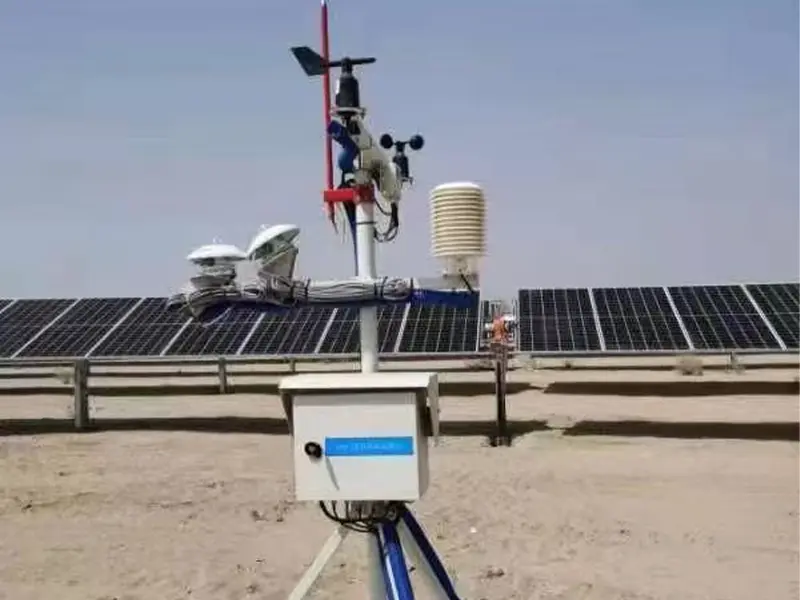
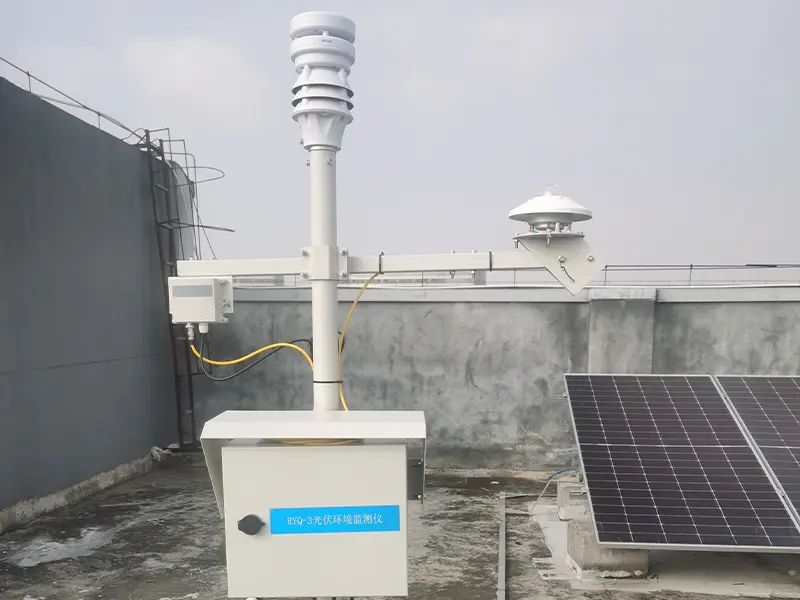
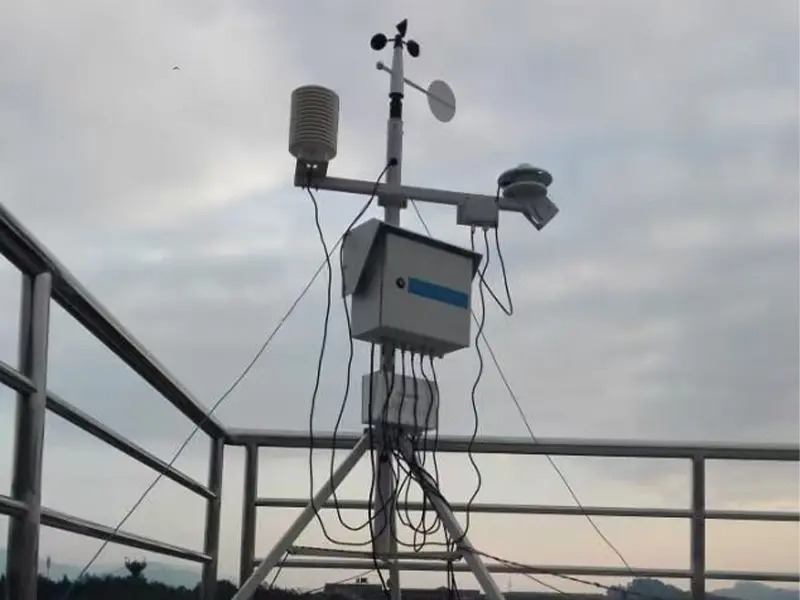
For a solar PV project, the choice between Class A vs Class B pyranometers depends largely on what the irradiance data will be used for. A Class B sensor may be sufficient for routine monitoring when the project specification does not require tighter performance. Class A becomes more relevant when the data is used for long-term performance analysis, reference measurements, or other applications where sensor-related differences can affect the result.
The measurement plane should also be considered. GHI and POA measurements serve different purposes, and factors such as tilt response, directional response, stability and calibration may have different importance depending on the application. In practice, the pyranometer class should therefore be selected together with the measurement purpose and project specification.
GHI Monitoring
For GHI monitoring, the pyranometer is installed horizontally to measure solar radiation received on a horizontal surface. PV projects may use GHI data to track site irradiance conditions, support solar resource assessment, or provide a reference for comparing operating periods.
When GHI is mainly used for routine site monitoring, Class B may be sufficient if it meets the specified requirements. Class A becomes more relevant when the measurements are retained as a long-term reference or used for analysis where changes in sensor stability and other performance characteristics could influence comparisons over time. For a broader understanding of direct solar radiation measurement, see Cómo medir la Irradiancia Directa Normal (DNI) con precisión.
POA Irradiance Monitoring
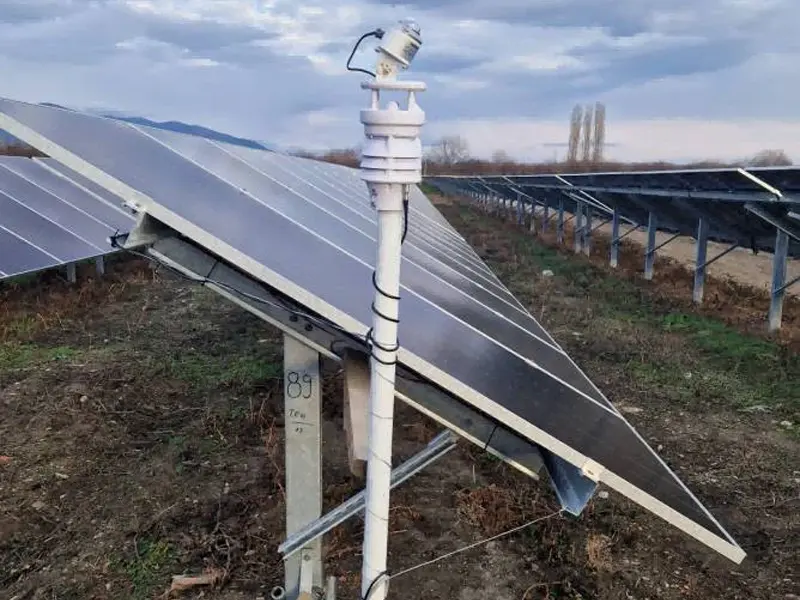
POA irradiance measures solar radiation on the plane of the PV array, so the pyranometer is normally installed to match the array’s tilt and orientation. The resulting data is more directly related to the irradiance available to the PV modules than horizontal GHI measurements.
This makes sensor performance particularly relevant when POA data is used for PV analysis. Tilt response, directional response and long-term stability can affect measurement consistency, especially over extended operating periods. Class B can be appropriate for routine monitoring when its performance meets the project requirements, while Class A may be preferred when tighter measurement performance is needed. For more details on solar irradiance measurement in PV applications, see Cómo medir la irradiancia solar para sistemas fotovoltaicos.
Performance Ratio and PV Performance Analysis
When irradiance data is used for Performance Ratio (PR) or long-term PV performance analysis, measurement consistency becomes more important. The purpose is not simply to record whether solar radiation is present, but to compare the available irradiance with the electricity produced by the PV system over a defined period.
This is where Class A can provide a practical advantage. Its tighter requirements for characteristics such as non-stability, nonlinearity, temperature response and tilt response can help maintain a more consistent irradiance dataset. Calibration is also important because sensor classification alone does not determine the quality of the final measurement.
A Class A pyranometer is not automatically required for every PR project. The actual requirement should come from the project specification and applicable monitoring standard, including IEC 61724-1:2021 where applicable. The important point for buyers is to evaluate the pyranometer’s class, actual performance specifications, calibration information and intended measurement plane together, rather than selecting a sensor based on its Class A or Class B label alone.
Class A vs Class B Pyranometer: Which One Should You Buy?
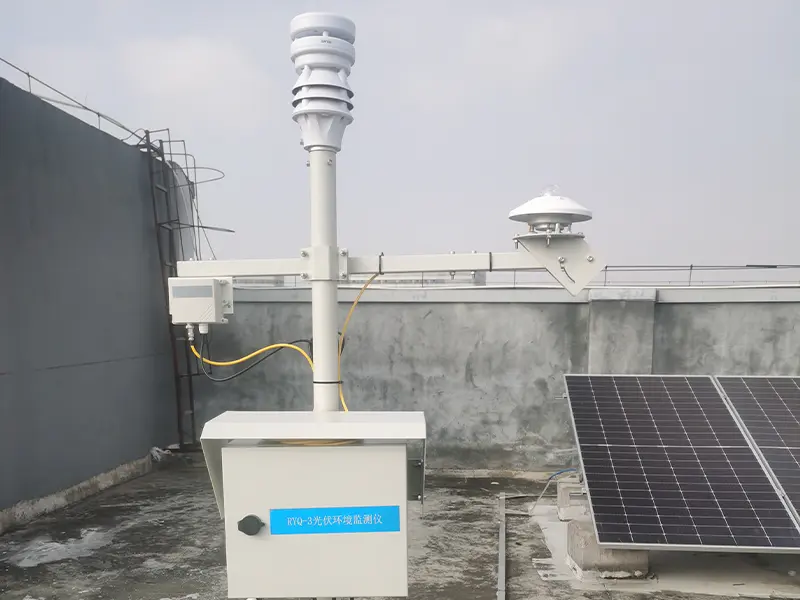
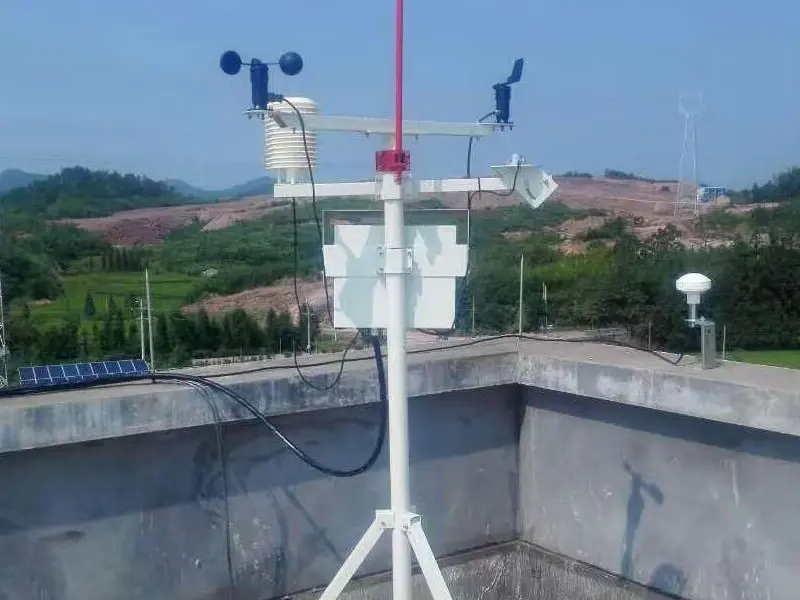
There is no fixed rule that a larger PV project must use Class A or that a smaller project can use Class B. Under ISO 9060:2018, Class A and Class B represent different levels of performance across multiple measurement characteristics. For buyers, the more useful question is how the irradiance data will be used. Research, reference measurement, bankable solar resource assessment, long-term datasets, and high-demand PV performance monitoring generally justify considering Class A, particularly when the tender or project specification requires it.
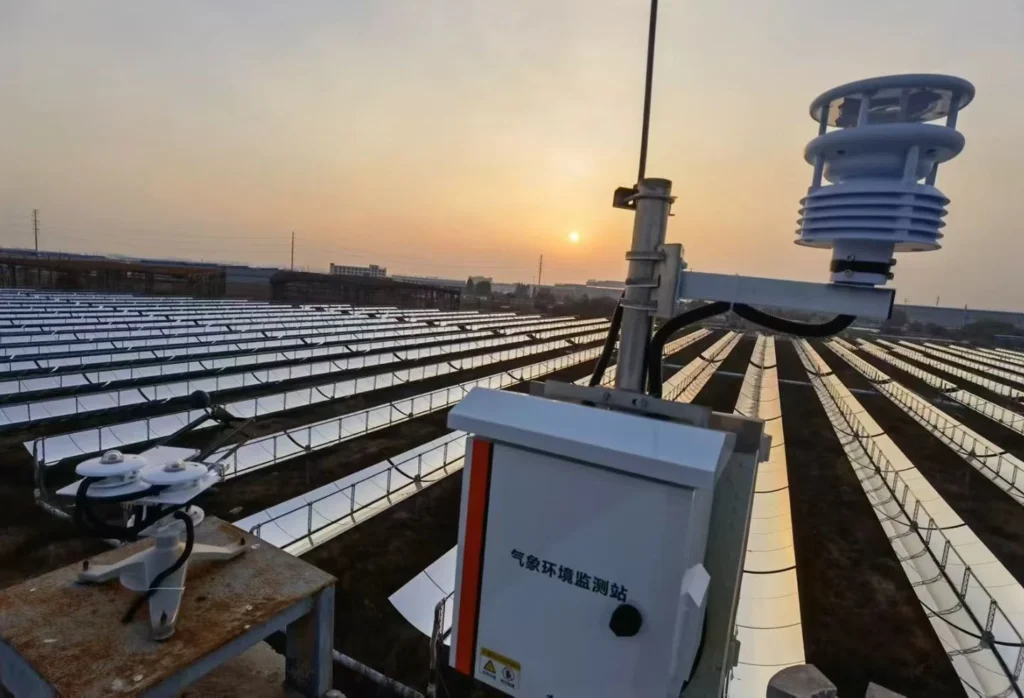
For routine commercial PV monitoring, agricultural weather monitoring, environmental monitoring, or multi-point deployments, Class B may be a more practical choice when its performance meets the project requirements. Basic education or demonstration applications may also use Class C where permitted. The important point is that PV plant capacity alone should not determine the pyranometer class. Measurement purpose, applicable standards, tender requirements, required data quality, installation conditions, and calibration should all be considered before choosing between Class A and Class B.



What Should You Check Besides Pyranometer Class?
ISO class is only one part of the specification. When comparing pyranometers, buyers should also check the sensor’s measurement range, response, calibration, output and installation requirements. These details determine whether the sensor fits the monitoring system and the conditions at the site.
Measurement Range and Spectral Range
Check that the measurement range covers the expected irradiance, such as 0–2000 W/m² for many PV applications. Spectral range also matters because different sensors do not necessarily respond to the same wavelength range, even when they have the same ISO class.
Response Time and Measurement Performance
Response time shows how quickly the sensor reacts to changing irradiance. Check whether the manufacturer specifies 95% or 99% response, then review nonlinearity, temperature response, directional response and tilt response. These specifications are more useful than simply choosing a sensor described as “fast.”
Calibration and Long-Term Stability
Ask for the calibration certificate and traceability information, especially when data will be used for PV performance analysis or long-term monitoring. Annual stability is also worth checking. ISO classification sets performance limits, but regular calibration and proper maintenance still affect measurement consistency.
Output, Installation and Maintenance
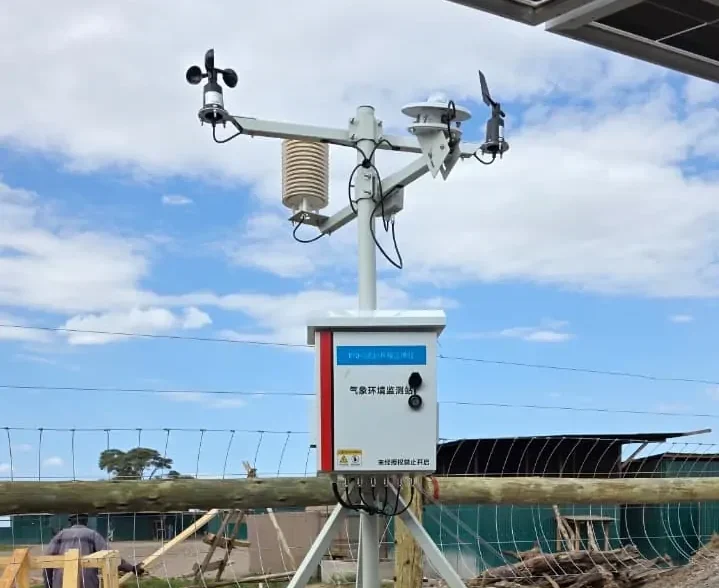
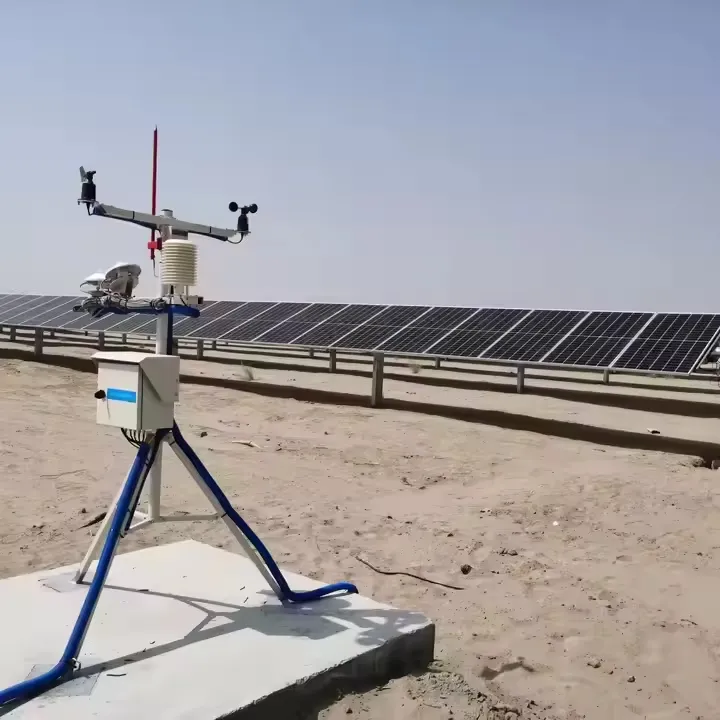
Make sure the output matches the monitoring system, such as mV, 4–20 mA or RS485/Modbus. Installation also matters: GHI measurements require level positioning, while POA measurements should match the PV array plane. Dome cleaning, shading and cable installation should be considered before commissioning.
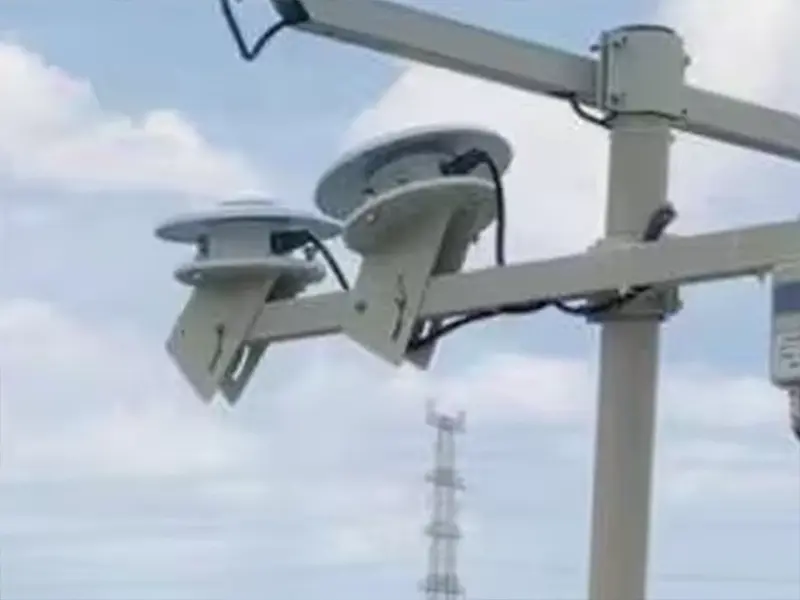
Class A vs Class B Pyranometers: Common Buying Mistakes
Choosing a Class A vs Class B pyranometer based on price alone is a common mistake. A lower-priced sensor may be suitable for routine monitoring, while a higher-class sensor may be justified when the project requires tighter measurement performance. Buyers should also avoid treating Class A or Class B as a single accuracy percentage. Under ISO 9060:2018, classification is based on several performance characteristics, including nonlinearity, non-stability, directional response, temperature response and tilt response.
Another common mistake is confusing ISO 9060:2018 with IEC 61724-1. ISO 9060 classifies pyranometer performance, while IEC 61724-1 addresses PV system performance monitoring. Calibration and installation also need attention: leveling, mounting angle, shading, dome cleanliness and calibration can all affect field data. When comparing response time, check the measurement definition as well—for example, a 95% response time cannot be directly compared with a 99% response time without considering what each specification represents.
Conclusión
There is no universal winner when comparing Class A vs Class B pyranometers. Class A is a better fit when tighter performance and higher confidence in irradiance data are important, while Class B can be a practical choice for routine PV and environmental monitoring. The important point is to match the sensor class with the actual measurement requirement.
ISO 9060:2018 defines the pyranometer classification, while IEC 61724-1 provides requirements for PV performance monitoring. Price should come after these requirements, not before them. The right sensor also depends on whether you need GHI or POA measurement, where it will be installed, and how the data will be collected.
If you are still comparing Class A and Class B pyranometers for a specific project, Sensor Yantai can help you review the measurement conditions and technical requirements before you make a selection.