
Compact Weather Station Environmental Monitoring Project Case
Project Background
To support regional ecological and environmental protection, the project required continuous monitoring of weather conditions across an outdoor rural area. The site had no convenient access to grid power, while the monitoring point needed to operate continuously with minimal on-site maintenance. The system also had to be compact and easy to deploy while providing reliable measurements of wind speed, wind direction, temperature, humidity, and other key weather parameters.
Based on these requirements, a compact ultrasonic weather station was selected for the monitoring point. Its integrated design and low power consumption made it suitable for remote outdoor deployment, while continuous weather data provided a reliable basis for environmental assessment, ecological management, and local weather analysis.
- Equipment:Compact 8-in-1 Ultrasonic Weather Station
- Application: Outdoor Environmental Protection and Regional Weather Monitoring
- Project Date: October 6, 2020
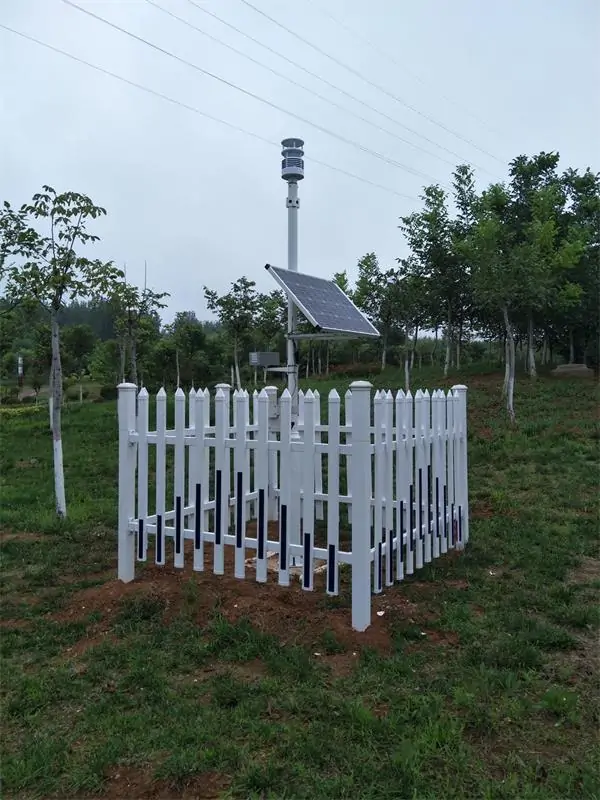
On-site Installation Process & Equipment Configuration
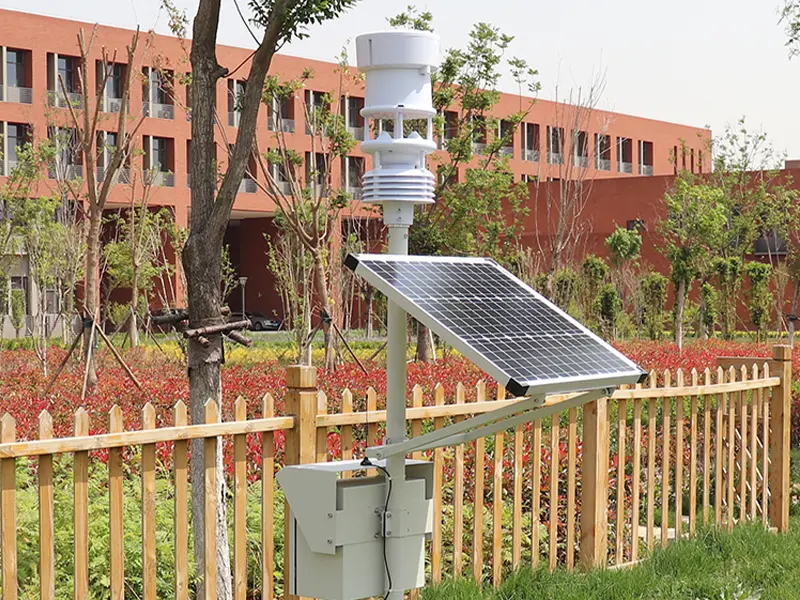
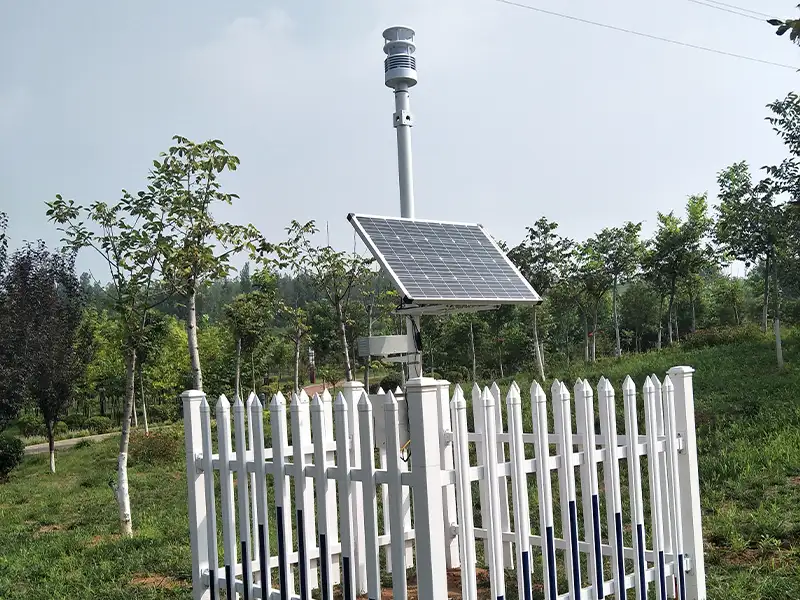
Our technical team first surveyed the site and selected an open monitoring location away from tall trees, buildings, and other potential obstructions. A metal mounting pole was installed and secured, and the compact ultrasonic weather station was mounted at the top. The sensor was aligned with true north to ensure accurate wind direction measurements.
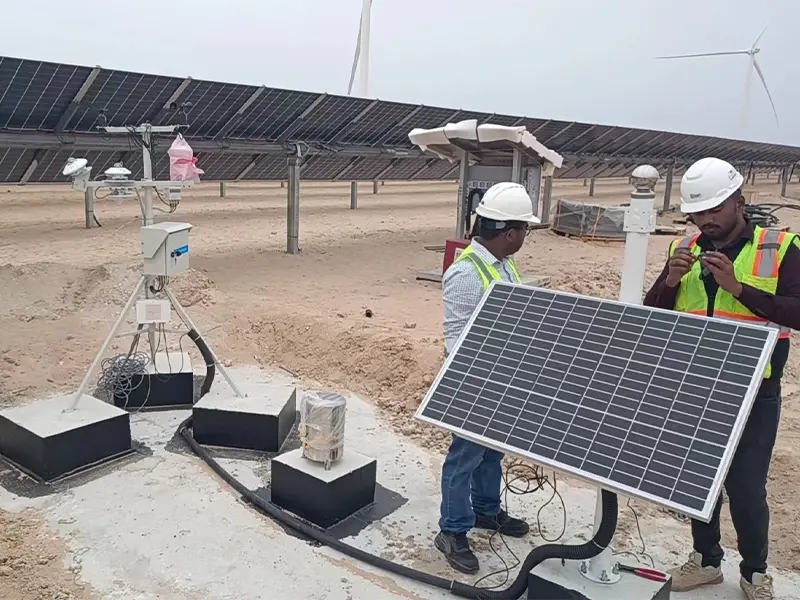
The solar panel, energy storage battery, and data acquisition and transmission unit were then installed and connected. This configuration allowed the monitoring station to operate independently without grid power. A protective enclosure was added around the equipment to reduce the risk of accidental damage. After completing cable connections and waterproof sealing, the team powered up the system, checked each monitoring parameter, and verified stable data transmission to the remote monitoring platform.
Equipment Configuration
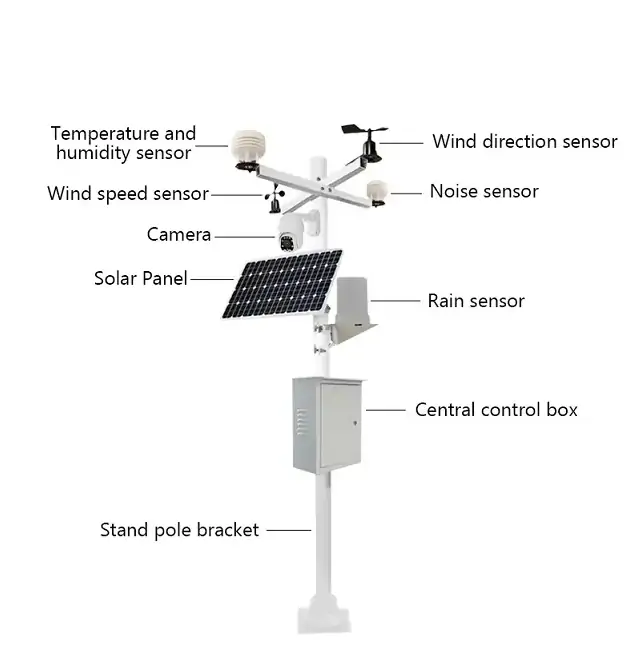
- Compact 8-in-1 Ultrasonic Weather Station: Measures wind speed, wind direction, temperature, humidity, atmospheric pressure, light, and other environmental parameters.
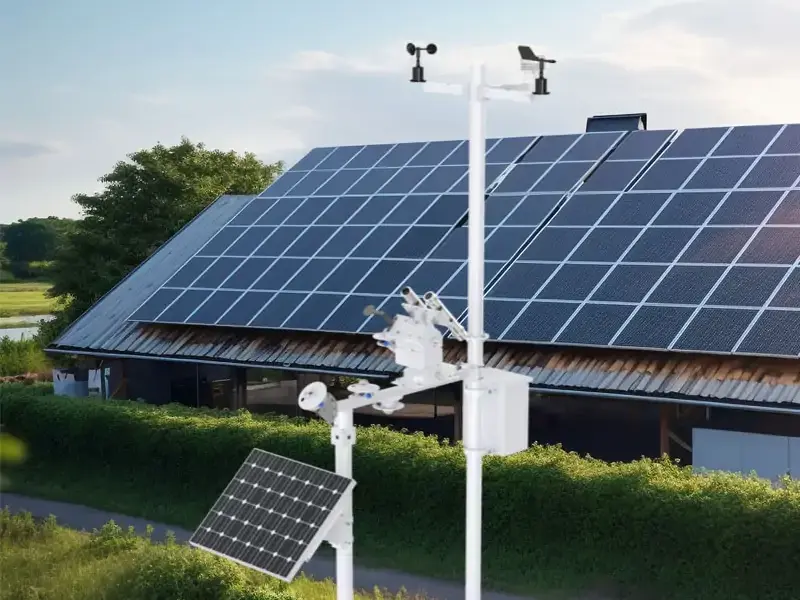
- Solar Power Supply: Solar panel and storage battery provide independent power for remote outdoor operation.
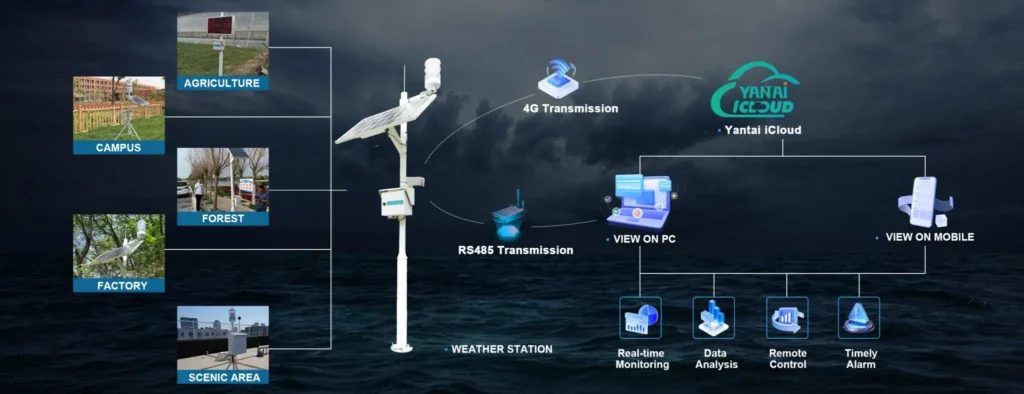
- Data Acquisition and Transmission Unit: Collects monitoring data and supports remote wireless transmission.
- Mounting and Protection Accessories: Includes mounting pole, protective enclosure, waterproof connectors, and related installation components.
Project Operation Performance
After commissioning, the weather station has provided 24/7 unattended monitoring at the outdoor site, maintaining stable operation through strong winds, rainy weather, and significant day-to-night temperature changes. The system continuously collects and transmits key weather data, with stable and complete data transmission supporting long-term field monitoring.
The station uses a solar-powered energy storage system for independent operation, eliminating the need for grid cabling at the site. This reduced installation work and ongoing electricity costs. Its compact ultrasonic design has no mechanical rotating components, avoiding common mechanical issues such as jamming and dust accumulation associated with traditional cup anemometers.
Based on our field maintenance experience, the equipment continued operating normally through the humid rainy season and windy autumn and winter periods without hardware damage. Routine maintenance mainly involves cleaning surface dust from the solar panel to maintain power supply performance. The continuously transmitted wind speed, wind direction, temperature, humidity, and other data are used for regional ecological assessment and local weather analysis, providing continuous field data for environmental protection and routine monitoring.
Customer Feedback
The project manager was initially concerned about several practical issues, including how long the equipment could operate without grid power, its reliability under demanding outdoor conditions, and whether monitoring data could be transmitted consistently to the remote platform.
After the weather station was put into operation, its actual performance addressed these concerns. The short installation period, solar-powered configuration, and low maintenance requirements made the system well suited to the remote outdoor site. The project team did not need to arrange frequent on-site inspections, while the monitoring station continued to provide complete multi-parameter weather data.
The project manager considered the solution well matched to the site’s actual conditions and confirmed that it met the expected project requirements. Based on the successful deployment, the same equipment configuration will be considered for similar outdoor monitoring points in future projects.
Related Products
Related Articles
Contact us
Looking for customized smart sensor solutions? Our team specializes in delivering scalable, flexible, and tailored solutions to meet your specific needs.
Fill out the form now to get a personalized solution. Our experts will provide professional advice and ensure your project runs smoothly. Contact us today to start boosting efficiency!