
Compact Weather Station for Agricultural Meteorological Monitoring
Project Background
The system was deployed at an open-field corn planting base where the farm management needed local meteorological data to support daily crop management. The monitoring requirements included wind speed, wind direction, air temperature, humidity, rainfall, and solar radiation, with the data used as a reference for irrigation planning, crop growth assessment, and weather-related risk management.
The site had limited access to mains electricity, so the customer needed a compact and low-power monitoring solution that could operate independently in the field. The equipment also had to withstand seasonal changes in temperature, rainfall, wind, and crop growth without requiring frequent on-site maintenance. Based on these conditions, a compact agricultural weather station with solar power and remote data transmission was selected for the project.
- Equipment:Compact Agricultural Weather Station
- Application: Agricultural Meteorological Monitoring / Precision Agriculture
- Date: July 2020
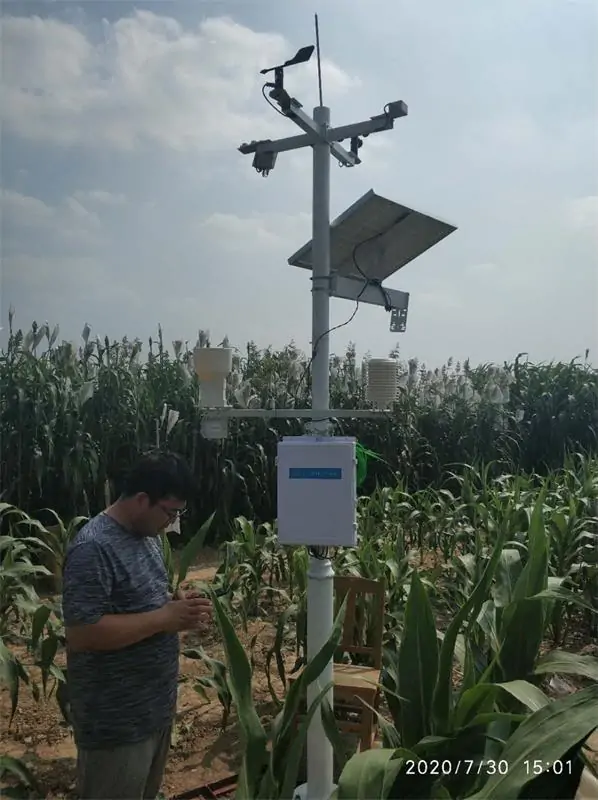
On-site Installation Process & Equipment Configuration
Before installation, our technical team surveyed the planting area and selected an open monitoring position with sufficient exposure and minimal interference from surrounding crops and structures. The mounting foundation was prepared and the galvanized pole was securely installed.
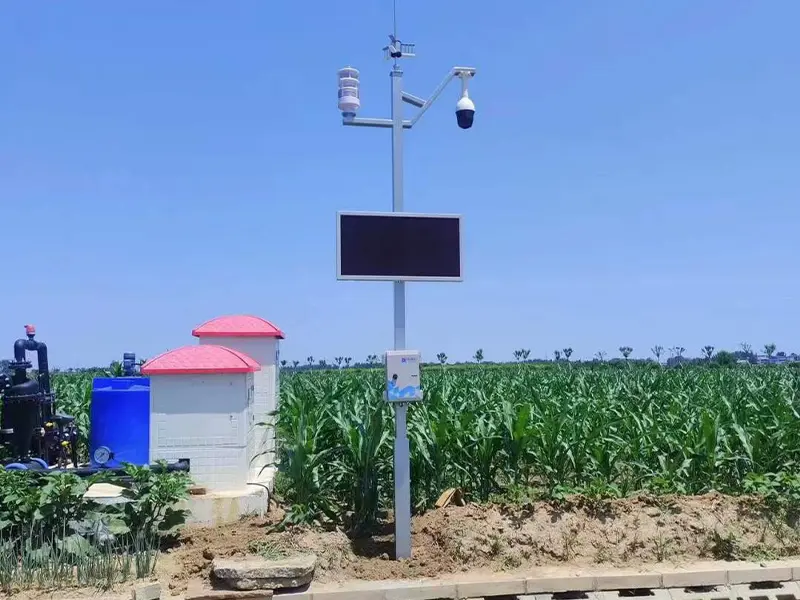
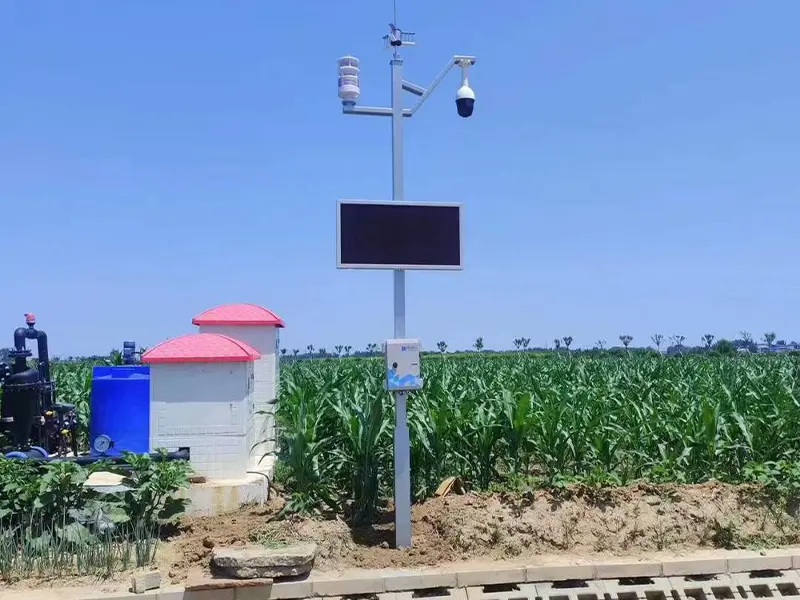
The weather station sensors were then assembled on the mounting structure, with the wind direction sensor aligned to true north. The solar panel, storage battery, and data acquisition and transmission unit were installed and wired on site. All external cable connections were protected with waterproof sealing to suit the outdoor environment.
After completing the installation, the team carried out on-site commissioning and checked the readings from each sensor. Communication was also tested to confirm that the collected meteorological data could be transmitted reliably to the remote monitoring platform. The system was put into operation after the measurement and communication checks were completed.
The monitoring system was configured with the following equipment to meet the site’s requirements for continuous field observation, off-grid power supply, and remote data transmission:
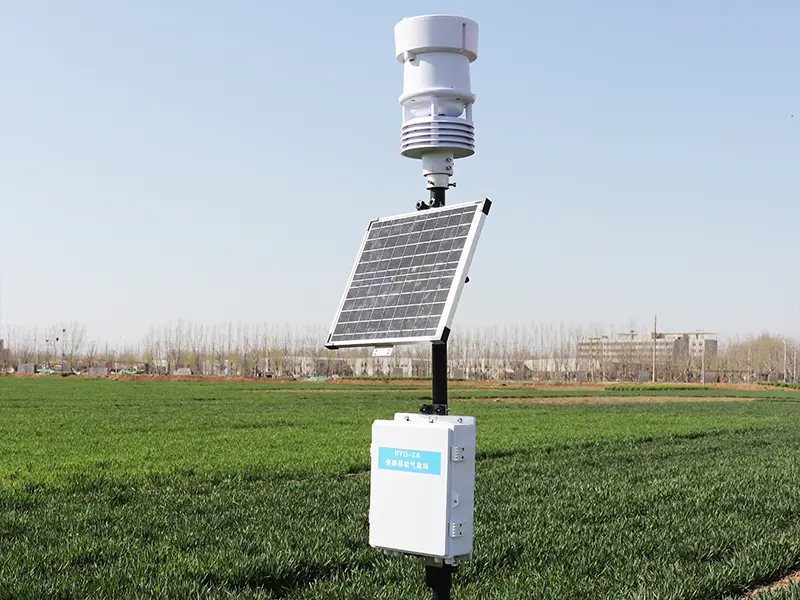
- Compact Agricultural Weather Station: Measures wind speed, wind direction, air temperature, humidity, rainfall, solar radiation, and other meteorological parameters required for field monitoring.
- Solar Power Supply: Solar panel and storage battery provide independent power for the remote monitoring point.
- Data Acquisition & Transmission Unit: Collects sensor measurements and transmits data to the remote monitoring platform.
- Mounting Structure: Galvanized mounting pole, cross-arm assembly, waterproof connectors, and related installation accessories.
Project Operation Performance
After commissioning, the compact agricultural weather station has provided stable 24/7 unattended monitoring in the corn field, operating through high temperatures, heavy rain, strong winds, and day-night temperature changes. The system continuously collects and transmits local meteorological data for the farm monitoring platform.
The off-grid solar power system eliminates the need for mains cabling across the farmland, while the compact ultrasonic design reduces mechanical maintenance requirements. Routine service mainly involves cleaning the solar panel and checking cable connections, without the need for frequent on-site troubleshooting.
The collected data covers wind speed, wind direction, rainfall, temperature, humidity, and solar radiation, providing field-level weather information for irrigation planning, crop growth monitoring, and weather-related risk assessment. These measurements give farm managers a direct reference for day-to-day crop management and precision agriculture applications.
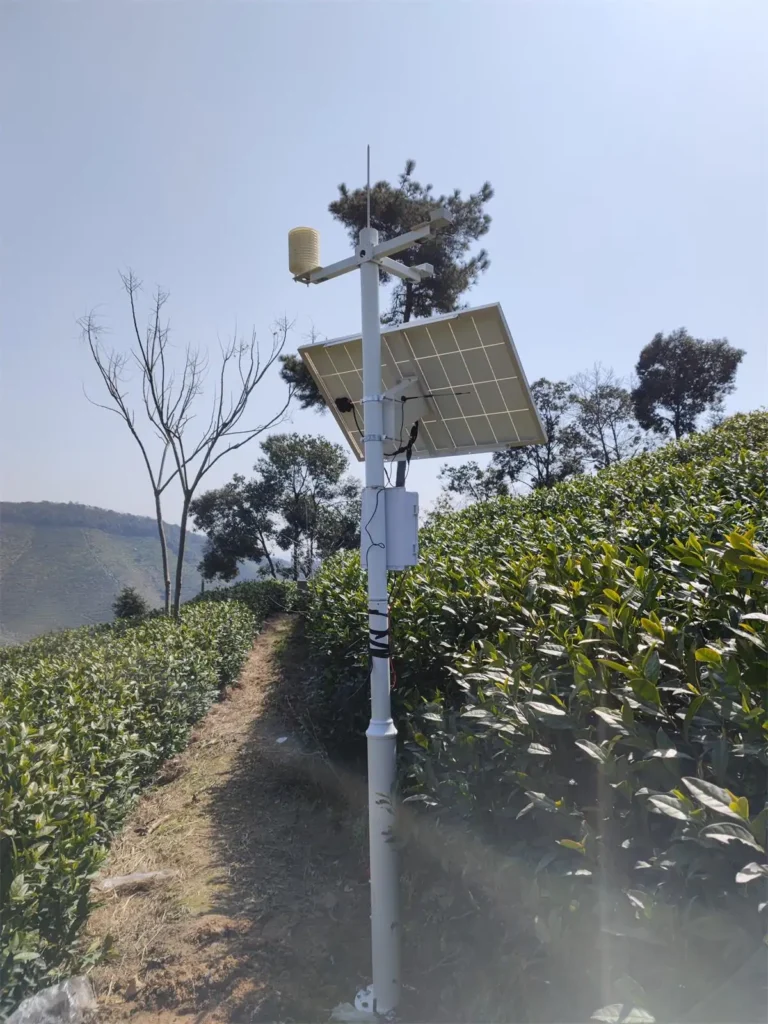
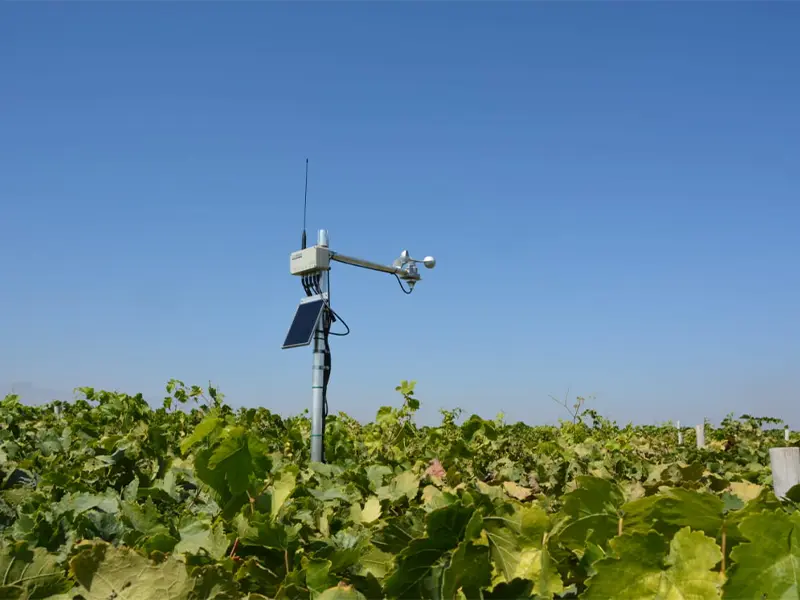
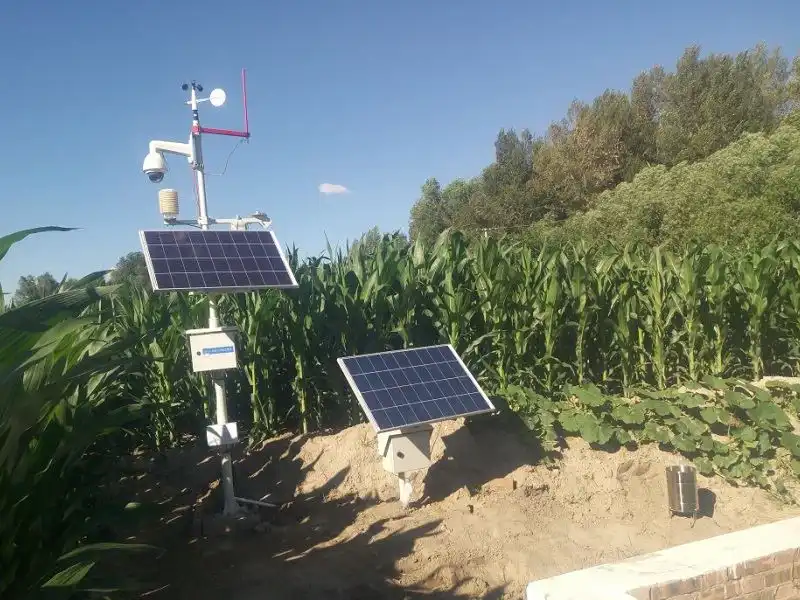
On-Site Photo Gallery
Customer Feedback
The farm’s project manager gave a positive assessment after months of field operation. Before implementation, he was mainly concerned about sensor performance under tall crops, heavy thunderstorms, farmland dust, and the reliability of solar power during extended cloudy weather.
Actual operation addressed most of these concerns. The system required limited civil work, involved low routine maintenance, and did not require frequent site visits. The locally collected micro-climate data proved suitable for irrigation scheduling and disease-risk assessment. Based on the project results, the customer considered the solution suitable for the farm’s conditions and future monitoring-point expansion.
Related Products
Related Articles
Contact us
Looking for customized smart sensor solutions? Our team specializes in delivering scalable, flexible, and tailored solutions to meet your specific needs.
Fill out the form now to get a personalized solution. Our experts will provide professional advice and ensure your project runs smoothly. Contact us today to start boosting efficiency!