
Wugang, Henan Ecological Negative Air Ion & Weather Monitoring Station Project
Project Background
Wugang, located at the eastern foothills of the Funiu Mountains in Henan Province, is known for its forest landscapes, lakes, and wetlands. Recognized as a China Natural Oxygen Bar destination, the area has developed ecological tourism and forest wellness resources around locations such as Shimantan National Wetland Park and its surrounding mountain and lakeside environments. Reliable environmental data are important for documenting local ecological conditions and supporting meteorological services for tourism and public wellness activities.
To improve its ecological meteorological observation network, the Wugang Meteorological Bureau planned to deploy multiple monitoring stations across forested slopes, lakeside wetlands, and suburban green spaces. Yantai Sensor supplied integrated ecological monitoring stations that combine negative air ion measurement with conventional meteorological monitoring. The system uses solar power and 4G wireless communication to collect and transmit field data to a cloud platform, supporting remote monitoring, historical data review, and centralized management of distributed observation sites.
- Project Location: Wugang, Henan, China
- Project Type: Ecological and Meteorological Monitoring
- Application: Negative Air Ion Monitoring, Forest Ecology Assessment, and Eco-Tourism Weather Services
- Monitoring Parameters: Negative air ion concentration, air temperature, relative humidity, atmospheric pressure, wind speed, and wind direction
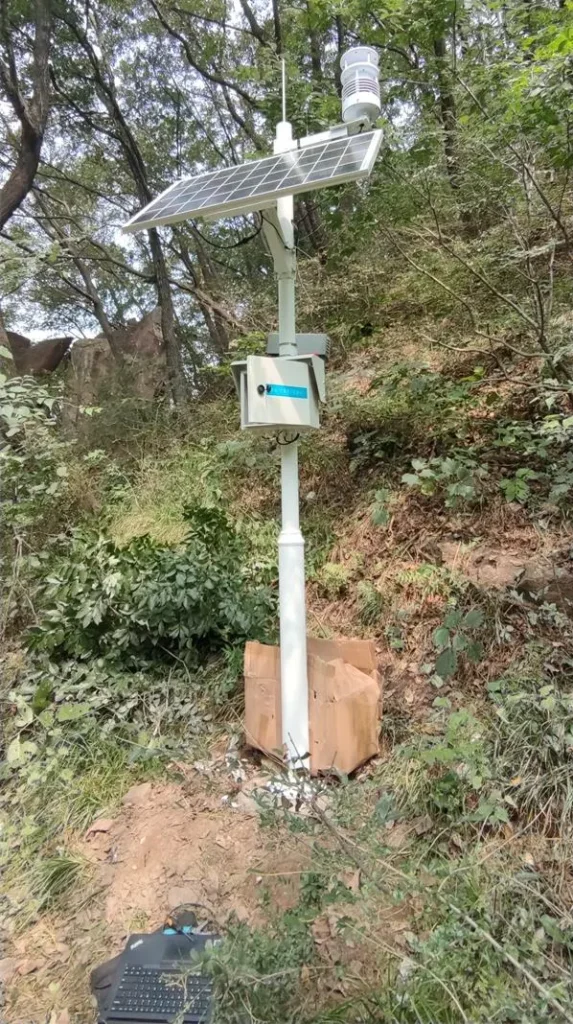
On-Site Installation Process
Site Survey & Monitoring Point Selection
Before installation, the technical team worked with the Wugang Meteorological Bureau to assess the planned monitoring locations. The sites covered different outdoor environments, including forested slopes, lakeside wetland areas, and suburban green spaces. During site selection, the team considered terrain, surrounding vegetation, sensor exposure, solar access, and communication availability.
At forest locations, nearby trees and vegetation were considered to avoid obstructing sensor ventilation or shading the solar panels. Lakeside sites required particular attention to moisture exposure and outdoor electrical protection. The mounting positions and foundations were planned according to the terrain and ground conditions at each location.
Equipment Installation & System Commissioning
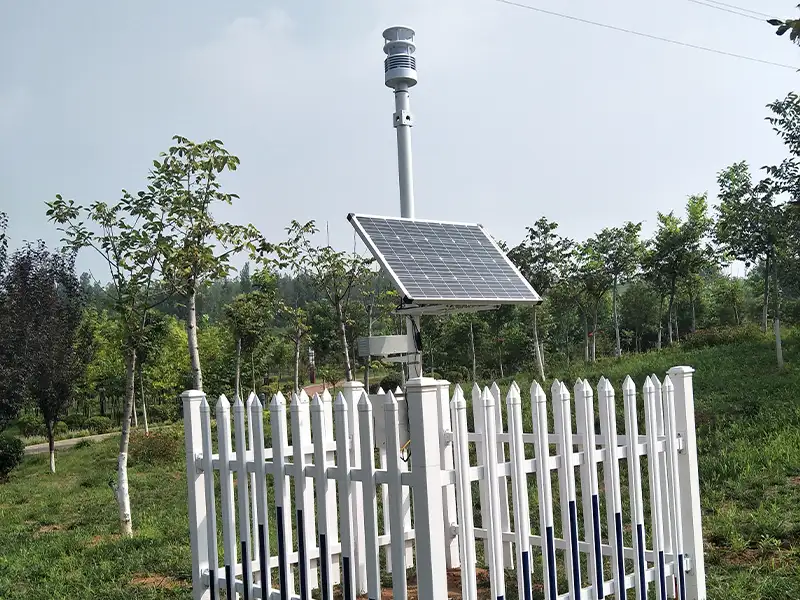
After the monitoring locations were confirmed, the team completed the foundation work, installed the galvanized mounting poles, and assembled the integrated ecological weather monitoring equipment. Solar panels, lithium battery storage, data acquisition enclosures, communication antennas, and lightning protection components were installed as part of the outdoor monitoring system.
Cable connections were sealed against moisture and rainwater, and the solar panel orientation was adjusted according to local sunlight conditions. After installation, the team checked sensor connections, power supply, data acquisition, and 4G communication. Each station was connected to the cloud platform for remote data access and centralized management.
Equipment Used
The project uses Yantai Sensor’s Weather Station Monitoring System as the main system configuration, adapted for negative air ion and meteorological monitoring.
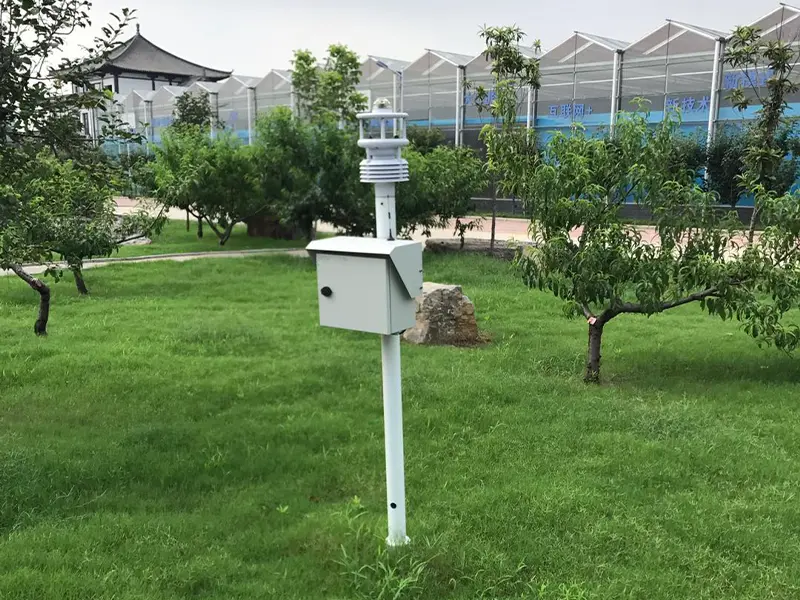
- Integrated Ecological Weather Monitoring Station: Combines negative air ion measurement with air temperature, relative humidity, atmospheric pressure, wind speed, and wind direction monitoring to collect ecological and meteorological data at each observation point.
- Negative Air Ion Monitoring Sensor: Measures negative air ion concentration as a key environmental indicator for forest and ecological monitoring.
- Meteorological Sensors: Collect conventional weather parameters, including temperature, humidity, atmospheric pressure, wind speed, and wind direction.
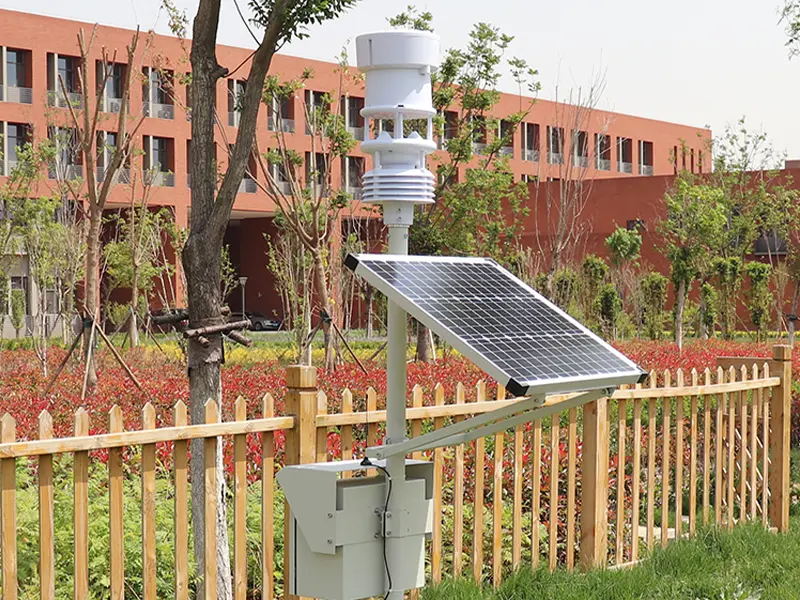
- Solar Power System: Uses photovoltaic panels and lithium battery storage to provide power at outdoor monitoring locations without a convenient grid connection.
- Data Acquisition & 4G Communication Unit: Collects sensor readings and transmits monitoring data to the cloud platform through a wireless communication module.
- Outdoor Mounting Structure: Includes galvanized steel mounting poles, flange bases, and supporting installation components for fixed outdoor deployment.
- Lightning & Signal Protection Components: Include lightning protection and signal antennas to support outdoor electrical and communication connections.
- Cloud Monitoring Platform: Supports real-time data viewing, historical data storage, data export, threshold-based alerts, and centralized management of multiple monitoring stations.
The monitoring platform supports remote data viewing, historical data export, and threshold-based alerts according to the configured monitoring requirements.
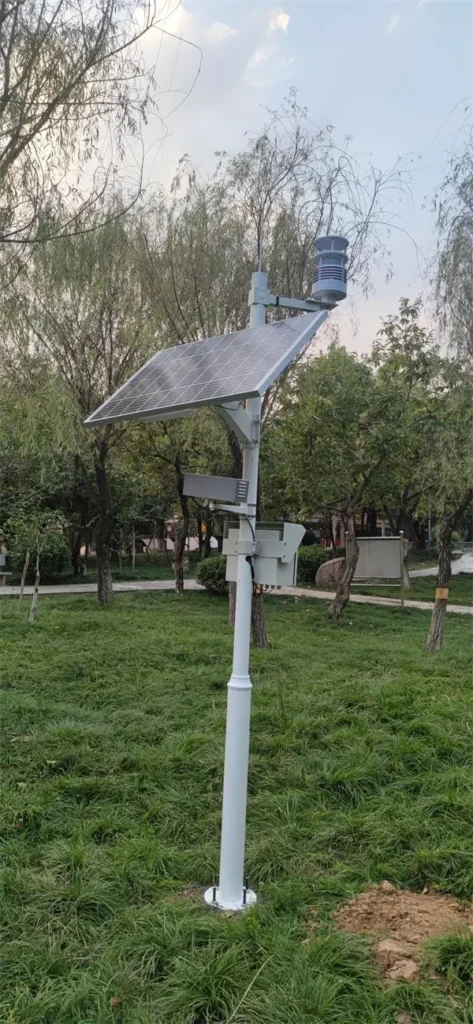
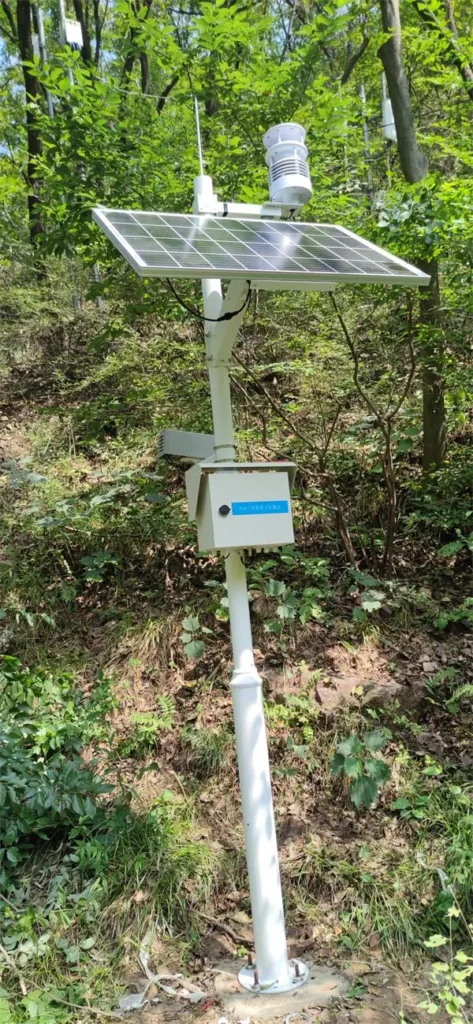
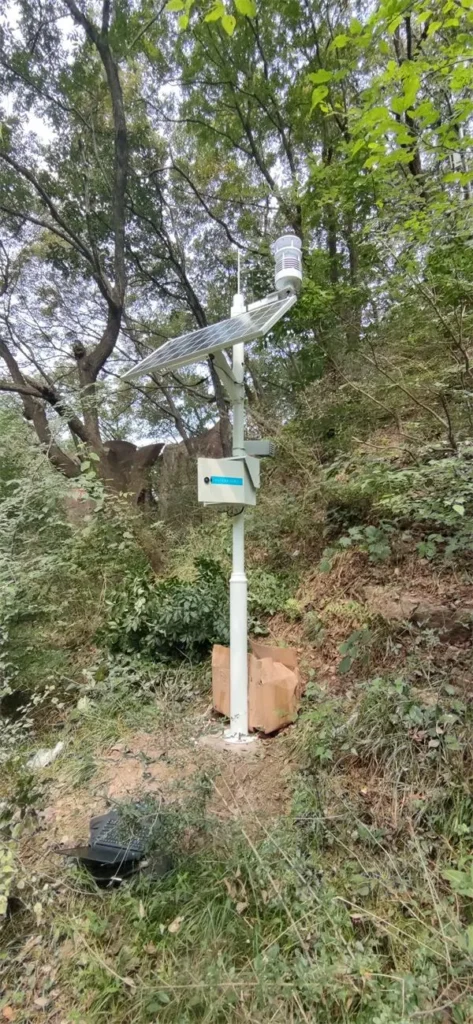
Project Site:
Project Highlights
- Multi-Environment Ecological Monitoring: Monitoring stations are distributed across forest slopes, lakeside wetlands, and suburban green spaces to collect environmental data from different ecological settings.
- Integrated Negative Air Ion & Weather Measurement: Combines negative air ion concentration with temperature, humidity, atmospheric pressure, and wind measurements in one monitoring configuration.
- Independent Solar Power Supply: Solar panels and lithium battery storage support outdoor operation at locations where extending grid power cables is difficult.
- 4G Remote Data Transmission: Transfers field measurements to the cloud platform, allowing meteorological staff to review data without visiting every monitoring point.
- Centralized Multi-Station Management: Provides access to monitoring records from different locations, with historical data storage, export, and configured threshold alerts.
- Outdoor Installation Protection: Galvanized mounting structures, sealed cable connections, and lightning protection components are included to address moisture, rain, and outdoor electrical exposure.
Project Results
The completed monitoring system provides the Wugang Meteorological Bureau with a distributed network for collecting negative air ion and meteorological data across different ecological environments. Measurements from forest, wetland, and suburban sites are transmitted to the cloud platform through 4G communication, allowing staff to review current readings and historical records through a centralized interface.
The accumulated data provide a reference for local ecological meteorological assessment and the long-term observation of negative air ion concentration. They can also support climate-resource surveys, forest wellness information services, and the meteorological information presented to visitors at ecological tourism sites. Solar power and remote data access reduce dependence on routine manual data collection, although periodic inspection of sensors, power systems, and communication equipment remains necessary for long-term operation.
Customer Feedback
“The integrated negative air ion and weather monitoring stations have been useful at our distributed forest and lakeside observation sites. The solar-powered configuration is suitable for locations where extending power cables is difficult, and the 4G connection makes it easier for us to review monitoring data remotely. This provides practical support for our routine ecological observations and meteorological services.”
Related Products

Related Articles

Contact us
Looking for customized smart sensor solutions? Our team specializes in delivering scalable, flexible, and tailored solutions to meet your specific needs.
Fill out the form now to get a personalized solution. Our experts will provide professional advice and ensure your project runs smoothly. Contact us today to start boosting efficiency!