Introduction
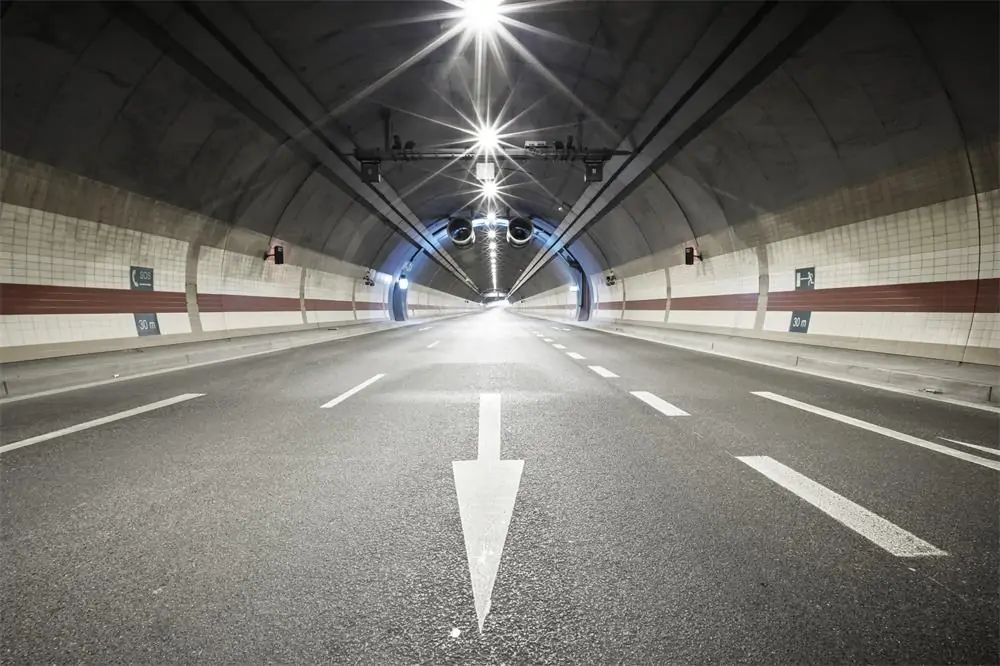
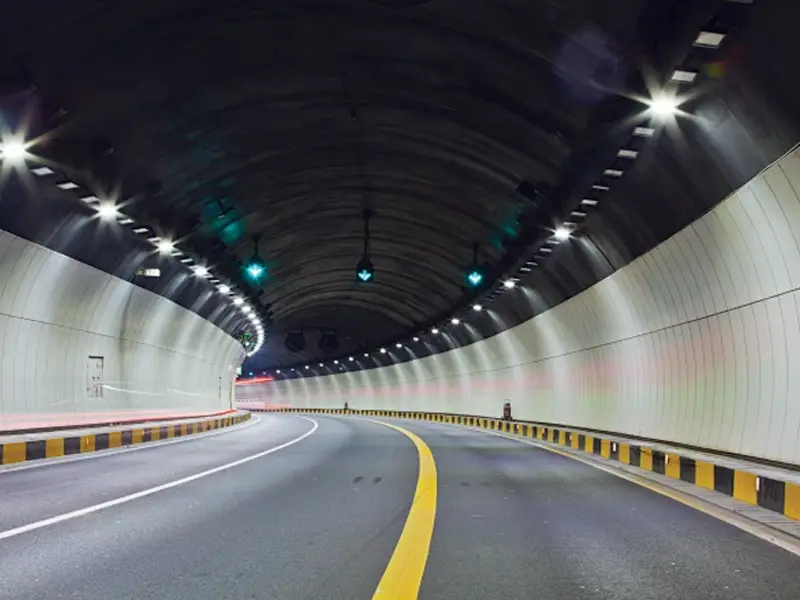
When driving into a tunnel, people often experience a sudden change in the surrounding light environment, especially when entering from bright outdoor conditions into a relatively darker tunnel area. The variation in natural light levels throughout the day and under different weather conditions creates challenges for maintaining consistent and comfortable tunnel illumination.
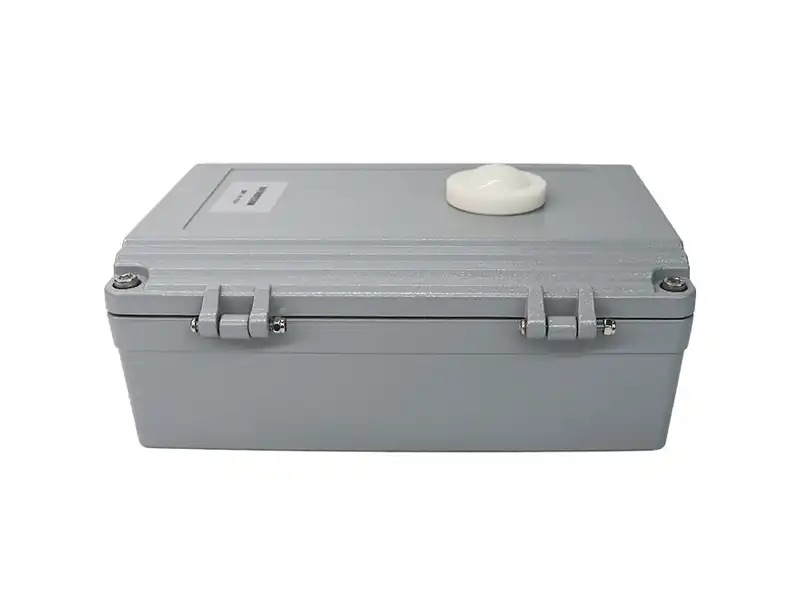
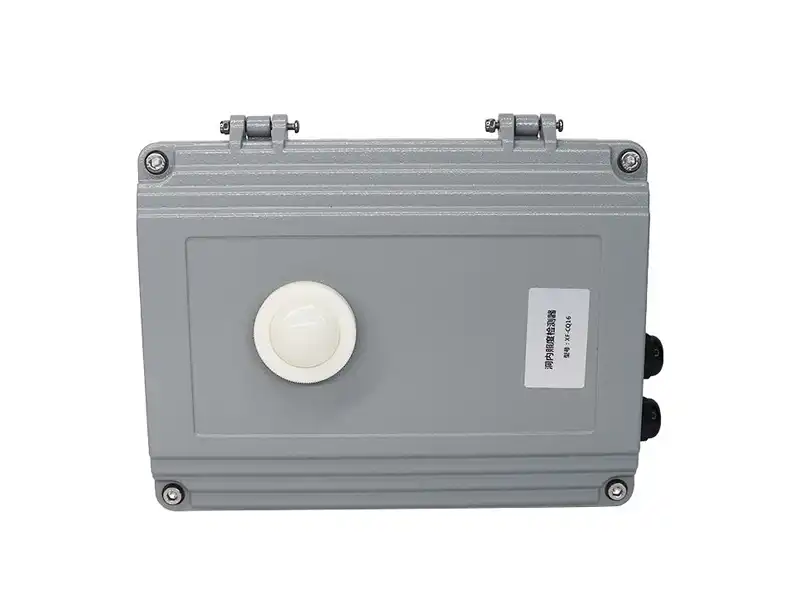
To address these challenges, modern tunnel lighting systems require accurate and continuous monitoring of ambient light levels. A tunnel illumination sensor measures illuminance in and around tunnels and provides real-time data to lighting control systems, allowing automatic adjustment of lighting output according to actual environmental conditions. This helps improve driving safety, energy efficiency, and intelligent lighting management.
This article will explain how tunnel illumination sensors work, the difference between illuminance and luminance measurement, and their applications in smart tunnel lighting systems, helping engineers and transportation professionals better understand the role of illuminance monitoring in tunnel lighting control.Want to learn about “Tunnel Luminance Sensor vs. Illumination Sensor: Differences Explained”? Click here to read more.
Why Tunnel Lighting Needs Intelligent Light Monitoring?
Tunnel lighting needs to adapt to changing environmental conditions rather than operate at fixed levels. A tunnel illuminance sensor provides continuous illuminance data for lighting control systems, helping maintain stable lighting performance while improving energy efficiency and automation.
Fixed Lighting Control Causes Energy Waste
Traditional tunnel lighting systems often rely on preset schedules or fixed power levels. However, actual lighting requirements vary throughout the day, and operating at constant levels may result in unnecessary energy consumption and higher operating costs.
Changing Light Conditions Require Real-Time Illuminance Data
Natural light entering a tunnel changes with weather, time of day, and seasonal conditions. Without continuous illuminance monitoring, lighting systems cannot respond accurately to these variations. Illuminance sensors provide the necessary data for dynamic lighting adjustment.
Manual Inspection Cannot Support Intelligent Management
Periodic manual inspections cannot provide continuous information about illumination changes or quickly identify abnormal conditions. By collecting real-time lighting data, tunnel illuminance sensors support automated monitoring, easier maintenance, and more reliable lighting operation.
Improve Energy Efficiency Through Smart Lighting Control
When connected with lighting controllers, illuminance sensors enable lighting systems to adjust output according to actual requirements instead of fixed settings. This helps reduce unnecessary power consumption, extend equipment lifespan, and improve overall tunnel operation efficiency.
What Is a Tunnel Illumination Sensor?
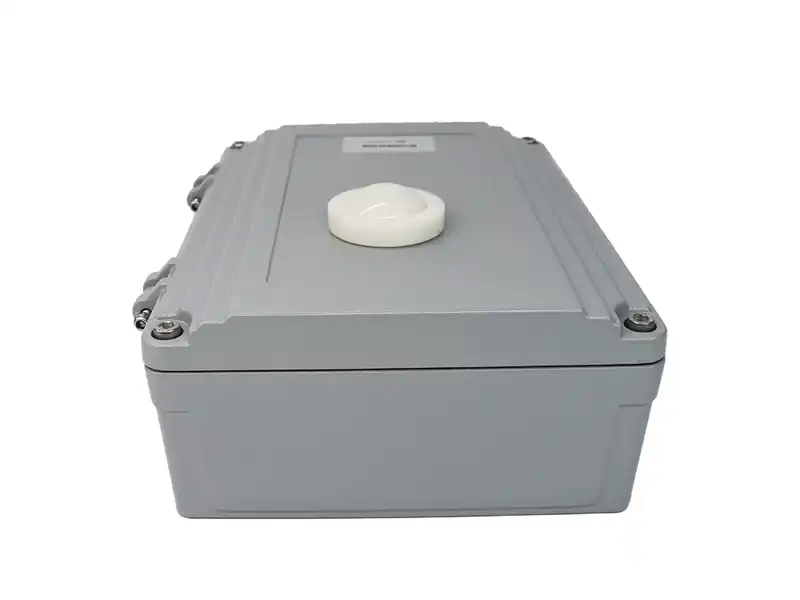
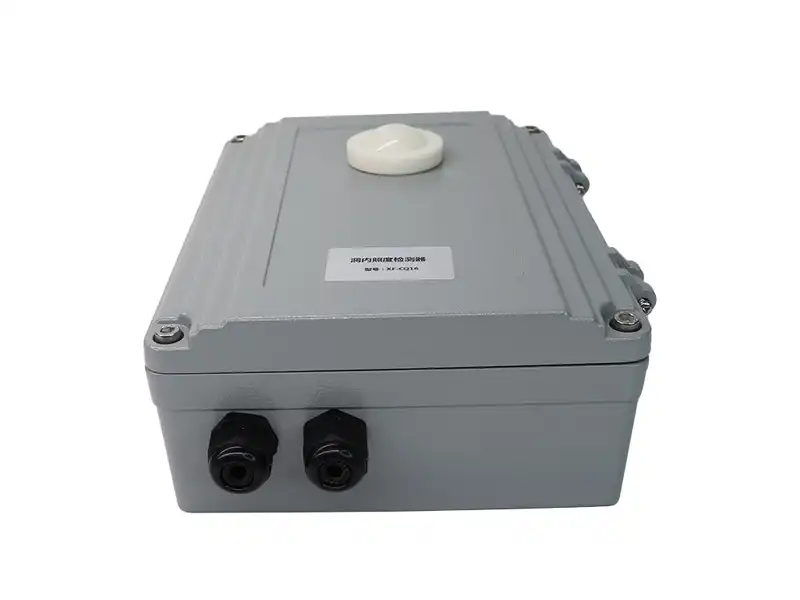
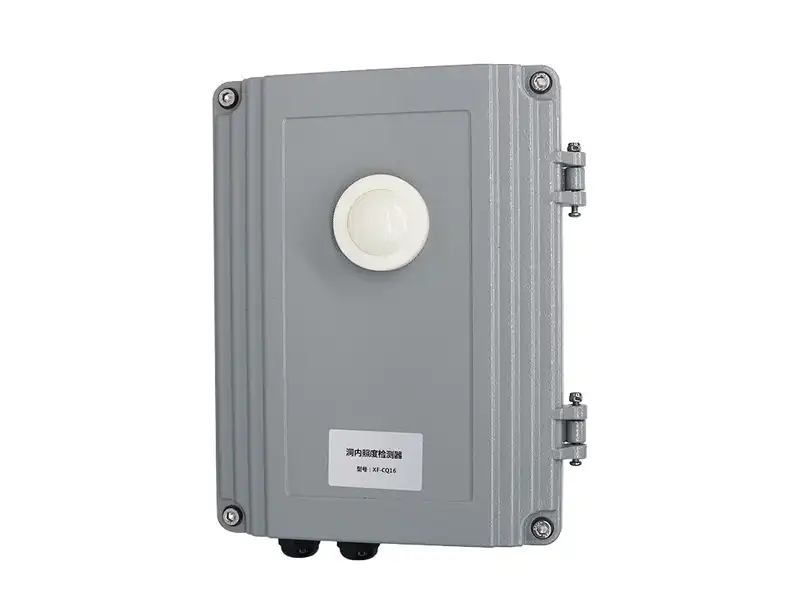
A tunnel illumination sensor is a device designed to measure ambient illuminance levels in and around tunnels and provide real-time light data for intelligent lighting control systems. By monitoring changes in surrounding light conditions, it helps lighting systems adjust automatically according to actual requirements.
Tunnel illumination sensors are commonly installed in key areas such as:
- Tunnel entrances for monitoring outdoor light changes
- Tunnel interiors for maintaining suitable illumination levels
- Tunnel exits for supporting smooth lighting transitions
These sensors are widely used in highway tunnels, railway tunnels, and smart transportation systems where reliable illuminance monitoring is required.
How Does a Tunnel Illumination Sensor Work?
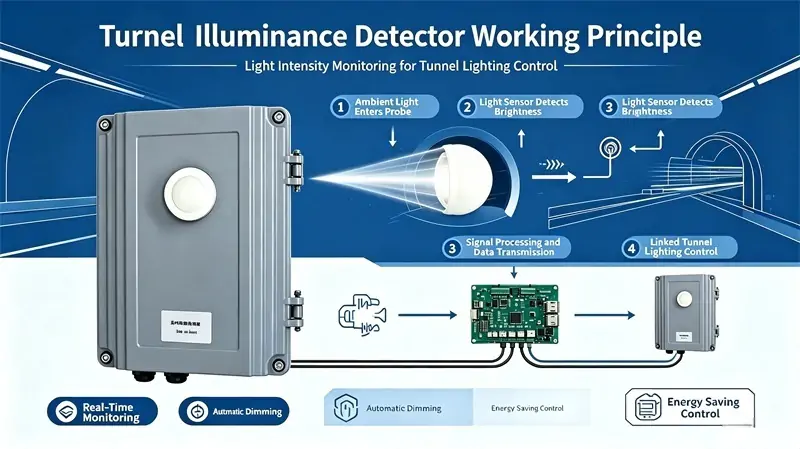
A tunnel illumination sensor works based on photoelectric conversion technology. It detects changes in ambient light levels, converts optical signals into electrical signals, and provides real-time illuminance data for tunnel lighting control systems. The complete process includes light detection, signal processing, and data communication.
Step 1: Optical Signal Collection
The optical sensing unit collects surrounding light entering the sensor and detects changes in illuminance levels inside or outside the tunnel. The sensor is designed to accurately capture environmental light variations while reducing the influence of external interference.
Step 2: Photoelectric Conversion
The collected light signals are converted into electrical signals through a photodiode. This photoelectric conversion process allows the system to transform changes in light intensity into measurable data for further processing.
Step 3: Signal Processing
The electrical signals are processed through internal circuits to improve stability and measurement accuracy. Functions such as signal amplification, filtering, and temperature compensation help maintain reliable performance under different tunnel environmental conditions.
Step 4: Data Communication and Lighting Control
After processing, the illuminance data is transmitted to lighting control systems through standard interfaces such as 4-20mA, RS485, and relay output. The system can integrate with PLC, SCADA, or intelligent lighting controllers to support automatic lighting adjustment and centralized monitoring.
Tunnel Luminance Sensor vs Illuminance Sensor: What Is the Difference?
Although both luminance sensors and illuminance sensors are used in tunnel lighting systems, they measure different physical quantities and support different control requirements. A luminance sensor focuses on the brightness of a visible surface, while an illuminance sensor measures the amount of light received by a surface. Understanding their differences helps engineers select the appropriate sensing solution for specific tunnel lighting applications.
Main Differences Between Luminance Sensor and Illuminance Sensor
| Comparison | Luminance Sensor | Illuminance Sensor |
| Measurement Object | Brightness of a visible surface or object | Light intensity received on a surface |
| Measurement Unit | cd/m簡 (candela per square meter) | lux (lx) |
| Measurement Principle | Measures reflected light from a surface | Measures incident light reaching a surface |
| Main Purpose | Supports visual adaptation and entrance lighting control | Provides ambient light monitoring for lighting adjustment |
| Typical Application | Tunnel entrance luminance control | Tunnel interior and environmental light monitoring |
| Control Focus | Driver visual perception | Lighting system operation and energy management |
The table above shows the fundamental difference between the two sensing technologies. While a tunnel luminance sensor is mainly concerned with how bright an environment appears to drivers, a tunnel illuminance sensor focuses on the actual amount of light available for lighting control. In practical tunnel projects, the two sensors are not interchangeable and are selected according to different measurement requirements and control objectives.
Different Measurement Principles
A luminance sensor measures the brightness of a visible surface, such as the road surface or tunnel entrance area, and is commonly used when lighting systems need to consider human visual perception.
An illuminance sensor measures the amount of light falling onto a surface and provides objective light intensity data. In tunnel lighting systems, it is mainly used for monitoring environmental illumination changes and providing feedback for automatic lighting adjustment.
Different Roles in Tunnel Lighting Systems
A luminance sensor is typically applied where precise control of visual adaptation is required, especially in tunnel entrance areas where outdoor and indoor light conditions change significantly.
An illuminance sensor is widely used for continuous light monitoring inside and around tunnels, helping lighting controllers adjust output according to real-time environmental conditions and improve energy efficiency.
Design Features
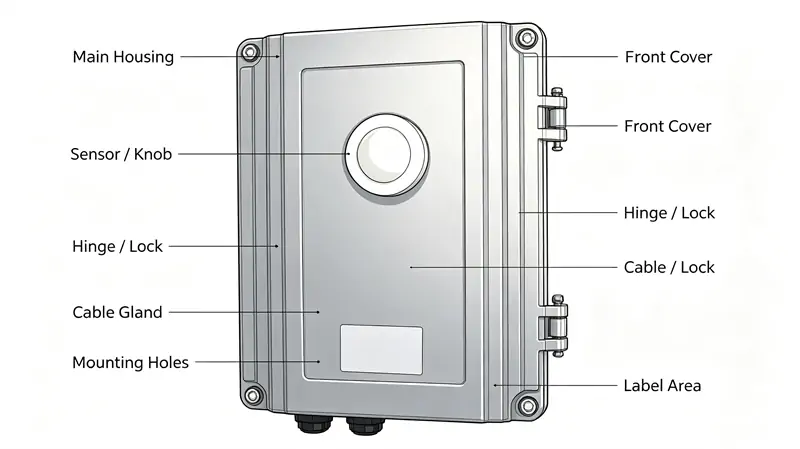
A reliable tunnel illumination sensor is designed to provide accurate illuminance monitoring under complex tunnel conditions. Its core design focuses on measurement accuracy, environmental durability, and seamless integration with intelligent lighting systems.
Accurate Illuminance Measurement
Accurate light detection is the foundation of intelligent tunnel lighting control. Tunnel illumination sensors use high-precision optical components and photoelectric conversion technology to capture ambient light changes and provide stable measurement data. With accuracy typically around ±3%, they can support reliable lighting adjustment based on real-time illuminance conditions.
Robust Design for Harsh Tunnel Environments
Tunnel environments often involve dust, humidity, temperature changes, and continuous operation requirements. Reliable sensors are designed with protective housings such as IP66-rated enclosures and temperature compensation technology, allowing stable operation under challenging conditions. A wide operating temperature range of -40℃ to 65℃ helps ensure long-term monitoring reliability in different climates.
Flexible Integration with Smart Lighting Systems
Modern tunnel lighting requires sensors that can communicate effectively with control platforms. With standard outputs such as RS485 and 4-20mA, tunnel illumination sensors can integrate with PLC, SCADA, and intelligent lighting controllers. This enables centralized monitoring, automatic adjustment, and more efficient tunnel lighting management.
Applications
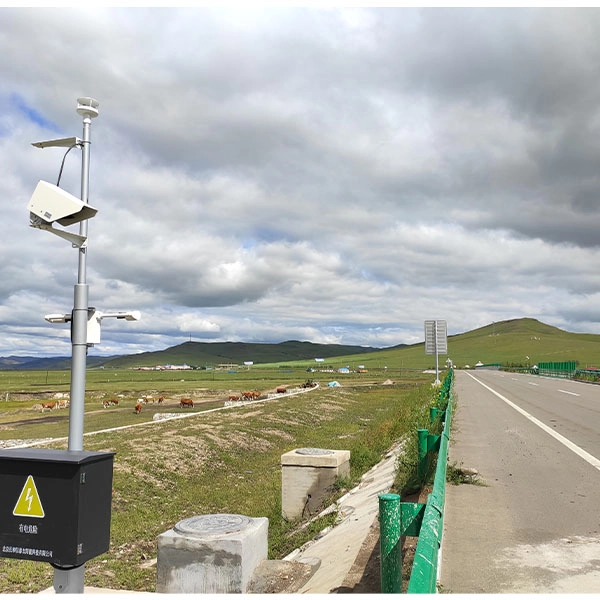
Tunnel illumination sensors are mainly used in intelligent transportation lighting systems where continuous monitoring of ambient light conditions is required. By providing real-time illuminance data, these sensors help lighting systems adjust operation according to actual environmental conditions and improve energy efficiency.
Highway Tunnel Lighting
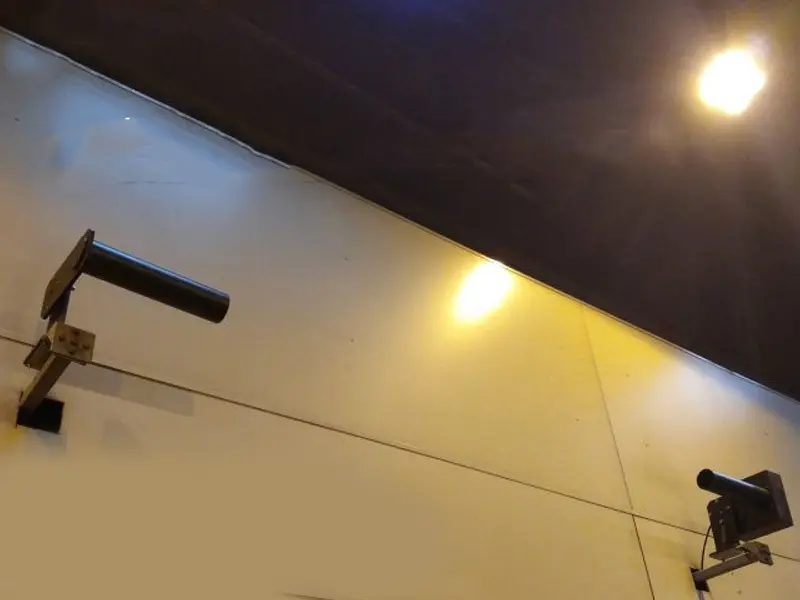
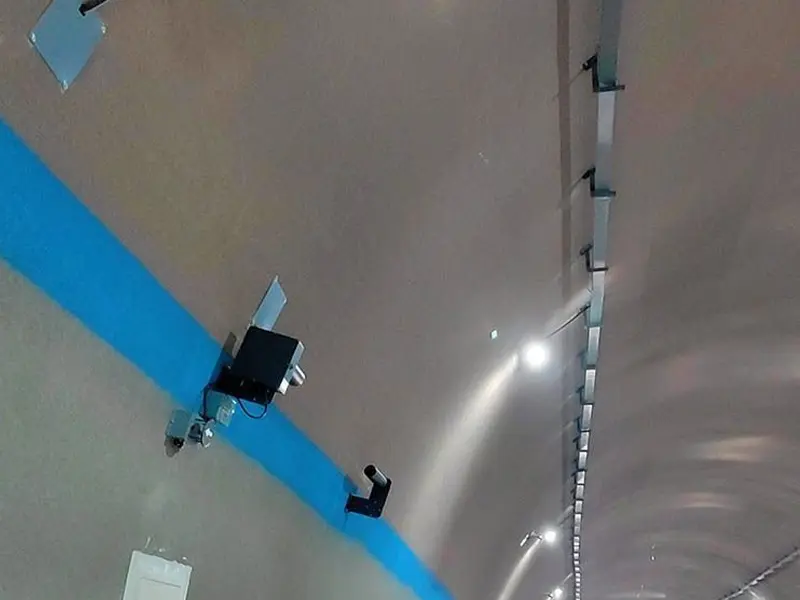
Highway tunnels require stable lighting performance under changing outdoor conditions. Tunnel illumination sensors installed at entrances, interiors, and exits continuously monitor surrounding illuminance levels and provide feedback to lighting controllers. This enables automatic lighting adjustment during different periods, such as daytime, nighttime, and changing weather conditions, helping maintain efficient tunnel lighting operation.
Railway Tunnel Lighting
Railway tunnels require reliable illumination monitoring because lighting systems often operate for long periods with limited manual access. Tunnel illumination sensors provide continuous light data to support automatic lighting control and system monitoring, ensuring stable illumination conditions while reducing unnecessary energy consumption and maintenance requirements.
Urban Underground Roads and Underpasses
Urban underground roads and underpasses usually experience frequent changes in natural light conditions due to surrounding buildings, weather, and time of day. Illuminance sensors help these lighting systems respond dynamically to environmental changes, enabling energy-efficient operation while maintaining suitable illumination levels for daily traffic environments.
How to Select the Right Tunnel Lighting Sensor?
When choosing a tunnel lighting sensor, we recommend first identifying the actual monitoring purpose. An illuminance sensor is suitable for measuring surrounding light levels and supporting automatic lighting adjustment, while a luminance sensor is used for measuring surface brightness. The installation location, such as tunnel entrances, interiors, or exits, should also be considered to ensure the sensor matches the lighting control requirements.
We also suggest checking whether the sensor can work reliably in the tunnel environment and connect with the existing lighting system. Factors such as IP protection level, communication options like RS485 or 4-20mA, and compatibility with PLC or lighting controllers can help ensure easier installation and stable long-term operation.
Conclusion
Tunnel illumination sensors provide essential light data for modern tunnel lighting control systems. With accurate photoelectric measurement, reliable environmental adaptability, and flexible system integration capabilities, these sensors help maintain stable illuminance monitoring under different tunnel conditions. By supporting intelligent lighting adjustment, they enable transportation operators to improve energy efficiency, simplify lighting management, and build safer, more efficient tunnel environments.
If you need a reliable tunnel illumination sensor solution, you can contact our engineering team. We can provide professional recommendations and customized solutions based on your tunnel lighting requirements and application conditions.