
Henan Xixia Yeren Valley Negative Air Ion & Weather Monitoring Station Project
Project Background
Yeren Valley in Xixia County, Nanyang, Henan, is a forested mountain scenic area within the Funiu Mountains, with dense vegetation, streams, and a humid valley climate. The area promotes forest wellness and eco-tourism, making negative air ion concentration and local weather conditions useful environmental data for both ecological monitoring and visitor information. The site also experiences frequent fog and rainfall in summer, frost and low temperatures in winter, and noticeable local variations caused by the valley terrain and vegetation.
To obtain continuous field data, the scenic area deployed a Yantai Sensor integrated negative air ion and weather monitoring station along the visitor trail. The system combines negative air ion, air temperature, relative humidity, wind speed, wind direction, and atmospheric pressure monitoring in one station, with the collected data transmitted remotely through 4G and selected values displayed on an outdoor LED screen. Compared with periodic manual sampling, the system provides continuous records while reducing the need for staff to repeatedly enter the valley for data collection.
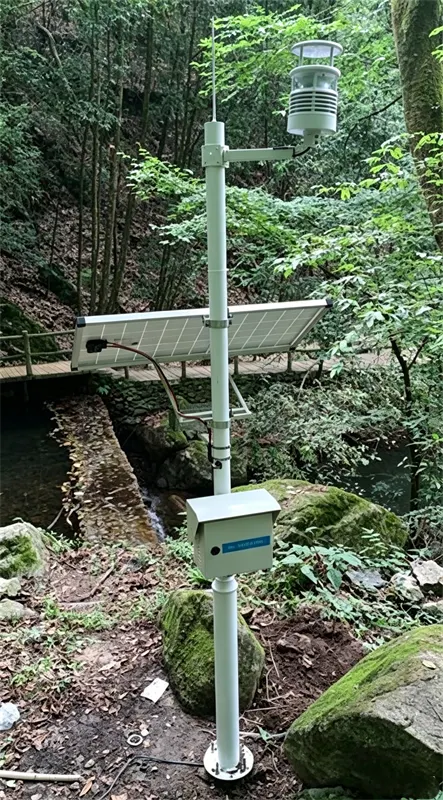
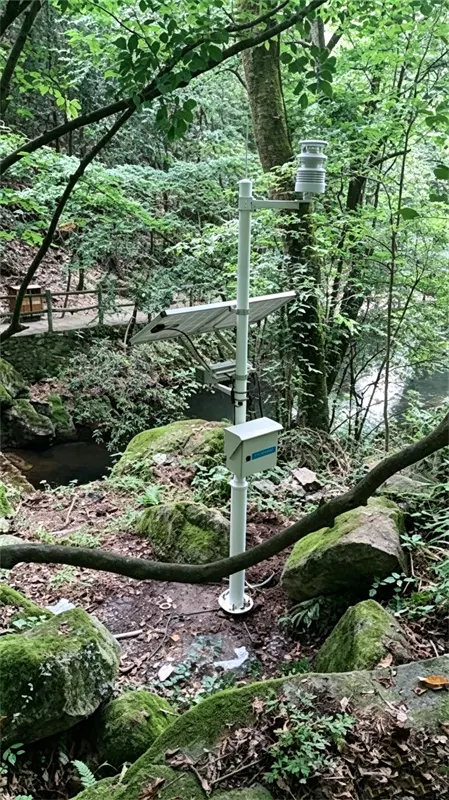
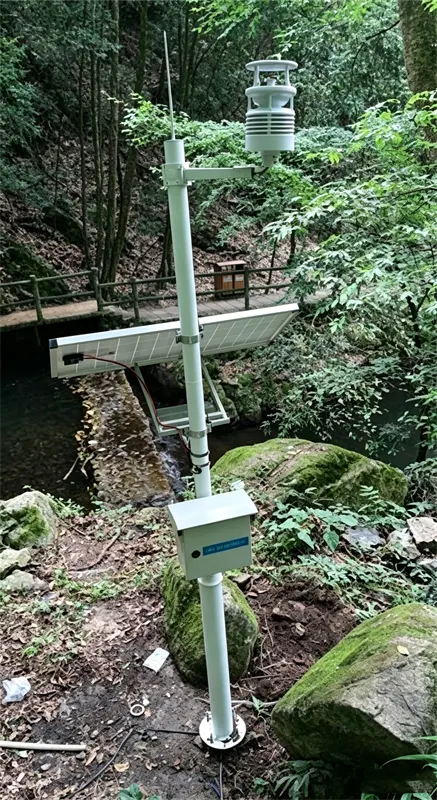
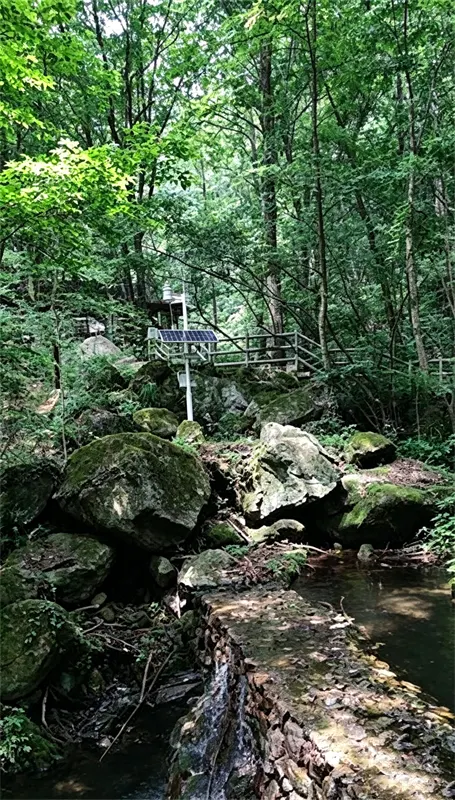
The installation itself required adjustment to the actual mountain conditions. Large rocks and shallow soil made the pole foundation more difficult to prepare, while surrounding trees had to be considered when positioning the station and solar panel. High humidity, dew, and rainfall also required proper outdoor protection and sealed cable connections. The final system was therefore configured around both the monitoring requirements and the physical conditions of the Yeren Valley site, allowing the station to operate as a practical long-term environmental monitoring point.
- Project Location: Yeren Valley Ecological Scenic Area, Xixia County, Nanyang, Henan, China
- Project Date: June 2021
- Application: Forest wellness monitoring, negative air ion monitoring, scenic-area weather monitoring, and public environmental data display
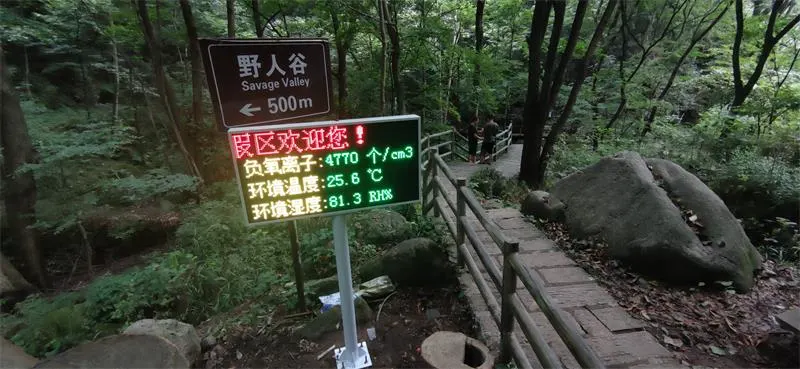
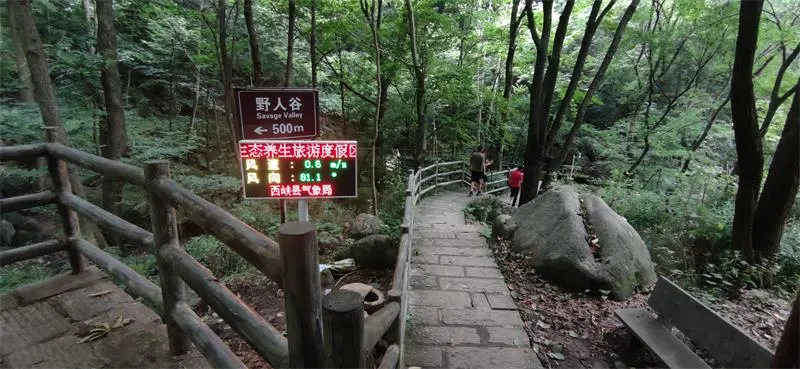
On-Site Installation Process
Before installation, the technical team entered the scenic area in late June 2021 and surveyed the planned trail section on foot. They checked sensor ventilation, surrounding tree coverage, rock distribution, drainage conditions, and the viewing position of the LED display before selecting the monitoring point. Because the trail was narrow and large equipment could not reach the site directly, the installation materials were transported manually to the selected location.
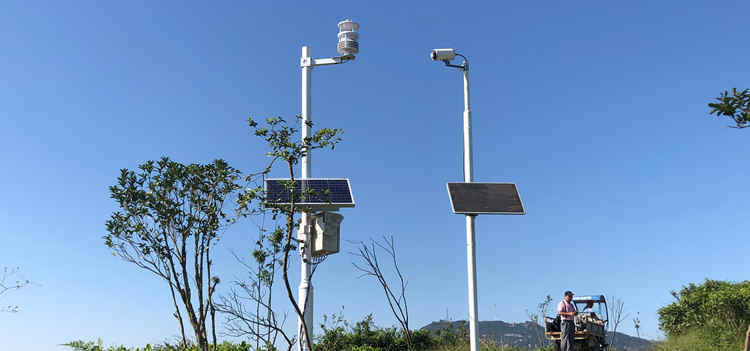
After the monitoring point was confirmed, the team completed the pole foundation and installed the integrated negative air ion and weather sensor, solar panel, data acquisition enclosure, 4G antenna, and outdoor LED display. The solar panel position was adjusted to make better use of the available sunlight under the surrounding trees. Outdoor cable joints were sealed against moisture and rainwater. During commissioning, engineers checked the power supply, sensor signals, data acquisition, and 4G transmission, then verified the negative air ion and weather data on the LED display before handover.
Equipment Used
- Weather Station With Multiple Sensors: Measures air temperature, relative humidity, wind speed, wind direction, atmospheric pressure, and rainfall for continuous local weather monitoring.
- Negative Air Ion Sensor: Measures negative air ion concentration for forest wellness and environmental assessment.
- Data Acquisition Unit: Collects, processes, and stores monitoring data from the connected sensors.
- 4G Wireless Communication Module: Transmits field data to the remote monitoring platform and LED display.
- Solar Power System: Supplies off-grid power through solar panels and battery storage.
- Outdoor Protective Enclosure: Protects the data acquisition and electrical components from rain, moisture, and outdoor exposure.
- Outdoor LED Display: Shows selected negative air ion and meteorological data in real time for visitors and site staff.
Project Implementation
1. Site Survey & Installation
Installation began in late June 2021. Because the trail was narrow and inaccessible to large machinery, equipment and construction materials were transported manually to the monitoring point. The technical team first completed the pole foundation and then installed the weather station with multiple sensors, negative air ion sensor, solar panel, outdoor enclosure, 4G antenna, and LED display. Sensor placement and solar panel orientation were adjusted according to the surrounding trees, rocks, and available sunlight.
2. Commissioning & Handover
After installation, engineers checked the power supply, sensor connections, data acquisition, and 4G communication system. During trial operation, they verified the collection and transmission of negative air ion, temperature, humidity, wind speed, wind direction, and atmospheric pressure data and checked the real-time updates on the LED display. After confirming stable operation, the system was handed over to the scenic-area management team, with basic guidance provided for routine inspection, cleaning, cable checks, and simple troubleshooting.
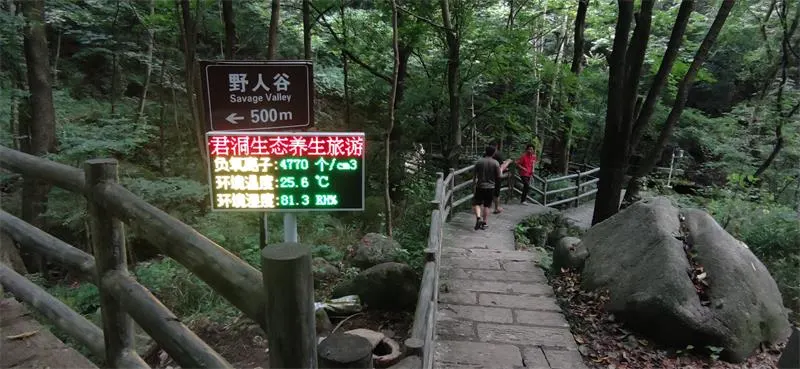
Project Site:
Project Highlights
The system was configured around the actual conditions and operating requirements of the Yeren Valley scenic area. Key advantages of the deployed solution include:
- Built for Mountain Valley Conditions: Configured for high humidity, frequent rainfall, dense vegetation, exposed rocks, and limited site access.
- Off-Grid Operation: Solar power and battery storage support operation where utility power is not available.
- Remote 4G Communication: Sends monitoring data remotely, reducing the need for frequent manual visits to the valley.
- Multi-Parameter Monitoring: Combines negative air ion measurement with temperature, humidity, wind speed, wind direction, and atmospheric pressure monitoring.
- Real-Time Visitor Display: The outdoor LED display shows selected monitoring data directly along the scenic trail.
- Reduced Manual Sampling: Automatic data collection provides continuous records for scenic-area monitoring instead of periodic manual measurements.
Customer Feedback
After the system was put into operation, the scenic-area management team found the automatic monitoring system practical for routine environmental monitoring. The main benefit for them was reducing the need for staff to enter the valley regularly for manual measurements and making the monitoring data available directly along the visitor trail.
“Before installation, we had to arrange staff to go into the valley and take negative air ion measurements from time to time, so the records were not continuous. Now the station collects the data automatically, and visitors can see the current readings on the LED display. It has made both our daily monitoring and environmental information display much easier.”
Related Products
Related Articles
Contact us
Looking for customized smart sensor solutions? Our team specializes in delivering scalable, flexible, and tailored solutions to meet your specific needs.
Fill out the form now to get a personalized solution. Our experts will provide professional advice and ensure your project runs smoothly. Contact us today to start boosting efficiency!