Introduction
With the rapid development of photovoltaic power generation, meteorological monitoring, smart agriculture, and environmental monitoring, the accuracy of solar radiation data has become a critical basis for project design, performance evaluation, and operation and maintenance. As the core instrument for measuring total solar radiation, the pyranometer is widely used in various professional monitoring scenarios due to its high precision, long-term stability, and compliance with international standards.
However, during the actual selection process, in addition to measurement accuracy, users must also comprehensively consider factors such as procurement costs, installation requirements, maintenance frequency, and calibration cycles. Therefore, a thorough understanding of the advantages and disadvantages of pyranometers helps engineers, procurement personnel, and system integrators select the appropriate solar radiation sensors based on project requirements and achieve the optimal balance between performance, budget, and long-term operation and maintenance. This article will provide an in-depth analysis covering advantages, disadvantages, application scenarios, comparisons with other solar radiation sensors, and selection recommendations, serving as a reference for your projects.If you are comparing different pyranometer technologies, see our guide to thermopile vs silicon pyranometers for a closer look at their differences and selection criteria.
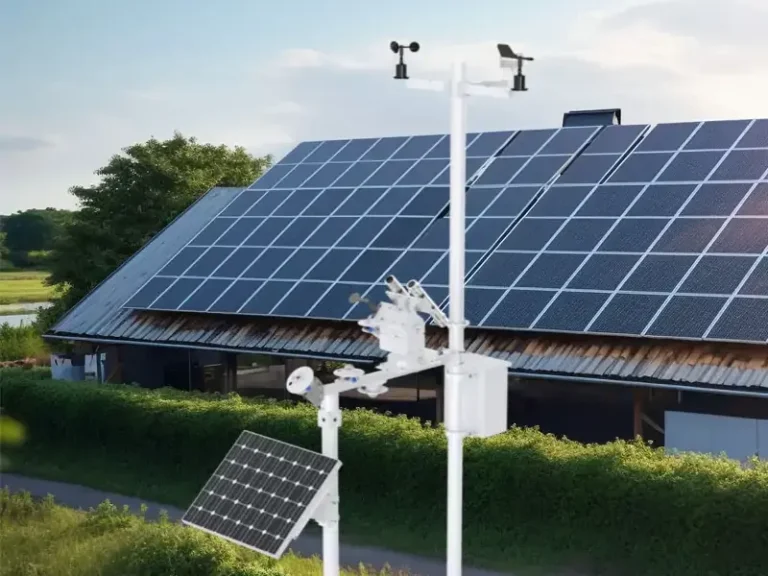
What Is a Photovoltaic Power Plant Environmental Monitoring System?
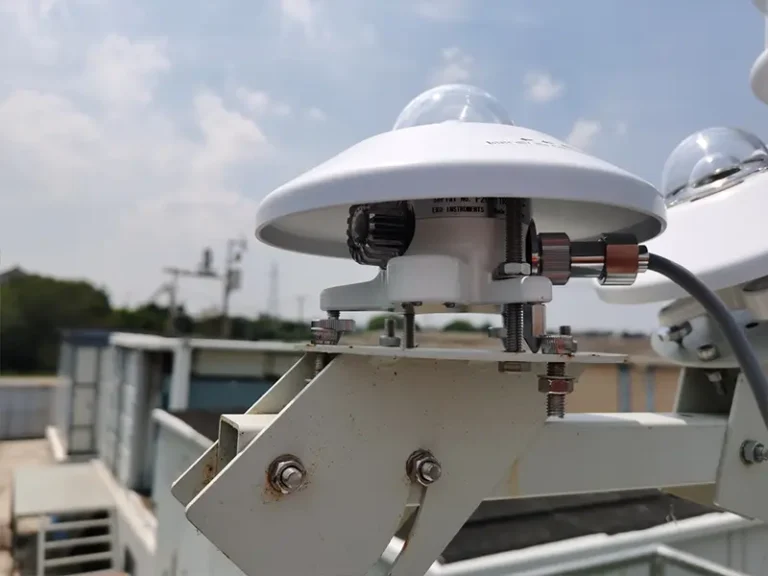
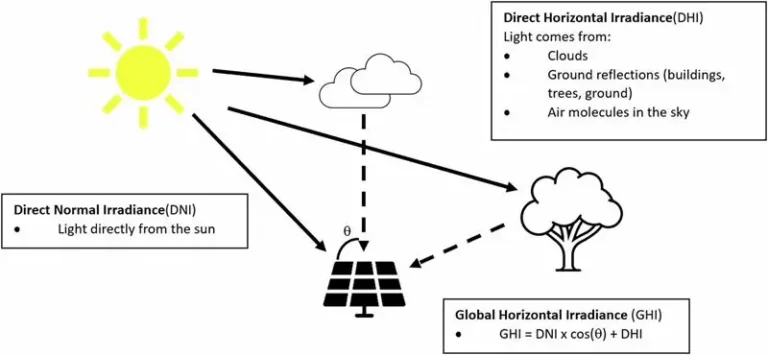
A pyranometer is a high-precision solar radiation sensor specifically designed to measure global horizontal irradiance (GHI). It simultaneously measures the total energy of direct solar radiation and sky-scattered radiation at the horizontal plane, typically expressed in W/m². Compared to ordinary light sensors, which primarily detect visible light intensity, pyranometers cover a broader range of the solar spectrum and accurately reflect solar radiation energy. As a result, they are widely used in fields such as photovoltaic power plant performance evaluation, meteorological monitoring, agricultural environmental monitoring, building energy efficiency, and scientific research.
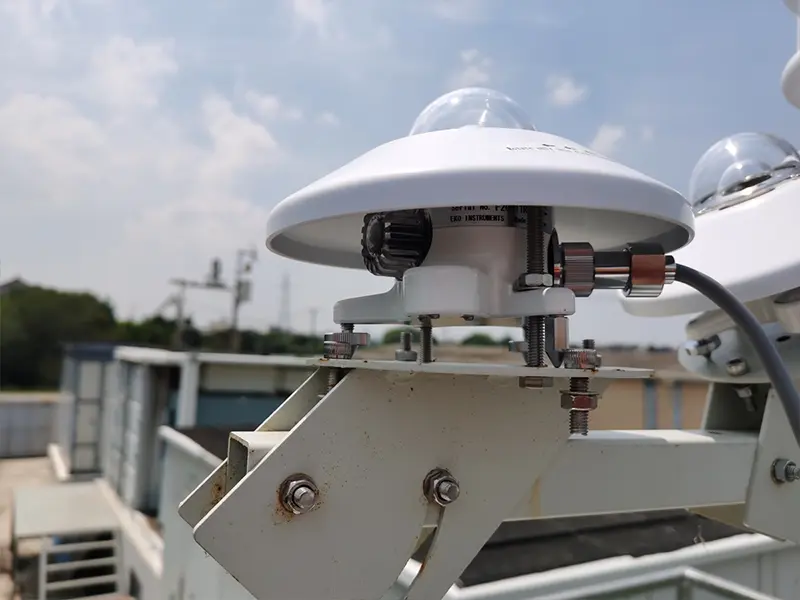
Their operating principle is typically based on thermopile technology. When solar radiation passes through a highly transparent glass cover and strikes a black absorber layer, the absorber layer converts the radiant energy into thermal energy, creating a temperature difference across the thermopile and generating a faint voltage signal proportional to the intensity of solar radiation. After internal calibration and signal processing within the sensor, precise solar irradiance data is output. Because it employs a broad-spectral measurement method, the pyranometer accurately reflects changes in solar radiation under various weather conditions. Compared to ordinary light sensors, it offers higher measurement accuracy and better long-term stability, making it the standard measurement instrument for solar resource assessment, photovoltaic power generation monitoring, and professional environmental monitoring systems.
Features and functions of Pyranometer
1. Wide measurement range: Pyranometer is capable of measuring the total energy of solar radiation in all wavelength ranges, including visible light, ultraviolet, and infrared.
2. Highly accurate measurement: Through sophisticated photocells and photoelectric conversion technology, the Pyranometer is able to provide highly accurate solar radiation measurement data.
3. Multi-disciplinary applications: In the field of meteorology, the Pyranometer can be used to measure the total amount of solar radiation in order to determine the meteorological conditions; in the field of agriculture, it can help farmers to optimise crop cultivation and irrigation plans; in the field of environmental monitoring, it can be used to monitor the total amount of solar radiation in order to assess the health of the environment.
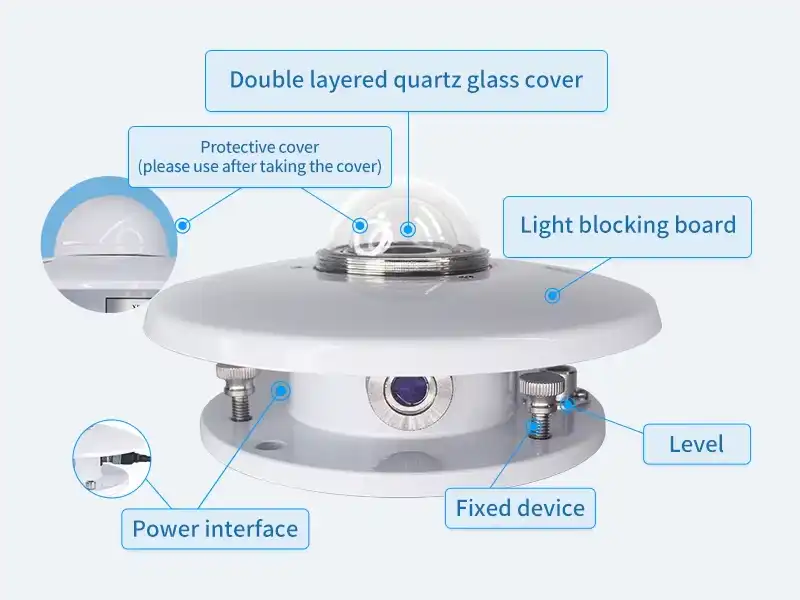
Application Scenarios of Pyranometer
1. Meteorological field: A pyranometer is one of the necessary measuring devices for meteorological stations, which can be used for weather forecasting and weather research.
2. Agricultural field: By measuring the total amount of solar radiation received by crops, farmers can make reasonable agricultural production plans to improve crop yield and quality.
3. Environmental monitoring field: A pyranometer can be used to monitor solar radiation in cities, industrial areas, mining areas, and other areas, providing reference data for environmental monitoring and air pollution control.
4. Solar applications: In solar power generation systems, the Pyranometer is used to measure the total amount of solar radiation to assess the power generation efficiency and energy yield of solar cells.
Why Understanding pyranometer pros and cons Matters
In solar monitoring and environmental data collection projects, the performance of pyranometers not only affects the accuracy of measurement results but also directly impacts system operational efficiency, project investment costs, and ongoing maintenance. Different types of total solar radiation sensors vary in terms of accuracy class, response speed, environmental adaptability, calibration requirements, and procurement costs.
- Improve Accuracy in Equipment Selection
Select the appropriate pyranometer model and grade based on the project’s requirements for measurement accuracy, budget, and application environment. - Optimize Project Investment Costs
Comprehensively consider the costs of equipment procurement, installation, calibration, and maintenance to achieve total life-cycle cost control. - Ensure the Reliability of Monitoring Data
High-quality solar radiation data forms the foundation for photovoltaic power generation assessments, resource analysis, and scientific research. - Meet Industry Standards and Project Specifications
Understand the requirements of relevant standards such as ISO 9060 and IEC 61724 to ensure the project complies with industry specifications. - Improve the Operational Efficiency of Photovoltaic Systems
Accurate irradiance data helps analyze power generation performance, identify system anomalies, and optimize operational strategies. - Minimize Long-Term Maintenance Risks
Understanding cleaning, calibration, and installation requirements in advance can reduce the impact of environmental factors on measurement results. - Select the Most Appropriate Solution
Choose the solar radiation measurement solution that best meets your needs for different scenarios, such as PV power plants, weather stations, agricultural monitoring, or scientific research experiments. - Improve Long-Term Return on Investment
Appropriate equipment selection can extend service life, reduce maintenance costs, and continuously provide stable, reliable monitoring data.
Advantages of Pyranometer
A pyranometer can directly measure total solar radiation and is an indispensable tool in meteorological observations, solar energy utilization, and environmental monitoring. Compared to ordinary light sensors, it offers significant advantages in terms of measurement accuracy, stability, and range of applications. Below are the pyranometer benefits:
High Accuracy and Wide Spectral Range
Modern solar irradiance meters (such as those using thermopile technology) can cover a wide spectral range from ultraviolet to infrared (e.g., 285–3000 nm) and feature a flat spectral response, ensuring the accuracy of measurement results. High-end models excel in key metrics such as calibration uncertainty and “zero offset a,” and are classified as Class 2 reference sensors under ISO 9060.
Long-Term Stability and Low Maintenance
Solar irradiance meters are designed for long-term, continuous operation. They offer excellent stability and durability and can withstand harsh environments such as high and low temperatures and humidity. Many models have no moving parts and experience virtually no mechanical wear, resulting in a long service life and extremely low maintenance costs.
Easy Installation and Data Integration
Modern solar radiation sensors are typically compact and relatively easy to install. They are generally equipped with digital outputs (such as RS-485 Modbus) and analog outputs, allowing for convenient integration into large-scale data acquisition systems or IoT platforms to enable real-time data logging and remote transmission.
Fast Response Time
High-quality solar irradiance meters have a fast response time to changes in solar radiation.
Versatility
In addition to measuring total solar radiation, some advanced solar radiation meters can also measure other radiation parameters (such as ultraviolet and infrared radiation) and can even directly calculate direct normal irradiance (DNI) and hours of sunshine, making them suitable for a wide range of applications.
Disadvantages of Pyranometer
Although pyranometers offer the advantages of high accuracy and long-term stability, they still have certain limitations in practical applications. Factors such as purchase cost, installation requirements, routine maintenance, and periodic calibration all affect the overall cost of using the equipment. Below are the pyranometer limitations:
High Cost
High-quality solar irradiance meters are expensive and may place a financial burden on research institutions or companies with limited budgets. In addition, installation, maintenance, and periodic calibration require specialized knowledge and skills, which come at a relatively high cost. High-end, research-grade products can cost $500 or more.
Measurement Errors Under Extreme Weather Conditions
Measurement accuracy may be compromised under extreme weather conditions such as strong winds, heavy rain, or sandstorms. Extreme temperature fluctuations can also affect sensor performance.
Decline in Sensor Sensitivity
After prolonged use, sensor sensitivity may decrease, requiring regular calibration and maintenance to maintain data accuracy.
Installation Location Constraints
To ensure that solar radiation in the target area is accurately reflected, the selection of the installation location must be made with great care. In certain regions or scenarios (such as high altitudes or areas with strong electromagnetic interference), finding a suitable installation site can be difficult.
Complex Data Interpretation
Measured solar radiation data requires professional analysis and interpretation to draw useful conclusions. This can be quite challenging for non-specialists.
Whether you’re building a solar power plant, weather station, or environmental monitoring system, our experts can help you select the right pyranometer based on your accuracy, communication, and installation requirements.
Contact Yantai Sensor today for expert advice, customized solutions, and a free quotation.
Pyranometer Advantages and Disadvantages Comparison Table
When selecting a pyranometer, you should not focus solely on measurement accuracy; you should also take into account the purchase cost, maintenance requirements, installation difficulty, and long-term value. The table below summarizes the main advantages and limitations of pyranometers to help you quickly assess whether they are suitable for your current project.
| Factor | Advantages | Disadvantages |
|---|---|---|
| Measurement Accuracy | High accuracy for measuring Global Horizontal Irradiance (GHI), suitable for professional solar radiation monitoring. | Requires periodic calibration to maintain measurement accuracy. |
| Cost | Delivers excellent long-term value through reliable performance and a long service life. | Higher initial purchase cost than standard light sensors. |
| Maintenance | Durable design with no moving parts and relatively low routine maintenance. | Requires regular cleaning, inspection, and scheduled calibration. |
| Applications | Widely used in solar power plants, weather stations, agriculture, environmental monitoring, and research. | Proper installation is essential to achieve accurate results. |
| Lifetime | Typically offers a service life of 10+ years with proper maintenance. | Periodic performance verification is recommended throughout its lifespan. |
| Environmental Adaptability | Designed for reliable outdoor operation under harsh weather conditions. | Dust, snow, dew, and shading can affect measurement accuracy. |
| Data Reliability | Provides stable and reliable data for performance analysis and resource assessment. | Inaccurate installation or poor maintenance can reduce data quality. |
| System Integration | Supports multiple output options such as RS485, Modbus, SDI-12, and 4–20 mA for easy integration. | Additional accessories and data acquisition equipment may increase overall system cost. |
Suggestion: If a project requires long-term, accurate solar radiation monitoring that complies with international standards, a pyranometer remains the most reliable choice. Although its purchase cost and maintenance requirements are higher than those of standard light sensors, its high precision, long-term stability, and broad applicability across industries make it a more valuable long-term solution for specialized applications such as photovoltaic power plants, meteorological monitoring, and scientific research.
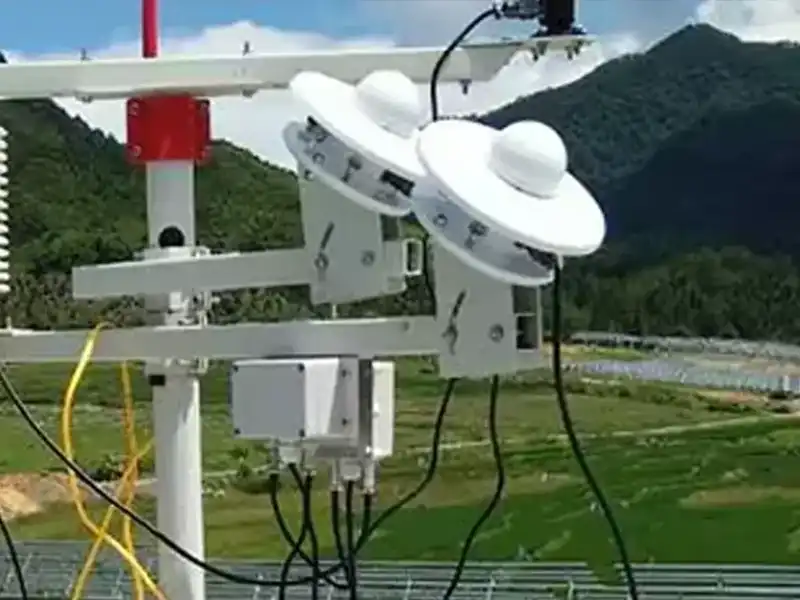
Pyranometer vs Other Solar Radiation Sensors
Not all solar radiation sensors are designed for the same purpose. While a pyranometer is the preferred choice for high-accuracy solar irradiance measurement, other sensors, such as silicon pyranometers, photodiode sensors, solar power meters, and reference cells, offer different advantages depending on the application. The comparison below highlights the key differences to help you select the right sensor for your project.
| Feature | Pyranometer | Silicon Pyranometer | Photodiode Sensor | Solar Power Meter | Reference Cell |
|---|---|---|---|---|---|
| Measurement Principle | Thermopile | Silicon photovoltaic cell | Photodiode | Handheld irradiance detector | PV reference cell |
| Accuracy | ★★★★★ Very High | ★★★★☆ High | ★★★☆☆ Moderate | ★★☆☆☆ Basic | ★★★★☆ High (PV-specific) |
| Spectral Response | Broad spectrum (285–3000 nm) | Limited to silicon response | Visible/NIR range | Limited | Similar to PV modules |
| Price | High | Medium | Low | Low | Medium to High |
| Response Time | Moderate | Very Fast | Very Fast | Fast | Fast |
| Long-Term Stability | Excellent | Good | Moderate | Moderate | Good |
| Calibration Requirement | Every 1–2 years | Periodic | Occasional | Minimal | Periodic |
| Maintenance | Regular cleaning and calibration | Low to moderate | Low | Very low | Moderate |
| Typical Applications | Solar farms, weather stations, research, and environmental monitoring | PV monitoring, weather stations | Light intensity monitoring, automation, IoT | Field inspection, educational use | PV performance testing and IEC compliance |
| Best For | High-precision solar radiation measurement | Cost-effective solar monitoring | General light sensing | Portable irradiance checks | PV system performance evaluation |
Quick Selection Guide
- Choose a Pyranometer if your project requires the highest measurement accuracy, long-term stability, and compliance with ISO 9060 or IEC standards.
- Choose a Silicon Pyranometer when you need a balance between cost and performance for routine photovoltaic monitoring.
- Choose a Photodiode Sensor for basic light intensity measurement, smart devices, or IoT applications where precision solar irradiance data is not critical.
- Choose a Solar Power Meter for portable, on-site irradiance measurements and quick inspections.
- Choose a Reference Cell when evaluating photovoltaic module performance or conducting PV system commissioning and efficiency testing.
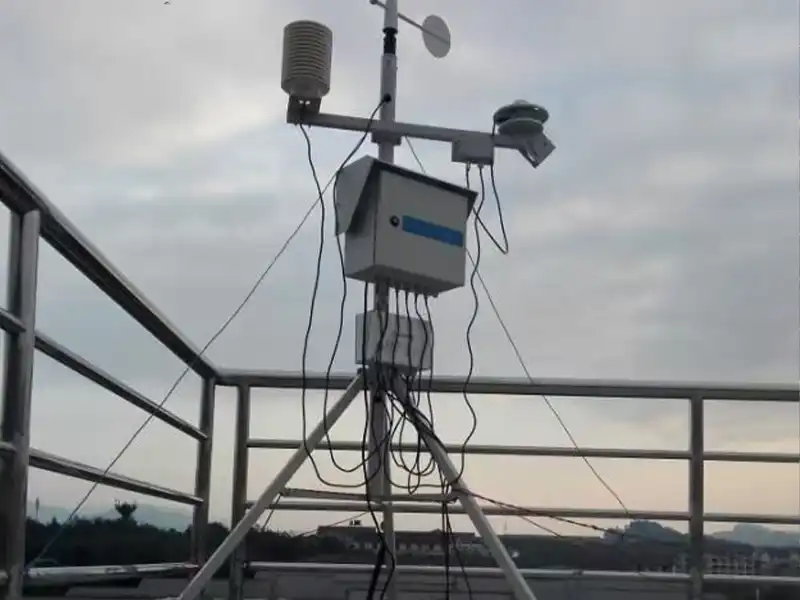
How to Reduce the Disadvantages of a Pyranometer
- Clean the sensor surface regularly
Regularly remove dust, bird droppings, snow, and other contaminants from the glass cover to prevent them from affecting solar radiation transmittance and to improve measurement accuracy. - Equipped with an automatic cleaning system
For large-scale photovoltaic power plants or unmanned monitoring stations, automatic cleaning devices can be installed to reduce the frequency of manual maintenance and improve data continuity. - Establish a Regular Calibration Schedule
Professional calibration is recommended every 1 to 2 years to ensure the sensor maintains measurement accuracy in accordance with standards over the long term. - Ensure Proper Installation Position
During installation, keep the sensor level and avoid obstruction by trees, buildings, mounting brackets, etc., to minimize the impact of shadows on measurement results. - Improve Lightning Protection and Grounding
For outdoor installations, equip the system with lightning arresters and a reliable grounding system to reduce the risk of damage to the equipment caused by lightning strikes and power surges. - Regularly Check Levelness
During long-term operation, inspect the spirit level to prevent installation angle deviations caused by equipment settlement, loose mounting brackets, or external forces. - Establish a Remote Monitoring System
Use data loggers and remote monitoring platforms to monitor the device’s operational status in real time, promptly detect abnormal data or equipment failures, and reduce the frequency of on-site inspections. - Enhance Routine Inspections and Maintenance
Regularly inspect the glass cover, cables, seals, and mounting brackets, and promptly address any issues related to aging, loosening, or damage to extend the device’s service life.
How to Choose the Right Pyranometer
- Define Measurement Accuracy Requirements
For photovoltaic performance testing and scientific research experiments, it is recommended to select high-precision thermopile pyranometers; for general environmental monitoring, choose cost-effective products based on actual needs. - Consider ISO 9060 Class
Select Class A, Class B, or Class C products based on project requirements to ensure compliance with industry standards and acceptance specifications. - Select the Appropriate Output Interface
Choose RS485, Modbus RTU, SDI-12, 4–20 mA, or voltage output based on the monitoring system to facilitate system integration. - Evaluate Environmental Adaptability
Prioritize products with a high protection rating (e.g., IP65/IP67), a wide operating temperature range, and resistance to UV radiation and corrosion. - Understand Calibration and Maintenance Requirements
Select products with clearly defined calibration intervals, easy maintenance, and comprehensive technical support to help reduce long-term operational and maintenance costs. - Select Models Based on Application Scenarios
Photovoltaic power plants, meteorological monitoring, agriculture, building energy efficiency, and research projects have different sensor performance requirements; selections should be made based on the specific application. - Focus on Long-Term Stability
Prioritize products with minimal zero-point drift, high long-term stability, and proven application cases to ensure the reliability of long-term monitoring data. - Confirm Installation and Accessories
Verify that accessories such as mounting brackets, spirit levels, sunshades, and lightning protection devices are included to improve installation efficiency and measurement quality. - Comprehensively Consider Total Lifecycle Costs
Do not focus solely on the purchase price; instead, comprehensively evaluate long-term costs such as maintenance, calibration, service life, and after-sales service. - Choose an Experienced Supplier
Prioritize manufacturers with R&D capabilities, quality certifications, project case studies, and comprehensive after-sales support to ensure reliable installation, calibration, and technical support.
Choosing the right pyranometer is essential for accurate solar radiation measurement and long-term system performance. Our engineering team can recommend the ideal solution based on your project requirements, budget, and industry standards.
Request a free consultation and receive a customized quotation today.
Common Mistakes When Buying a Pyranometer
- Focusing Only on Price and Neglecting Measurement Accuracy
While low-cost products can reduce initial investment, they may fail to meet a project’s requirements for solar radiation measurement accuracy and long-term stability. - Failure to Select Products Based on Application Scenarios
Photovoltaic power plants, meteorological monitoring, agriculture, and scientific research projects have different requirements for accuracy levels and performance; product selection should be based on the actual application. - Ignoring ISO 9060 Class Requirements
Some projects require compliance with ISO 9060 or IEC 61724 standards; before purchasing, verify that the product class meets project specifications. - Failure to Consider Output Interface Compatibility
Neglecting communication interfaces such as RS485, Modbus, SDI-12, or analog outputs may increase the difficulty of system integration later on. - Ignoring Installation Conditions
Failure to consider whether the installation location is obstructed, whether the mounting bracket is secure, or whether the device features level adjustment capabilities can all affect measurement results. - Underestimating Maintenance and Calibration Needs
Failure to establish a cleaning and calibration schedule can lead to a gradual increase in long-term measurement errors, compromising data reliability. - Ignoring Environmental Adaptability
In high-temperature, high-humidity, coastal, or dusty environments, attention should be paid to the product’s protection rating, corrosion resistance, and operating temperature range. - Failure to Consider Long-Term Operating Costs
The purchase price is only a portion of the total cost; maintenance, calibration, replacement of parts, and equipment lifespan should also be comprehensively evaluated. - Neglecting After-Sales Service and Technical Support
A lack of professional technical support, calibration services, or spare parts supply may affect the normal operation of the equipment in the long term. - Failure to Select a Reliable Manufacturer
Prioritizing suppliers with proven project experience, quality certifications, and a comprehensive after-sales support system can reduce risks associated with project implementation and long-term operation and maintenance.
Conclusion
Understanding the advantages and disadvantages of pyranometers is a crucial step in selecting solar radiation measurement equipment. As a professional instrument for measuring total solar radiation, the pyranometer has become the solution of choice for photovoltaic power plants, meteorological monitoring, agricultural environmental monitoring, and scientific research due to its high precision, long-term stability, and compliance with international standards. Although its initial cost is relatively high and it requires regular cleaning and calibration, these investments yield more reliable monitoring data and greater long-term value.
During the actual selection process, a comprehensive evaluation should be conducted, taking into account factors such as measurement accuracy, communication methods, installation environment, maintenance requirements, and budget to choose the most suitable product and configuration. Through proper installation, regular maintenance, and scientific calibration, not only can the performance advantages of the pyranometer be fully realized, but the service life of the equipment can also be extended, providing continuous and accurate data support for solar resource assessment, photovoltaic system optimization, and environmental monitoring.
Yantai Sensor provides high-accuracy pyranometers designed for solar energy, meteorology, agriculture, and environmental monitoring. We offer OEM/ODM services, technical support, and customized monitoring solutions for global projects.
Talk to our engineers to find the best solar farm environmental monitoring solution for your application.