Introduction
Improving PV power forecasting accuracy is important for solar plant operation and energy management. However, solar power output is highly affected by changing weather conditions, such as solar irradiance, temperature, wind, and humidity. These changes can cause prediction errors, especially when regional weather data cannot fully represent the actual conditions at the PV site.
Accurate local weather data helps improve solar power prediction. A solar photovoltaic environmental monitoring station collects real-time environmental information through sensors and provides reliable data for forecasting models and PV system analysis. This article explains how weather station data improves PV forecasting accuracy, how PV environmental monitoring stations work, and the key sensors used for solar monitoring.
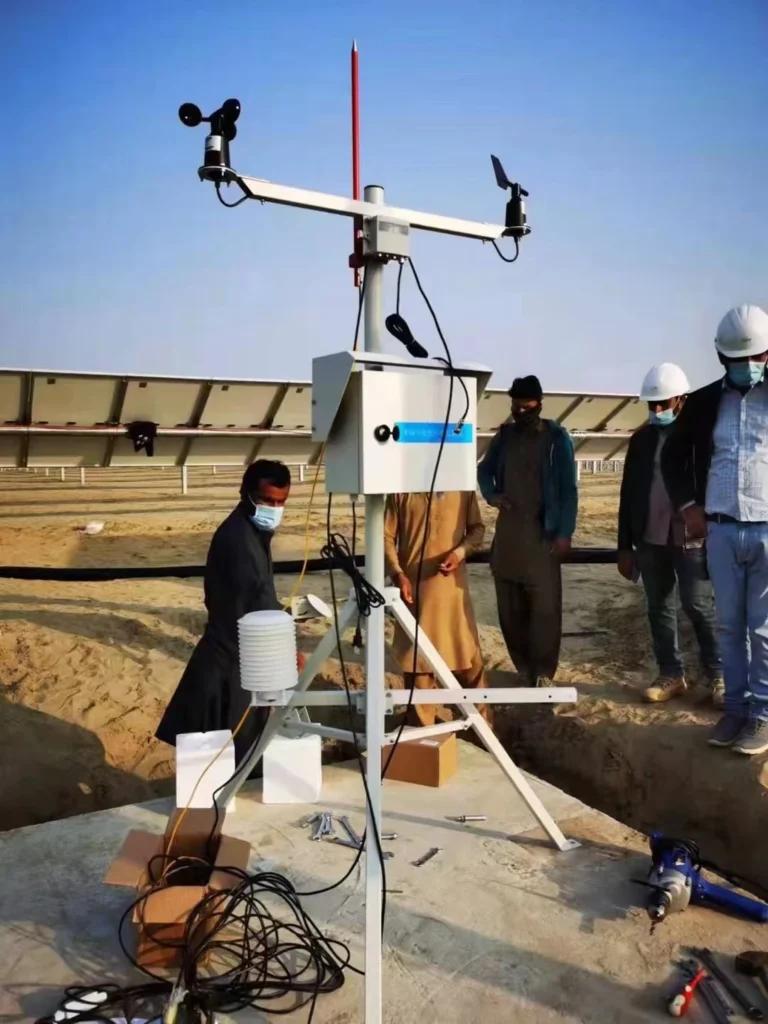
What Is a Solar Photovoltaic Environmental Monitoring Station?
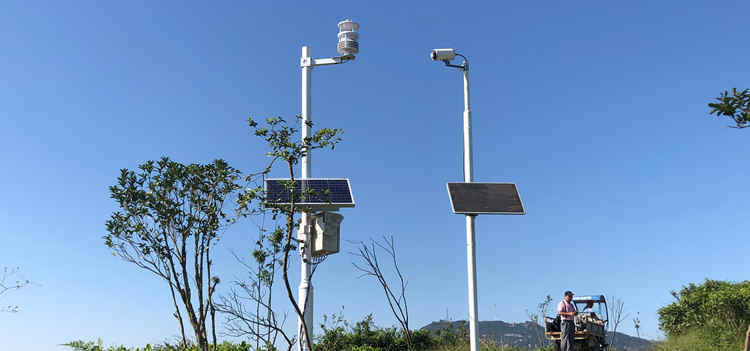
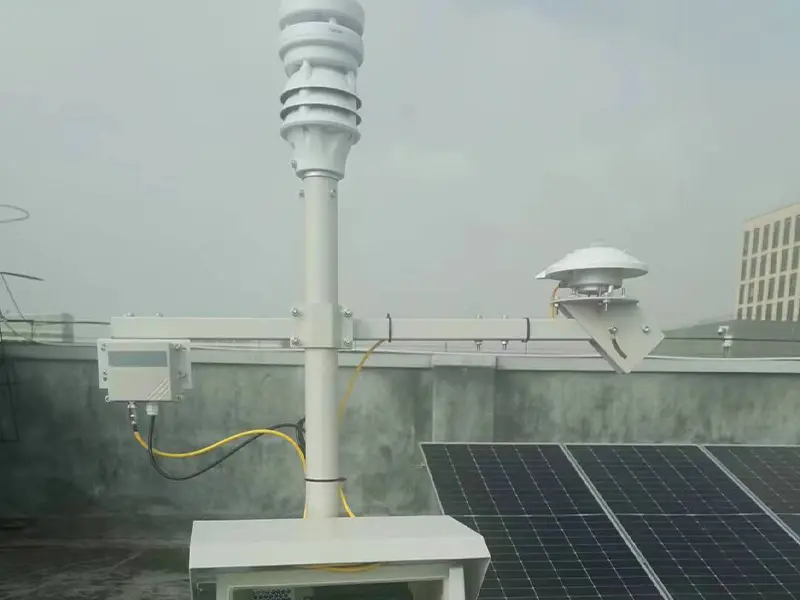
A Solar Photovoltaic Environmental Monitoring Station is a monitoring system designed for PV plants to collect real-time weather data related to solar power generation. It uses multiple sensors to measure important environmental conditions, including solar irradiance, temperature, humidity, wind speed, and wind direction, helping operators understand how weather affects PV output.
By monitoring local weather conditions at the PV site, the system provides accurate data for solar power forecasting, PV performance analysis, and daily operation. Since weather changes directly influence solar generation, reliable site-specific weather data is important for improving PV power forecasting accuracy.
Why Weather Data Accuracy Matters in PV Power Forecasting?
Weather data quality has a direct impact on PV power forecasting results. Solar generation changes with weather conditions, so inaccurate weather information can lead to differences between predicted and actual power output.
For PV plants, local weather conditions are often different from regional weather forecasts. Factors such as cloud movement, terrain, temperature changes, and wind conditions can affect the actual operating environment of a solar site. For this reason, collecting accurate on-site weather data helps forecasting models better reflect real PV plant conditions and reduce prediction errors.
Relationship Between Weather Conditions and PV Output
PV power output is closely related to environmental conditions, including solar irradiance, module temperature, ambient temperature, cloud movement, and wind conditions. Solar irradiance is the most important factor because it determines the amount of solar energy received by PV modules. Changes in sunlight caused by cloud movement can lead to rapid fluctuations in PV output, making real-time irradiance data important for short-term forecasting.
Temperature also affects PV performance. As module temperature increases, photovoltaic conversion efficiency usually decreases, which can reduce actual power output. Wind conditions influence heat dissipation around PV modules and can affect temperature changes. Since these weather factors continuously change, accurate local weather measurements help forecasting models better reflect actual PV conditions and improve PV power forecasting accuracy.
Limitations of Traditional Weather Data Sources
Traditional weather data sources, including regional weather forecasts, satellite data, and numerical weather prediction models, can provide general weather information but may not accurately reflect the actual conditions at a specific PV site. Since PV power output changes with local weather conditions, differences in solar irradiance, temperature, cloud movement, and wind conditions can affect forecasting results.
For PV power forecasting, accurate local weather data is important because even small differences between predicted and actual conditions can lead to power prediction errors. On-site environmental monitoring systems collect real-time weather information directly from the PV plant, providing more accurate data for forecasting models and helping improve PV power forecasting accuracy.
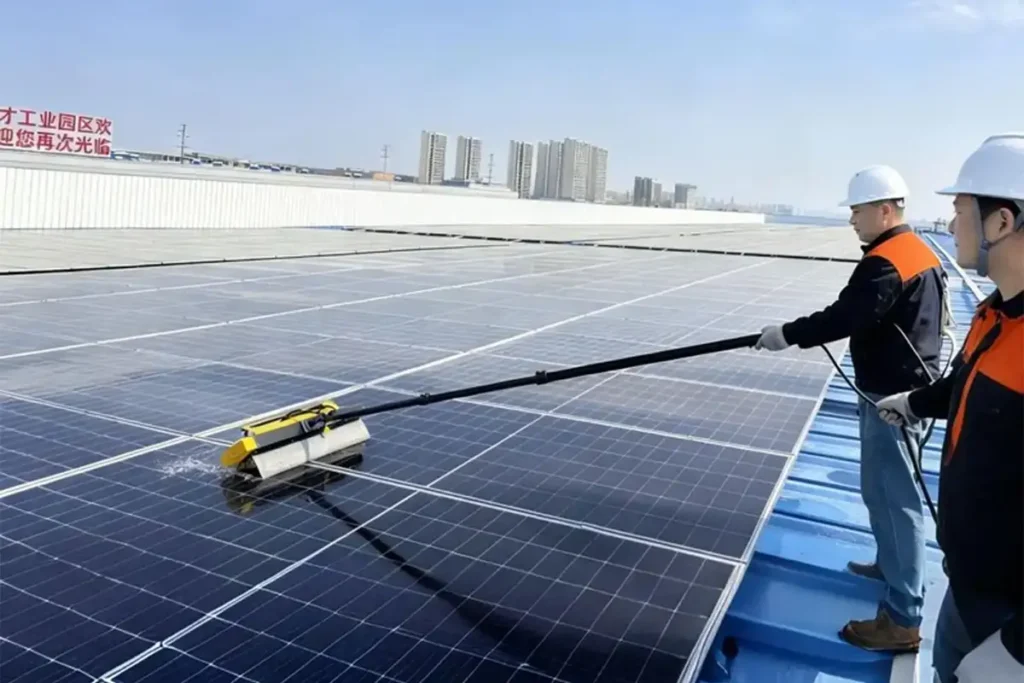
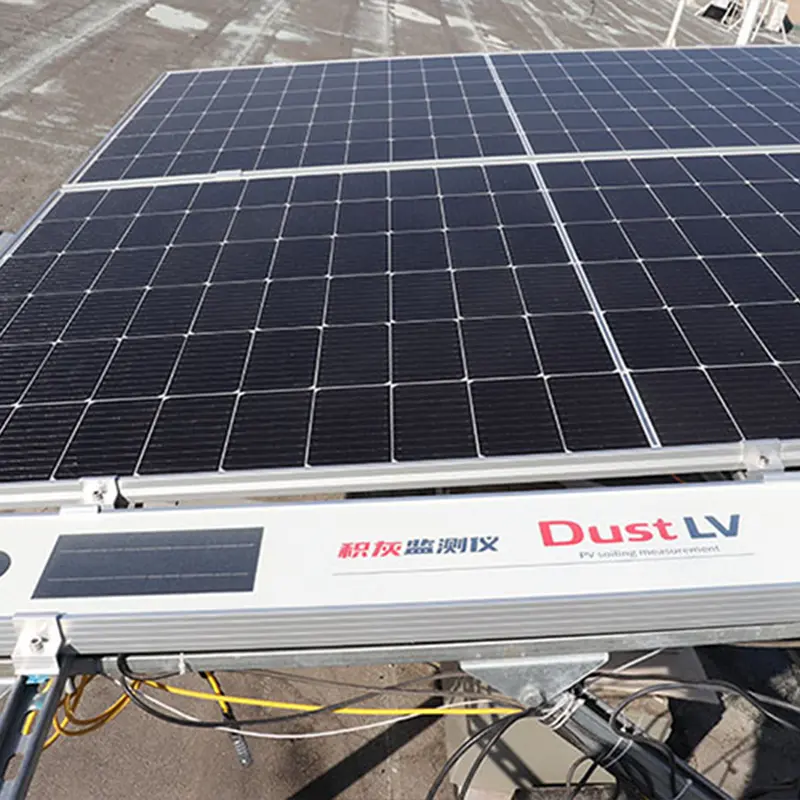
PV Environmental Monitoring Station vs Standard Weather Station.
Although both systems collect weather data, they serve different purposes. A standard weather station provides general atmospheric information, while a solar photovoltaic environmental monitoring station is built for PV plants and measures factors directly related to power generation, including solar irradiance, module temperature, and local weather conditions.
For PV forecasting and performance analysis, site-specific environmental data is more valuable than general weather information. The comparison below shows the main differences between the two systems in measurement, integration, and application.
| Comparison | PV Environmental Monitoring Station | Standard Weather Station |
| Main Purpose | PV power forecasting and solar plant performance analysis | General weather monitoring |
| Solar Data | Measures solar irradiance for PV generation analysis | Usually provides basic weather data |
| Module Temperature | Monitors PV module temperature to evaluate efficiency changes | No module temperature monitoring |
| Data Integration | Supports PV forecasting platforms, SCADA, and EMS systems | Mainly provides weather information |
| Site Application | Designed for outdoor solar plants with PV-specific configurations | Used for general weather observation |
How Weather Station Data Improves PV Power Forecasting Accuracy?
Weather station data improves PV power forecasting by providing measured environmental conditions from the actual PV site. Unlike regional weather forecasts, on-site measurements can capture local changes in solar irradiance, temperature, and weather conditions that directly affect PV output.
Accurate weather data provides reliable inputs for forecasting models, helping reduce the gap between predicted and actual power generation.
Providing Site-Specific Weather Data
PV plants are affected by local weather conditions, including cloud movement, terrain, and surrounding environment. Regional forecasts provide general weather trends but may not accurately reflect the actual conditions at a specific PV site.
A photovoltaic environmental monitoring station measures local irradiance, temperature, humidity, and wind conditions, providing more accurate data for PV power forecasting.
Improving Solar Irradiance Prediction
Solar irradiance is the main factor affecting PV output because it determines the solar energy received by PV modules. The solar irradiance sensor provides essential data for estimating expected generation and analyzing output changes.
When cloud movement causes rapid irradiance fluctuations, real-time radiation measurements help forecasting systems respond faster and improve short-term prediction accuracy.
Reducing Forecast Errors Through Real-Time Correction
Weather forecasts provide predicted conditions, but actual weather at the PV site can vary due to local changes. By comparing weather forecasts with real-time sensor data, forecasting systems can correct deviations and improve PV power prediction accuracy.
Supporting PV Forecasting Models with Accurate Data
Forecasting models such as LSTM, Neural Networks, Random Forest, and XGBoost rely on high-quality environmental data to identify the relationship between weather changes and PV output.
Data collected by monitoring stations, including solar irradiance, module temperature, ambient temperature, humidity, and wind conditions, provides important inputs for improving prediction performance under different weather conditions.
Improving Short-Term and Day-Ahead Forecasting
Weather station data supports different PV forecasting periods, including ultra-short-term, intraday, and day-ahead prediction. Real-time measurements help capture rapid power changes, while historical weather and generation data support future output estimation.
Accurate forecasting helps PV operators reduce prediction deviations, improve generation planning, and support energy management.
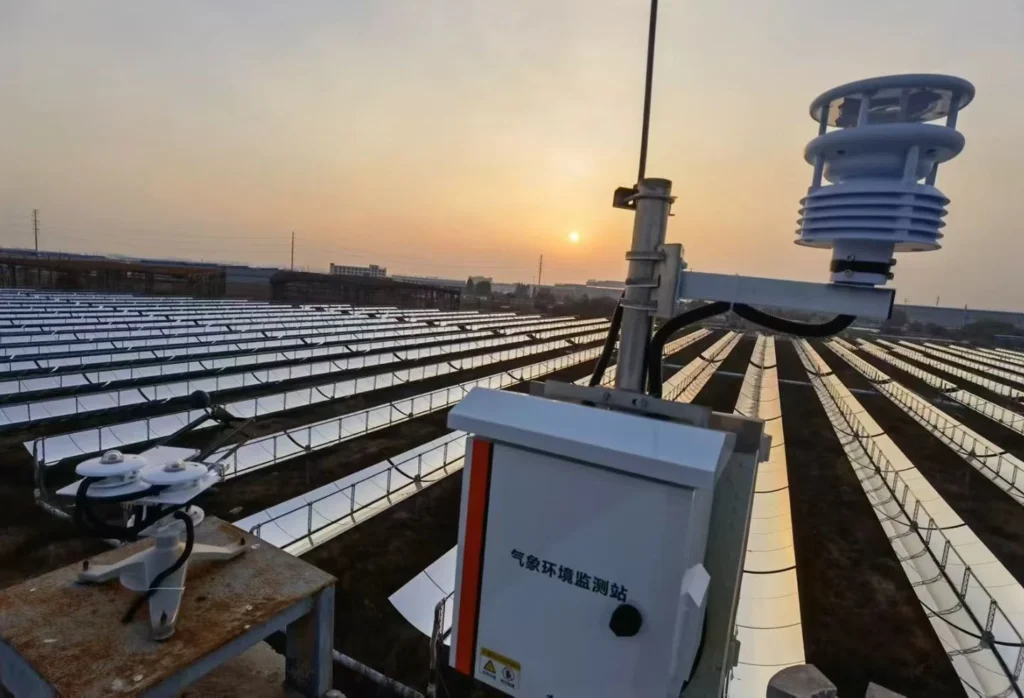
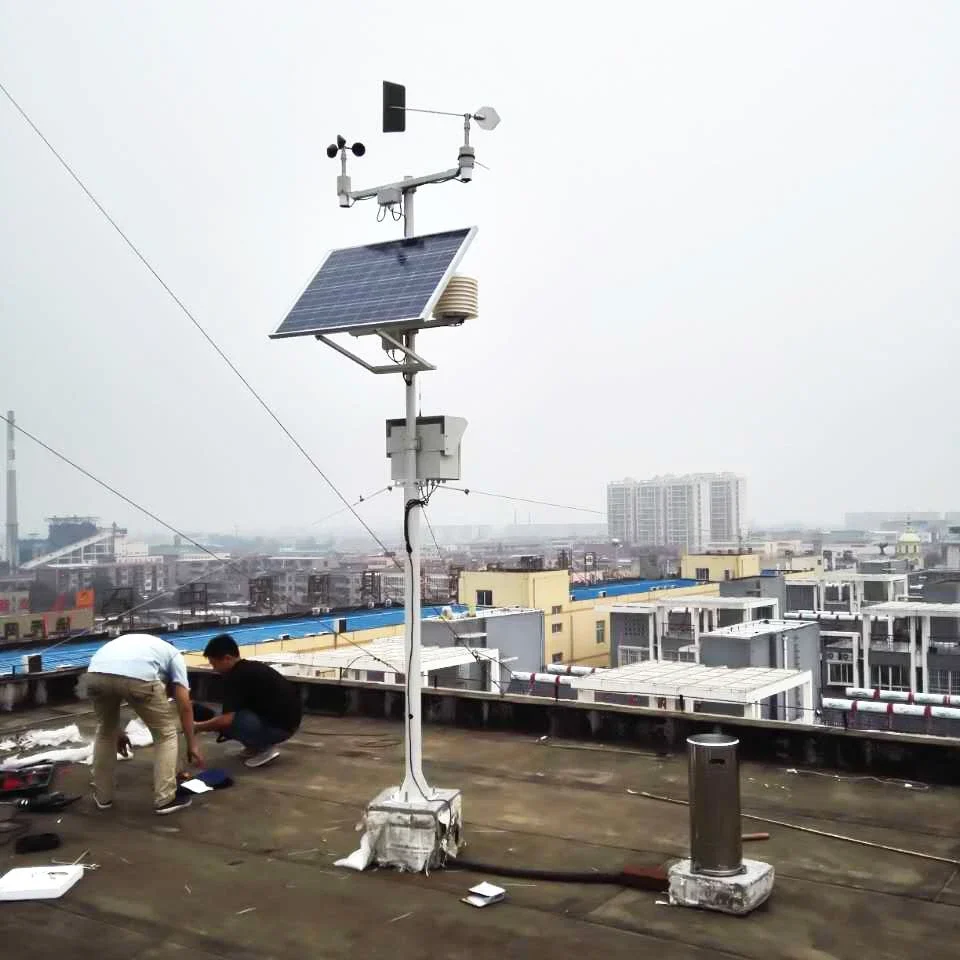
How a Solar Photovoltaic Environmental Monitoring Station Works?
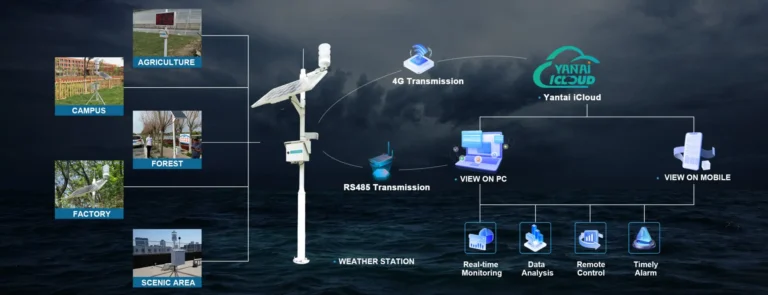
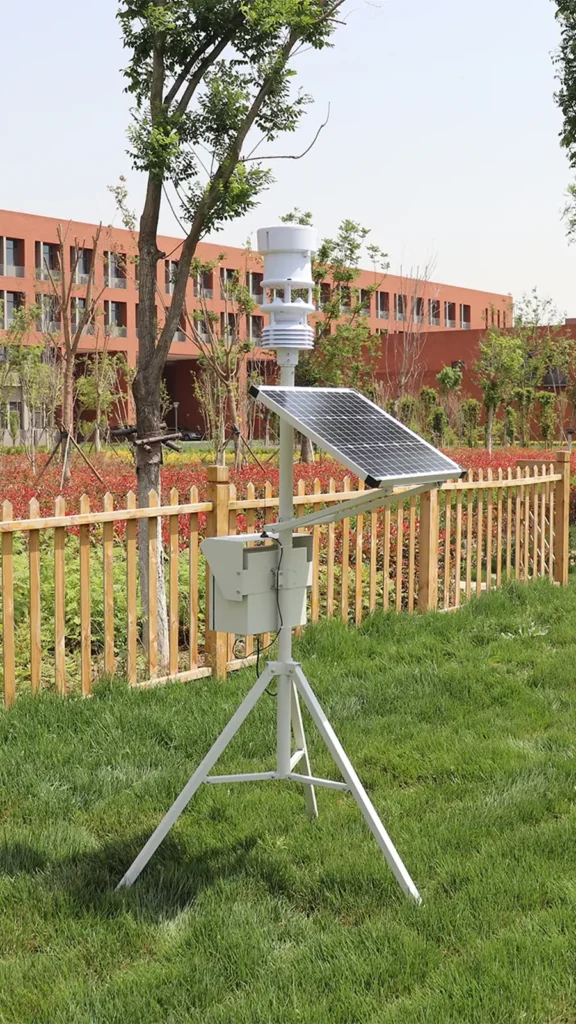
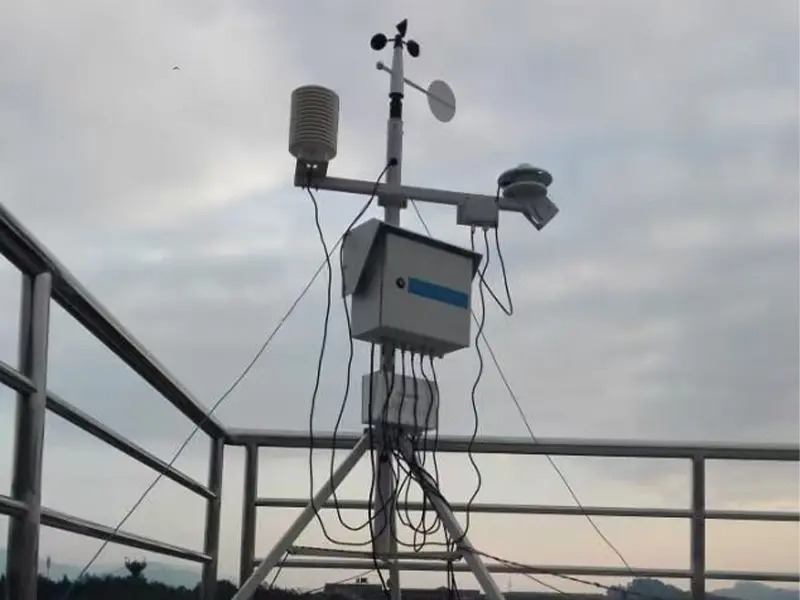
A Solar Photovoltaic Environmental Monitoring Station collects real-time weather data from the PV site, processes the information through a data acquisition system, and transfers the data to monitoring platforms. The system combines sensors, power supply, data processing, and communication functions to provide continuous environmental monitoring for PV plants.
- Environmental Data Measurement
Sensors collect real-time weather data from the PV site, including solar irradiance, temperature, humidity, wind speed, wind direction, and atmospheric pressure. - Data Collection and Processing
The data acquisition unit receives sensor signals, processes measurement data, and stores information for further transmission and monitoring. - Data Transmission and Cloud Integration
Processed data is transmitted to cloud platforms or monitoring systems through wired or wireless communication for remote access and management. - Data Application in PV Management
The collected weather data supports PV forecasting, performance analysis, and daily operation by helping operators understand weather impacts on generation.
Main Components
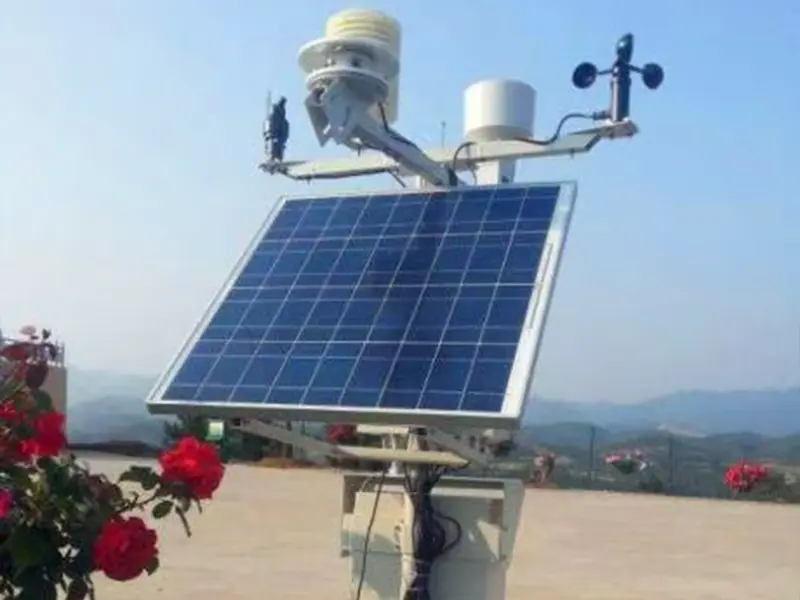
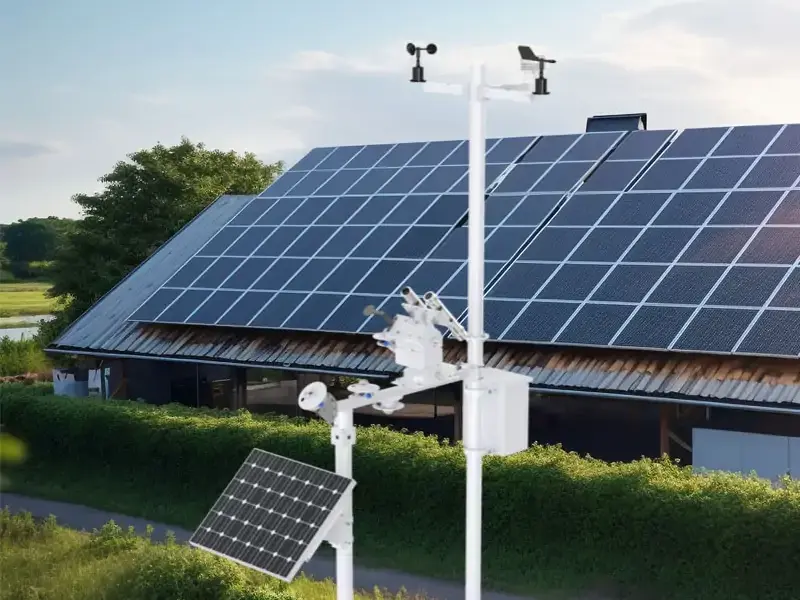
A Solar Photovoltaic Environmental Monitoring Station integrates multiple sensors and data devices to collect important environmental information around PV plants. These components work together to monitor weather conditions, support PV power forecasting, and provide data for system performance analysis.
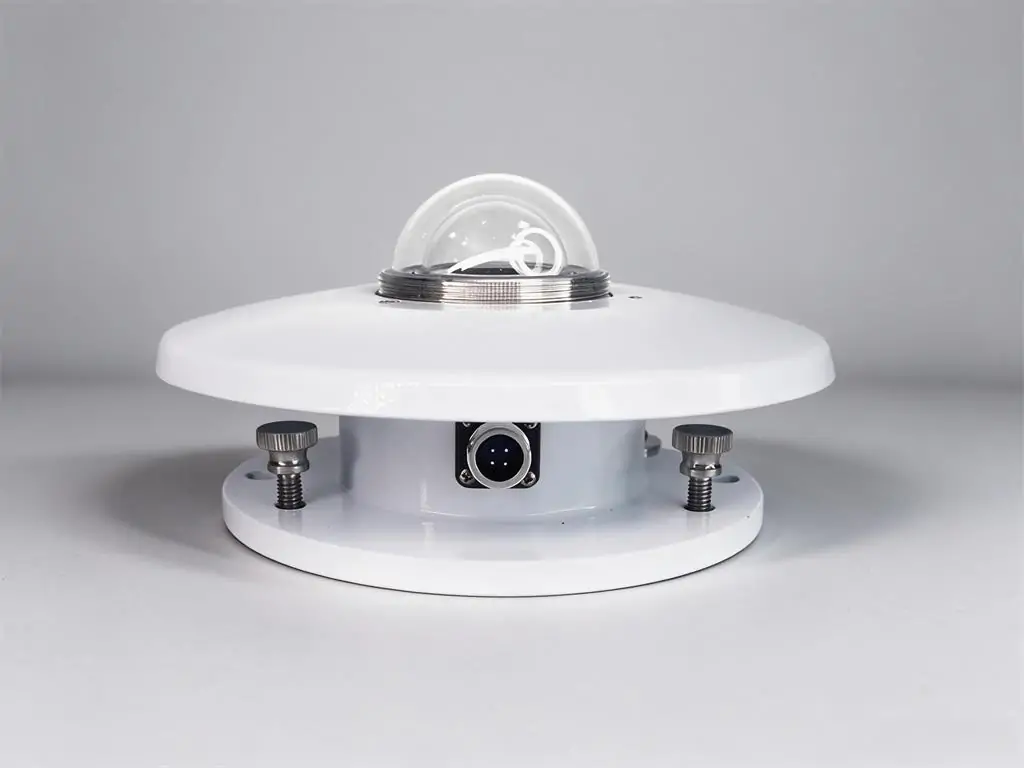
TBQ-2C Total Solar Radiation Sensor
The TBQ-2C Total Solar Radiation Sensor is used to measure solar irradiance, the key factor affecting PV power generation. It provides accurate solar radiation data for solar resource monitoring, irradiance analysis, and PV power forecasting, helping forecasting systems better evaluate available solar energy.
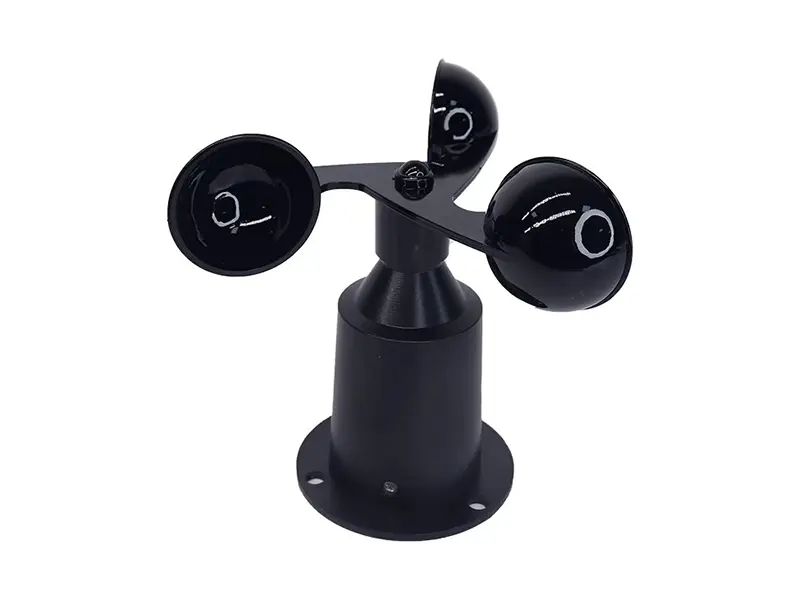
RY-FSX Mechanical Wind Speed and Direction Sensor
The RY-FSX wind speed and direction sensor measures real-time wind conditions around the PV site. Its stable structure and reliable measurement performance help analyze airflow changes, module cooling effects, and environmental factors that may influence PV system performance.
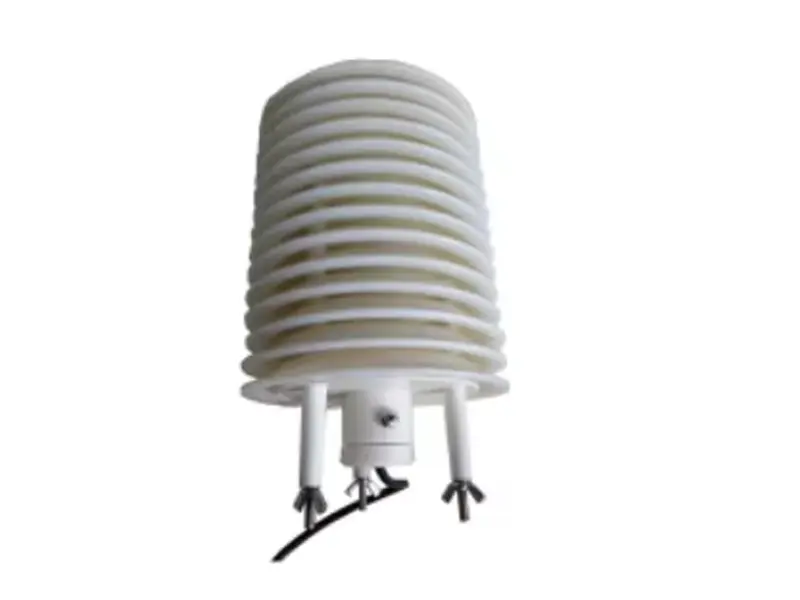
XF103 Temperature Humidity Pressure Integrated Sensor
The XF103 sensor combines temperature, humidity, and atmospheric pressure measurement in one device. It provides important atmospheric data for monitoring PV site conditions and analyzing how environmental changes affect solar power generation and system operation.
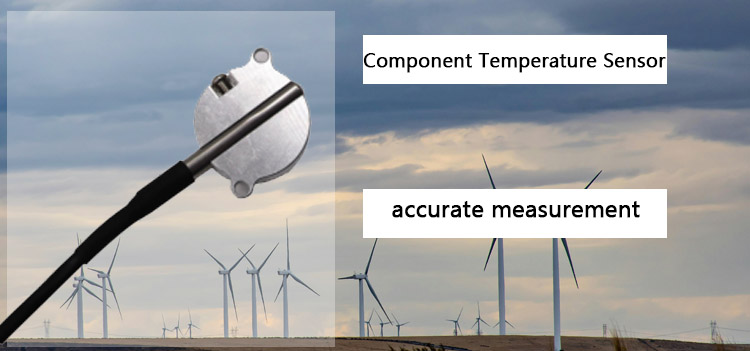
Component Temperature Sensor
The Component Temperature Sensor measures PV module temperature in real time. Since module temperature affects PV efficiency and power output, accurate temperature data helps improve PV performance analysis and forecasting. Its waterproof design supports long-term outdoor solar monitoring.
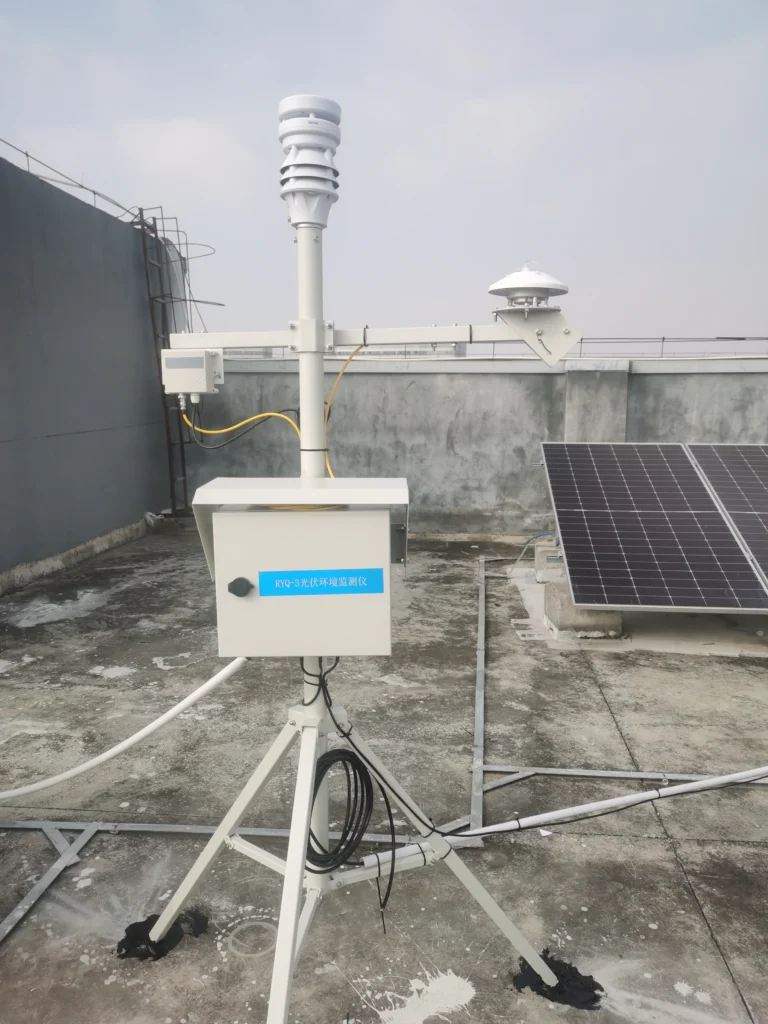
RYQ-2 Portable Weather Station Tripod
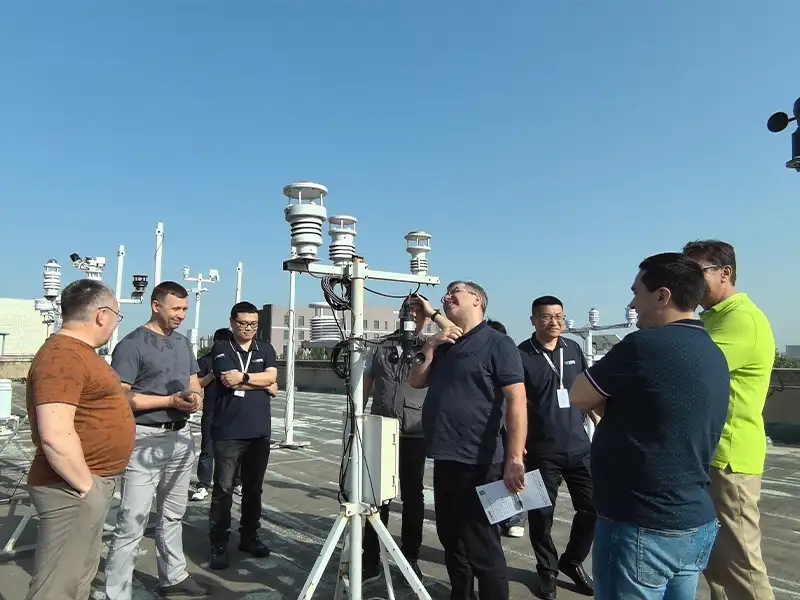
The RYQ-2 portable weather station tripod provides stable support for sensor installation. It helps maintain proper sensor positioning and measurement conditions, improving the accuracy and reliability of collected environmental data.
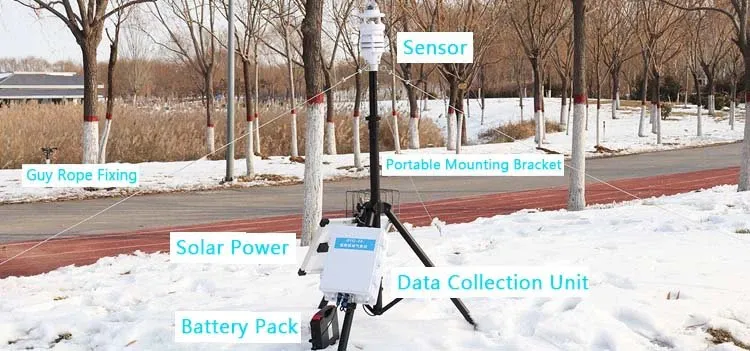
Weather Parameters Affecting PV Power Forecasting
PV power output changes with local weather conditions. Solar irradiance is the main factor affecting generation, while temperature, wind, humidity, and atmospheric pressure influence PV efficiency and output stability. Monitoring these parameters provides accurate inputs for PV forecasting models and helps reduce prediction errors.
| Weather Parameter | Impact on PV Forecasting |
| Solar Irradiance | Determines available solar energy and directly affects PV output changes. |
| Module Temperature | Higher temperature reduces PV module efficiency and power output. |
| Ambient Temperature | Helps correct temperature-related output variations. |
| Wind Speed & Direction | Affects module cooling and temperature changes. |
| Humidity & Pressure | Provides additional atmospheric data for forecasting models. |
Installation Considerations for Accurate PV Weather Monitoring
Proper installation ensures accurate weather data for PV power forecasting. Correct sensor placement, calibration, and protection help maintain reliable measurements under outdoor conditions.
| Installation Factor | Key Requirement |
| Site Selection | Install in an open area away from shading, buildings, and airflow obstacles. |
| Sensor Positioning | Ensure correct orientation and installation angle for accurate measurements. |
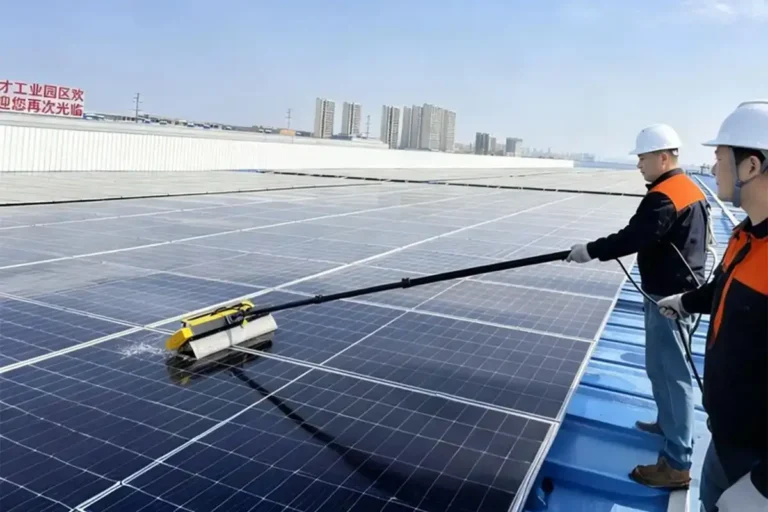
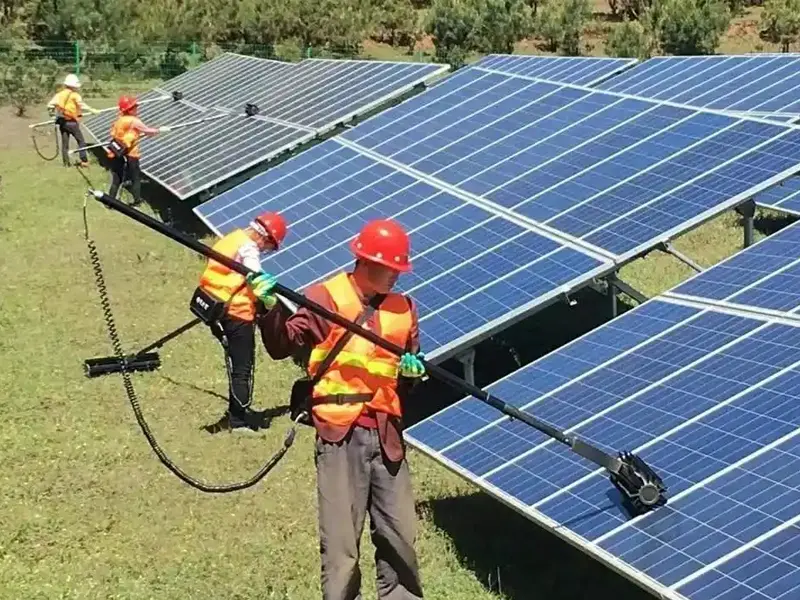
| Sensor Maintenance | Keep irradiance sensors clean and calibrate sensors regularly. |
| Weather Protection | Use waterproof, grounding, and lightning protection measures for outdoor operation. |
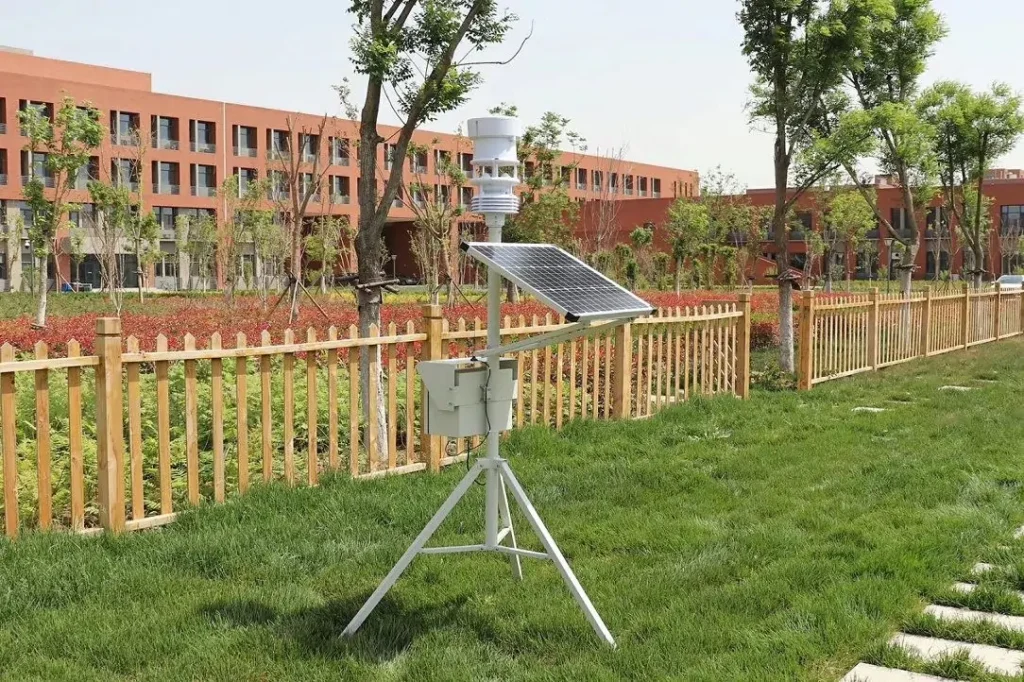
Applications
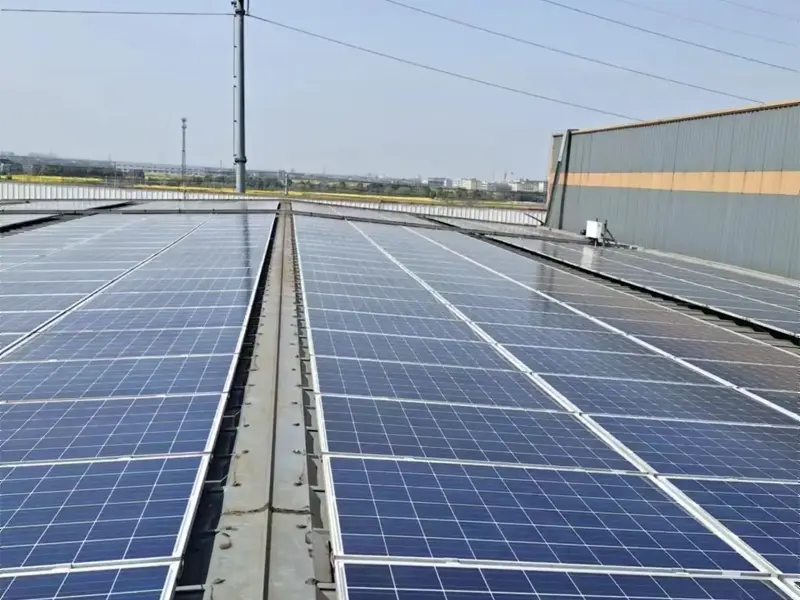
Solar photovoltaic environmental monitoring stations are used in different PV applications to collect site-specific weather data. The collected information supports power forecasting, system performance evaluation, and energy management throughout the PV project lifecycle.
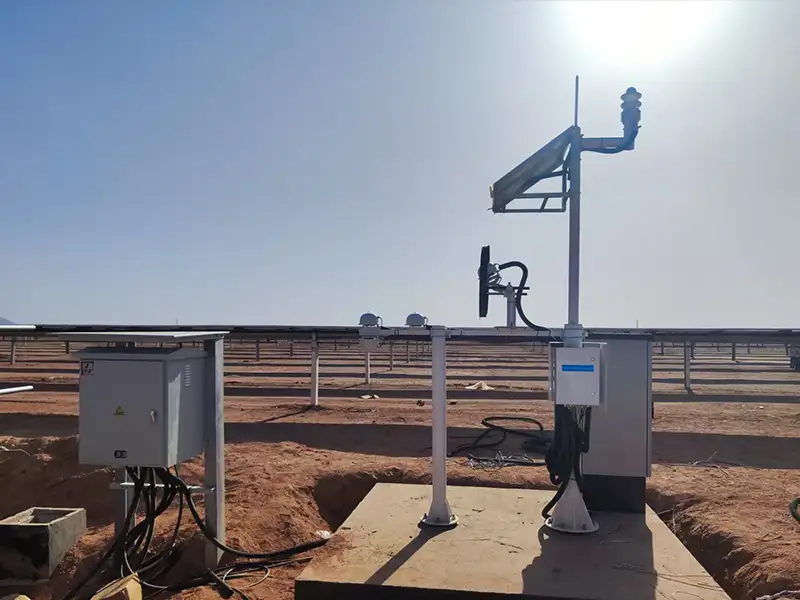
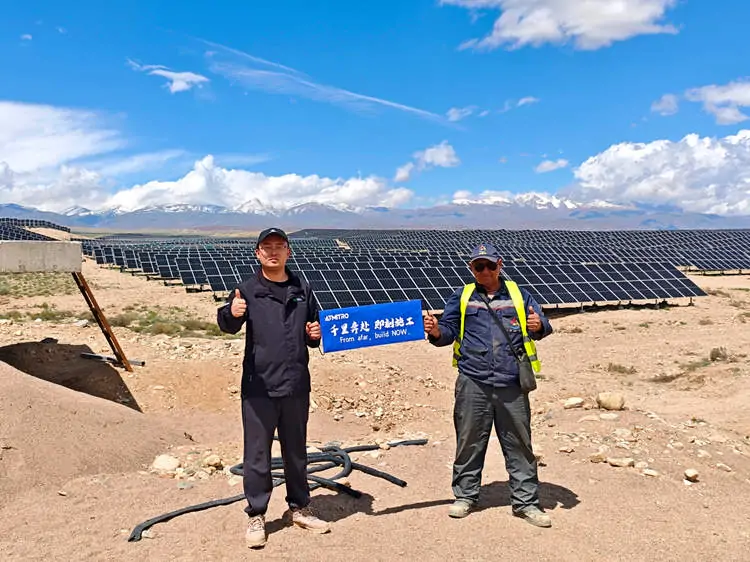
Utility-Scale Solar Farms
Used in large-scale solar farms to support power forecasting, grid scheduling, and generation management through continuous environmental monitoring.
Commercial and Industrial PV Systems
Applied in rooftop and distributed PV systems for performance monitoring, generation analysis, and energy management.
Renewable Energy Management Platforms
Weather data can be integrated with cloud platforms, SCADA, and EMS systems for centralized monitoring, data analysis, and energy management.
Solar Resource Assessment and PV System Testing
Used for solar resource evaluation, PV project planning, and system performance testing under different environmental conditions.
How to Select a Solar Photovoltaic Environmental Monitoring Station?
Choosing a solar photovoltaic environmental monitoring station requires considering the PV plant scale, local environment, and monitoring objectives. Key factors include measurement accuracy, sensor configuration, system integration, and long-term reliability.
Measurement Accuracy and Sensor Performance
PV forecasting depends heavily on the quality of measured weather data.Solar irradiance is the most important parameter because it directly affects PV output estimation. The station should also measure module temperature, ambient temperature, humidity, wind speed, and wind direction accurately. Sensor selection should match local conditions, including dust, humidity, and extreme weather.
Sensor Configuration and System Integration
The sensor configuration should match the project location, plant type, and monitoring purpose. Different PV sites may require additional monitoring functions. The system should support communication with PV forecasting platforms, SCADA, EMS, and cloud platforms for easier data management and integration.
Reliability and Long-Term Operation
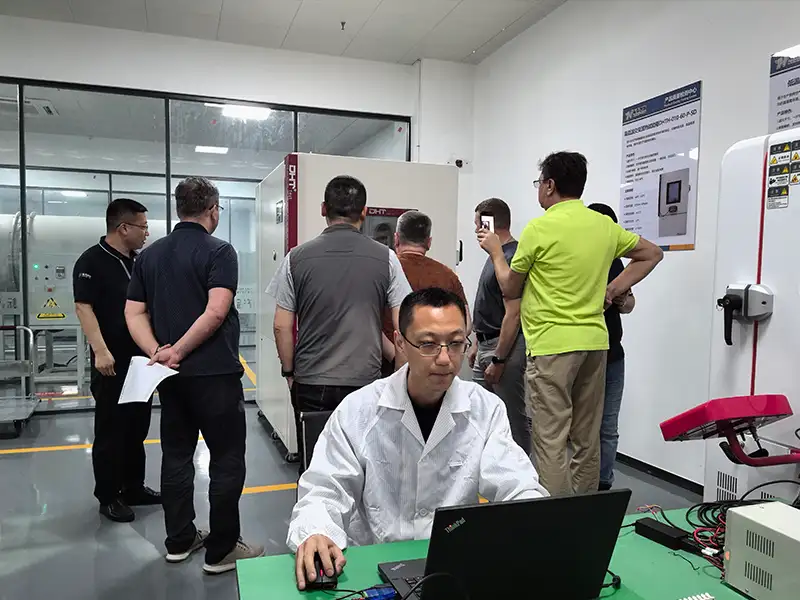
PV monitoring stations operate outdoors and must withstand rain, dust, strong sunlight, and temperature changes. Stable components, proper protection, and regular calibration help maintain accurate data collection. Technical support for installation and maintenance is also important for long-term operation.

Conclusion
Improving PV power forecasting accuracy requires more than relying on regional weather information. Accurate site-specific weather data from a solar photovoltaic environmental monitoring station provides important inputs for forecasting models by monitoring solar irradiance, temperature, wind, humidity, and other environmental factors.
By combining reliable sensors, data acquisition systems, and forecasting platforms, PV operators can reduce prediction errors, improve generation management, and support more stable grid operation. A properly configured monitoring station helps transform real-time weather conditions into valuable data for better solar power forecasting.
Get in touch with our experts to design a reliable PV environmental monitoring solution for your solar power forecasting needs.