Introduction
Low visibility is one of the major causes of highway accidents, especially during fog, heavy rain, dust storms, smoke, and haze conditions. When drivers cannot clearly see road conditions ahead, the risk of sudden braking and collisions increases significantly. A reliable visibility sensor highway safety helps transportation departments monitor real-time atmospheric visibility and improve road safety management.
With continuous visibility measurement and early warning capabilities, visibility sensors provide valuable data for intelligent traffic systems, variable message signs, and emergency response. Yantai Sensor develops and supplies advanced visibility monitoring solutions designed for highways, tunnels, and smart transportation projects, helping you detect hazardous weather conditions and take timely safety measures.For a closer look at fog visibility monitoring and its applications, see How Does a Fog Visibility Sensor Work? Technology & Applications.

What Is a Visibility Sensor for Highway Safety?
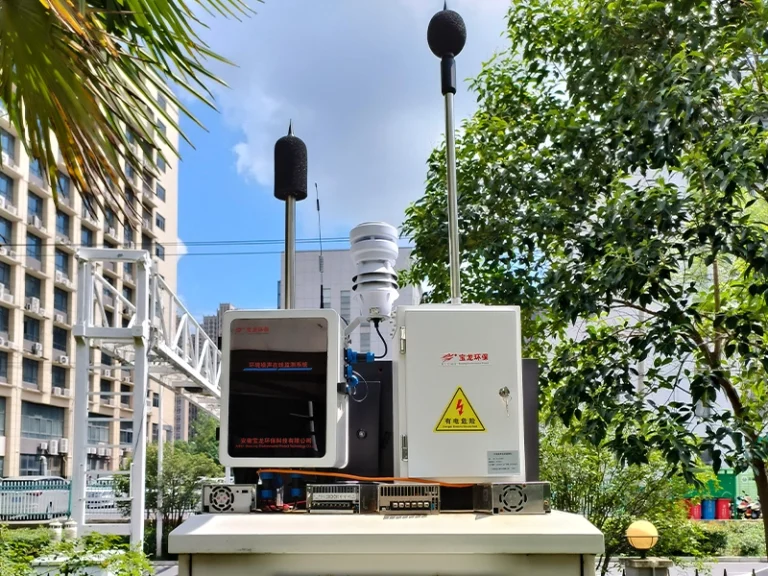
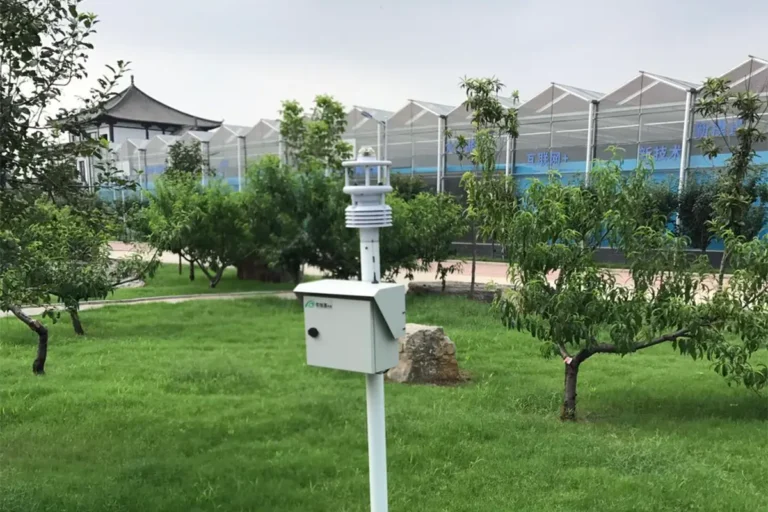
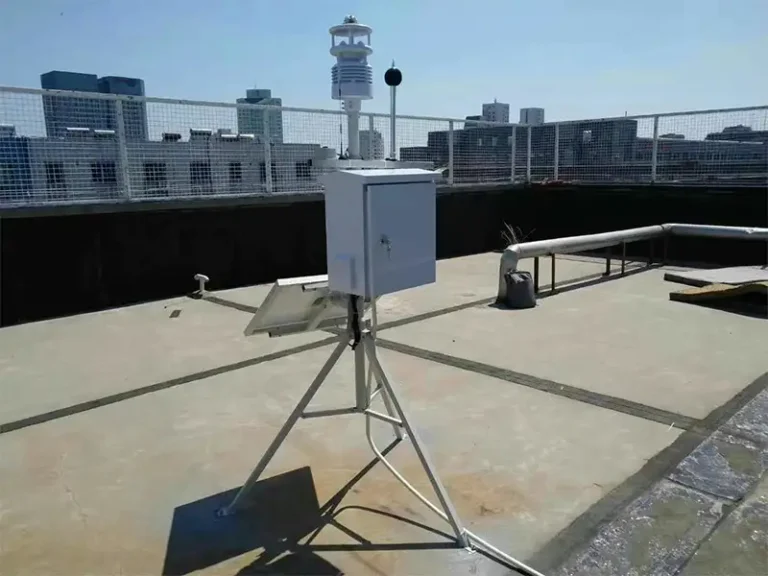
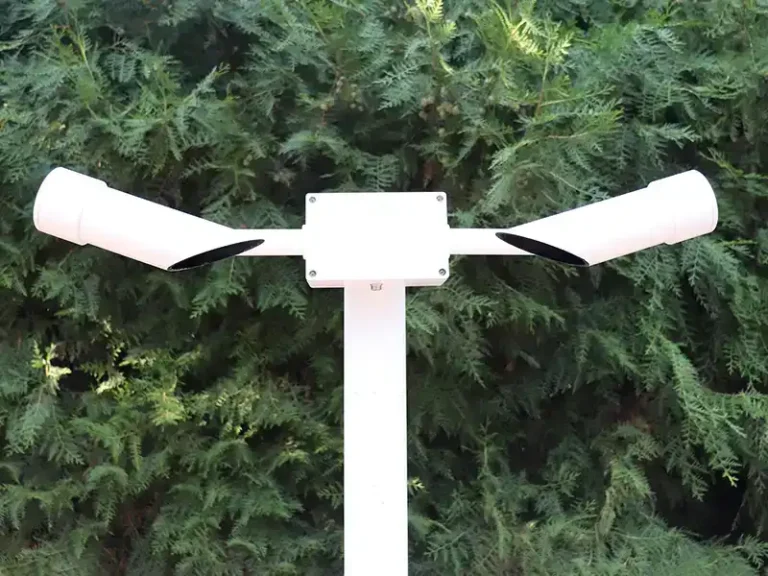
A visibility sensor is a monitoring device that uses optical principles to measure the distance of visibility in the atmosphere. It is primarily used to detect light scattering caused by particulate matter in the air—such as fog, rain, snow, dust, and haze—and to calculate the current actual visibility.
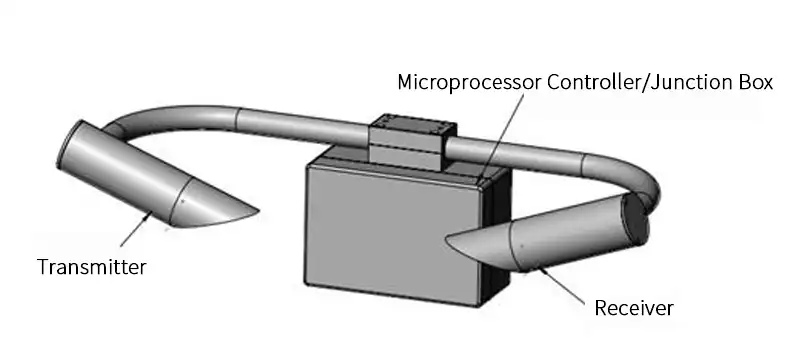
Simply put, it acts like an “electronic eye”: it emits infrared light and detects the intensity of forward scattering of the light by atmospheric particles (such as fog, haze, and raindrops). A built-in microprocessor then uses a mathematical model to convert this data into meteorological optical range (MOR), which is what we refer to as visibility distance.To learn more about highway visibility monitoring and how visibility sensors are used in road safety applications, see Highway Visibility Sensor: Applications for Road Safety Monitoring.
Features of Visibility Sensors
- Designed specifically for roadways
- All-weather automatic monitoring
- Non-contact measurement
- Real-time monitoring data output
- Supports remote communication and networked management
- Stable, continuous long-term operation
- Suitable for harsh environments
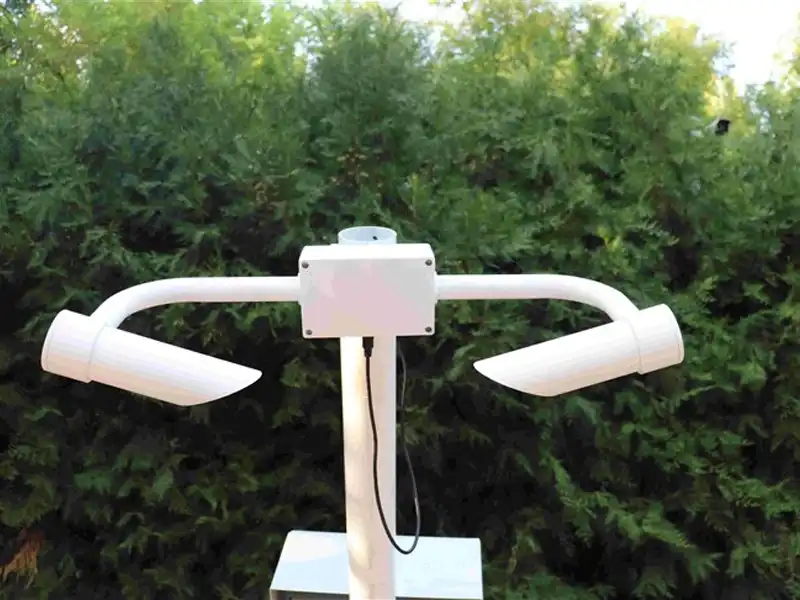
Visibility monitoring equipment has been widely deployed in transportation infrastructure such as highways, bridges, tunnels, airports, and ports to provide real-time data support for traffic safety. On highways, its core value lies in ensuring driving safety. It can monitor and issue early warnings in real time for low visibility caused by patchy fog, dense fog, or haze, providing data support to traffic management authorities so they can promptly implement measures such as speed limits and road closures, effectively preventing major traffic accidents—such as chain-reaction rear-end collisions—caused by insufficient visibility.
Why Is Visibility Monitoring Important for Highway Safety?
Reducing the Risk of Traffic Accidents in Low Visibility Conditions
When visibility decreases, the time drivers have to detect obstacles, judge distances, and apply the brakes is significantly reduced. If traffic control measures are not implemented in a timely manner, this can easily lead to multi-vehicle rear-end collisions.
By monitoring road visibility in real time, traffic management authorities can anticipate changes in road conditions and activate early warning systems before hazards arise.
Improving Road Operational Efficiency
Traditional methods typically rely on manual patrols or driver feedback, resulting in a certain degree of information lag. With the installation of visibility sensors, traffic management centers can obtain real-time monitoring data from various road sections and implement targeted traffic management measures based on weather changes in different areas, thereby improving road operational efficiency.
The Core Foundation for Integrated Management and Services
Visibility monitoring data serves as the key foundation for precise management of expressways: On the one hand, real-time visibility and weather alert information can be directly displayed on roadside information screens to guide drivers in avoiding hazards in advance;
On the other hand, they help management authorities improve the accuracy of their decision-making in response to sudden weather events such as dense fog and heavy rain, providing data support for the early implementation of contingency plans—including traffic diversion, speed limits, traffic rerouting, and even temporary road closures—thereby enhancing the overall safety assurance capabilities of the highway network.
How does a visibility sensor work?
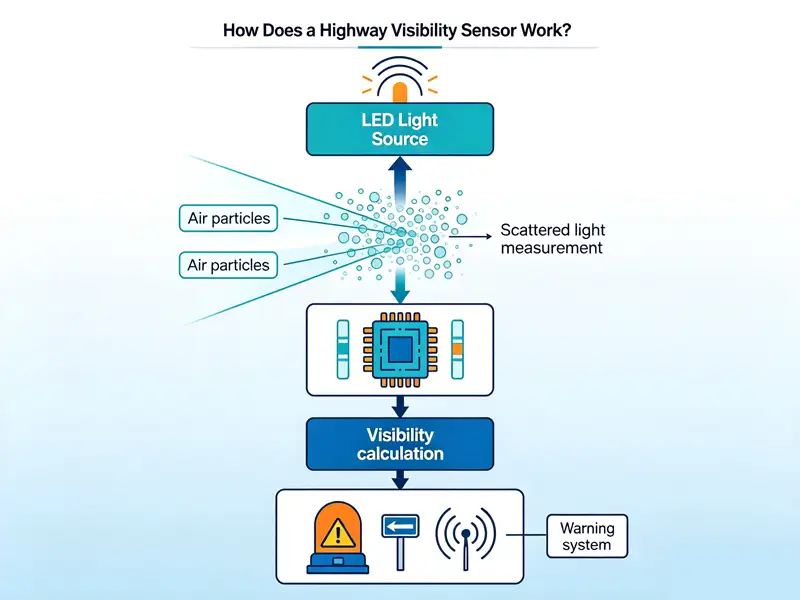
Currently, forward scatter visibility sensors for roads are widely used on highways. The core operating principle of visibility sensors is based on the forward scattering principle; they estimate visibility values by measuring the intensity of light scattered by aerosol particles in the atmosphere.
- Light Emission
The device emits a stable light beam into the air. - Light Scattering Detection
Particles in the air—such as water droplets, dust, and smoke—scatter the light. - Signal Analysis
The sensor receives the scattered light signal and analyzes changes in light intensity. - Visibility Calculation
The system automatically calculates the current visibility range based on the scattering coefficient and outputs standard monitoring data.
Key Components of a Highway Fog Warning System
A highway fog warning system is not comprised of a single device, but rather is a comprehensive monitoring system that integrates environmental monitoring, data transmission, intelligent analysis, and traffic guidance. The various components work together to monitor changes in road visibility in real time and quickly issue warnings when low-visibility conditions occur, providing reliable data support to traffic management authorities. A complete highway fog warning system typically includes the following core components:
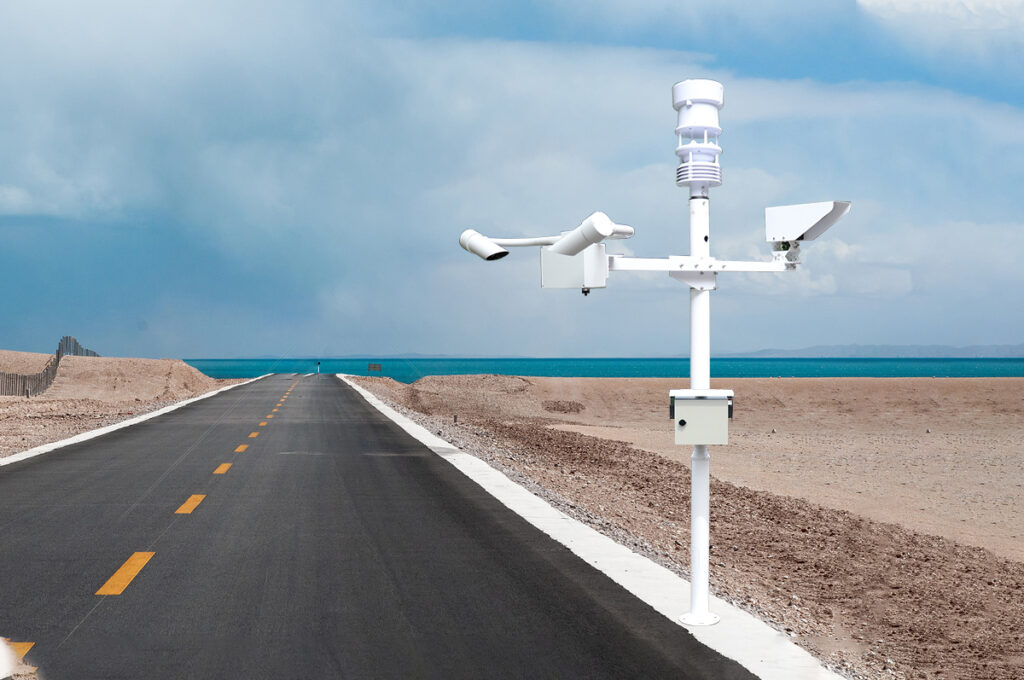
- Visibility Sensor — Monitors road visibility in real time and serves as the core component of the fog warning system.
- Weather Sensors — Collect environmental parameters such as temperature, humidity, wind speed, wind direction, and rainfall to assist in analyzing fog formation conditions.
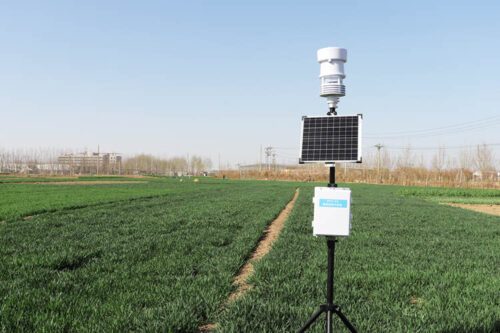
- Data Acquisition & Communication System — Responsible for collecting on-site monitoring data and transmitting it to the monitoring platform via RS485, 4G, Ethernet, and other methods.
- Traffic Warning Devices — Include variable message signs, speed limit signs, warning lights, and other devices that promptly issue safety alerts to drivers based on monitoring results.
- Traffic Management Platform — Centralizes the management, analysis, and storage of data from all monitoring points, enabling automatic alerts, historical data queries, and decision support.
Applications of Visibility Sensors in Highway Safety
Highway Fog Zones
Mountainous areas, areas near rivers, and areas surrounding lakes are typically prone to fog formation and are key areas for visibility monitoring.
Bridges
Temperature and humidity levels fluctuate rapidly in bridge areas, making them prone to localized dense fog.
Mountain Roads
Mountain roads feature many curves and steep gradients; the risk of accidents increases significantly when visibility is low.
Tunnel Entrances and Exits
When vehicles enter or exit tunnels, drivers’ eyes need a short time to adjust to changes in lighting. Installing visibility monitoring equipment helps issue early warnings.
Airports and Ports
In addition to highways, visibility sensors are widely used at locations requiring continuous monitoring of environmental visibility, such as airport runways, port terminals, and logistics parks.



Visibility Sensors for Different Weather Conditions
| Weather Condition | Detection Purpose |
|---|---|
| Fog | Measure the visibility distance |
| Heavy Rain | Monitor reduced visibility |
| Dust Storm | Detect airborne particles |
| Snow | Safety warning |
| Haze | Air quality indication |
| Snow | Supporting winter road safety management |
Benefits of Installing Visibility Sensors on Highways
Real-Time Continuous Monitoring
Data is collected automatically around the clock, without being limited by the schedule of manual inspections. As soon as low-visibility weather conditions—such as dense fog or patchy fog—occur, the system can automatically trigger alerts, giving highway authorities valuable response time to promptly implement measures such as speed limits, road closures, or traffic diversion, thereby effectively reducing the incidence of traffic accidents such as chain-reaction rear-end collisions.
Precise Data Support
Compared to visual estimates, sensors provide objective and precise visibility readings (e.g., accurate to the meter), helping managers accurately assess road conditions and avoid erroneous traffic control decisions resulting from subjective misjudgments.
Improved Operational Efficiency
Sensors can automatically collect, store, and process data without the need for manual supervision. Based on precise monitoring data, management departments can develop operational plans that offer the best cost-effectiveness.
Adaptability to Complex Environments
Equipped with protective covers, heating devices, and corrosion-resistant housings, the sensors achieve an IP67 protection rating. These features enable them to effectively withstand rain, snow, dust, condensation, and glare, ensuring stable operation even in harsh outdoor environments.
Flexible Deployment Options
The sensors are compact, lightweight, and easy to install. Some models also support solar power, addressing power supply challenges in remote areas or regions without access to the grid, thereby significantly expanding the monitoring range.
Reducing Manual Maintenance Costs
The devices operate stably over the long term, reducing the frequency of manual inspections and improving management efficiency.
Support for Smart Transportation Infrastructure
The sensors can be easily integrated into existing road weather information systems or traffic monitoring platforms to enable data sharing and centralized management without the need for complex protocol adaptation.

Visibility Sensor Integration with Intelligent Transportation Systems (ITS)
Modern highways have evolved from relying on single-device monitoring to utilizing comprehensive sensing systems. Visibility sensors can operate in coordination with various types of equipment, including:
- Automatic weather stations
- Road surface condition monitors
- Video surveillance cameras
- Wind speed and direction sensors
- Rainfall monitoring equipment
- Cloud-based management systems
Through data fusion, management authorities can gain a comprehensive understanding of changing road conditions, enabling automated analysis, early warning systems, and intelligent decision-making, thereby providing more robust data support for smart transportation.
How to Choose a Visibility Sensor for Highway Applications?
Measurement Range and Accuracy
For highway scenarios, the measurement range is typically required to be between 5 meters and 10 kilometers, with a particular focus on measurement capabilities under low-visibility conditions (e.g., within 50 meters).
Environmental Adaptability
The equipment must be able to withstand harsh outdoor environments. Key factors include the operating temperature range (high-quality products can operate from -40°C to +60°C) and the protection rating (IP66 or higher is recommended for outdoor use). In addition, an automatic lens heating module is an essential feature that effectively prevents lens icing and condensation during winter.
Response Time and Power Consumption
Highways require equipment that can respond quickly to sudden drops in visibility, typically requiring data updates to be completed within one minute. At the same time, to accommodate deployment needs in remote areas without access to the power grid, low-power designs (such as a total power consumption of just 1 W) and support for solar power are critical.
Visibility Sensor vs Traditional Weather Monitoring Methods
| Method | Limitation |
|---|---|
| Manual observation | Low efficiency |
| Camera monitoring | Affected by lighting |
| Weather station | Cannot directly measure visibility |
| Visibility sensor | Direct visibility measurement |
Future Trends of Highway Visibility Monitoring
The core trend in highway visibility monitoring is a shift from traditional, isolated, point-based, and passive monitoring toward a systematic approach characterized by intelligence, comprehensive coverage, and proactive early warning.
Enhanced Predictive Capabilities: Through deep integration with 5G and artificial intelligence, the system offers enhanced predictive capabilities, enabling it to anticipate trends in visibility in advance.
Vehicle-Road Coordination: Provides critical meteorological sensing support for autonomous driving technology, enabling vehicles to autonomously avoid obstacles.
More Reliable Equipment: The equipment features adaptive calibration and self-diagnostic functions, allowing it to automatically adapt to different weather conditions and remotely diagnose malfunctions, thereby significantly reducing operation and maintenance costs.




Conclusion
Low visibility has always been a major factor affecting highway safety. By deploying visibility sensors, traffic management authorities can monitor changes in road conditions in real time and, in conjunction with fog warning systems, traffic guidance equipment, and intelligent transportation platforms, achieve rapid response and scientific management.
For projects requiring the construction or upgrade of highway environmental monitoring systems, selecting visibility sensors that are stable, reliable, and suitable for long-term outdoor operation not only enhances road safety but also contributes to the sustained development of smart transportation systems. Contact Yantai Sensor for customized visibility monitoring solutions.