
Henan Sanmenxia Rural & Forest Negative Air Ion Monitoring Project
Project Background
Sanmenxia, Henan, has a variety of natural landscapes and rural tourism sites, including forest parks, mountain trails, and village cultural centers. Negative air ion monitoring system is one of the environmental parameters used at these locations to present local environmental conditions to visitors and residents. The project required monitoring stations at multiple dispersed locations to collect negative air ion concentration, air temperature, relative humidity, and wind speed, with selected readings displayed on outdoor LED screens.
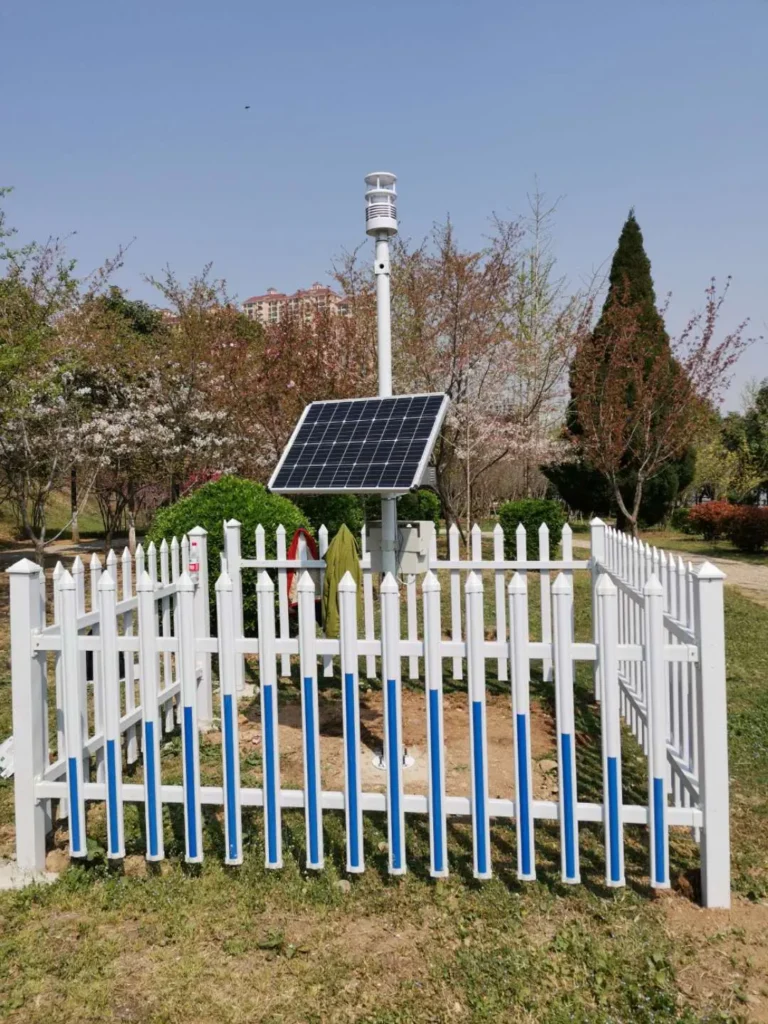
The monitoring system supplied by Yantai Sensor combines integrated negative air ion and weather sensors, data acquisition, wireless communication, and local display. Power arrangements differ by location: village cultural centers use mains electricity, while remote forest sites use solar panels and lithium battery storage. Data are transmitted through RS485 Modbus between the sensor and data acquisition equipment, then uploaded through 4G to a cloud monitoring platform for remote viewing and historical data access.
- Project Location: Sanmenxia, Henan, China
- Monitoring Parameters: Negative air ion concentration, air temperature, relative humidity, and wind speed
- Monitoring Sites: Village cultural centers, forest parks, mountain trails, and forest conservation areas
- Power Supply: Mains electricity for grid-connected sites; solar panels with lithium battery storage for remote locations
- Data Transmission: RS485 Modbus for local data communication; 4G wireless transmission to the cloud platform
On-Site Installation Process
Site Survey & Foundation Installation
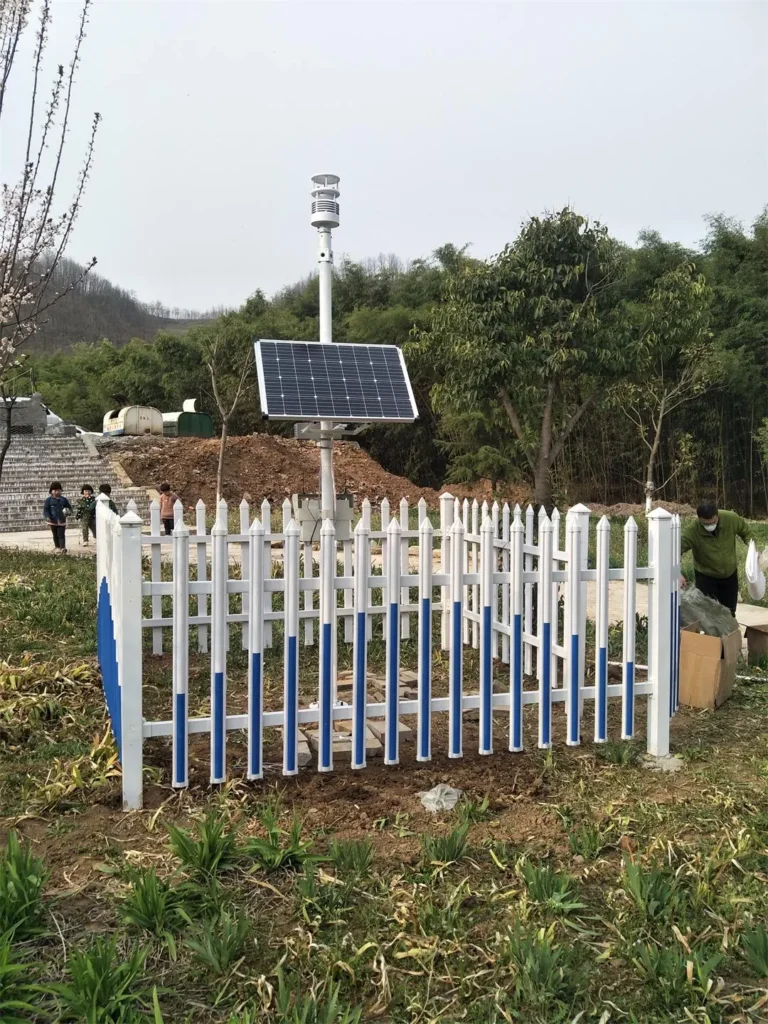
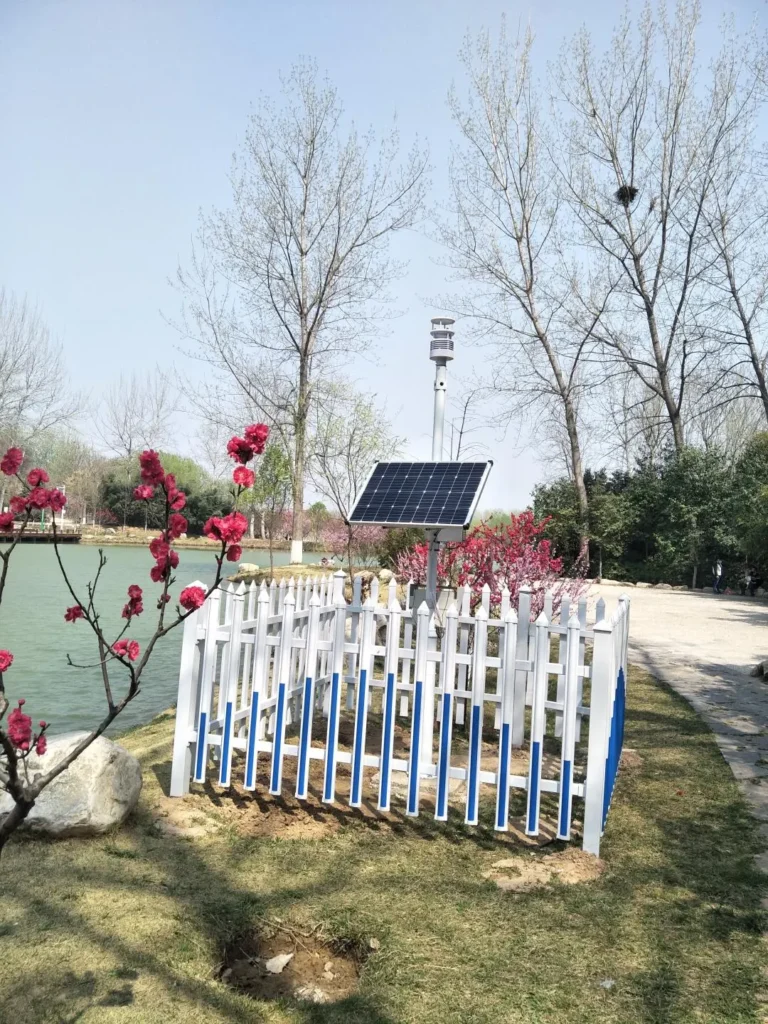
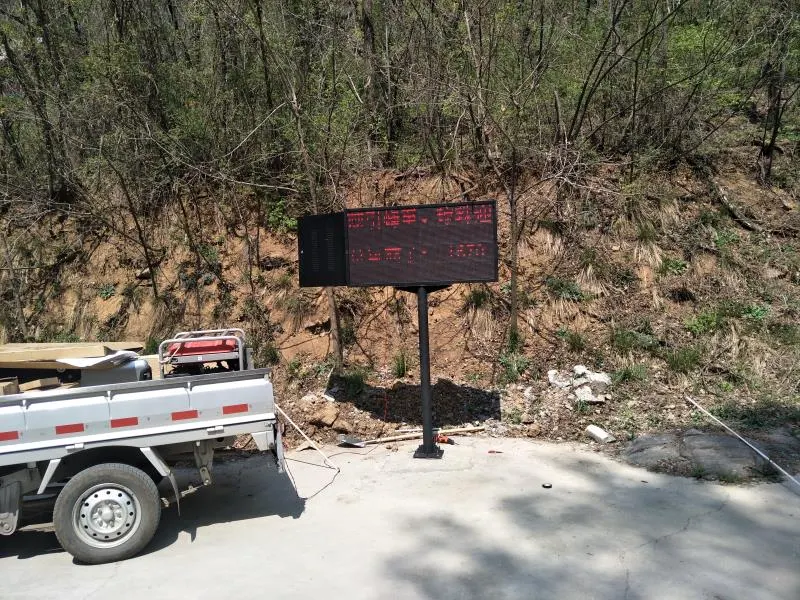
Before installation, the team assessed each monitoring location for airflow, surrounding vegetation, nearby exhaust or dust sources, public access, and available power. Sensors were positioned in open, ventilated areas to reduce interference from nearby obstructions and local pollution sources. At public sites, the LED display was mounted at a height suitable for pedestrians to read, while protective fencing was installed around equipment where needed to reduce accidental contact.
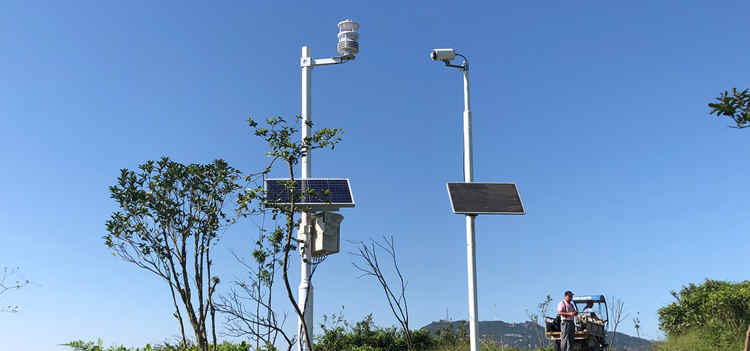
The monitoring poles, sensor assemblies, data acquisition equipment, and LED displays were installed according to the requirements of each location. At remote forest sites, solar panels and lithium battery systems were installed without the need to extend utility power cables. Signal cables were routed with protective sleeving where required, and outdoor connections were sealed against moisture. Grounding and lightning protection were incorporated into the outdoor installation.
System Commissioning & Handover
After installation, the team checked sensor connections, power supply, RS485 Modbus communication, 4G data transmission, and LED display operation. The display was configured to cycle between public information and current monitoring readings, with the data refresh interval set for the application. The team also checked that each monitoring point was registered on the cloud platform and that current readings and historical records could be accessed remotely.
Equipment Used
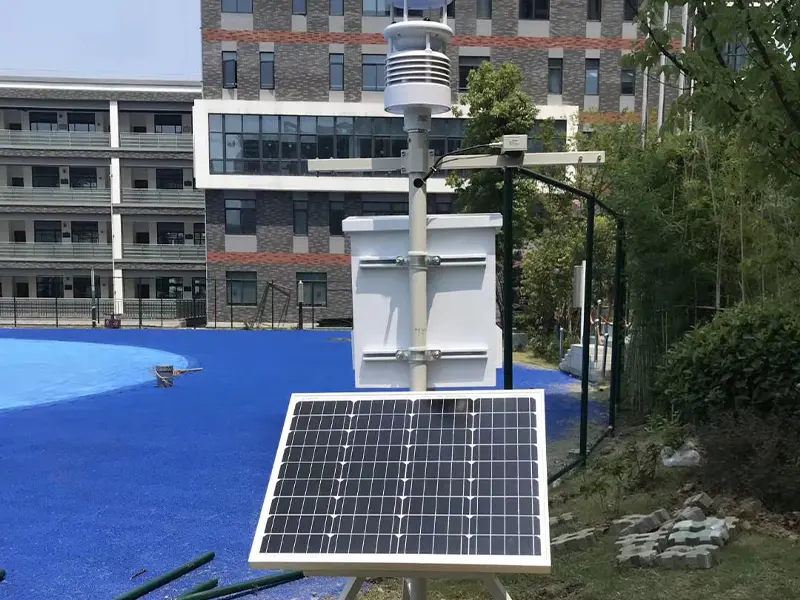
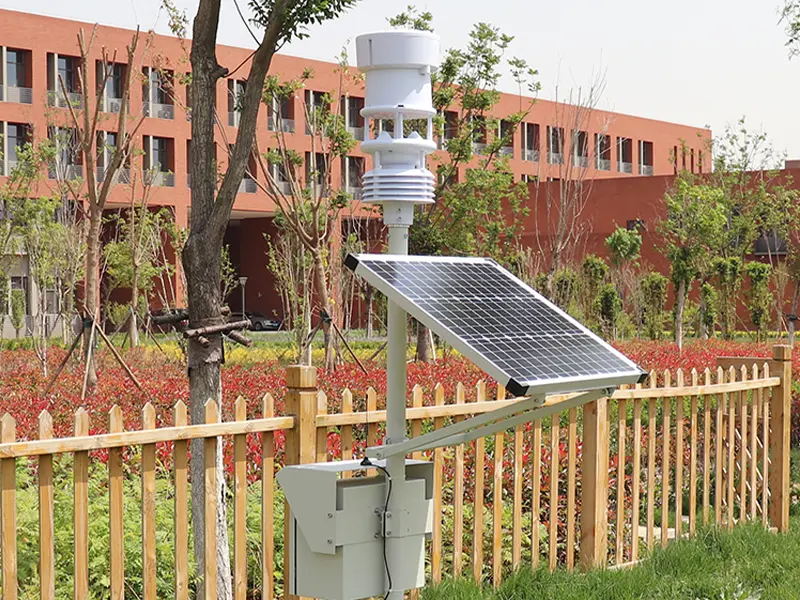
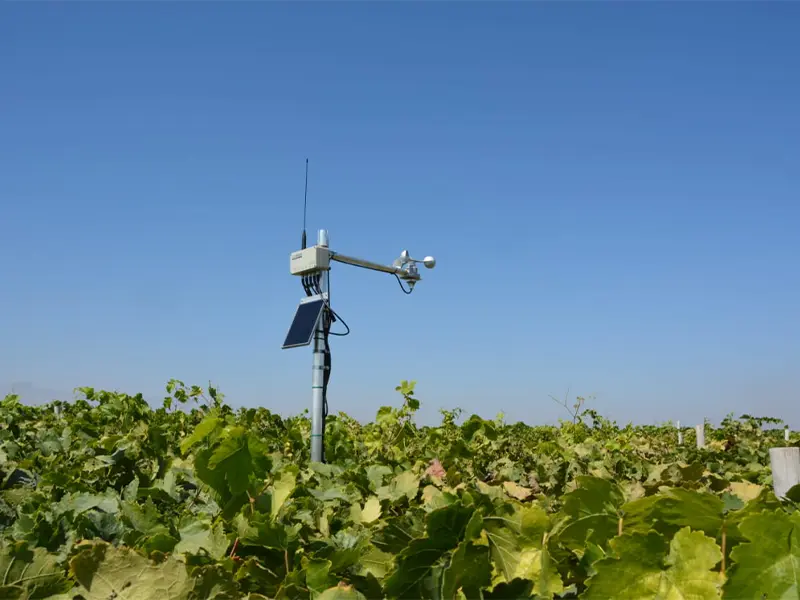
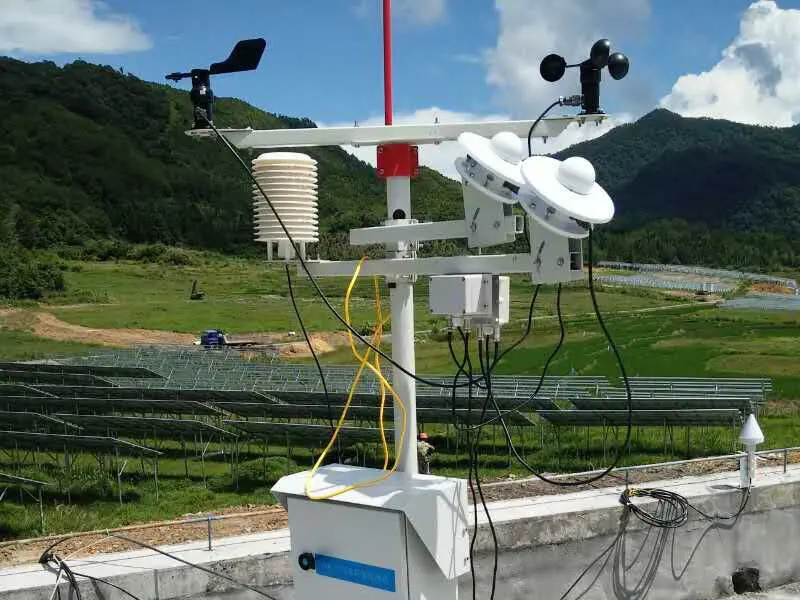
The monitoring system is based on Yantai Sensor’s Weather Station Monitoring System, configured for negative air ion and meteorological monitoring at village and forest sites. The system combines sensing, data acquisition, wireless transmission, and local display, with mains or solar power selected according to site conditions.
- Weather Station Monitoring System (Main Product): Integrates configurable environmental sensors, data logging, wireless communication, and cloud monitoring. Negative air ion measurement and an outdoor LED display can be included according to project requirements.
- Air Temperature and Humidity Sensor: Measures ambient temperature and relative humidity for local environmental monitoring.
- XF200A Ultrasonic Wind Speed and Direction Sensor: Measures wind speed and direction using ultrasonic technology without rotating mechanical components. The installed parameters should match the project configuration.
- Negative Air Ion Monitoring Module: Measures negative air ion concentration, the primary environmental parameter in this project. The monitoring function should be configured within the main system according to the supplied equipment specification.
- Data Acquisition and 4G Communication Module: Collects sensor readings through RS485 Modbus and transmits data to the cloud platform for remote viewing and historical records.
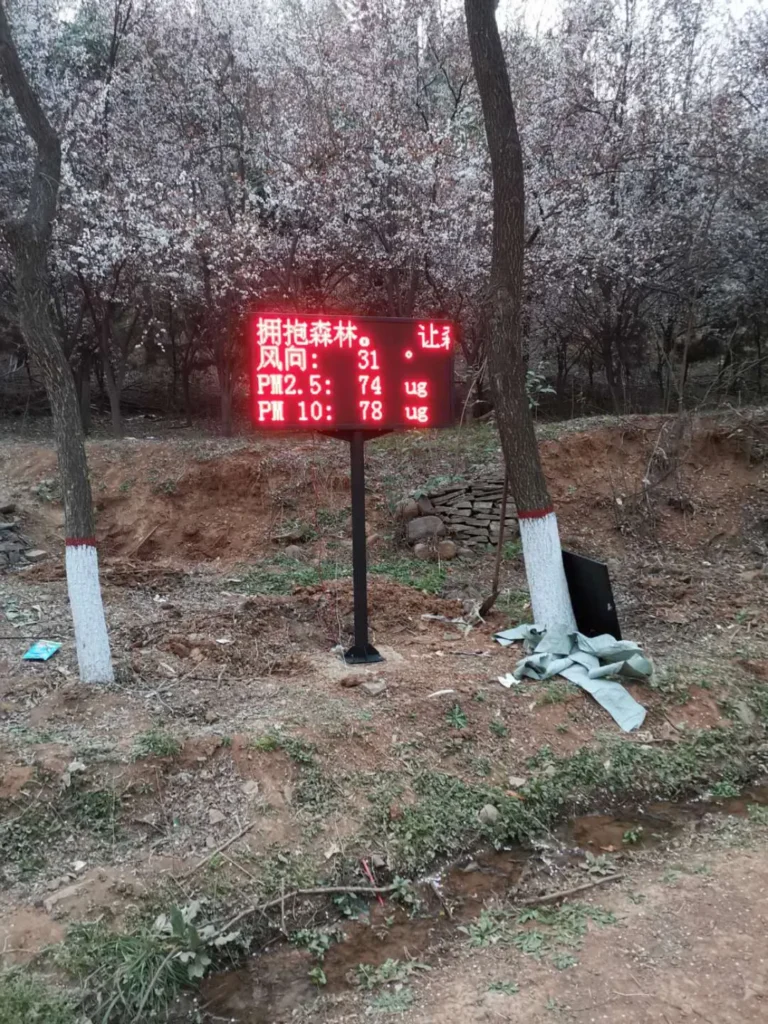
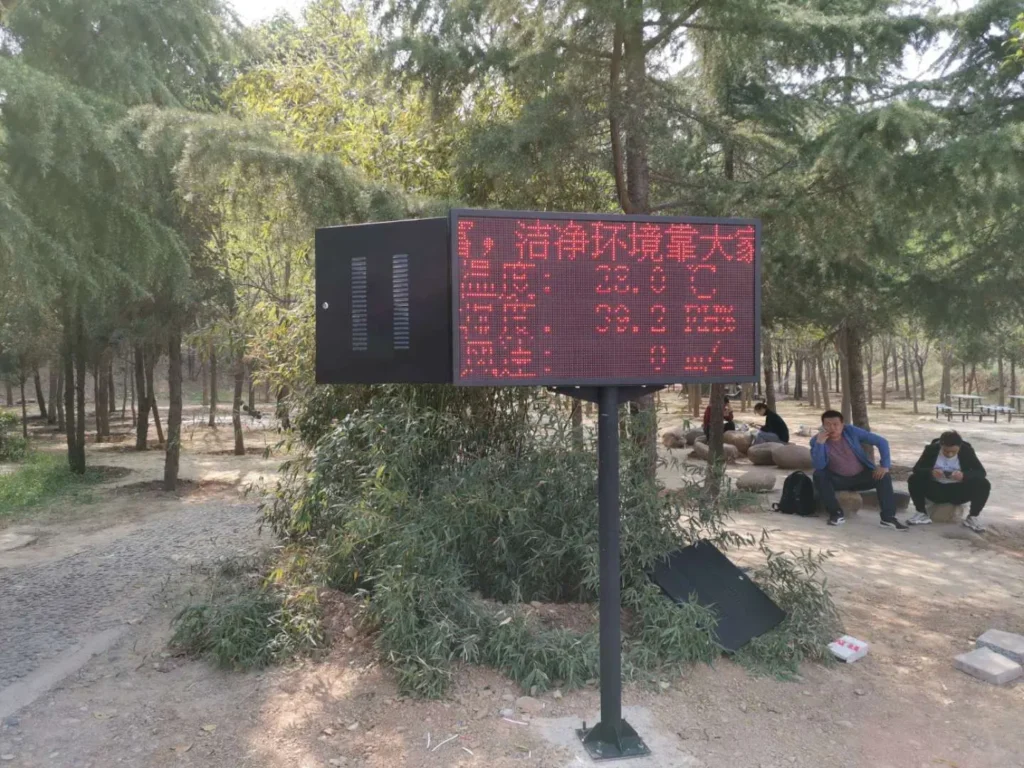
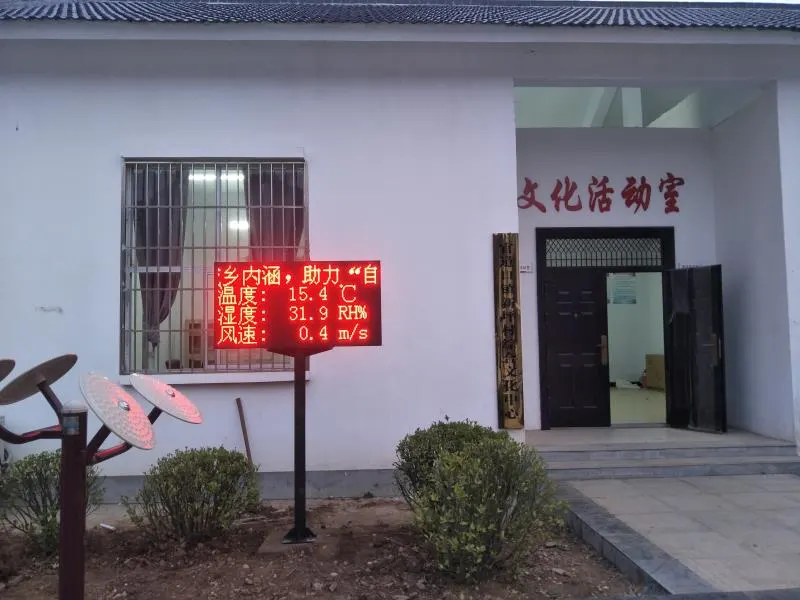
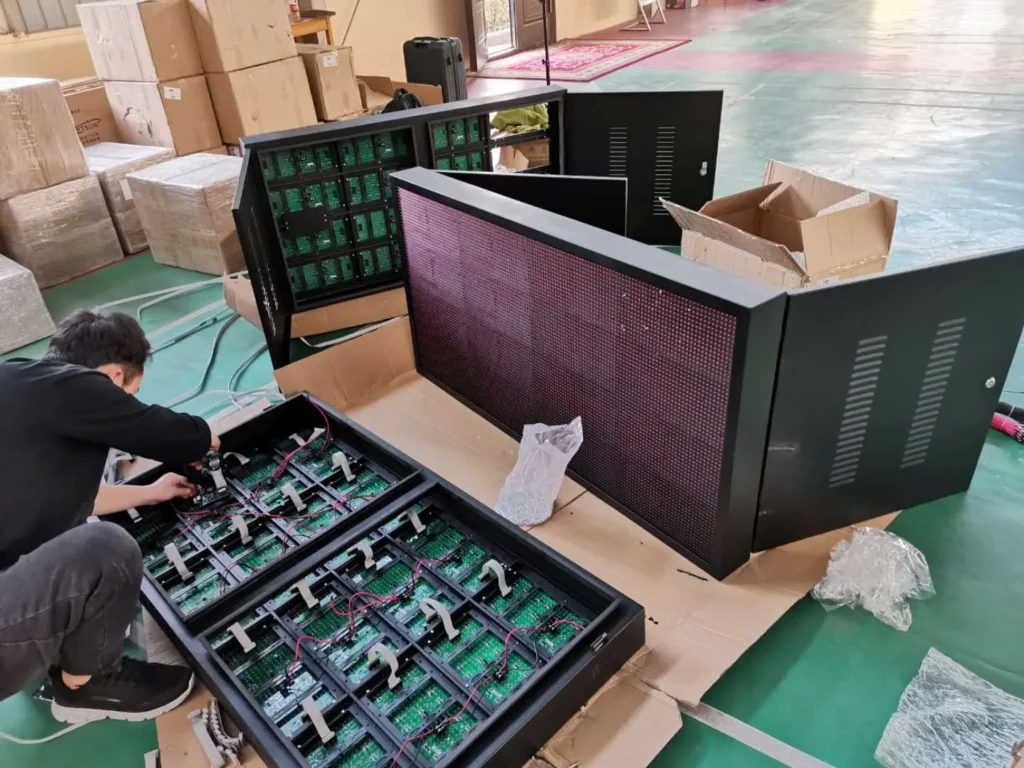
- Outdoor LED Display: Uses a high-brightness red LED screen to display selected monitoring readings and scrolling public information.
- Solar Power System: Combines a photovoltaic panel, charge controller, and lithium battery to supply monitoring stations at remote forest sites without grid access.
- Outdoor Mounting and Protection Components: Include monitoring poles, protective fencing, shielded signal cables, waterproof junction boxes, and grounding and lightning-protection components as required by the site.
Project Site:
Project Highlights
- Multi-Site Monitoring: Covers village public spaces, forest parks, and remote woodland locations.
- Flexible Power Supply: Uses mains power at grid-connected sites and solar power with lithium battery storage at remote sites.
- Integrated Measurements: Combines negative air ion concentration, air temperature, relative humidity, and wind speed monitoring.
- Local Display & Remote Access: LED screens display selected readings, while 4G communication transmits data to the cloud platform.
- Outdoor Protection: Mounting poles, protective fencing, sealed cable connections, and lightning protection are configured according to site conditions.
Project Results
The monitoring stations provide negative air ion and meteorological data at the selected village and forest sites. Readings are displayed locally on outdoor LED screens and transmitted to the cloud platform for remote viewing and historical data access.
The system accommodates both grid-connected and off-grid locations. Routine inspection of sensors, cable connections, power systems, and communication links remains necessary to maintain data continuity.
Customer Feedback
“The system runs reliably at our forest sites. Solar power eliminates the need for power cables, and the LED display makes the data easy to read. It is useful for both environmental reporting and public display, and technical support has been straightforward.”
Related Products

Related Articles

Contact us
Looking for customized smart sensor solutions? Our team specializes in delivering scalable, flexible, and tailored solutions to meet your specific needs.
Fill out the form now to get a personalized solution. Our experts will provide professional advice and ensure your project runs smoothly. Contact us today to start boosting efficiency!