Introduction
When solar modules lose power over time, project developers and O&M teams need to identify the cause. UV radiation can accelerate the aging of encapsulants and backsheets and, in some module designs, affect electrical performance. The UV impact on solar panels depends on module materials, cell structure, cumulative UV exposure, and environmental conditions such as temperature and humidity. Power loss alone, however, does not confirm UV damage.
UV exposure can vary between project sites and even across the same solar plant due to local climate, mounting angle, and tracker movement. Total solar irradiance measurements do not isolate UV radiation, while standardized aging tests cannot fully represent every field condition. Understanding UV degradation of solar panels requires examining material changes, site exposure, and how UV measurements can support long-term performance assessment.For a closer look at the role of UV measurement in PV systems, see Why UV Sensors Matter in Solar Panel Monitoring, which explains how UV sensors help assess site exposure.
How Does UV Radiation Affect Solar Panels?
The UV impact on solar panels depends on how radiation affects both solar cells and the materials that protect them. Prolonged exposure may alter cell surface passivation, reduce encapsulant transparency, or accelerate backsheet aging. Depending on the module design and exposure conditions, these changes can affect power output and long-term reliability. The extent of UV degradation of solar panels varies with cell technology, material formulation, cumulative UV exposure, and environmental conditions such as heat and humidity.
UV-Induced Degradation of Solar Cell Materials
In some silicon solar cells, UV exposure can alter surface passivation layers or interfaces within the cell structure. These layers help limit charge recombination. If their properties change, recombination may increase, potentially reducing open-circuit voltage (Voc), fill factor, and maximum power. The extent of this effect depends on the cell architecture and manufacturing process; it should not be assumed that all silicon cells respond in the same way.
The practical concern is whether these changes cause measurable electrical losses in a particular module. UV-induced degradation in solar cells is one possible contributor to performance decline, but its effect needs to be distinguished from other degradation mechanisms.
UV Damage to Encapsulants and Backsheets
UV exposure can accelerate aging in polymer materials used in solar modules. EVA encapsulants may yellow or undergo chemical changes that reduce light transmission to the cells. Backsheets serve a different purpose: they protect the module’s rear surface and provide electrical insulation. Depending on the material formulation and exposure conditions, aging can cause discoloration, cracking, or changes in insulation performance.
The consequences differ by material. Encapsulant yellowing can reduce the light reaching the cells, while backsheet cracking may compromise environmental protection and electrical insulation. UV stabilizers, material formulation, heat, and moisture all influence how these changes develop.
How UV Exposure Can Reduce Power Output?
UV-related power loss can occur when aged encapsulants transmit less light or when changes to cell passivation and interfaces affect electrical performance. Deterioration of protective materials may also create longer-term reliability concerns if moisture resistance or electrical insulation is compromised.
These effects do not occur in every module, and power loss alone cannot confirm UV damage. Shading, soiling, high cell temperatures, and electrical faults can also reduce energy yield. Identifying the cause requires considering the module design, operating environment, and available performance evidence.UV exposure is only one possible cause of reduced PV output. For a broader look at other performance issues, see Top 5 Factors Reducing Solar Panel Efficiency.
Does UV Radiation Shorten Solar Panel Lifespan?
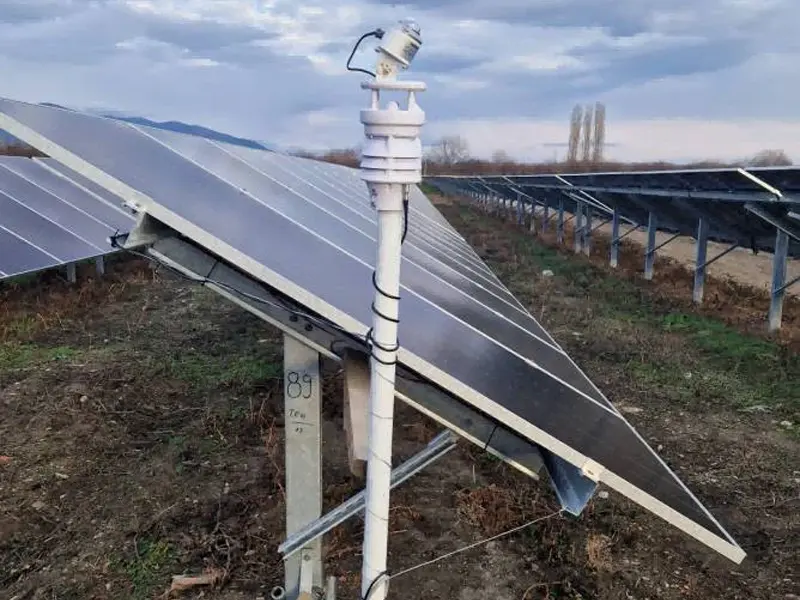
The UV impact on solar panels can extend beyond short-term performance changes and contribute to long-term degradation. However, the effect on service life varies with module design, cumulative UV exposure, and operating conditions. There is no single lifespan reduction that applies to all solar panels.
What Recent Research Reveals About UV-Related Degradation
A 2026 UNSW Sydney study used a global model to estimate UV exposure for fixed-tilt and tracking PV systems. It found that UV photodegradation could account for nearly a quarter of annual degradation in monocrystalline silicon modules in high-UV regions, potentially reducing system lifespan by 7–10 years under the modeled conditions. These figures are model estimates, not universal field measurements.
The findings show why local UV exposure and mounting configuration matter when assessing long-term module reliability.
Why Solar Panel Lifespan Varies by Location and Technology?
UV exposure varies with climate, atmospheric conditions, season, and module orientation. Tracking systems may receive different UV doses than fixed-tilt systems, depending on the site. Cell architecture, encapsulant formulation, and protective materials also affect module response. Heat, humidity, and thermal cycling can contribute to further degradation, so solar panel lifespan cannot be predicted from UV exposure alone.
UV Degradation vs. Other Solar Panel Degradation Mechanisms
UV-related degradation can affect cell passivation and polymer materials. Thermal cycling stresses electrical connections, damp heat accelerates moisture-related aging, and potential-induced degradation (PID) can reduce electrical performance under certain conditions.
These mechanisms may occur together, so total annual power loss should not be treated as a direct measure of UV-related degradation. Environmental conditions and module performance need to be assessed together to understand the likely causes.
Which Solar Panel Technologies Are More Sensitive to UV Radiation?
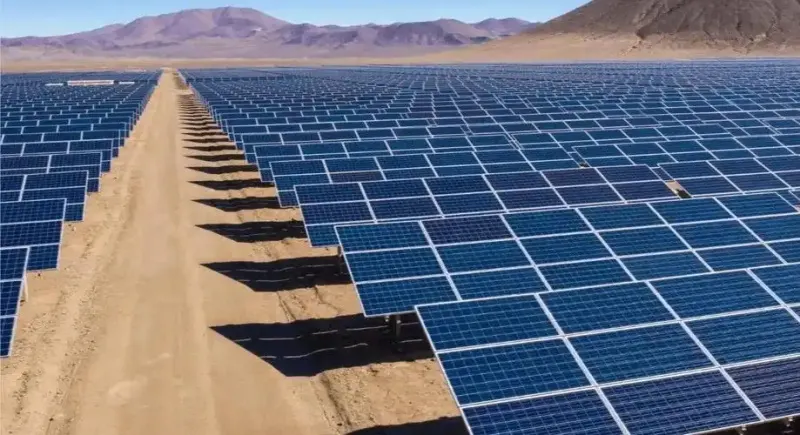
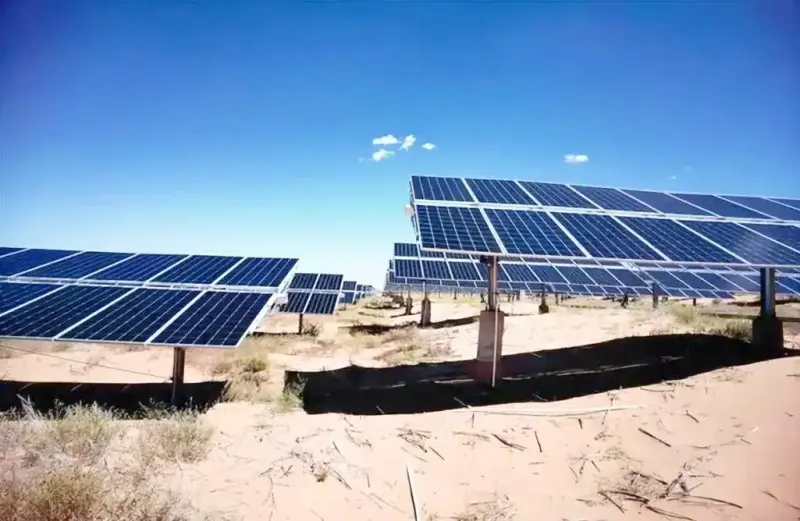
UV sensitivity depends on both cell design and module materials. UV exposure can affect cell passivation, encapsulant transparency, and backsheet durability. These degradation pathways differ, so UV-induced degradation in solar cells should be assessed separately from aging of the materials that protect them.
UV Sensitivity in Crystalline Silicon Solar Modules
In crystalline silicon cells, UV exposure can alter surface passivation and increase charge recombination, potentially reducing open-circuit voltage and power output. The extent depends on the cell structure and manufacturing process. UV can also age polymer components: encapsulant yellowing reduces light transmission, while backsheet deterioration may compromise weather protection or electrical insulation.
UV Reliability of TOPCon and Heterojunction Modules
TOPCon and heterojunction (HJT) cells use different passivation structures, and both can experience UV-induced performance losses. Research results vary with UV wavelength and dose, cell design, and module construction. Some studies report greater degradation in tested HJT samples than in TOPCon samples, but this does not establish a universal ranking. Buyers should compare UV reliability data for the specific module model and its test conditions.
How Encapsulants Affect UV Resistance?
Encapsulants such as EVA, POE, and TPO can influence UV-related degradation through differences in optical properties, chemical formulation, and compatibility with the cell structure. Their performance also depends on stabilizers and the module’s overall design. A 2026 comparative study found that encapsulant selection affected degradation under the tested conditions, reinforcing the need to assess UV-resistant solar panel materials alongside cell technology rather than choosing by material name alone.
What Factors Increase UV Exposure on Solar Panels?
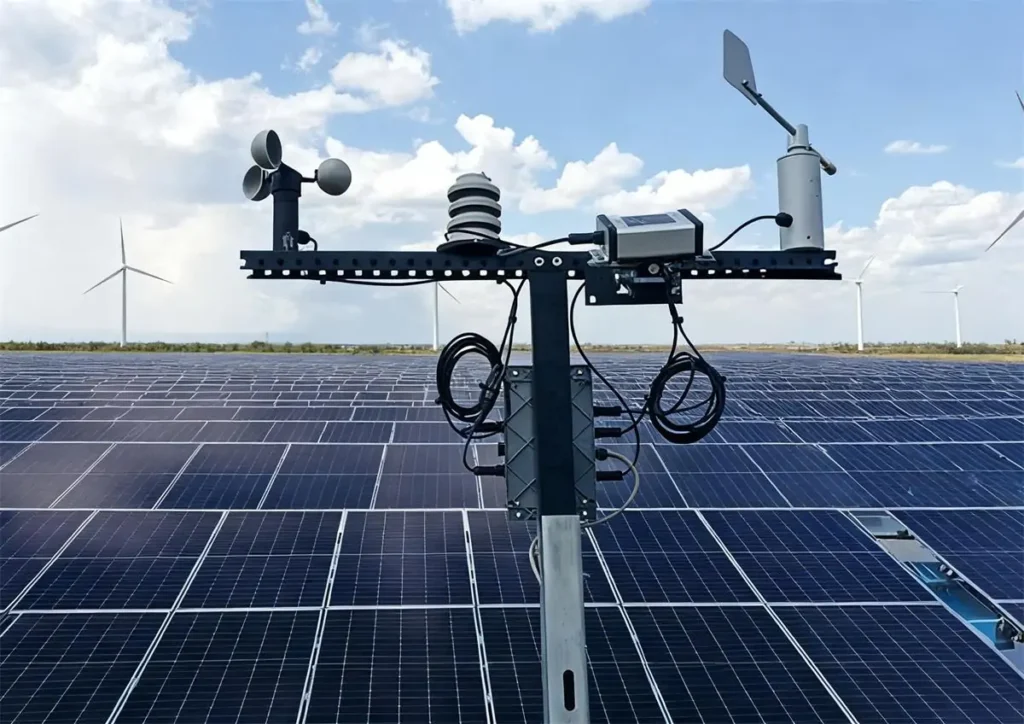
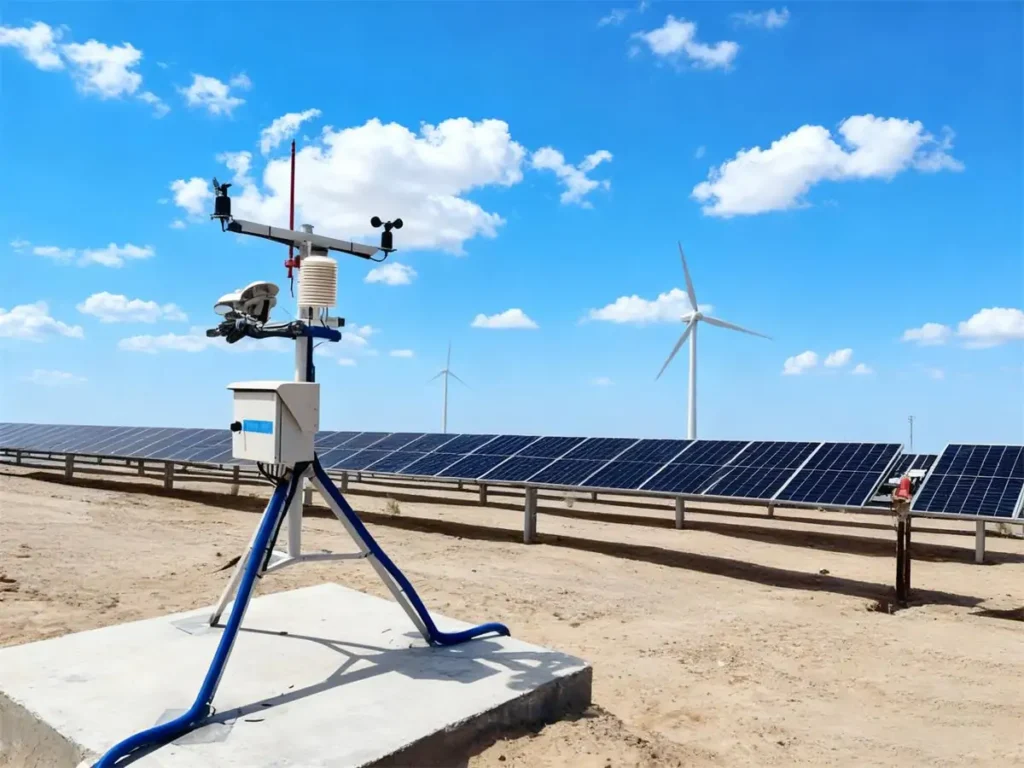
The amount of UV radiation reaching a solar module depends on its location, mounting geometry, and local weather. These factors help engineers assess potential exposure, but regional climate data alone cannot determine how quickly a module will degrade.
Geographic Location, Latitude, and Atmospheric Conditions
Latitude, elevation, season, and solar elevation angle influence UV levels at a project site. Clouds and aerosols can further change the amount of UV radiation reaching the ground. Annual solar irradiance or a general label such as “high-UV region” is therefore insufficient to quantify actual solar panel UV exposure.
Measurement orientation also matters. UV radiation measured on a horizontal surface may differ from the exposure received by tilted modules because the direct and diffuse components change with orientation. Site assessments should use measurements representative of the array plane whenever possible.
Fixed-Tilt vs. Solar Tracking Systems
Fixed-tilt modules maintain a set orientation, while tracking systems adjust their angle to follow the sun. This changes how much direct and diffuse UV radiation reaches the module throughout the day and across seasons.
A 2026 UNSW global modeling study identified higher cumulative UV exposure for tracking systems in some high-UV environments. The effect is site-dependent, so mounting type should be evaluated alongside local climate and measured UV levels rather than treated as a universal predictor of degradation.
Combined Effects of UV Radiation, Heat, and Humidity
UV radiation, heat, and humidity can contribute to module aging through different but potentially interacting processes. Elevated temperatures can accelerate some degradation reactions, while moisture can affect protective materials and electrical insulation. Their combined effects depend on module construction and actual operating conditions.
For a more complete risk assessment, engineers should evaluate UV dose alongside module temperature, ambient temperature, humidity, and PV performance. These records help distinguish exposure conditions from observed performance changes; solar panel UV degradation factors cannot be assessed reliably from UV data alone.
How Can UV Degradation Be Measured and Monitored?
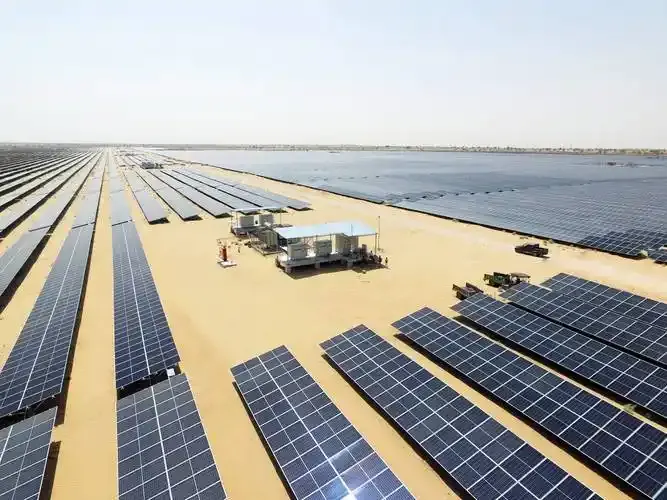
UV impact on solar panels cannot be assessed from power output alone. Engineers need to track UV exposure at the site and compare it with changes in PV performance over time. UV measurements show the radiation received at the sensor’s location, not the extent of damage inside a module. To investigate possible UV-related degradation, exposure records should be evaluated alongside module materials, operating conditions, and electrical performance.
UV Radiation vs. Total Solar Irradiance
A UV sensor measures radiation within a defined ultraviolet wavelength range, while a total solar irradiance sensor measures broadband solar radiation. These measurements serve different purposes. Total irradiance helps assess the solar resource available to the array; UV measurements quantify exposure within the sensor’s specified UV band.
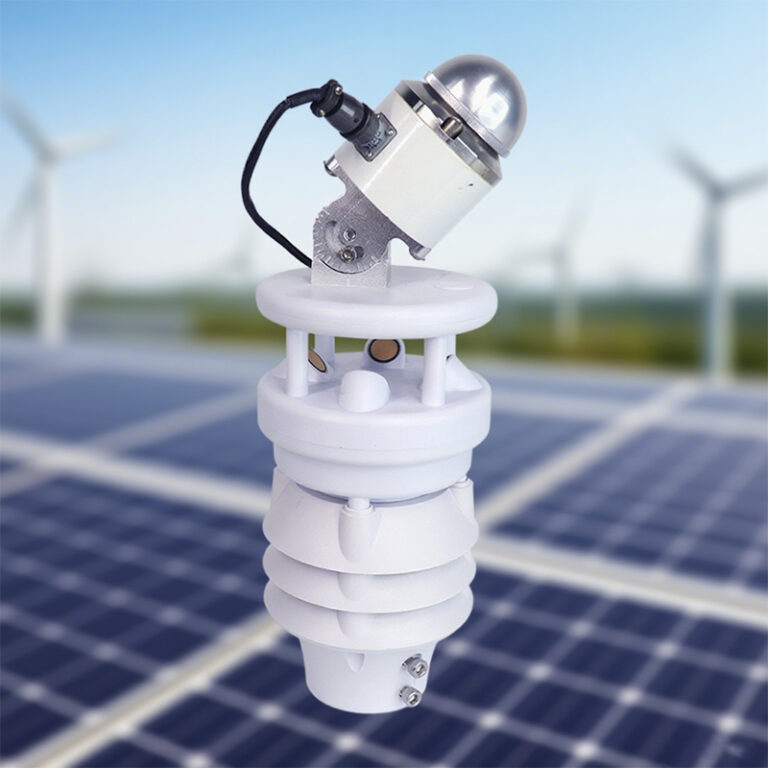
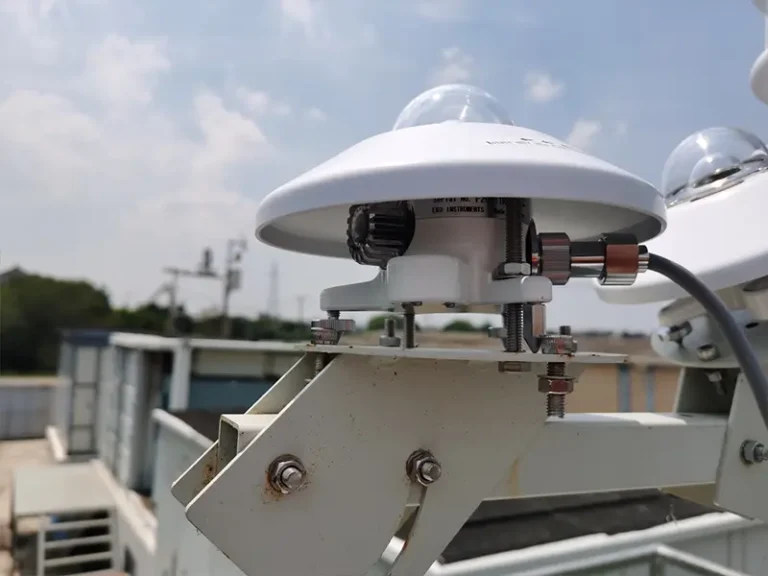
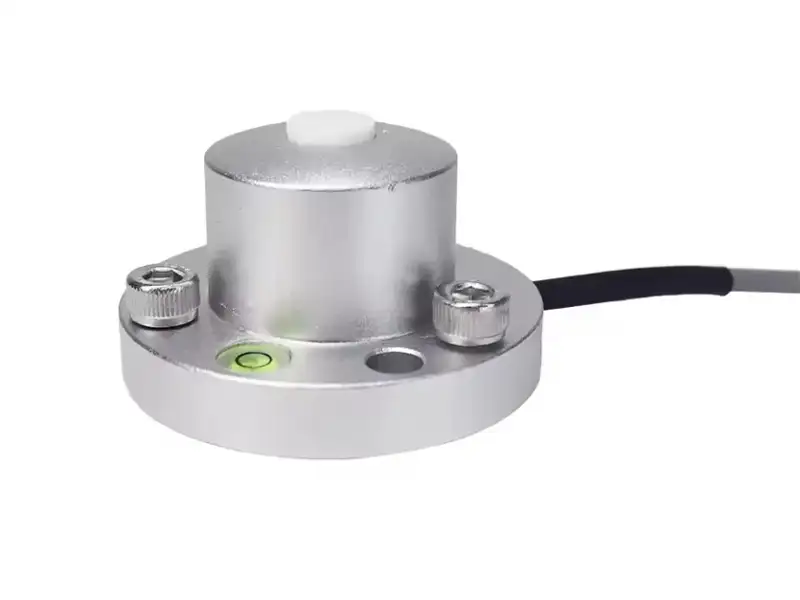
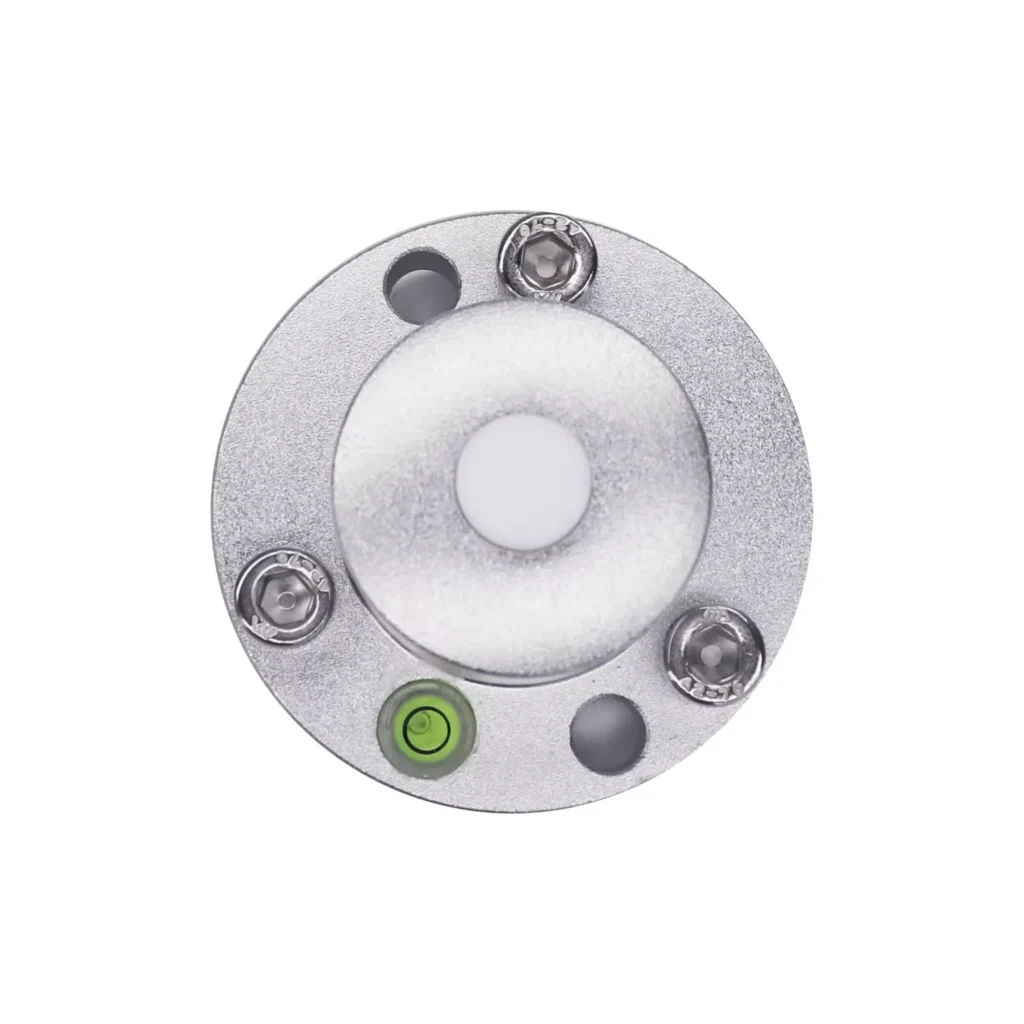
When selecting a solar UV sensor, check its spectral response against the UV radiation monitoring for solar panels objective. The Yantai Sensor RY-ZW is specified for UV AB radiation over 280–400 nm, covering UVA and UVB. It provides a combined measurement across this range, not separate UVA and UVB readings. This matters when comparing field data with research or module-aging tests that use a narrower wavelength range.For practical guidance on measuring broadband solar radiation in PV systems, see How to Measure Solar Irradiance for Photovoltaic Systems.
Measuring UV Irradiance and Cumulative UV Dose
UV irradiance describes the intensity of ultraviolet radiation at a given moment, typically expressed in W/m². Cumulative UV dose represents the radiation received over a period. It is calculated by integrating irradiance over time and is commonly expressed in J/m² or kWh/m².
For meaningful UV exposure measurement, continuous data collection matters more than isolated readings. Record UV irradiance at consistent intervals, account for missing data, and document calibration checks. If the objective is to estimate exposure at the module surface, install the sensor in an orientation representative of the array.
Cumulative dose also depends on the sensor’s spectral response. Values measured over different wavelength ranges should not be compared as if they represent the same exposure. Even when sensors cover the same range, differences in calibration, installation, and data processing can affect the results.
Linking UV Exposure to PV Performance Data
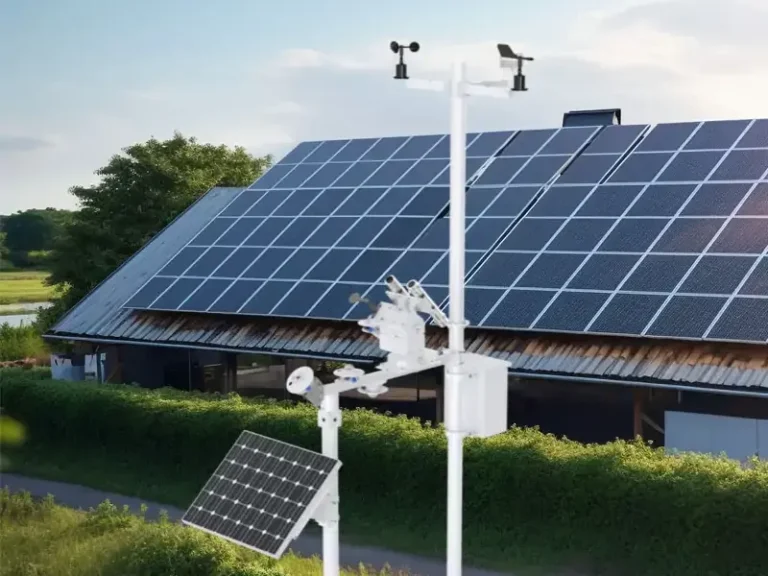
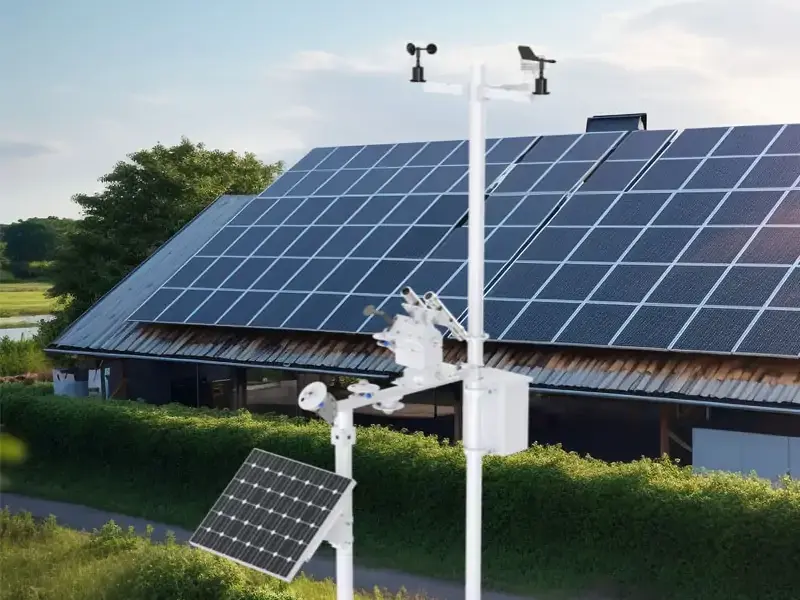
UV records should be reviewed alongside plane-of-array irradiance, module temperature, ambient temperature, humidity, and inverter output. Comparing these records helps engineers determine whether changes in power generation coincide with changes in environmental exposure.A PV weather station can bring several of these measurements together for site-level analysis. See What Is a PV Weather Station and Why Is It Critical for Solar Farms? for an overview of its role in solar plant monitoring.
A decline in output does not, by itself, establish UV damage. Soiling, shading, high cell temperatures, electrical faults, and other degradation mechanisms can produce similar symptoms. Engineers should check these factors and review module inspection records before attributing performance loss to UV exposure. Where necessary, electrical testing and material inspection can help distinguish between possible causes.
UV radiation monitoring for solar panels is therefore one part of a broader PV performance assessment. It provides exposure data for long-term analysis, while module condition and degradation must be evaluated using additional evidence.For a wider view of how environmental data support plant-level performance assessment, see Environmental Monitoring for Utility-Scale Solar Farms.
How to Select a UV Radiation Sensor for Solar Monitoring?
The right UV radiation monitoring for solar panels depends on the project’s measurement objective, installation conditions, and data acquisition system. Before procurement, check the following specifications:
- Spectral range: Confirm that the wavelength range matches the UV radiation monitoring for solar panels objective and any data used for comparison.
- Measurement range and response: Check the specified range, response time, and measurement uncertainty available from the manufacturer.
- Installation and environmental protection: Verify the operating-temperature range, ingress protection rating, mounting requirements, and suitability for long-term outdoor exposure.
- Data acquisition and integration: Confirm that the output signal is compatible with the site’s data logger or monitoring platform.
- Calibration and maintenance: Check how calibration is verified and what maintenance is required to keep readings comparable over time.
- Installation orientation: Position the sensor to represent the exposure conditions experienced by the modules as closely as practical.
For projects requiring dedicated UV measurements, see the RY-ZW UV Light Radiation Sensor for Solar Panel System. The published specifications list a 280–400 nm spectral range, a 0–70 W/m² measurement range, a response time of ≤1 s (99% response), an operating-temperature range of −50°C to +50°C, a cosine response of ≤4% at a solar altitude angle of 30°, and IP65 protection.UV measurement is only one part of a plant monitoring setup. See [What Sensors Are Required for a Solar Power Plant?] for an overview of other measurements used to monitor PV site conditions.
How Can Solar Panel UV Degradation Be Reduced?
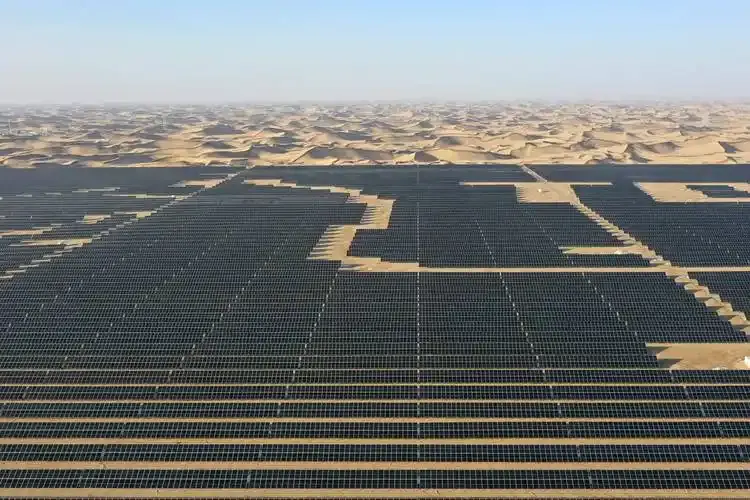
The UV impact on solar panels depends on module design, cumulative exposure, and operating conditions. Although UV degradation of solar panels cannot be eliminated entirely, project teams can reduce the risk through appropriate module selection, material design, and long-term performance UV radiation monitoring for solar panels. The aim is to limit avoidable degradation and identify changes in module performance before they develop into larger operational problems.
Select Modules with Verified UV Reliability Data
When comparing UV-resistant solar panels, request UV preconditioning results and relevant reliability test reports for the specific module model. Check the test conditions, UV exposure level, and measured changes in electrical performance. Passing a UV test provides useful evidence, but it does not guarantee the same service life under every climate or installation condition.
UV test results should also be reviewed alongside thermal-cycling and damp-heat results, warranty terms, and degradation guarantees. This gives procurement teams a broader basis for comparing modules than relying on cell technology or general claims of UV resistance alone.
Evaluate Materials and Site Conditions Together
UV resistance depends on the complete module design. Cell passivation structures affect how cells respond to UV radiation, while encapsulants, backsheets, and edge seals help maintain optical performance and protect the module from environmental exposure.
When selecting modules, consider the site’s UV exposure, temperature, humidity, and mounting conditions together. Ask suppliers whether the tested material configuration matches the module being offered and whether the reliability data are relevant to the intended operating environment. No single encapsulant or cell technology should be assumed to provide the best UV protection for every project.
Use Long-Term Monitoring to Identify Degradation Trends
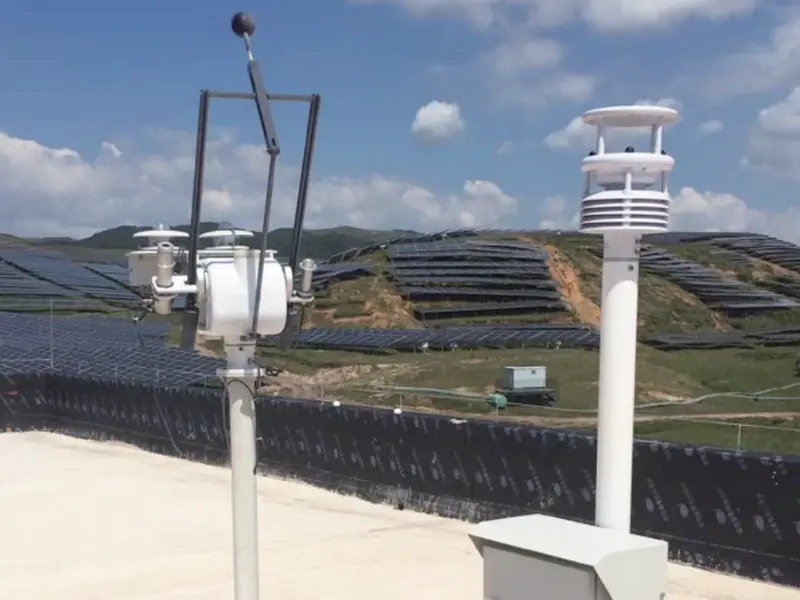
UV radiation monitoring for solar panels helps engineers compare environmental exposure with changes in actual system performance. Establish baseline records for UV exposure, plane-of-array irradiance, module temperature, humidity, and power output. Reviewing these data over time provides more useful evidence than relying on occasional readings.
If power output declines, compare the trend with environmental records and investigate other possible causes, such as shading, soiling, high operating temperatures, or electrical faults. Module inspections and appropriate electrical tests can help determine whether further action is needed. UV measurements provide context about exposure; they cannot independently confirm internal cell damage or identify the cause of a power loss.
Keep records of sensor calibration, maintenance, and replacement so that measurements remain comparable throughout the plant’s operating life. For more on site-level UV measurement, see Why UV Sensors Matter in Solar Panel Monitoring.
Conclusion
The UV impact on solar panels varies with cell technology, encapsulation materials, cumulative UV exposure, and site conditions. UV radiation can contribute to changes in module materials, optical transmission, and long-term reliability, but neither a region’s UV index nor a single laboratory test can determine how long a specific module will last. Assessing UV degradation of solar panels requires considering module reliability data alongside the conditions in which the system operates.
Combining UV radiation monitoring for solar panels with solar irradiance, temperature, humidity, and PV performance records helps project teams track environmental exposure and investigate long-term performance trends.If you are planning a PV monitoring system or evaluating UV measurement requirements, contact our team to discuss the required spectral range, measurement range, and data interface for your project.