Introduction
Accurate solar radiation data is important for designing and evaluating solar energy systems. Among different solar radiation parameters, Direct Normal Irradiance (DNI) plays a key role in applications such as Concentrated Solar Power (CSP), solar resource assessment, and solar energy forecasting.
Direct normal irradiance refers to the amount of direct sunlight received on a surface that is perpendicular to the sun’s rays. Unlike GHI, which includes both direct and diffuse radiation, DNI only measures the direct solar beam, making accurate measurement essential for systems that rely on concentrated sunlight.
So, how can you measure DNI accurately? The most common and reliable method is using a calibrated pyrheliometer combined with a solar tracker. This setup ensures the sensor stays aligned with the sun and provides reliable DNI data for solar monitoring and project evaluation.
In this article, we will explain the basic principles of direct normal irradiancemeasurement, the factors that affect accuracy, and how to achieve more reliable solar radiation measurements.If you want to know what GHI, DNI, and DHI are in solar energy, click on the article.
What Is Direct Normal Irradiance ?
Direct Normal Irradiance is the amount of direct solar radiation received per unit area on a surface that is perpendicular to the sun’s rays. It represents the intensity of sunlight traveling directly from the solar disk to the Earth’s surface and is measured in watts per square meter (W/m²).
Unlike other solar radiation parameters, DNI only measures the direct solar beam and excludes diffuse radiation caused by atmospheric scattering. This makes direct normal irradiance a critical measurement parameter for solar applications that rely on concentrated sunlight, such as Concentrated Solar Power (CSP) and Concentrated Photovoltaic (CPV) systems.
To understand DNI measurement, it is important to distinguish it from other common solar radiation values:
| Parameter | What It Measures | Typical Instrument |
| DNI | Direct solar radiation received perpendicular to sunlight direction | Pyrheliometer |
| GHI | Total solar radiation on a horizontal surface, including direct and diffuse radiation | Pyranometer |
| DHI | Diffuse solar radiation scattered by the atmosphere | Shaded Pyranometer |
DNI, GHI, and DHI describe different components of solar radiation. While GHI is commonly used for conventional photovoltaic systems, direct normal irradiance measurement is especially important for solar technologies that concentrate sunlight because only direct radiation can be effectively utilized.A reliable DNI value provides essential data for solar resource assessment, system design, and energy yield prediction, helping developers determine whether a location has sufficient solar potential for a specific project.To understand how irradiance data is used in solar PR calculation, see our Solar PR Calculation Guide.
Why Accurate DNI Measurement Is Important?
Accurate direct normal irradiance measurement provides essential data for solar projects because it reflects the amount of direct solar radiation that can actually be utilized. Unlike general solar radiation measurements, DNI focuses on the direct sunlight component, making it a key reference for technologies that depend on concentrated or tracked solar energy.
Solar Resource Assessment and Project Planning
Reliable DNI data plays an important role in solar resource assessment before project development. Engineers use long-term direct normal irradiance measurements to evaluate site conditions, compare potential locations, and estimate expected energy output. Accurate data helps reduce uncertainty during feasibility studies and provides a more reliable basis for investment decisions and system design.
CSP Performance Evaluation
For Concentrated Solar Power (CSP) systems, DNI is one of the most critical parameters because mirrors and heliostats can only concentrate direct sunlight. Direct normal irradiance measurement supports plant simulation, thermal output prediction, and performance evaluation. Even small errors in DNI estimation may affect system sizing and the accuracy of expected energy production.
Solar Forecasting and System Optimization
Continuous DNI monitoring is also valuable after a solar system is installed. Changes in direct radiation caused by clouds, atmospheric conditions, and seasonal variations can influence power generation. Reliable DNI data helps operators improve solar forecasting, monitor system performance, and optimize daily operation strategies.
How Is DNI Measured?
Accurate direct normal irradiance measurement requires measuring only the direct solar radiation coming from the sun while excluding diffuse radiation from the atmosphere. In professional solar monitoring applications, DNI is mainly measured through ground-based instruments, calculated from other radiation parameters, or estimated using satellite models. Among these methods, direct measurement with a pyrheliometer and solar tracker provides the highest accuracy for project-level solar assessment.
Method 1: Pyrheliometer Measurement (Most Accurate Method)
A pyrheliometer installed on a high-precision solar tracker is the standard method for direct DNI measurement. The instrument uses a narrow optical tube to allow only direct sunlight from the solar disk to enter, while minimizing interference from diffuse radiation. A thermopile sensor converts solar radiation into an electrical signal, which is then calibrated into irradiance values in W/m².
For high-accuracy applications, the pyrheliometer must remain accurately aligned with the sun throughout the day. The system typically uses a two-axis solar tracker to maintain positioning, and professional instruments follow ISO 9060 classification with traceable calibration to ensure long-term measurement reliability.
Method 2: DNI Calculation from GHI and DHI
When a dedicated pyrheliometer is not available, direct normal irradiance can be estimated from Global Horizontal Irradiance (GHI) and Diffuse Horizontal Irradiance (DHI) measurements using solar geometry calculations:
DNI = (GHI – DHI) / cos(θ)
where θ represents the solar zenith angle. This approach is commonly used in research projects, existing weather stations, or historical solar resource analysis where direct DNI measurements are unavailable.
However, calculated DNI depends heavily on the accuracy of GHI and DHI sensors and atmospheric models. Under rapidly changing weather conditions, such as broken clouds or high aerosol levels, calculation uncertainty can increase compared with direct pyrheliometer measurement.
Method 3: Satellite-Based DNI Estimation
Satellite-based models provide DNI estimates by analyzing atmospheric conditions, cloud coverage, and historical solar radiation data over large geographic areas. This method is useful for regional solar resource mapping, preliminary site screening, and areas where ground measurement data is limited.
However, satellite estimation generally has lower accuracy than onsite measurement because it relies on modeled atmospheric information rather than direct radiation observation. For bankable solar projects, CSP development, and detailed energy yield assessment, ground-based direct normal irradiance measurement remains the preferred solution.
What Instrument Is Used to Measure DNI?
Accurate DNI measurement requires an instrument specifically designed to capture direct solar radiation. The standard solution is a pyrheliometer installed on a precision solar tracker, which keeps the sensor aligned with the sun and measures only the direct solar beam through a narrow field of view.
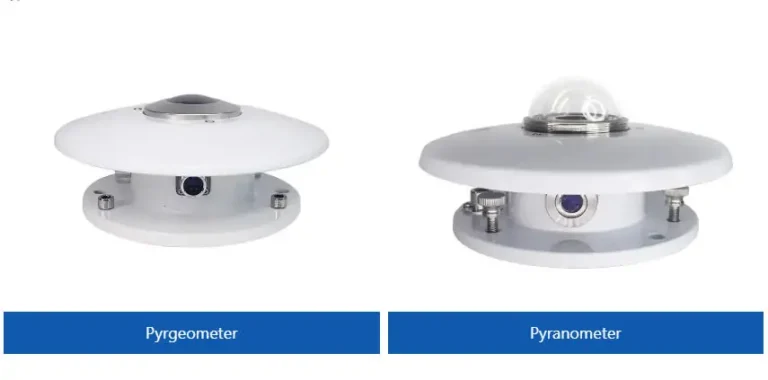
A pyranometer, on the other hand, is mainly designed for measuring GHI (Global Horizontal Irradiance). It receives radiation from the entire sky hemisphere, including both direct and diffuse components, so it cannot directly measure direct normal irradiance unless combined with additional measurements and solar position calculations.If you’d like to learn more about the best solar radiation sensors for PV monitoring systems, click on the article.
Pyrheliometer vs Pyranometer for DNI Measurement
| Feature | Pyrheliometer | Pyranometer |
| Measurement Target | Direct solar beam radiation | Global solar radiation (direct + diffuse) |
| Primary Parameter | DNI | GHI |
| Measurement Method | Direct measurement through narrow optical tube | Horizontal surface radiation measurement |
| Field of View | Narrow angle (typically around 5掳) | Hemispherical view |
| Solar Tracking | Required for accurate measurement | Usually not required |
| DNI Accuracy | High accuracy direct measurement | Indirect DNI estimation only |
| Typical Applications | CSP, CPV, solar resource assessment, research stations | PV monitoring, weather stations, general solar monitoring |
For CSP plants, CPV systems, and bankable solar resource assessment, a pyrheliometer with a high-precision solar tracker is the preferred measurement solution. Pyranometers remain essential for monitoring GHI and overall solar conditions, but they are not a replacement for professional DNI measurement systems.
Factors Affecting DNI Measurement Accuracy
Accurate DNI measurement is not determined by the pyrheliometer alone. The complete measurement system, including calibration, solar tracking accuracy, installation conditions, and atmospheric environment, affects the reliability of direct solar radiation data.
Sensor Calibration
Calibration directly affects the accuracy and long-term stability of direct normal irradiance measurements. Professional pyrheliometers should follow ISO 9060 classification and have traceable calibration to maintain measurement consistency. Regular calibration helps reduce sensitivity drift caused by aging, environmental exposure, and long-term operation.
Solar Tracker Accuracy
Since DNI measures direct sunlight from the solar disk, precise solar alignment is essential. Even a high-accuracy pyrheliometer cannot provide reliable data if the tracker has positioning errors. Mechanical accuracy, motor performance, alignment adjustment, and tracking algorithms all influence the final measurement result.
Installation Environment
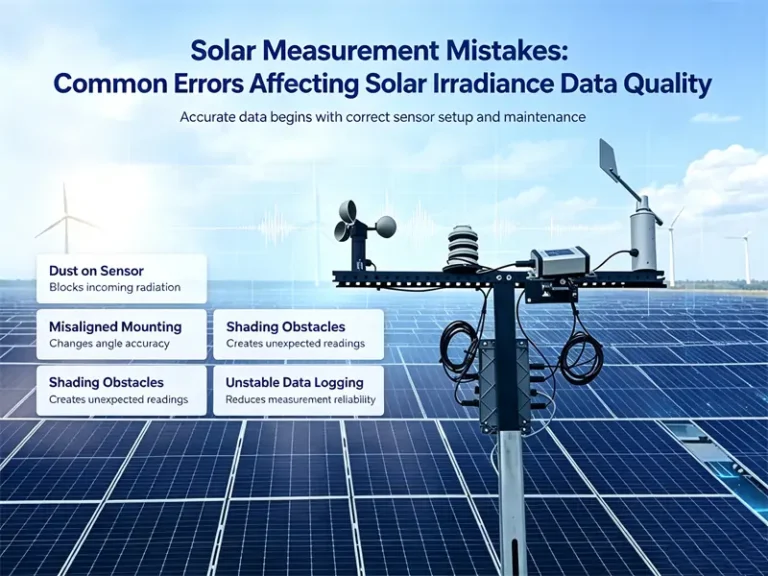
Proper installation is important for maintaining stable DNI monitoring. The measurement system should be installed on a stable platform with an unobstructed view of the sun. Regular cleaning of the optical window and protection against dust, vibration, and shading help prevent unnecessary measurement errors during long-term outdoor operation.
Atmospheric Conditions
Atmospheric conditions affect the actual DNI value rather than instrument accuracy itself. Clouds, aerosols, humidity, and airborne particles can reduce direct solar radiation by absorption and scattering. Therefore, local climate characteristics should be considered when analyzing direct normal irradiance data for solar resource assessment.
How to Improve DNI Measurement Accuracy?
Improving DNI measurement accuracy requires more than selecting a high-quality sensor. The reliability of DNI data depends on the complete measurement system, including instrument selection, solar tracking accuracy, calibration management, installation conditions, and data verification. For long-term solar monitoring projects, a well-designed measurement system helps ensure stable and trustworthy solar resource data.
Use a Calibrated, Standards-Compliant Pyrheliometer
The pyrheliometer is the core instrument for direct DNI measurement, and its performance directly affects the accuracy of solar radiation data. For professional applications such as CSP development, solar resource assessment, and research monitoring, the instrument should have reliable calibration and meet recognized measurement standards, ensuring long-term stability and traceable results.
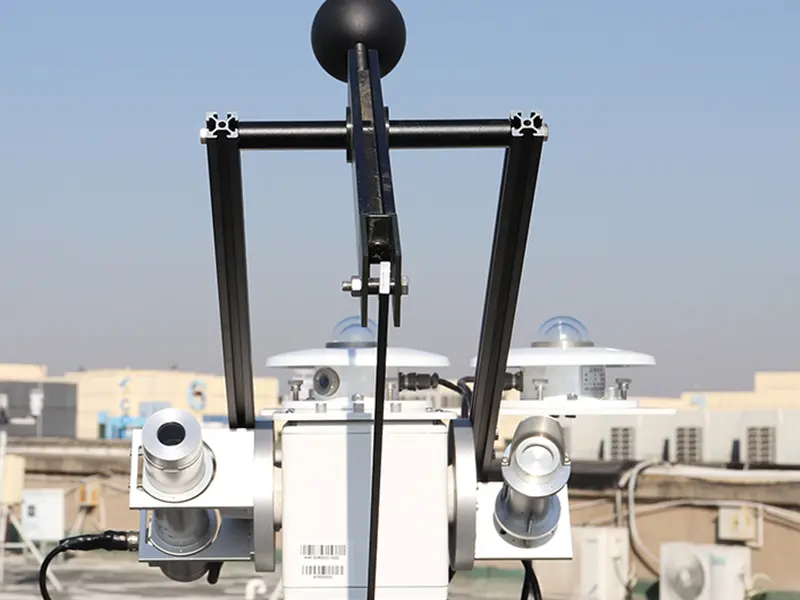
Since direct normal irradiance measurement requires the sensor to remain precisely aligned with the sun, the pyrheliometer is usually installed together with a high-precision solar tracker. The SAUT Automatic Tracking Solar Radiation Measurement System provides automated solar positioning and tracking for radiation sensors, helping maintain accurate alignment throughout the day. It is suitable for photovoltaic monitoring, meteorological observation, and solar radiation measurement projects where continuous and reliable data collection is required.
Perform Regular Maintenance and Calibration Checks
Even high-quality solar radiation instruments require proper maintenance to maintain measurement accuracy over time. Regular cleaning of the optical window prevents dust and contamination from reducing radiation reception, while periodic checks of tracker alignment help avoid errors caused by positioning deviation.
Calibration verification is also important for long-term monitoring stations. By maintaining calibration consistency and checking system performance regularly, operators can reduce measurement drift and ensure that collected DNI data remains reliable for solar resource evaluation and performance analysis.
Combine Multiple Measurements for Higher Data Reliability
For large-scale solar projects, relying on a single measurement point may not always provide sufficient data confidence. Multiple DNI monitoring stations or combined radiation measurements can help identify abnormal values, improve data validation, and maintain measurement continuity during maintenance periods.
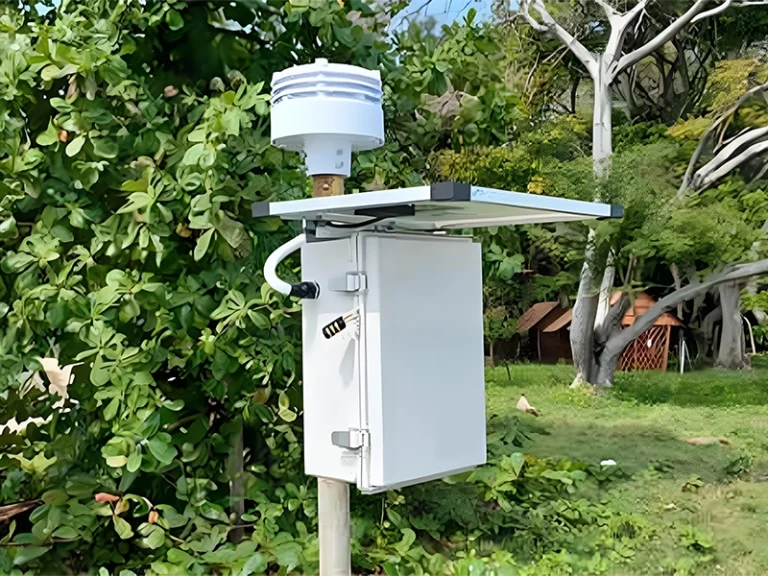
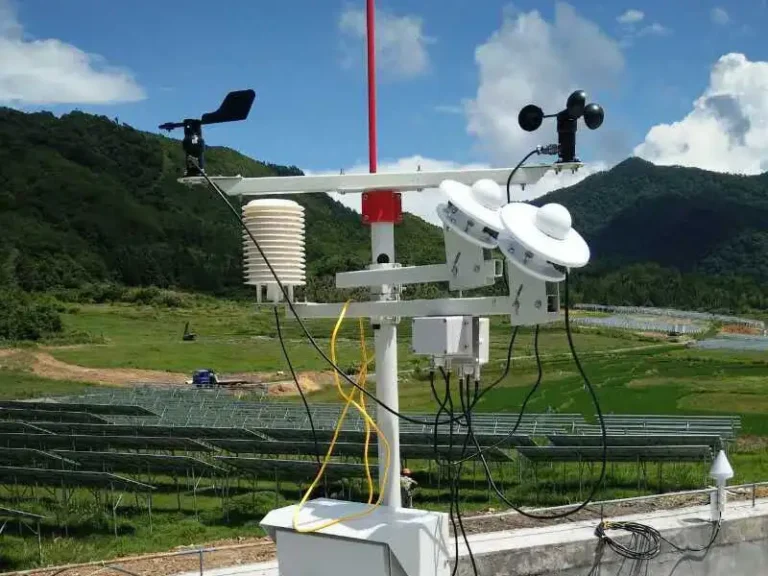
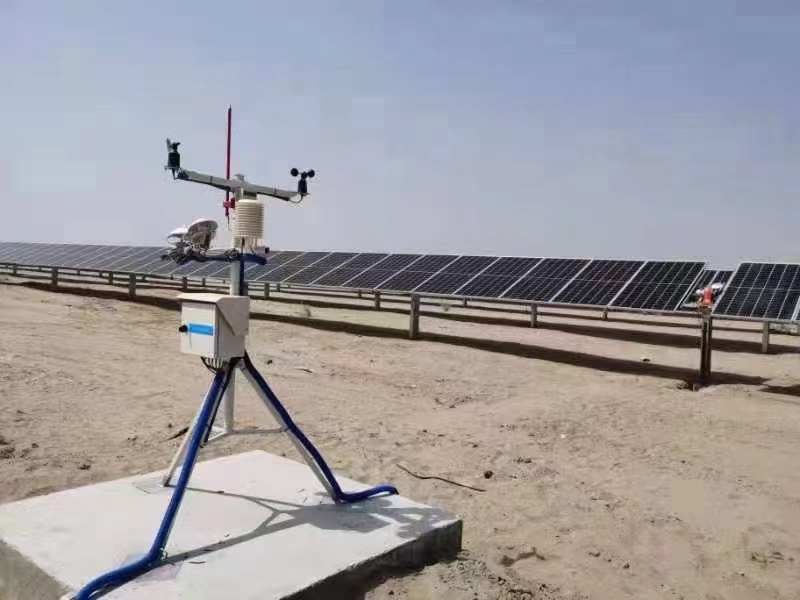
In photovoltaic power plant monitoring, direct normal irradiance data is often analyzed together with other environmental parameters to evaluate system performance. The XF500S-CWB Compact Weather Station integrates key meteorological measurements, including atmospheric temperature, humidity, wind speed, wind direction, atmospheric pressure, component temperature, and POA solar radiation, providing comprehensive environmental data support for PV operation and maintenance.
For photovoltaic performance monitoring, high-precision pyranometers (solar radiation sensors) are also widely used to measure solar irradiance and support Power Ratio (PR) analysis. Combining radiation measurement with weather monitoring provides a more complete understanding of solar system performance.
DNI Measurement Applications in Solar PV Systems
Accurate DNI measurement provides essential solar resource information throughout the photovoltaic project lifecycle, from initial site assessment to plant operation. By understanding direct solar radiation availability, developers can improve energy yield estimation and make better decisions on system configuration and performance management.
PV Project Development and System Design
During PV project planning, DNI data is used for solar resource assessment, site selection, and energy yield prediction. Combined with GHI and DHI measurements, long-term radiation data helps engineers evaluate solar conditions and select suitable system designs. For tracking PV systems and CPV applications, accurate direct normal irradiance measurement is particularly important because direct sunlight availability directly affects system performance and expected energy output.
PV Plant Monitoring and Performance Optimization
After a photovoltaic plant is operational, continuous DNI monitoring supports performance evaluation and power forecasting. By comparing solar radiation data with actual power generation, operators can analyze system efficiency, identify abnormal performance, and optimize operation strategies. Integrated PV monitoring systems often combine DNI with other meteorological parameters, such as temperature, wind, and module temperature, to provide comprehensive operational data.
How to Select a DNI Measurement System?
Selecting a suitable DNI measurement system depends on the required accuracy, application purpose, and installation environment. For high-accuracy solar resource assessment, PV project development, and research applications, a calibrated pyrheliometer combined with a precision solar tracker is typically preferred. For general solar monitoring, the system configuration can be adjusted based on data requirements and project budget.
System integration is another important consideration for long-term monitoring. The selected DNI measurement system should be compatible with data loggers and monitoring platforms, with communication options such as RS485, Modbus, or Ethernet available for remote data transmission and centralized management.
Since DNI monitoring systems are usually installed outdoors for continuous operation, environmental adaptability should also be considered. Factors such as protection rating, operating temperature range, installation stability, and maintenance requirements directly affect measurement reliability and long-term data quality.
Conclusion
Accurate DNI measurement depends on the combination of the right instrument, precise solar tracking, proper installation, and regular calibration. A reliable measurement system ensures high-quality solar radiation data for PV project assessment, system optimization, and long-term performance analysis.
For professional solar resource assessment and photovoltaic monitoring applications, a calibrated pyrheliometer combined with a high-precision solar tracking system remains the most accurate solution for direct normal irradiance measurement.
If you are looking for a reliable DNI measurement solution, solar radiation sensor, or photovoltaic weather monitoring system, contact our engineering team for customized solutions based on your project requirements.